Minimally invasive surgery is defined as any operation performed through small incisions of 1–2cm or less, or through the body’s natural openings, rather than a single large wound. The clinical term used by NHS and NICE is “minimally invasive surgery” (MIS), and it encompasses laparoscopic, arthroscopic, and robotic-assisted techniques. Compared with conventional open surgery, MIS reduces the amount of tissue cut during the procedure. That reduction translates directly into less post-operative pain, lower scarring rates, and faster discharge from hospital. For patients in the UK researching their surgical options, understanding what MIS involves, and where its limits lie, is the first step toward making an informed decision alongside a GMC-registered specialist.
How does minimally invasive surgery work?
MIS replaces the large incision of open surgery with a series of small ports through which a surgeon passes a camera and slender instruments. The camera, called a laparoscope or endoscope depending on the body cavity, transmits a magnified image to a screen in the operating theatre. The surgeon watches that screen and manipulates instruments inside the body without opening it fully.
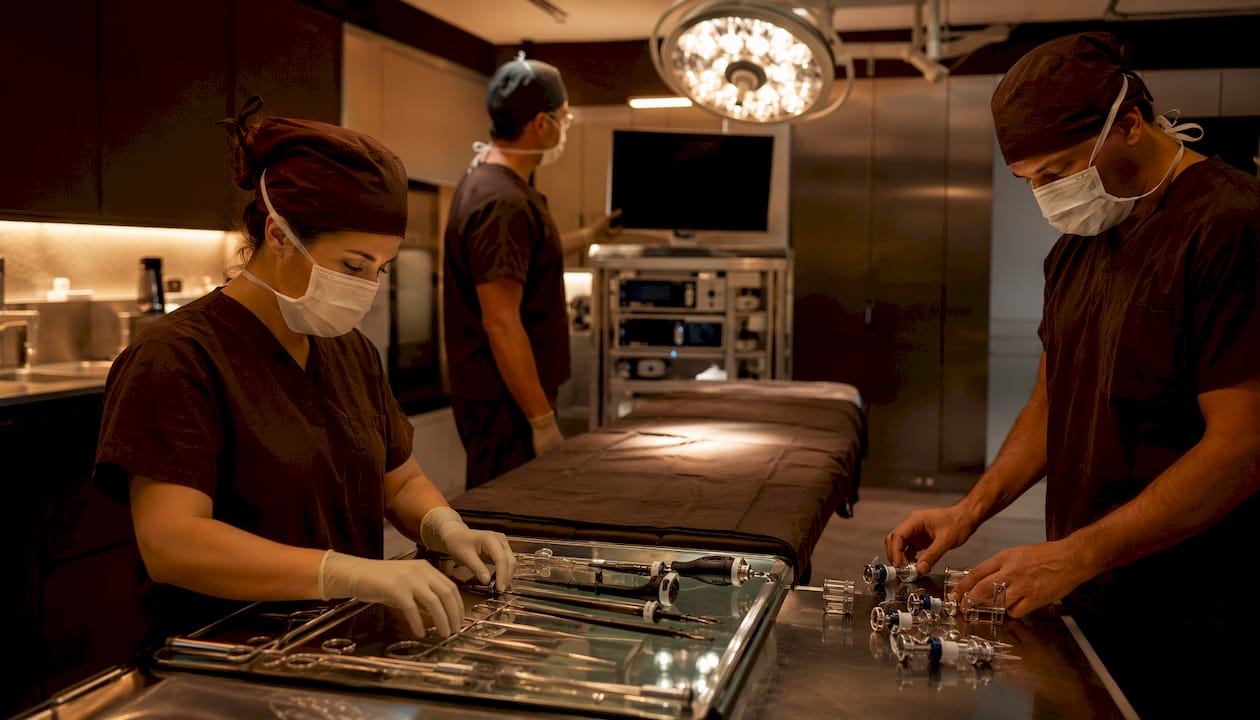
Laparoscopic surgery
Laparoscopic surgery is the most widely used MIS technique in the UK. The surgeon inserts a thin, lighted tube through a port near the navel and additional instruments through one or two further ports. Carbon dioxide gas inflates the abdominal cavity to create working space. Common laparoscopic procedures include gallbladder removal (cholecystectomy), appendectomy, and hernia repair.
Robotic-assisted surgery
Robotic-assisted surgery is an advanced subset of laparoscopic technique. The surgeon sits at a console with 3D vision and handles controlling robotic arms that hold the instruments inside the patient. Systems such as the da Vinci platform offer a greater range of motion than the human wrist allows with standard laparoscopic tools. NICE notes that robotic systems improve ergonomics and precision, though clinical outcomes vary by procedure and are not automatically superior to standard laparoscopy.
Pro Tip: Ask your surgeon whether the robotic system proposed for your procedure has been assessed under NICE interventional procedures guidance. NICE evaluates each system and each indication separately, so approval for one operation does not mean approval for all.
Arthroscopic surgery
Arthroscopic surgery applies the same small-port principle to joints. An arthroscope enters through a tiny incision near the knee, shoulder, or hip, allowing surgeons to repair cartilage, reconstruct ligaments, or remove loose bodies without opening the joint. This technique is standard for anterior cruciate ligament reconstruction and rotator cuff repair in NHS orthopaedic practice.
| Technique | Typical body area | Key instrument | Common examples |
|---|---|---|---|
| Laparoscopic | Abdomen and pelvis | Laparoscope and graspers | Gallbladder removal, hernia repair |
| Robotic-assisted | Abdomen, pelvis, thorax | Robotic arms with wristed instruments | Prostatectomy, colorectal resection |
| Arthroscopic | Joints | Arthroscope and shavers | Knee ligament repair, shoulder surgery |
| Endoscopic | GI tract, airways | Flexible endoscope | Polyp removal, bronchoscopy |
What are the benefits of minimally invasive surgery?
The benefits of minimally invasive surgery are well documented across NHS and NICE patient outcome data. Patients can be discharged the day after major procedures that would previously have required several days in hospital. That earlier discharge reduces the risk of hospital-acquired infection and frees NHS capacity.
The patient-reported advantages over traditional open surgery include:
- Less post-operative pain. Smaller incisions mean less muscle and tissue disruption, reducing the need for strong opioid analgesia in the days after surgery.
- Reduced scarring. Port sites heal to small marks rather than long linear scars. Patients who want to understand how to manage residual marks can read the Lux Plastic Surgery guide on minimising scarring after surgery.
- Shorter hospital stay. Same-day or next-day discharge is now routine for many laparoscopic procedures, compared with three to seven days for equivalent open operations.
- Faster return to normal activity. Most patients resume light daily tasks within one to two weeks rather than four to six weeks.
- Lower risk of wound complications. Smaller wounds carry a lower rate of dehiscence and superficial infection.
- Reduced blood loss. Precise instrument control limits intraoperative bleeding, reducing the likelihood of transfusion.
One important nuance deserves emphasis. Quicker discharge does not always mean faster total healing. Internal tissues, whether bowel anastomoses, repaired tendons, or reconstructed ligaments, heal at a biological rate that surgery cannot accelerate. Patients who leave hospital on day one still need to respect activity restrictions for the weeks that follow. A practical post-surgery recovery guide can help patients plan this period realistically.
NICE evidence also indicates that robotic surgery systems reduce length of hospital stay and may reduce surgical waiting lists, benefiting NHS productivity and patient flow. That is a system-level benefit as well as an individual one.
Who is suitable for minimally invasive surgery?
Patient suitability for MIS depends on several clinical factors assessed during a formal pre-operative evaluation. Not every patient or every condition is appropriate for a minimally invasive approach, and the decision rests with the operating surgeon after reviewing individual health status.
Pre-operative assessment typically takes place 1–4 weeks before surgery and covers the following:
- Medical history and medication review. Blood thinners, diabetes medications, and certain supplements must be adjusted before surgery to reduce bleeding and anaesthetic risk.
- Blood pressure check. A target of below 160/95 mmHg is standard before elective procedures to reduce cardiovascular risk during anaesthesia.
- Blood glucose and HbA1c measurement. An HbA1c below 8.5% is the accepted threshold for elective surgery in patients with diabetes, as higher levels increase infection and healing complications.
- Blood tests and ECG. Full blood count, renal function, and cardiac screening identify conditions that could affect anaesthetic safety.
- Prehabilitation assessment. NICE guidance emphasises that lifestyle changes improve outcomes regardless of surgical method. Patients are advised to stop smoking, increase physical activity, and optimise nutrition in the weeks before their procedure.
- Anaesthetic review. Patients with complex airways, severe obesity, or significant cardiorespiratory disease may require specialist anaesthetic input. The role of anaesthesia in surgery is a critical safety consideration that patients should discuss openly with their clinical team.
Factors that may reduce suitability for MIS include extensive previous abdominal surgery causing adhesions, very large tumours requiring wide excision, and certain bleeding disorders. Age alone is not a contraindication, but older patients with multiple comorbidities require more thorough pre-operative optimisation.
What are the risks and limitations of minimally invasive surgery?
MIS carries real risks that patients must understand before consenting to any procedure. All interventional procedures are overseen for safety under NICE interventional procedures guidance, and patients have the right to be told whether their surgery is part of routine care or an ongoing research programme.
The principal risks include:
- Infection. Port sites can become infected, and intra-abdominal infection, though less common than in open surgery, remains possible.
- Bleeding. Injury to blood vessels during port insertion or instrument manipulation can cause significant haemorrhage requiring urgent intervention.
- Conversion to open surgery. If the surgeon encounters unexpected anatomy, dense adhesions, or uncontrolled bleeding, the procedure may need to convert to a conventional open approach. This is not a failure; it is a safety decision.
- Gas embolism. The carbon dioxide used to inflate the abdomen during laparoscopy carries a small risk of entering the bloodstream.
- Nerve or organ injury. Instruments working in a confined space can inadvertently damage adjacent structures.
Robotic-assisted MIS adds further considerations. NICE appraisal notes that clinical results can be similar or, rarely, have higher complication rates compared with standard laparoscopy for certain procedures. The technology improves surgeon ergonomics but does not eliminate human error or anatomical complexity.
Access to MIS is not uniform across the UK. Lower uptake in deprived areas reflects a geographic equity gap within NHS trusts, driven by differences in equipment availability and surgical training volume. Patients in some regions may have limited access to robotic-assisted techniques regardless of clinical suitability.
Pro Tip: Before consenting to any MIS procedure, ask your surgeon three specific questions: What is the conversion rate to open surgery for this operation at this hospital? Is this procedure being performed as part of a clinical trial? What activity restrictions will apply after discharge, and for how long?
Patients considering cosmetic or elective procedures can find further guidance on patient safety in cosmetic surgery and how to approach risk-aware decision-making.
Key takeaways
Minimally invasive surgery reduces tissue damage through small incisions of 1–2cm or less, delivering faster discharge and less scarring than open surgery, but internal healing timelines remain unchanged and patient suitability requires thorough pre-operative assessment.
| Point | Details |
|---|---|
| Definition of MIS | Operations performed through incisions of 1–2cm or less, or natural orifices, using laparoscopic, robotic, or arthroscopic techniques. |
| Core patient benefits | Shorter hospital stay, less post-operative pain, reduced scarring, and faster return to light activity compared with open surgery. |
| Discharge vs. full recovery | Earlier hospital discharge does not equal faster internal healing; activity restrictions post-discharge remain clinically necessary. |
| Pre-operative preparation | HbA1c below 8.5%, blood pressure below 160/95 mmHg, smoking cessation, and prehabilitation are standard requirements before elective MIS. |
| Risks and access | Conversion to open surgery, bleeding, and infection are real risks; access to robotic MIS varies significantly across UK NHS trusts. |
What I have learned from years of working with minimally invasive techniques
The conversation around MIS in the UK has shifted considerably over the past decade. When robotic platforms first appeared in NHS trusts, there was understandable excitement about the technology itself. What I have observed, both in NHS practice and in private consultations at Lux Plastic Surgery, is that the technology is only as good as the preparation surrounding it.
The patients who do best after MIS are not necessarily those who had the most advanced robotic system. They are the ones who arrived at surgery in the best possible condition: non-smokers, well-controlled blood pressure, realistic expectations about what “quicker recovery” actually means day to day. NICE’s emphasis on prehabilitation is not a bureaucratic formality. It reflects what experienced surgeons see consistently in outcomes data.
There is also an uncomfortable truth about access. The geographic equity gap in robotic MIS availability means that where a patient lives in the UK influences what they are offered. That is a structural problem the NHS is working to address, but patients should be aware of it when comparing their options. A procedure performed with standard laparoscopy by a highly experienced surgeon often delivers better results than the same procedure performed robotically by a less experienced one.
MIS is one option among several. The right approach depends on the individual patient, the specific condition, and the surgeon’s honest assessment of what technique gives the best outcome for that person. Clear communication between patient and surgeon, before the consent form is signed, is the single most important factor in a successful result.
— Lux
Considering surgery? Speak with a consultant at Lux Plastic Surgery
Lux Plastic Surgery offers consultant-led surgical and non-surgical procedures across Bedford, London, and Manchester, directed by Professor Sandip Hindocha, GMC-registered Consultant Plastic Surgeon and NHS Clinical Director. Every patient receives a thorough pre-operative assessment and a frank discussion of the options available, including whether a minimally invasive approach is appropriate for their individual circumstances.

Professor Hindocha’s practice covers a wide range of surgical and aesthetic services, from body contouring to facial procedures, with patient safety and natural results at the centre of every plan. For patients weighing their options, the Lux Plastic Surgery guide to safe cosmetic surgery choices provides a clear framework for risk-aware decision-making. To arrange a consultation with Professor Hindocha, contact Lux Plastic Surgery directly.
This article is for informational purposes only and does not constitute medical advice. Consult a GMC-registered specialist before making any surgical decision.
FAQ
What is minimally invasive surgery in simple terms?
Minimally invasive surgery is any operation performed through small incisions of 1–2cm or less, or through natural body openings, using a camera and slender instruments rather than a large wound. The approach reduces tissue damage compared with conventional open surgery.
How long does recovery take after minimally invasive surgery?
Hospital discharge often occurs the day after a major MIS procedure, but full internal healing takes several weeks. Activity restrictions post-discharge remain necessary regardless of how quickly a patient feels well.
Is minimally invasive surgery safe?
MIS is performed under rigorous NICE and NHS safety oversight, and patients have the right to informed consent before any procedure. Risks including infection, bleeding, and conversion to open surgery exist and must be discussed with the operating surgeon beforehand.
Who is not suitable for minimally invasive surgery?
Patients with extensive previous abdominal surgery, very large tumours, or certain bleeding disorders may not be suitable candidates. Suitability is determined individually during a formal pre-operative assessment, typically conducted 1–4 weeks before the planned procedure.
Does robotic surgery produce better results than standard laparoscopy?
Not automatically. NICE appraisal confirms that robotic systems improve surgeon ergonomics and visualisation, but clinical outcomes vary by procedure and can be similar to, or occasionally less favourable than, standard laparoscopic results depending on the operation and the surgeon’s experience.