Post surgery recovery steps are the essential actions patients must follow immediately after an operation to promote healing, reduce complications, and restore function. Structured post-operative care is not optional. Patients who follow clear, evidence-based recovery protocols experience fewer complications, shorter rehabilitation periods, and better long-term outcomes. This guide draws on clinical evidence and the expertise of Professor Sandip Hindocha, GMC-registered Consultant Plastic Surgeon and NHS Clinical Director, to walk you through every phase of recovery. From the first 48 hours to full tissue healing, you will find practical, clinically grounded guidance for each stage.
What are the essential post surgery recovery steps in the first 48–72 hours?
The first 72 hours after surgery are the most critical window for preventing complications and setting the foundation for healing. Two factors define this period above all others: pain control and early, careful movement. Advance recovery planning, including organising your medications and caregiver support before you leave hospital, significantly improves post-operative outcomes.

Pain management: stay ahead of the pain
Pain medication works best when taken on a schedule, not on demand. Scheduled analgesics during the first 48 hours prevent pain from escalating to a level that is harder to control. Waiting until pain becomes severe before taking medication complicates management and can slow recovery.
Multi-modal pain control uses non-narcotic medicines such as paracetamol and ibuprofen as the first line of treatment, reserving opioids for severe pain only. This approach reduces side effects and supports faster healing. Always follow the specific medication instructions given by your surgical team.
Wound care and hygiene
Keep the wound site clean and dry unless your surgeon has given specific instructions to do otherwise. Check the dressing at least once daily for signs of bleeding, leakage, or loosening. Never remove surgical dressings without guidance from your clinical team.
Avoid submerging the wound in water, including baths and swimming pools, until your surgeon confirms the wound is fully sealed. Gentle patting dry after showering, if permitted, is preferable to rubbing. Any change in wound appearance should be reported promptly.
Early movement: small steps matter
Complete bed rest after surgery increases the risk of blood clots and pneumonia. Short, gentle walks every 2–4 hours, even within your home, support circulation and lung function. These movements do not need to be strenuous to be effective.
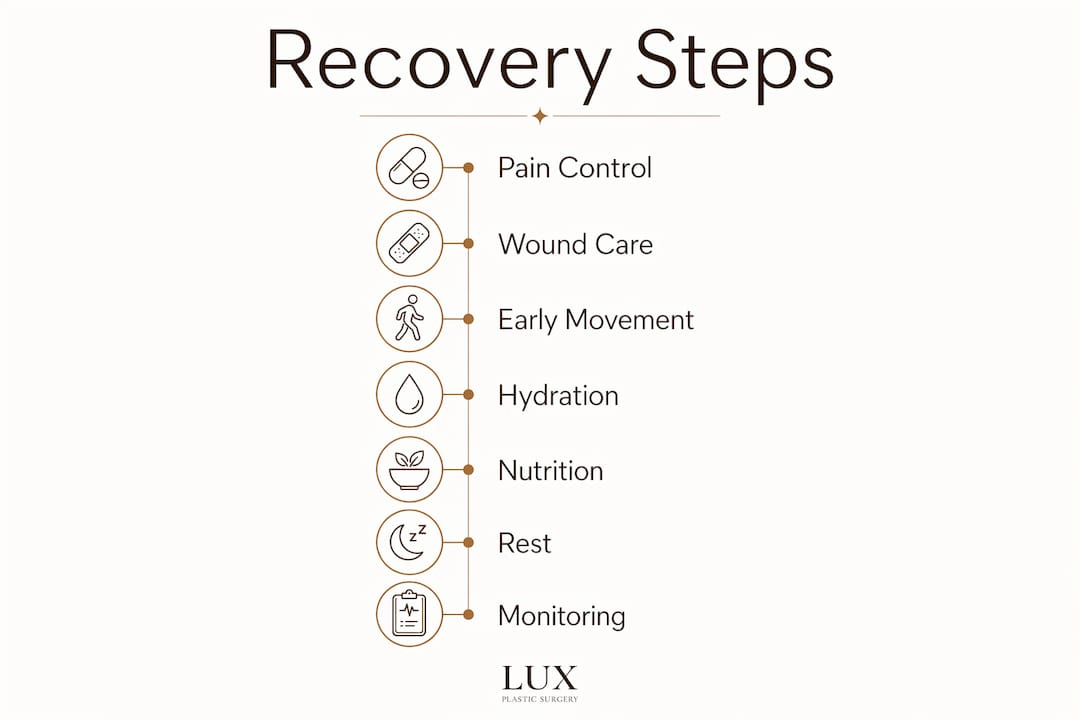
Pro Tip: Set a gentle alarm every two to three hours as a reminder to stand and take a short walk around the room. Consistency matters more than distance in the first few days.
Hydration, nutrition, and rest
Drink water consistently throughout the day. Dehydration slows tissue repair and can worsen constipation, a common side effect of opioid pain medication. Aim for light, easily digestible meals in the first 24–48 hours before returning to your normal diet as tolerated.
Rest is not the same as immobility. Sleep as much as your body requires, but plan short periods of gentle movement between rest intervals. A prepared home environment with everything you need within easy reach reduces unnecessary strain and supports your recovery.
A fever above 38.3°C within the first 48 hours after surgery is a red flag that requires immediate medical assessment. Do not wait to see if it resolves on its own. Contact your surgical team or attend your nearest emergency department without delay.
How should patients safely progress mobility during the rehabilitation phases?
Post surgery rehabilitation is an active process, not a passive one. The goal is to increase physical activity in a stepwise manner that protects healing tissue while preventing the stiffness, muscle loss, and circulatory problems that come from excessive rest.
The surgery recovery timeline follows broadly predictable milestones, though the exact pace depends on the type and complexity of your procedure.
Recovery milestones by phase
Days 1–2 (initial mobilisation). Stand and walk short distances with assistance if needed. Focus on breathing exercises to reduce the risk of chest infection. Avoid any activity that causes sharp or worsening pain.
Days 3–7 (early recovery). Gradually increase walking distance each day. Most patients can manage light self-care tasks such as washing and dressing. Avoid lifting anything heavier than a light bag.
Weeks 2–4 (progressive activity). Return to gentle daily activities such as light cooking and short outdoor walks. Avoid driving until your surgeon confirms it is safe, typically no earlier than two weeks post-operation and only once you can perform an emergency stop without hesitation.
Weeks 4–6 (functional restoration). Many patients return to desk-based work and light social activities. Continue to avoid strenuous exercise, heavy lifting, and high-impact activity.
Months 3–6 (full recovery for most procedures). Most patients regain full strength and function within this window. Complex procedures, including major reconstructive surgery, can take up to 9–12 months for complete recovery.
Pro Tip: Keep a simple daily log of your activity levels and pain scores. This gives your surgical team accurate information at follow-up appointments and helps identify any plateau in your progress.
Lifting restrictions: follow them even when you feel well
Heavy lifting restrictions of six weeks apply even when patients feel physically capable of more. Internal tissues heal more slowly than surface wounds. Lifting prematurely places mechanical stress on repairs that are not yet strong enough to withstand it.
The threshold most surgical teams use is avoiding any item heavier than approximately 4.5 kilograms for the first six weeks. This applies to shopping bags, children, and gym equipment equally. When in doubt, ask your surgeon before attempting any new activity.
| Recovery phase | Typical timeframe | Key activity guidance |
|---|---|---|
| Initial mobilisation | Days 1–2 | Short walks, breathing exercises, assisted movement |
| Early recovery | Days 3–7 | Increasing daily walking, light self-care |
| Progressive activity | Weeks 2–4 | Light daily tasks, no driving, no heavy lifting |
| Functional restoration | Weeks 4–6 | Desk work, gentle social activity |
| Full recovery | Months 3–6 (up to 12 for complex cases) | Return to full exercise and normal activity |
Research shows that each additional 1,000 daily steps after inpatient surgery reduces post-operative complications by 17% and 30-day readmission by 15%. This finding underlines why consistent, progressive walking is one of the most effective tools available to recovering patients.
What nutritional and lifestyle considerations support healing after surgery?
Nutrition and lifestyle choices have a direct and measurable effect on how quickly and completely your body heals. The body’s demand for protein, vitamins, and fluids increases significantly after surgery. Failing to meet these demands slows tissue repair and raises infection risk.
Diet and hydration
- Protein. Prioritise protein-rich foods such as eggs, chicken, fish, legumes, and dairy. Protein provides the building blocks for tissue repair and immune function.
- Vitamin C. Found in citrus fruits, peppers, and broccoli, vitamin C supports collagen synthesis, which is central to wound healing.
- Iron. Leafy greens, red meat, and fortified cereals help restore iron levels, particularly important after procedures involving blood loss.
- Fibre. Oats, vegetables, and fruit reduce constipation, which is common after surgery due to reduced movement and opioid use.
- Fluids. Aim for at least 1.5–2 litres of water daily unless your surgical team has advised otherwise due to your specific procedure.
Alcohol and smoking: avoid both
Alcohol interferes with wound healing, impairs immune response, and interacts dangerously with many post-operative medications. Avoid alcohol entirely for at least two weeks after surgery, and longer if your surgeon recommends it.
Smoking reduces blood oxygen levels and constricts the small blood vessels that supply healing tissue. This significantly increases the risk of wound breakdown, infection, and poor scarring. The NHS advises stopping smoking before surgery and maintaining abstinence throughout the recovery period. For quicker healing after surgery, stopping smoking is one of the most impactful steps you can take.
Sleep and rest scheduling
Sleep is when the body performs the majority of its tissue repair. Aim for seven to nine hours of sleep per night during recovery. If pain or discomfort disrupts sleep, discuss this with your surgical team rather than increasing medication without guidance.
Pro Tip: Elevating the operated area with pillows during sleep reduces swelling and improves comfort. Ask your nurse or surgeon for the specific position recommended for your procedure.
Avoid screens for at least an hour before bed to support sleep quality. Fatigue is normal in the first two weeks and is a signal that your body is directing energy towards healing. Respect it.
How do you recognise warning signs of complications after surgery?
Recognising complications early is one of the most important skills a recovering patient can develop. Most post-operative problems are treatable when identified promptly. Delayed recognition is the primary reason minor complications become serious ones.
Patients who know what to look for and act quickly on warning signs consistently have better outcomes than those who wait. If something feels wrong, contact your surgical team the same day. Do not wait for your next scheduled appointment.
Signs that require same-day contact with your surgical team
- Increasing redness, warmth, or swelling around the wound site, particularly if spreading beyond the wound edges
- Wound discharge that is yellow, green, or has an unpleasant odour
- A fever above 38.3°C at any point in the first week, or recurring fever after the first 48 hours
- Pain that is worsening rather than gradually improving after the first 48–72 hours
- Unusual bruising or a sudden increase in swelling not explained by activity
Signs that require emergency services (999 or A&E)
- Chest pain, shortness of breath, or coughing up blood (possible signs of a pulmonary embolism)
- Sudden severe pain at the wound site with rapid swelling
- Loss of sensation or movement in a limb
- Confusion, high fever above 39°C, or rapid heart rate (possible signs of sepsis)
- Heavy bleeding that does not stop with direct pressure after ten minutes
Understanding aftercare adherence is not simply about following instructions. It is about knowing when those instructions need to be supplemented by urgent clinical input. The two are equally important.
Wound infection: what to look for
Wound infection typically presents between days 3 and 7 after surgery. The wound becomes increasingly red, warm to the touch, and tender. Swelling around the site increases rather than decreases. A discharge may appear, and the patient often develops a low-grade fever.
Early infection responds well to antibiotics. Left untreated, it can progress to abscess formation or, in rare cases, systemic infection. Report any of these signs to your surgical team without delay. Never attempt to drain or treat a wound infection at home.
Key takeaways
Effective post-operative care requires structured action from the first hours after surgery through to full tissue healing, with pain control, early movement, and complication recognition forming the three pillars of a safe recovery.
| Point | Details |
|---|---|
| Schedule pain medication | Take analgesics on a fixed timetable in the first 48 hours to prevent pain from escalating. |
| Move early and consistently | Short walks every 2–4 hours reduce the risk of blood clots, pneumonia, and muscle loss. |
| Respect lifting restrictions | Avoid items heavier than approximately 4.5 kilograms for six weeks, even when feeling well. |
| Eat and hydrate well | Prioritise protein, vitamin C, and fluids to support tissue repair and immune function. |
| Act on warning signs promptly | Fever above 38.3°C, worsening pain, or spreading redness require same-day clinical contact. |
What I have learned from years of supporting patients through recovery
Recovery planning begins before the operation, not after. This is the single most consistent lesson from clinical practice. Patients who arrive home with their medications organised, their environment prepared, and a clear understanding of what to expect in the first 72 hours recover more smoothly than those who improvise.
The most common misconception I encounter is that rest means doing nothing. Complete immobility is actively harmful after surgery. The body needs gentle, consistent movement to maintain circulation, prevent clots, and keep the lungs clear. The challenge is finding the balance between protecting healing tissue and avoiding the complications of prolonged inactivity. That balance shifts week by week, and it requires patients to listen carefully to their bodies rather than following a rigid timetable.
A second misconception is that feeling better means being better. Internal tissues heal on a different schedule to surface wounds. A patient who feels well at three weeks may have wound repairs that are only a fraction of their final strength. This is why lifting restrictions exist for six weeks regardless of how capable a patient feels. Ignoring this is one of the most reliable ways to undo good surgical work.
The patients who do best are those who communicate openly with their surgical team. They report changes promptly, ask questions without embarrassment, and follow guidance even when it feels overly cautious. Recovery is not a test of toughness. It is a clinical process, and it works best when patients and surgeons work together throughout. For a broader view of what to expect, the cosmetic surgery recovery guide from Lux Plastic Surgery provides useful context for patients preparing for elective procedures.
— Lux
Personalised post-operative care at Lux Plastic Surgery
Lux Plastic Surgery provides patients with structured aftercare pathways designed around their specific procedure and individual needs.

Professor Sandip Hindocha and the Lux Plastic Surgery clinical team offer detailed pre-operative recovery planning, post-operative monitoring, and direct access to specialist support throughout the healing process. Whether you are considering a surgical or non-surgical procedure, understanding the recovery process is a central part of making an informed decision. Patients can explore the full range of plastic surgery options, benefits, and safety information on the Lux Plastic Surgery website, or contact the team directly to arrange a consultation. This article does not constitute medical advice. Consult a GMC-registered specialist before making any decisions about surgical treatment.
FAQ
What are the most important post surgery recovery steps in the first 24 hours?
The most critical steps are taking pain medication on a fixed schedule, performing short gentle walks every 2–4 hours, keeping the wound site clean and dry, and monitoring for red flags such as fever above 38.3°C.
How long does a typical surgery recovery timeline last?
Recovery milestones range from initial mobilisation within 24–48 hours to full strength at 3–6 months for most procedures. Complex surgeries can take up to 9–12 months for complete recovery.
When is it safe to return to exercise after surgery?
Most patients can return to light exercise such as walking from the first week, but strenuous activity and heavy lifting should be avoided for at least six weeks, even when feeling physically capable.
What foods support healing after surgery?
Protein-rich foods, vitamin C sources such as citrus and peppers, iron-rich foods, and adequate hydration of at least 1.5–2 litres of water daily all support tissue repair and immune function during recovery.
When should I contact my surgical team after an operation?
Contact your surgical team the same day if you develop a fever above 38.3°C, notice increasing redness or discharge from the wound, or experience pain that is worsening rather than improving after the first 48–72 hours.