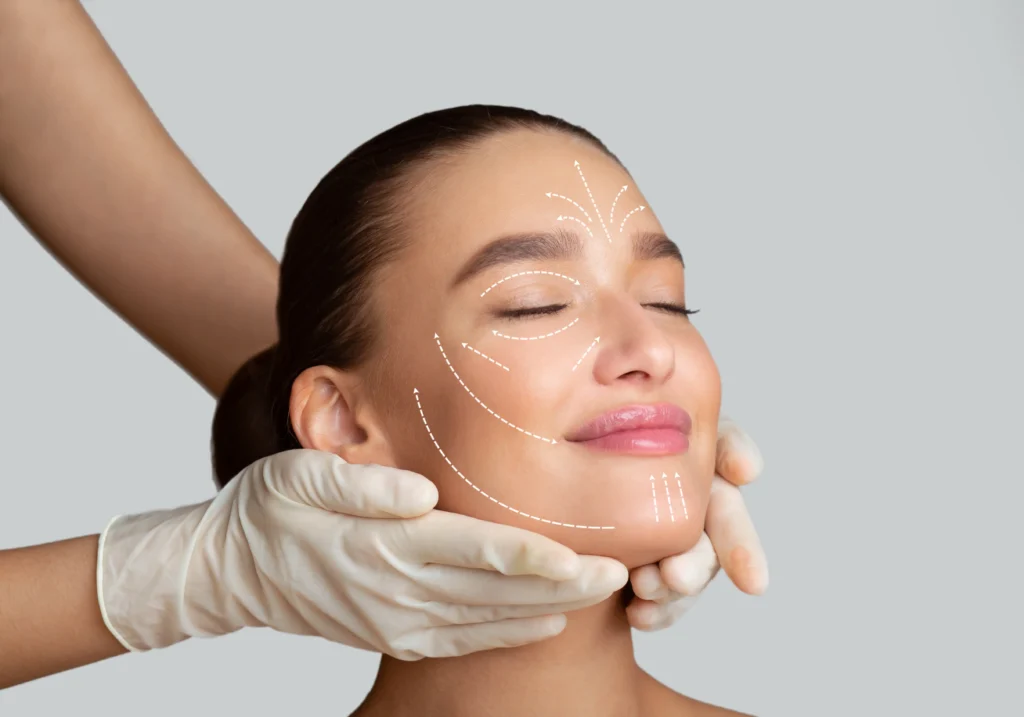
Patient safety in cosmetic surgery is defined by three non-negotiable pillars: informed consent, verified surgeon qualifications, and adherence to regulated facility standards. In clinical terms, this is called perioperative patient safety, and it governs every stage from your first consultation to your final follow-up appointment. The UK’s regulatory environment is tightening in 2026, with the General Medical Council (GMC) and the Women and Equalities Committee both publishing updated guidance that places greater responsibility on surgeons and clinics. Understanding what these standards require of your provider is the most effective protection you have before any procedure begins.
1. What makes a cosmetic surgeon qualified and trustworthy in the UK?
Surgeon qualification is the single most important factor in safe cosmetic procedures. The UK does not currently require a specific licence to perform cosmetic surgery, which means the burden of verification falls on you as the patient.
A trustworthy cosmetic surgeon holds full GMC registration and appears on the Specialist Register for plastic surgery. Membership of the British Association of Aesthetic Plastic Surgeons (BAAPS) or the British Association of Plastic, Reconstructive and Aesthetic Surgeons (BAPRAS) signals additional peer-reviewed credibility. These bodies require members to meet defined training standards and adhere to professional codes of conduct.
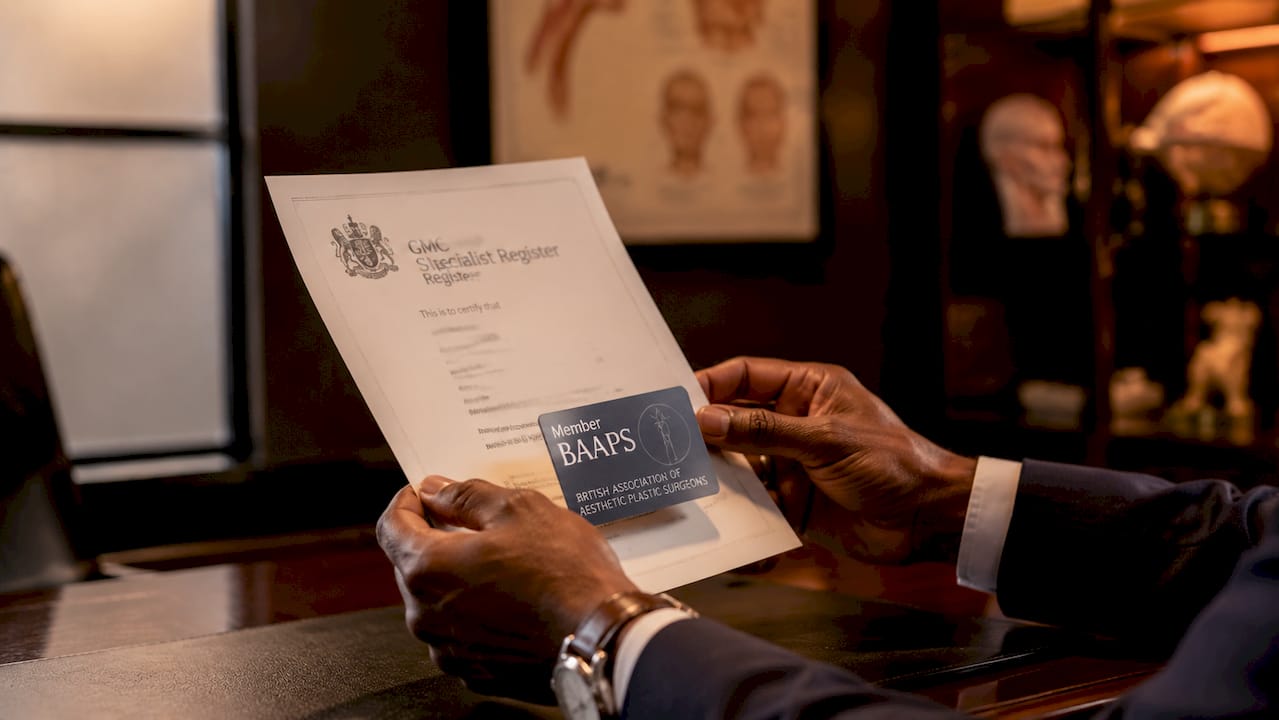
The Intercollegiate Cosmetic Surgery Certification Scheme exists as an additional quality marker, but participation remains voluntary, leaving gaps in the regulatory framework. A surgeon who holds this certification has voluntarily submitted to external scrutiny. One who does not may still be competent, but you have less independent verification.
Pro Tip: Before booking a consultation, search the GMC’s online register at gmc-uk.org. Enter the surgeon’s name and confirm their registration status and any conditions on their licence.
- Confirm GMC registration and Specialist Register listing for plastic surgery
- Check BAAPS or BAPRAS membership on the respective society websites
- Ask directly about the surgeon’s specific training in the procedure you are considering
- Request to see outcome data or audit results from previous patients
- Avoid any provider who cannot answer these questions clearly and without hesitation
Choosing a board-certified plastic surgeon with verifiable credentials is not a bureaucratic formality. It is the most direct way to reduce your risk of a poor outcome or the need for corrective surgery.
2. How does a robust informed consent process enhance patient safety?
Informed consent is a clinical process, not a document. Signing a form on the day of surgery does not constitute valid consent, and court rulings confirm that consent obtained under time pressure is frequently deemed invalid. Reputable providers implement a mandatory cooling-off period of approximately two weeks between the consent discussion and the procedure date.
The 2026 GMC draft guidance makes this explicit: doctors must personally manage consent, providing structured information on risks, benefits, and alternatives. This responsibility cannot be delegated to sales staff, patient coordinators, or counsellors. If a clinic’s consent process is led by anyone other than your operating surgeon, that is a significant red flag.
A thorough consent discussion should cover the following:
- The specific procedure being proposed, including the surgical technique
- All material risks, including rare but serious complications
- Realistic expected outcomes, with reference to your individual anatomy
- Available alternatives, including non-surgical options
- What happens if the procedure does not achieve the desired result
- Clear contact details for your surgeon if complications arise post-operatively
- Confirmation that you have had adequate time to consider and ask questions
Pro Tip: Write down your questions before the consultation and bring them with you. A surgeon who is unwilling to answer all of them in full is not the right surgeon for you.
Legal consent requires clinical dialogue tailored to your individual circumstances. Generic information sheets are a starting point, not a substitute for a face-to-face conversation with your surgeon. Patients who feel rushed or pressured during the consent process should treat that as a reason to pause and seek a second opinion.
3. What safety protocols and facility standards protect patients during cosmetic surgery?
The physical environment in which your surgery takes place directly affects your safety. Cosmetic surgery in the UK must be performed in a Care Quality Commission (CQC) registered facility. CQC registration means the facility has been independently inspected against national standards covering staffing, infection control, equipment, and emergency protocols.
Non-surgical treatments may be performed in regulated aesthetic centres, but surgical procedures require a higher level of oversight. A clinic that cannot confirm its CQC registration should not be considered for any invasive procedure.
Implant tracking is a related area where UK standards are still developing. The Breast and Cosmetic Implant Registry exists to track implanted devices and enable rapid patient notification if a safety issue emerges. However, registry participation remains voluntary, covering approximately 80% of implants placed in the UK. Experts and parliamentary committees have called for mandatory registration to close this gap.
| Safety standard | Current UK status |
|---|---|
| CQC facility registration | Mandatory for surgical procedures |
| GMC surgeon registration | Mandatory for all doctors |
| Breast and Cosmetic Implant Registry | Voluntary; approximately 80% coverage |
| Intercollegiate Cosmetic Surgery Certification | Voluntary; not universally adopted |
| Cooling-off period before surgery | Advocated by GMC; not yet statutory |
Post-operative care protocols are equally important. A reputable clinic provides written aftercare instructions, a direct contact number for concerns, and scheduled follow-up appointments. The absence of structured aftercare is a warning sign that patient safety has not been fully considered.
4. Which cosmetic surgery risks should patients be aware of?
Every surgical procedure carries risk. Understanding those risks before you consent is a legal and ethical requirement, and a surgeon who minimises or avoids discussing them is not meeting their professional obligations.
Common risks associated with cosmetic surgery include:
- Infection: Surgical site infections can occur even in well-managed facilities. Signs include increasing redness, warmth, swelling, and discharge beyond the first 48 hours.
- Anaesthesia complications: Reactions to general or local anaesthesia range from nausea to, in rare cases, serious cardiovascular events. The role of anaesthesia in cosmetic surgery should be discussed with both your surgeon and the anaesthetist before the procedure.
- Implant-related complications: These include capsular contracture, implant rupture, and, in the case of breast implants, the rare condition Breast Implant-Associated Anaplastic Large Cell Lymphoma (BIA-ALCL).
- Unsatisfactory results: Asymmetry, scarring, and results that do not match expectations are among the most common reasons patients seek corrective procedures.
- Psychological impact: Body dysmorphic disorder (BDD) can be exacerbated by cosmetic surgery. Reputable surgeons screen for this condition before proceeding.
Some procedures carry substantially higher risk profiles. The Women and Equalities Committee recommends banning liquid Brazilian butt lifts due to the risk of fatal fat embolism. The committee’s 2026 report highlights rising numbers of corrective NHS surgeries resulting from procedures performed by inadequately trained providers. This is a direct consequence of the regulatory gaps described above.
Red flags that should prompt you to reconsider a provider include: pressure to book quickly, discounts tied to immediate decisions, reluctance to discuss complications, and consultations conducted by non-clinical staff. Surgeons are ethically bound to disclose all material risks relevant to your decision. A surgeon who does not do so is not meeting the standard of care.
5. How to prepare for surgery and maintain safety post-procedure
Preparation before surgery reduces risk as meaningfully as anything that happens in the operating theatre. Patients should attend at least two consultations before committing to a procedure. The first establishes rapport and gathers information. The second allows you to return with questions after you have had time to reflect.
Before your procedure, take the following steps:
- Disclose your full medical history, including all medications, supplements, and previous surgeries
- Inform your surgeon of any history of blood clotting disorders, allergies, or adverse reactions to anaesthesia
- Follow pre-operative instructions precisely, including fasting guidelines and medication adjustments
- Arrange for a responsible adult to accompany you home and stay with you for the first 24 hours
- Confirm that the facility is CQC registered and that your surgeon is on the GMC Specialist Register
Post-operative care is where many complications first become apparent. Follow your surgeon’s aftercare instructions without deviation. Attend every scheduled follow-up appointment, even if you feel well. Report any concerns promptly rather than waiting to see if they resolve.
Seek urgent medical attention if you experience any of the following after surgery:
- A temperature above 38°C
- Increasing rather than decreasing pain after the first 48 hours
- Significant swelling, redness, or discharge from the wound site
- Shortness of breath or chest pain
- Numbness or colour change in the treated area
Pro Tip: Keep a written record of your symptoms in the days following surgery. Dates, times, and descriptions help your surgeon assess whether a symptom is within the expected range or requires intervention.
Patients who choose safe cosmetic surgery steps and follow structured aftercare protocols consistently report better outcomes and higher satisfaction. The post-operative period is not a passive recovery. It is an active phase of your care.
Key takeaways
Patient safety in cosmetic surgery depends on verified surgeon credentials, GMC-compliant informed consent, CQC-registered facilities, and structured post-operative care working together at every stage.
| Point | Details |
|---|---|
| Verify surgeon credentials | Confirm GMC Specialist Register listing and BAAPS or BAPRAS membership before any consultation. |
| Demand surgeon-led consent | The 2026 GMC guidance requires your operating surgeon to personally lead all consent discussions. |
| Choose CQC-registered facilities | Surgical procedures must take place in CQC-registered settings to meet UK safety standards. |
| Attend multiple consultations | At least two consultations before surgery supports informed, unpressured decision-making. |
| Follow aftercare instructions | Structured post-operative care reduces complication rates and supports optimal recovery. |
What I have learned about patient safety after years in cosmetic surgery
The patients who fare best are not necessarily those who choose the most complex procedures or the most elaborate techniques. They are the ones who ask the hardest questions before they agree to anything.
After many years working in this field, the pattern is consistent. Patients who arrive at a consultation having researched their surgeon’s credentials, prepared a list of questions, and given themselves time to reflect make better decisions. They are also more likely to follow aftercare instructions carefully, which directly affects their outcomes.
The regulatory changes coming through in 2026 are long overdue. The GMC’s position that consent cannot be delegated to non-clinical staff should have been standard practice for years. The fact that it needed to be stated formally tells you something about the variation in standards that still exists across the sector. Voluntary certification schemes and incomplete implant registries are not adequate safeguards for patients undergoing irreversible procedures.
What concerns me most is the gap between what patients assume and what the law actually requires. Many people believe that any clinic offering cosmetic surgery must meet a defined standard of training and oversight. The reality is more complicated. The Intercollegiate Cosmetic Surgery Certification Scheme is voluntary. Mandatory licensing for aesthetic procedures does not yet exist. That gap places real responsibility on patients to verify what they cannot assume.
My advice is direct: treat the consultation process as a test of your surgeon’s transparency, not just their technical skill. A surgeon who welcomes your questions, discusses complications without prompting, and supports a cooling-off period before you sign anything is demonstrating the professional standard you should expect. One who does not is showing you something equally important.
Higher UK prices for cosmetic surgery often reflect the cost of proper training, audit, regulatory compliance, and aftercare infrastructure. That is not a marketing claim. It is the reason that UK regulatory standards offer greater consumer protection than many international alternatives. The price difference is the price of accountability.
— Lux
Lux Plastic Surgery’s approach to safe, expert cosmetic care
Lux Plastic Surgery operates under the clinical direction of Professor Sandip Hindocha, a GMC-registered Consultant Plastic Surgeon, NHS Clinical Director, and Fellow of the Royal College of Surgeons (Plastic Surgery). Every patient consultation at Lux Plastic Surgery is led by Professor Hindocha personally, in line with 2026 GMC guidance on surgeon-led consent. Procedures are performed in CQC-registered facilities across Bedford, London, and Manchester.
Patients considering a procedure can review plastic surgery options and safety in detail before their first appointment. For those at the research stage, the UK cosmetic procedures guide provides a structured overview of how to evaluate providers and procedures safely. To arrange a consultation with Professor Hindocha, contact Lux Plastic Surgery directly through the website.
This article provides general information only and does not constitute medical advice. Consult a GMC-registered specialist before making any decision about cosmetic surgery.
FAQ
What qualifications should a cosmetic surgeon hold in the UK?
A cosmetic surgeon should hold full GMC registration and appear on the Specialist Register for plastic surgery. Membership of BAAPS or BAPRAS provides additional evidence of peer-reviewed training standards.
Is informed consent just a form I sign before surgery?
Informed consent is a clinical process requiring meaningful dialogue between you and your surgeon over time. The 2026 GMC guidance confirms that consent responsibility cannot be delegated to non-clinical staff, and consent obtained on the day of surgery is often considered invalid.
What is the cooling-off period in cosmetic surgery?
A cooling-off period is a defined interval, typically around two weeks, between your consent discussion and the procedure date. It exists to prevent psychological pressure and give you time to make a fully considered decision.
Does cosmetic surgery in the UK have to take place in a registered facility?
Yes. Cosmetic surgery in the UK must be performed in a Care Quality Commission (CQC) registered facility. CQC registration confirms the setting has been independently inspected against national safety standards.
What are the highest-risk cosmetic procedures currently?
The Women and Equalities Committee’s 2026 report identifies liquid Brazilian butt lifts as particularly high risk due to the potential for fatal fat embolism, and recommends a ban on the procedure. Any procedure performed by an inadequately trained provider carries elevated risk regardless of technique.