Non-surgical rhinoplasty is a minimally invasive procedure in which injectable hyaluronic acid fillers temporarily reshape the nose without surgery. Clinically, it is known as non-surgical nose enhancement or liquid rhinoplasty, and it sits firmly within the field of aesthetic medicine rather than plastic surgery. Clinical studies report over 90% patient satisfaction with complication rates below 1%, making it one of the more studied injectable procedures available. At Lux Plastic Surgery, this procedure is assessed and overseen by Professor Sandip Hindocha, GMC-registered Consultant Plastic Surgeon and NHS Clinical Director, whose clinical governance ensures every patient receives a thorough, personalised evaluation before any treatment proceeds. This guide explains how the procedure works, who is suitable, what the risks are, and what UK regulations currently require.
What is non-surgical rhinoplasty and how does it work?
Non-surgical rhinoplasty uses dermal fillers, most commonly hyaluronic acid (HA), to alter the shape and contour of the nose without incisions or general anaesthesia. The filler is injected at specific anatomical points to add volume, smooth irregularities, or create the visual impression of a straighter, more balanced nose. The procedure typically takes between 15 and 30 minutes in a clinical setting.
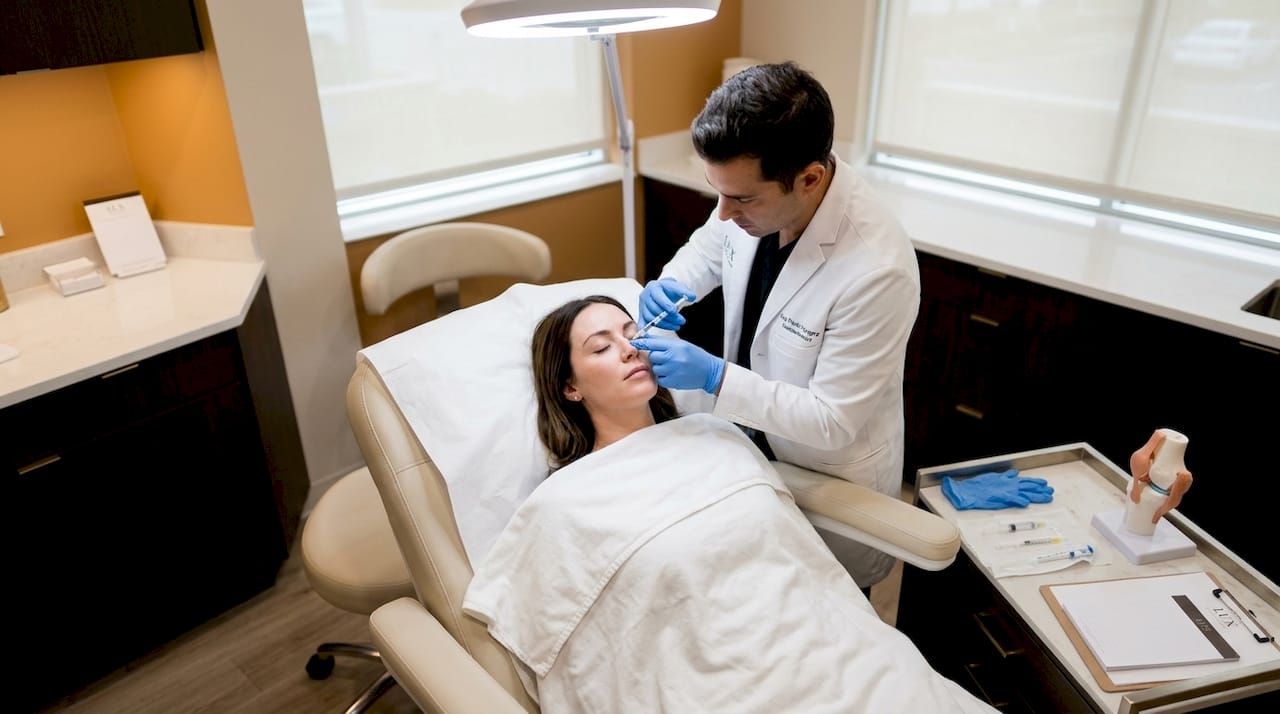
The choice of hyaluronic acid as the standard filler material is deliberate. HA fillers are reversible using an enzyme called hyaluronidase, which dissolves the filler rapidly if a complication arises or if the patient wishes to return to their baseline. This reversibility is a significant clinical advantage over permanent or semi-permanent filler materials, which carry a higher long-term risk profile.
Injection technique matters considerably in this procedure. Skilled practitioners use slow, controlled injection with a thorough understanding of nasal vascular anatomy. The nose connects to the ophthalmic artery, meaning a misplaced injection carries the risk of vascular occlusion. To reduce this risk, advanced practitioners now use ultrasound guidance to map arteries before injecting, allowing them to identify safe pathways specific to each patient’s anatomy.
What the procedure involves, step by step
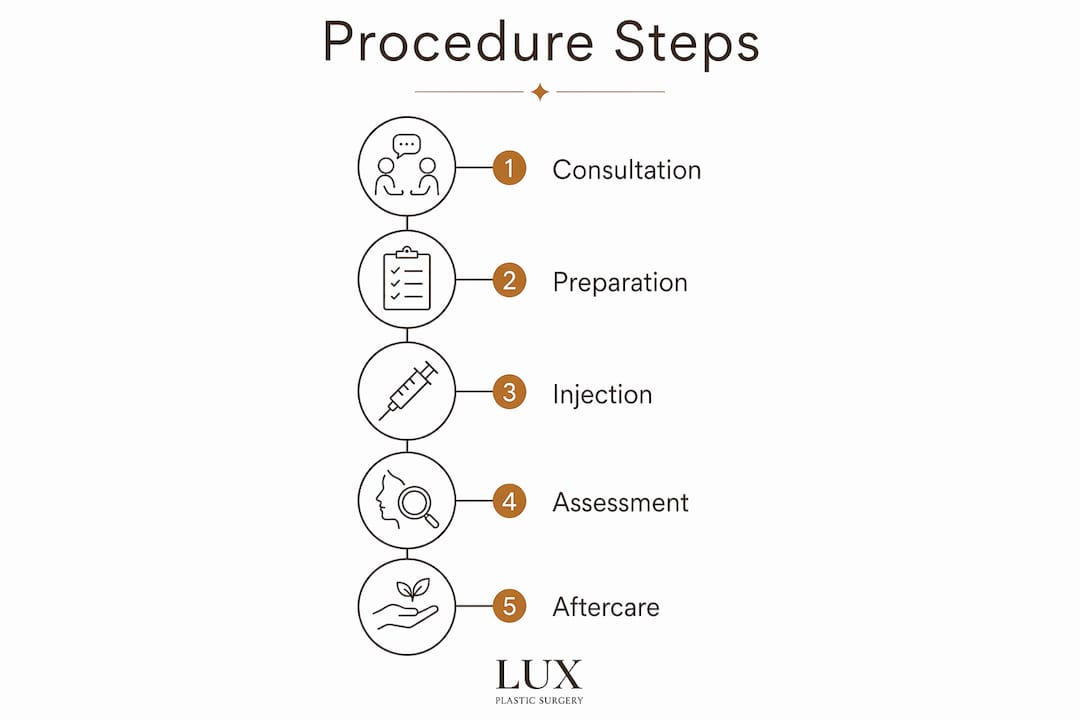
A well-conducted non-surgical rhinoplasty follows a structured sequence:
- Initial consultation: A face-to-face assessment of nasal anatomy, skin quality, and aesthetic goals. This is now a legal requirement under UK prescribing regulations.
- Topical anaesthesia: A numbing cream is applied to the treatment area to minimise discomfort.
- Injection: Small quantities of HA filler are placed at precise anatomical points, such as the radix (bridge), dorsum, or tip, depending on the correction required.
- Moulding: The practitioner gently shapes the filler immediately after injection to achieve the desired contour.
- Review: The patient is assessed for symmetry, vascular response, and patient satisfaction before leaving the clinic.
Pro Tip: Ask your practitioner whether they use ultrasound guidance for nasal injections. Clinics that invest in this technology demonstrate a higher standard of clinical care and a measurable commitment to patient safety.
Standardised protocols reduce variability in outcomes across practitioners with different levels of experience. Research confirms that structured injection techniques yield consistent results, though better aesthetic outcomes remain linked to higher injector expertise. This is why selecting a practitioner with formal training in facial anatomy, rather than simply a cosmetic certificate, is clinically significant.
Who is suitable for a non-surgical nose job?
Non-surgical rhinoplasty is appropriate for patients with mild nasal contour irregularities who do not require structural change. The procedure corrects minor defects such as a dorsal hump, low radix, or mild asymmetry by adding volume strategically to create the visual impression of a smoother, more proportionate nose.
Suitable candidates typically share the following characteristics: they are in good general health, have realistic expectations about what fillers can achieve, and understand that the results are temporary. Patients who want to reduce the overall size of their nose, correct a severely deviated septum, or achieve permanent structural change are not suitable for this procedure. Those goals require surgical rhinoplasty.
The results of non-surgical nose enhancement are immediate. Patients leave the clinic with visible changes on the same day. However, the longevity of those results depends on the filler product used, the volume injected, and individual metabolic factors.
Expected results by filler type
| Filler type | Typical duration | Best suited for |
|---|---|---|
| Standard HA filler | 6–12 months | Dorsal hump camouflage, radix augmentation |
| Higher-density HA filler | 12–18 months | Tip refinement, structural support |
| Collagen-stimulating filler | 18–24 months | Gradual volume building (less common in nose) |
| Permanent filler | Indefinite | Not recommended due to complication risk |
Patient satisfaction with non-surgical rhinoplasty is high when expectations are well-managed. The procedure does not narrow the nose, reduce nostril size, or correct breathing difficulties. Patients who understand these limitations before treatment report significantly better outcomes. A thorough consultation, such as those conducted at Lux Plastic Surgery, is the most reliable way to establish whether this procedure matches your goals. You can read more about what to expect from facial procedure steps in the clinic’s patient guide.
What are the risks and safety considerations?
The nose is one of the highest-risk sites for injectable filler in the face. Its vascular anatomy connects directly to the ophthalmic artery, and a misplaced injection can cause vascular occlusion, leading to tissue necrosis or, in rare cases, vision loss. Complication rates from published data include vascular occlusion at 0.35%, vision loss at 0.09%, skin necrosis at 0.08%, and infection at 0.07%. These figures are low in absolute terms, but the consequences of the rarer complications are severe and irreversible.
Understanding these risks does not mean avoiding the procedure. It means choosing the right practitioner and the right clinical environment. The most significant risk-reduction strategy available today is ultrasound imaging before injection, which maps each patient’s unique arterial anatomy and allows the practitioner to plan safe injection pathways. This technology also improves the accuracy of hyaluronidase delivery if a vascular event occurs, reducing the amount of enzyme needed and limiting tissue damage.
Common, less serious side effects include temporary swelling, bruising, redness, and tenderness at the injection site. These typically resolve within 5–7 days. Asymmetry or filler migration is also possible and may require a correction appointment.
Key safety checks before proceeding
- Confirm the practitioner holds a statutory registration with the GMC, NMC, or GPhC.
- Verify voluntary accreditation with the Joint Council for Cosmetic Practitioners (JCCP) or Save Face.
- Confirm the consultation is conducted in person, not remotely.
- Ask whether hyaluronidase is available on-site for emergency filler reversal.
- Check that the clinic holds appropriate medical indemnity insurance.
Pro Tip: The Save Face register is a government-approved accreditation service for non-surgical cosmetic treatments. Searching for your practitioner on the Save Face website takes under two minutes and provides meaningful assurance about their qualifications and complaints record.
Selecting a qualified practitioner is the single most effective safety measure available to you. The guidance on choosing a cosmetic specialist published by Lux Plastic Surgery outlines the specific credentials and questions to ask before committing to any injectable treatment.
How does non-surgical rhinoplasty compare to surgical rhinoplasty?
Non-surgical and surgical rhinoplasty address different patient needs. Neither is universally superior. The right choice depends on the degree of correction required, the patient’s tolerance for downtime, and whether permanent structural change is the goal.
Non-surgical rhinoplasty offers reduced invasiveness, faster recovery, reversibility, and fewer complications compared to surgery. Surgical rhinoplasty remains the gold standard for major corrections, including septal deviation, significant size reduction, or tip reconstruction. Surgery produces permanent results; fillers do not.
| Feature | Non-surgical rhinoplasty | Surgical rhinoplasty |
|---|---|---|
| Procedure time | 15–30 minutes | 2–4 hours |
| Anaesthesia | Topical | General or local |
| Recovery time | 1–3 days (minor swelling) | 2–4 weeks |
| Results | Immediate, temporary | Permanent (after swelling resolves) |
| Reversibility | Yes, via hyaluronidase | No |
| Structural change | No | Yes |
| Typical UK cost range | £300–£800 per session | £4,000–£8,000+ |
| Complication profile | Low, but includes vascular risk | Higher surgical risk, longer-term outcomes |
Cost is a practical consideration for many patients. Non-invasive nose reshaping costs considerably less per session, but the results require maintenance every 6–18 months. Over five years, the cumulative cost of repeat filler treatments may approach or exceed the cost of a single surgical procedure. Patients weighing long-term value should factor this into their decision.
For patients who are uncertain about surgery, non-surgical rhinoplasty can serve as a useful interim step. It allows you to experience a changed nasal profile before committing to a permanent surgical result. Professor Hindocha advises patients at Lux Plastic Surgery to consider this sequencing carefully during their consultation, particularly if they have not previously altered their nasal appearance. You can explore the full range of rhinoplasty options available at the clinic to understand where each approach fits.
What are the current UK regulations for non-surgical rhinoplasty?
UK regulation of non-surgical aesthetic procedures has tightened considerably since 2024, and 2025 brought a significant change that directly affects patients seeking injectable treatments. From 1 june 2025, remote prescribing for elective non-surgical cosmetic procedures is prohibited under NMC guidelines. This means a prescriber must see you in person before any injectable treatment, including hyaluronidase for filler reversal, can be authorised.
The JCCP and NMC require face-to-face consultations and strict prescribing standards for all ongoing injectable treatments. Patients who receive repeat treatments must have regular in-person reviews rather than remote sign-offs. This regulation exists because remote prescribing was identified as a patient safety risk, particularly where complications were not being assessed in person.
As of 2026, standard facial fillers are not regulated by the Care Quality Commission (CQC) in the same way that surgical procedures are. A licensing scheme is expected but has not yet been enforced. This regulatory gap means patients cannot rely on CQC registration alone as a safety indicator for filler treatments.
What to look for in a compliant UK clinic
- Statutory practitioner registration: GMC, NMC, or GPhC.
- Voluntary accreditation: JCCP or Save Face.
- Mandatory in-person consultation before any prescription is issued.
- Written consent and a cooling-off period before treatment.
- Clear aftercare protocols and access to emergency reversal agents.
Valid trust indicators in the current regulatory environment are statutory registration and voluntary accreditation, not CQC registration alone. Patients should ask directly for evidence of these credentials before booking any injectable treatment. The Lux Plastic Surgery guide on selecting cosmetic procedures safely provides a practical checklist for navigating this process.
Key takeaways
Non-surgical rhinoplasty is a temporary, injectable procedure that suits mild nasal irregularities but cannot replace surgery for structural or permanent corrections.
| Point | Details |
|---|---|
| Procedure definition | HA fillers reshape the nose temporarily without incisions or general anaesthesia. |
| Patient suitability | Best for mild contour issues such as dorsal humps or asymmetry, not major structural change. |
| Safety and risk | Vascular occlusion is rare but serious; ultrasound guidance and qualified practitioners reduce this risk. |
| UK regulation | From june 2025, in-person consultations are legally required before any injectable cosmetic prescription. |
| Surgical comparison | Surgery offers permanent structural results; fillers offer reversibility and lower upfront cost with ongoing maintenance. |
Professor Hindocha’s perspective on non-surgical rhinoplasty
The most common misconception I encounter is that non-surgical rhinoplasty is a straightforward, low-stakes procedure because it does not involve a scalpel. That framing concerns me. The nose is anatomically one of the most demanding injection sites in aesthetic medicine. The vascular connections are complex, the margin for error is narrow, and the consequences of a serious complication can be permanent.
What has genuinely improved patient safety in recent years is the adoption of ultrasound guidance. When I assess a patient’s nasal anatomy before injection, I am not working from a textbook diagram. I am looking at their specific arterial layout, which varies meaningfully between individuals. That level of precision changes the risk profile of the procedure in a meaningful way.
I am also encouraged by the regulatory direction the UK is taking. The ban on remote prescribing is a necessary step. Patients deserve to be seen, assessed, and counselled in person before any injectable treatment is authorised. A video call is not a clinical consultation.
Where I would push back against conventional wisdom is on the idea that non-surgical rhinoplasty is always the “safe first step” before surgery. For some patients, it is exactly that. For others, particularly those with significant structural concerns, it delays the conversation they actually need to have. The role of a thorough consultation is to distinguish between those two groups honestly, without bias toward any particular treatment pathway.
The procedure has a legitimate and growing place in aesthetic medicine. Used correctly, with proper patient selection and clinical governance, it delivers real value. Used carelessly, it carries risks that are disproportionate to its apparent simplicity.
— Lux
Considering non-surgical nose enhancement? Speak to an expert
Lux Plastic Surgery offers personalised assessments for patients considering both surgical and non-surgical facial procedures, led by Professor Sandip Hindocha, FRCS (Plast), GMC-registered Consultant Plastic Surgeon and NHS Clinical Director. Every consultation is conducted in person, in full compliance with current UK prescribing regulations, and is tailored to your anatomy and aesthetic goals rather than a standard treatment menu.

Whether you are weighing a non-invasive nose reshaping against surgical rhinoplasty, or simply want an expert opinion on what is achievable, a consultation with Professor Hindocha provides the clinical clarity you need. You can also read the clinic’s overview of non-surgical aesthetic treatments and the broader guide to plastic surgery options and safety before your appointment. Book your consultation directly through Lux Plastic Surgery’s website.
This article is for informational purposes only and does not constitute medical advice. Consult a GMC-registered specialist before proceeding with any cosmetic procedure.
FAQ
What is non-surgical rhinoplasty?
Non-surgical rhinoplasty is an injectable procedure using hyaluronic acid fillers to temporarily reshape the nose without surgery. Results are immediate, reversible, and typically last between 6 and 18 months depending on the filler used.
How long does non-surgical rhinoplasty last?
Results typically last 6–18 months, depending on the filler density and individual metabolism. Maintenance appointments are required to sustain the effect.
Is non-surgical rhinoplasty safe?
The procedure carries a low overall complication rate, but the nose is a high-risk injection site due to its connection with the ophthalmic artery. Choosing a practitioner with statutory registration and ultrasound guidance capability significantly reduces risk.
What can non-surgical rhinoplasty not correct?
The procedure cannot reduce the overall size of the nose, correct a deviated septum, or produce permanent structural change. Patients with these goals require surgical rhinoplasty.
How much does non-surgical rhinoplasty cost in the UK?
Costs typically range from £300 to £800 per session in the UK, depending on the clinic, practitioner experience, and filler volume used. Surgical rhinoplasty costs considerably more but produces permanent results without the need for repeat treatments.