Medically reviewed by Professor Sandip Hindocha, GMC-registered Consultant Plastic Surgeon and NHS Clinical Director. Articles are reviewed against current UK guidance from the GMC, BAAPS, BAPRAS and NICE.
TL;DR:
- Most people believe anaesthesia simply involves “sleep,” but it actually includes pain control, monitoring, and airway management. The choice among general, sedation, or local anaesthesia depends on procedure complexity, patient history, and recovery priorities, with safety improved through continuous monitoring and assessment. Proper preoperative communication and understanding of anaesthesia options empower patients to have safer, more confident surgical experiences.
Most people think of anaesthesia as simply “going to sleep” before an operation. That misunderstanding is worth correcting before you book anything. The role of anaesthesia in cosmetic surgery is far more sophisticated than sedation alone. It encompasses pain control, physiological monitoring, airway management, and recovery planning. The anaesthesiologist is not a background figure; they are a clinical co-pilot for your entire procedure. This guide explains every major aspect of anaesthesia in cosmetic surgery, so you can walk into your consultation with confidence rather than anxiety.
Key takeaways
| Point | Details |
|---|---|
| More than sleep | Anaesthesia controls pain, muscle relaxation, consciousness, and vital sign monitoring throughout surgery. |
| Three main types | General anaesthesia, conscious sedation, and local or regional anaesthesia each suit different procedures. |
| Safety is proactive | Pre-operative assessment and continuous monitoring significantly reduce anaesthesia-related complications. |
| Type affects recovery | Local anaesthesia and sedation typically allow faster discharge and fewer side effects than general anaesthesia. |
| Personalised planning | Your medical history, anxiety level, and procedure complexity all shape your anaesthesia plan. |
The role of anaesthesia in cosmetic surgery: an overview
Anaesthesia is not a single drug or a single experience. It is a collection of techniques covering four key functions: analgesia (pain relief), hypnosis (loss of awareness), muscle relaxation, and continuous physiological monitoring. Each function matters independently, and a skilled anaesthesiologist combines them in proportions suited to your specific procedure.
The three primary types used in cosmetic surgery are:
- General anaesthesia. You are fully unconscious, with your airway managed through a breathing tube or laryngeal mask. This is standard for long, invasive procedures such as full abdominoplasty, deep plane facelifts, or combined body contouring. General anaesthesia is standard for any procedure where movement or consciousness would compromise safety or surgical precision.
- Conscious sedation. You remain in a relaxed, drowsy state but can still respond to instructions. It is commonly paired with local anaesthetic injections for procedures like liposuction of a small area or minor facial corrections.
- Local and regional anaesthesia. A specific area is numbed using injected medication. You are fully awake. Regional techniques such as nerve blocks can numb a larger zone, making them suitable for more extensive work without requiring unconsciousness. Monitored anaesthesia care (MAC) combines local anaesthetic with light sedation and continuous monitoring, offering a middle ground for moderate procedures.
Procedure complexity and duration are the primary factors driving that choice. A ten-minute eyelid correction and a five-hour body lift are simply not in the same clinical category. Your surgeon and anaesthesiologist will agree on the most appropriate approach during your pre-operative consultation.
Safety, monitoring, and the anaesthesiologist’s role
The safety of anaesthesia in cosmetic surgery has improved considerably over recent decades, largely because of advances in monitoring technology and patient assessment protocols. Before your procedure, you will undergo a pre-operative evaluation that covers your medical history, current medications, allergies, weight, airway anatomy, and any conditions such as sleep apnoea or cardiovascular disease that could influence the anaesthetic plan.
During surgery, your anaesthesiologist continuously monitors:
- Heart rate and cardiac rhythm via ECG
- Blood oxygen saturation via pulse oximetry
- Blood pressure at regular intervals
- Breathing rate and end-tidal carbon dioxide
- Depth of anaesthesia via bispectral index monitoring in general cases
- Temperature and urine output in longer procedures
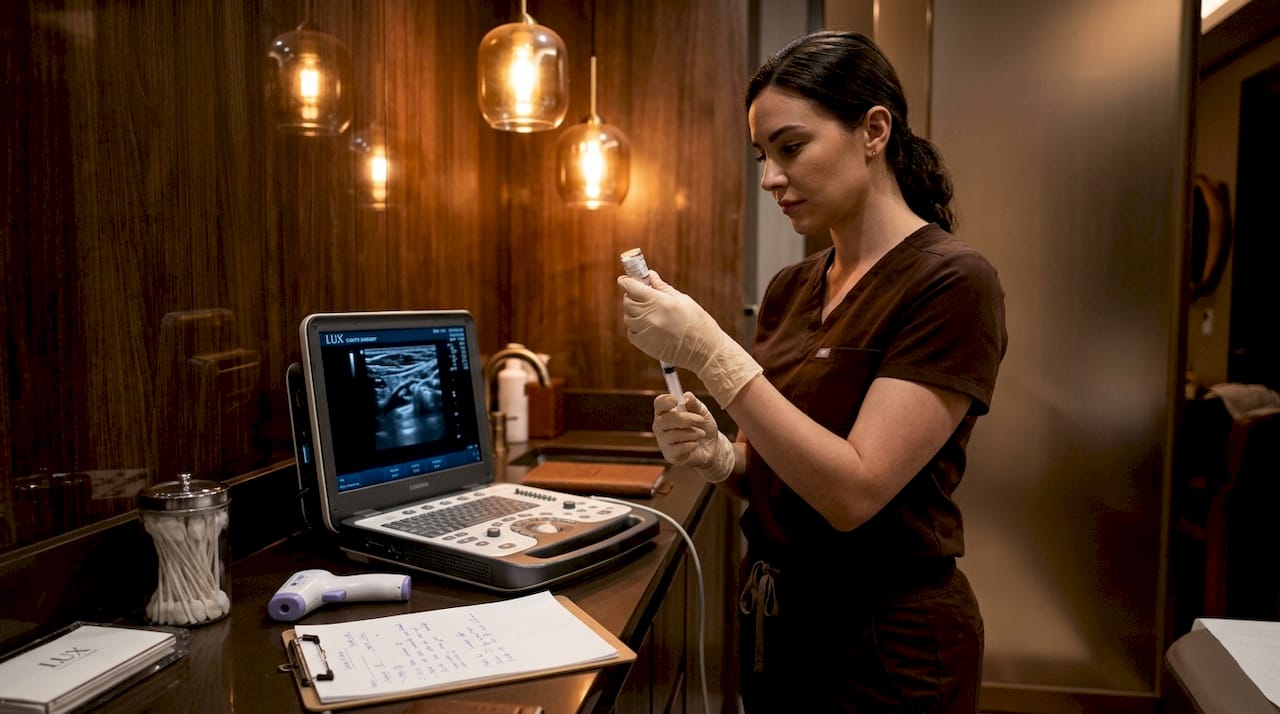
Modern practice also incorporates ultrasound-guided nerve blocks and multimodal analgesia, where several different analgesic medications work together at lower individual doses. This reduces the side effects of any single drug while maintaining excellent pain control. The shift towards what clinicians now call perioperative medicine treats anaesthesia as a thread woven through your entire surgical experience, from the first consultation to the final follow-up, rather than a task performed only in theatre.
Pro Tip: Tell your anaesthesiologist about every supplement and herbal remedy you take, not just prescription drugs. Substances such as garlic, ginkgo biloba, and fish oil can affect bleeding and drug metabolism in ways that matter intraoperatively.
Choosing the right anaesthesia for your procedure
There is no universal anaesthesia plan, and that is entirely by design. The right approach depends on a combination of clinical and personal factors that you and your surgical team work through together. Understanding how that decision gets made helps you ask better questions during your pre-surgical consultation.
Factors that shape your anaesthesia plan include:
- Procedure type and invasiveness. A rhinoplasty typically requires general anaesthesia because of the proximity to the airway. A small area of liposuction may be well managed under local anaesthetic with sedation.
- Procedure duration. Longer surgeries almost always require general anaesthesia to maintain stable conditions and give surgeons freedom to work without patient movement.
- Your medical history. Conditions like obstructive sleep apnoea, heart disease, or obesity require detailed anaesthetic planning and sometimes specialist input before surgery is approved.
- Anxiety levels. If the thought of being awake during surgery feels unbearable, that is a clinically relevant preference. Patient comfort during cosmetic surgery contributes to better physiological responses and more predictable outcomes.
- Recovery priorities. If you need to return to normal activity quickly, the anaesthesia technique matters enormously. Local anaesthetic avoids the systemic effects of general anaesthesia, meaning quicker discharge and recovery.
One notable development worth understanding is Tumescent Local Anaesthesia (TLA). A retrospective study of 1,644 cases of breast augmentation performed under TLA showed no conversion to general anaesthesia and a significant reduction in complications such as nausea. TLA involves infiltrating large volumes of dilute local anaesthetic solution into the target tissue, creating both numbness and a degree of natural tissue separation that aids the surgeon.
For context on how different techniques compare across procedure types, the table below summarises the key differences:
| Technique | Best suited to | Recovery speed | Main advantages | Main limitations |
|---|---|---|---|---|
| General anaesthesia | Long, complex, invasive procedures | Slower | Complete unconsciousness, surgical freedom | Nausea, grogginess, longer monitoring |
| Conscious sedation | Moderate procedures, anxious patients | Moderate | Relaxed without full unconsciousness | Less predictable depth of sedation |
| Local or regional | Minor to moderate, specific area | Fastest | Fewer systemic effects, quick discharge | Not suitable for lengthy or complex cases |
| Tumescent Local Anaesthesia | Liposuction, breast augmentation | Fast | Minimal systemic effects, reduced bleeding | Requires patient cooperation, volume limits |
What to expect during and after anaesthesia
Knowing what happens step by step removes a great deal of uncertainty. On the day of surgery, you will arrive having fasted for the required period. Your anaesthesiologist will review your details, place an intravenous cannula, and explain what to expect. In the operating theatre, monitoring equipment is applied before any medication is given.
The typical sequence for general anaesthesia looks like this:
- Induction: A combination of intravenous drugs renders you unconscious within seconds
- Airway management: A breathing device is placed to protect your airway and deliver anaesthetic gases
- Maintenance: A balance of intravenous and inhaled agents maintains the correct depth throughout surgery
- Emergence: Drugs are reduced towards the end of the procedure so you regain consciousness in a controlled way
- Recovery room: You are monitored until you are stable and comfortable before moving to the ward or discharge lounge
Waking up from general anaesthesia is rarely as dramatic as films suggest. Most people feel groggy, slightly cold, and occasionally nauseous. Patients often experience grogginess and nausea from general anaesthesia, which is why recovery room monitoring is standard before discharge is considered. Anti-nausea medications are routinely given during and after surgery to reduce this. Local or sedation-based anaesthesia avoids most of these effects, which is why same-day discharge is more predictable with those approaches.
The impact of anaesthesia on recovery extends beyond the first few hours. Good pain control in the immediate post-operative period directly influences how well you sleep, how much you move, and how quickly tissues heal. Nerve blocks and multimodal analgesia used intraoperatively can extend pain relief for hours after surgery, reducing the need for opioid medication and its associated side effects.
Pro Tip: For the first 24 hours after general anaesthesia, avoid making important decisions or signing legal documents. Cognitive function recovers more gradually than physical wakefulness, even when you feel fine.
Practical aftercare following surgery plays a direct role in minimising anaesthesia-related complications such as prolonged nausea, dizziness, or delayed wound healing. Staying well hydrated, eating light meals, and following your team’s medication schedule all help your body process residual anaesthetic agents efficiently.
Comparing anaesthesia options: a quick reference
For patients exploring different surgical procedures, understanding how anaesthesia options differ in practice makes the overall decision clearer. The comparison table in the section above captures the four main approaches. The additional layer worth noting is the growing role of awake surgery.
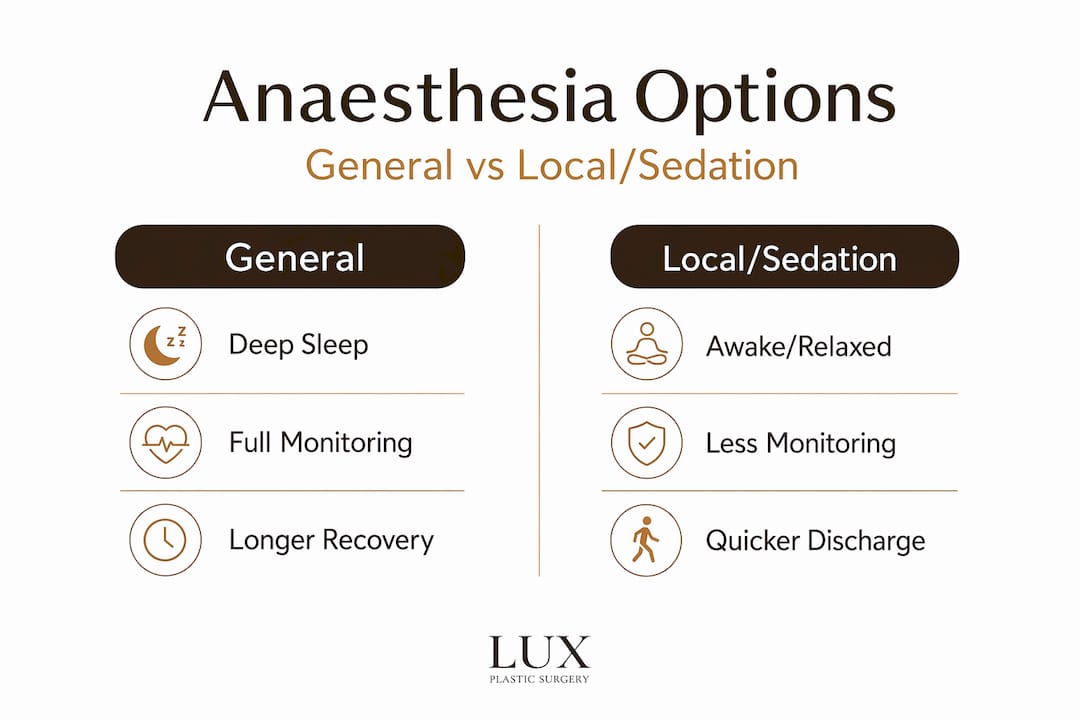
Awake plastic surgery is particularly well suited to patients with comorbidities who face elevated risk under general anaesthesia. For those patients, the ability to have a procedure under local anaesthetic with sedation is not just a convenience. It is a genuinely safer clinical path. That said, general anaesthesia remains the right choice for complex, multi-area, or lengthy procedures where trying to avoid it would compromise the quality of the surgical work.
The temperature of the tumescent solution used in TLA is a practical detail many patients never hear about. Cold solution increases pain and shivering during injection, which disrupts monitoring and patient comfort. Room temperature solution buffered with bicarbonate reduces injection discomfort significantly. This level of clinical detail is precisely why choosing an experienced team matters.
My perspective on anaesthesia and patient confidence
I have seen a consistent pattern over many years of writing about cosmetic surgery. Patients research their surgeon carefully. They look at before-and-after photographs, read reviews, and check credentials. The anaesthesiologist gets almost no attention until the day before surgery. That gap in preparation is a mistake.
In my experience, the patients who have the smoothest recoveries are the ones who treated the pre-operative anaesthesia consultation with the same seriousness they gave the surgical one. They asked about the specific drugs being used, what pain management would look like in the recovery room, and what to do if they felt unwell at home. That conversation builds genuine confidence, not the performative reassurance of “don’t worry, you’ll be fine.”
I have also found that the anxiety around being awake during a procedure is almost always worse than the reality. Patients who chose local or sedation anaesthesia for appropriate procedures are frequently surprised by how manageable and even positive the experience was. The clinical team’s communication during the procedure makes an enormous difference. A good anaesthesiologist narrates what is happening, checks in regularly, and adjusts medications in response to patient feedback in real time.
What I think matters most is this: the perioperative medicine approach transforms anaesthesia from something that happens to you into something that is planned with you. If the clinic you are considering has not mentioned anaesthesia until your admission paperwork, that is worth raising directly.
— Gregg
Plan your surgery with an expert anaesthesia team

At Luxplasticsurgery, every patient receives a personalised consultation that covers both the surgical plan and the anaesthesia strategy. Professor Sandip Hindocha and his team understand that patient comfort during cosmetic surgery is not a side consideration. It is central to achieving the results you are seeking. Whether you are considering a minor facial procedure under local anaesthesia or a complex body contouring procedure requiring general anaesthesia, the team takes the time to explain your options clearly. Explore the full range of cosmetic surgery options available, or review practical guidance on recovery after surgery to understand what your post-operative experience could look like.
FAQ
What are the main types of anaesthesia in cosmetic surgery?
The three primary types are general anaesthesia, conscious sedation, and local or regional anaesthesia. The right choice depends on the complexity and duration of your procedure, as well as your medical history.
Is anaesthesia safe for cosmetic surgery?
Modern anaesthesia is extremely safe when administered by a qualified anaesthesiologist with proper pre-operative assessment and continuous monitoring. Advances in technique including multimodal analgesia and ultrasound-guided nerve blocks have significantly reduced complication rates.
How does anaesthesia affect my recovery time?
Local and sedation anaesthesia generally allow faster discharge and fewer post-operative side effects than general anaesthesia. Your recovery experience will depend significantly on which technique was used and how well your aftercare plan is followed.
Can I be awake during a cosmetic procedure?
Yes. Awake or local anaesthesia is appropriate for many shorter, less invasive procedures. It suits patients who want faster recovery or who have health conditions that increase the risks of general anaesthesia.
What should I tell my anaesthesiologist before surgery?
Disclose all medications, supplements, allergies, previous anaesthetic reactions, and any conditions such as sleep apnoea or heart disease. This information allows your anaesthesiologist to build the safest, most effective plan for your procedure.