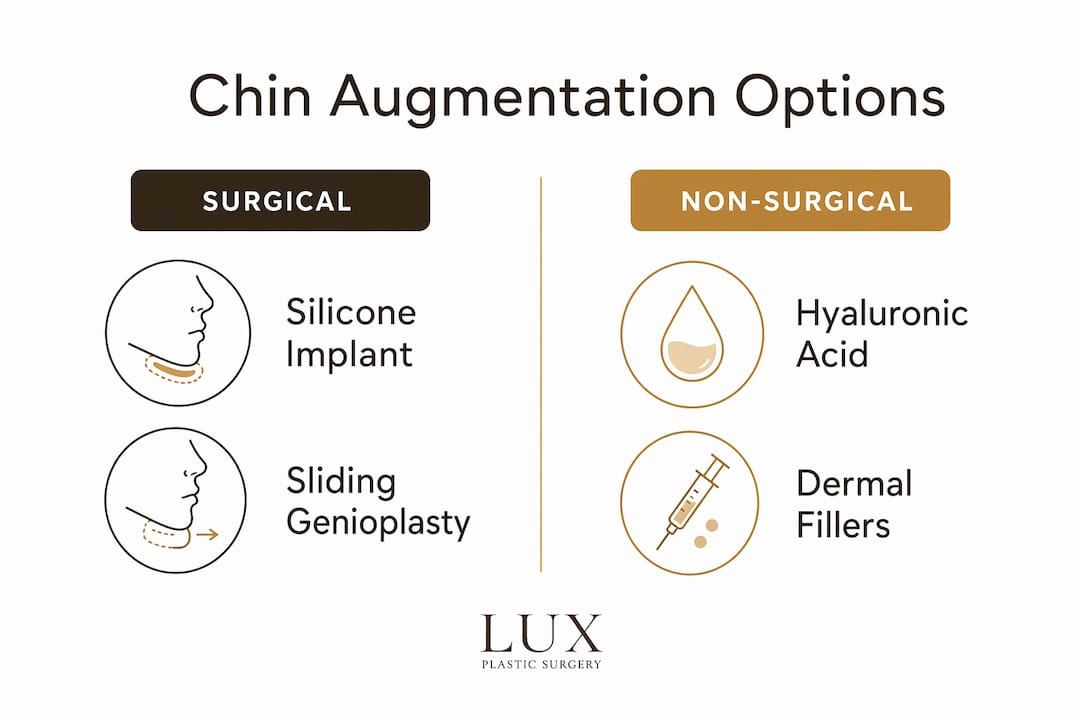
Chin augmentation is a surgical or non-surgical procedure that reshapes, repositions, or adds volume to the chin to improve facial proportion. The goal is not to create a dramatic change in isolation, but to bring the chin into better balance with the nose, cheekbones, and jawline. BAAPS guidance frames the procedure explicitly as a tool for facial harmony, not simply feature alteration. The three main approaches are silicone implants (mentoplasty), sliding genioplasty (bone repositioning), and hyaluronic acid dermal fillers. Each differs in permanence, invasiveness, and the type of correction it can achieve.
At Lux Plastic Surgery, chin enhancement procedures are led by Professor Sandip Hindocha, a GMC-registered Consultant Plastic Surgeon, NHS Clinical Director, and FRCS (Plast) with over 100 published papers. The guidance in this article reflects his clinical approach and UK practice standards.
- Implants add permanent volume and projection without altering the underlying bone
- Sliding genioplasty cuts and repositions the chin bone, allowing adjustment of both projection and vertical height
- Dermal fillers offer a temporary, reversible option with no downtime, lasting roughly 6–18 months
This article is for informational purposes only and does not constitute medical advice. Consult a GMC-registered specialist before making any treatment decision.
Who is a suitable candidate for chin augmentation?
The most common indication is a recessed or underprojected chin, sometimes called microgenia, where the chin sits noticeably behind the vertical plane of the lower lip. Asymmetry and a desire for improved profile definition are also frequent reasons patients seek assessment. MedlinePlus notes that the best candidates for chin augmentation are those with small or receding chins who have a normal bite.
Where jaw alignment is the underlying issue rather than soft tissue or volume alone, a maxillofacial evaluation is advisable before committing to any approach. Surgical candidacy also depends on general health: patients should be non-smokers or willing to stop before surgery, free from uncontrolled medical conditions, and at a stable weight.
Equally important is the psychological dimension. BAAPS emphasises that patients must have a clear idea of what concerns them about their appearance and be able to communicate the changes they want. Realistic expectations, not perfection, are the benchmark for a satisfactory outcome.
- Recessed or underprojected chin (microgenia)
- Facial asymmetry affecting the lower third
- Desire for improved profile or jawline definition
- Normal dental bite (for implant or filler candidates)
- Good general health and non-smoking status
- Psychological readiness and realistic expectations
A formal consultation with Professor Hindocha at Lux Plastic Surgery includes a full facial assessment, photographic analysis, and a frank discussion of which technique, if any, is appropriate.
What are the main chin augmentation options?
Surgical options
Silicone implants (mentoplasty) are placed through a small incision either inside the mouth or beneath the chin. The implant sits over the chin bone and is secured in the soft tissue pocket. The result is permanent and predictable, adding projection and volume without altering the bone itself. Recovery is relatively straightforward compared to genioplasty.
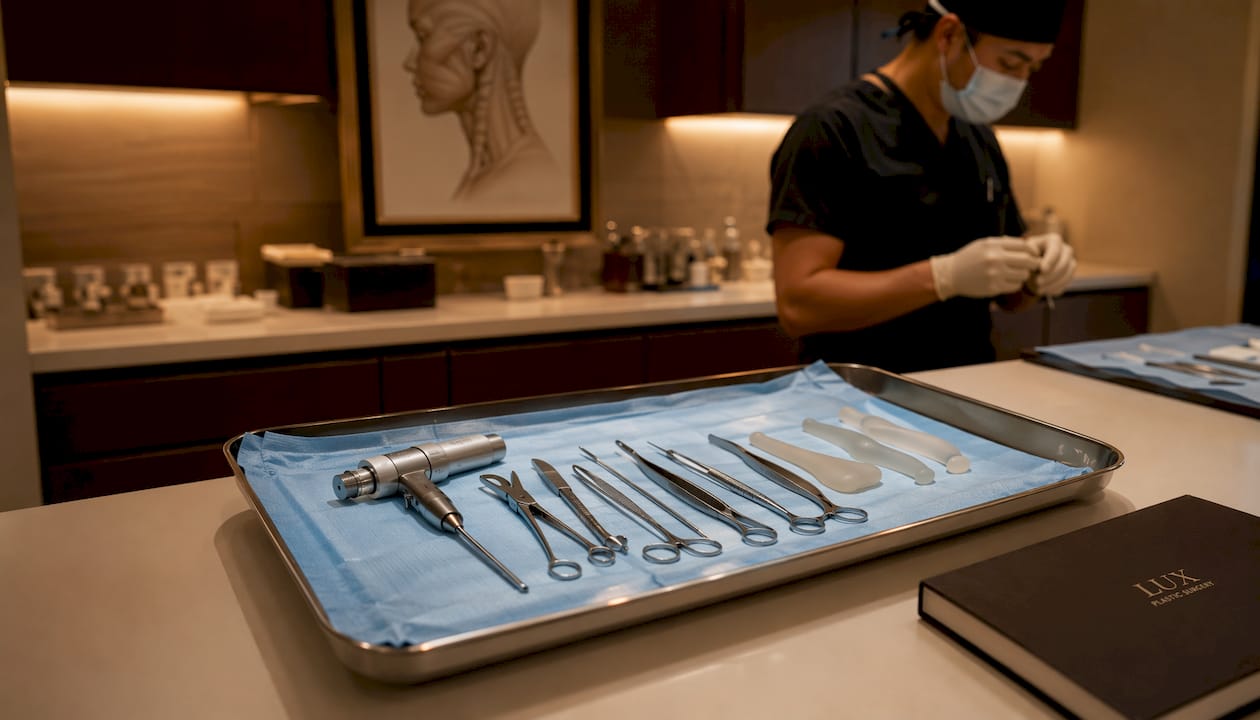
Sliding genioplasty is the more technically involved procedure. The chin bone is cut with a small saw, moved to its new position, and fixed with titanium plates and screws, which remain permanently unless a rare complication requires removal. Unlike implants, genioplasty can adjust vertical height as well as projection, making it the preferred approach for more complex skeletal corrections. BAAPS describes it as the gold standard for skeletal repositioning.
Non-surgical option
Hyaluronic acid dermal fillers are injected into the chin area as an outpatient treatment, taking around 20–30 minutes with no general anaesthetic. Results last a period of months before the filler is naturally absorbed. The procedure is reversible: hyaluronidase can dissolve the filler if the result is unsatisfactory. Many patients use fillers as a trial before committing to surgery.
| Method | Permanence | Invasiveness | Bone correction | Reversible |
|---|---|---|---|---|
| Silicone implant | Permanent | Surgical | No | No (implant removable) |
| Sliding genioplasty | Permanent | Surgical | Yes | No |
| Dermal fillers (HA) | 6–18 months | Non-surgical | No | Yes |
What happens during the procedure?
Surgical chin augmentation
Both implant surgery and genioplasty are typically performed as day-case procedures under general anaesthetic, taking roughly one to two hours depending on complexity.
For implant placement, the surgeon makes a small incision either inside the lower lip or in the natural crease beneath the chin. A pocket is created over the chin bone, the implant is positioned and secured, and the incision is closed with dissolvable sutures. The intraoral approach leaves no visible scar on the skin.
For genioplasty, the operation is carried out from inside the mouth through a cut in the gum on the inside of the lower lip. The chin bone is then cut in a controlled manner, moved to the planned position, and held with small metal plates and screws. Dissolvable stitches close the gum; these typically take a fortnight or longer to fall out.
Non-surgical filler treatment
Filler injections require no anaesthetic beyond a topical numbing cream. The practitioner marks the injection points, administers the filler in small aliquots, and moulds the result. The appointment is usually complete within 30 minutes, and patients can return to normal activities the same day.

What does recovery from chin surgery involve?
Swelling is the most noticeable feature of the early recovery period. It typically peaks on days two and three after surgery and resolves mostly within two weeks, though some residual swelling can persist for several weeks longer. Bruising follows a similar pattern.
Numbness of the lower lip and chin is common after both implant surgery and genioplasty, caused by proximity to the mental nerve. In most cases it resolves gradually over several months, though it can occasionally be permanent. Patients should be counselled on this before consenting to surgery.
Pain is generally manageable with over-the-counter analgesia such as paracetamol or ibuprofen. Most patients describe the discomfort as mild rather than severe. For practical guidance on planning your recovery period, the Lux Plastic Surgery facial surgery recovery guide covers timelines and self-care steps in detail.
- Swelling peaks days 2–3, mostly resolves within two weeks
- Numbness of lower lip: common, usually temporary, occasionally permanent
- Pain: mild, typically controlled with paracetamol or ibuprofen
- Dissolvable stitches: fall out within a fortnight or slightly longer
- Intraoral incisions leave no visible facial scar
- Most patients return to desk-based work within one to two weeks
- Strenuous activity should be avoided for four to six weeks
How much does chin augmentation cost in the UK?
Costs vary considerably depending on the technique chosen, the surgeon’s experience, clinic location, and whether the procedure is combined with other treatments. As a general guide, dermal fillers represent the lowest upfront cost but require repeat treatments every 6–18 months, making them a recurring expense over time. Implant surgery and genioplasty are typically one-off costs, though they carry higher initial fees and the additional expense of anaesthesia and facility charges.
Costs vary by treatment type, with fillers requiring maintenance and implants generally representing a single investment. Surgeon expertise and clinic location are significant factors; prices can vary widely by provider and region.
These figures are indicative. Lux Plastic Surgery provides personalised quotes following a formal consultation, as the final fee depends on the specific procedure plan and any combined treatments.
What are the risks and complications of chin augmentation?
No surgical procedure is without risk, and chin augmentation is no exception. The most frequently cited surgical risks include wound infection, implant displacement, asymmetry, bleeding, and complications related to general anaesthesia. Rarer but more serious risks include deep vein thrombosis and, in the case of implants, capsular contracture or extrusion.
Nerve-related numbness, as noted in the recovery section, is an expected consequence of surgery near the mental nerve. Most patients experience temporary numbness; a small proportion find it persists long-term. Fat necrosis is a rare complication associated with more extensive soft tissue manipulation.
For non-surgical fillers, risks are considerably lower but include bruising, swelling, asymmetry, and, in rare cases, vascular occlusion if filler is inadvertently injected into a blood vessel. This underscores the importance of having filler treatments performed by a qualified, experienced practitioner.
- Infection (surgical and non-surgical)
- Implant displacement or malposition
- Asymmetry of result
- Bleeding or haematoma
- Anaesthesia-related complications
- Nerve numbness (mental nerve proximity)
- Deep vein thrombosis (surgical)
- Vascular occlusion (fillers, rare)
Pro Tip: If you notice increasing redness, warmth, or pain around the chin in the weeks following surgery, contact your surgical team promptly. Early identification of infection or implant-related complications significantly improves outcomes and reduces the likelihood of further intervention.
For a broader overview of how to minimise procedural risk, the Lux Plastic Surgery guide on patient safety in cosmetic surgery is a useful reference.
Professor Hindocha’s perspective on chin augmentation
This philosophy has practical implications for treatment planning. A patient seeking chin projection may benefit more from a combined approach, such as chin augmentation alongside neck liposuction or rhinoplasty, than from chin surgery alone. BAAPS clinical guidance supports this view, noting that combining procedures commonly yields better aesthetic balance.
On the question of implants versus genioplasty, Professor Hindocha’s approach is guided by the degree of skeletal correction required. Implants are well suited to patients who need added projection and volume without bone repositioning. Genioplasty is indicated where vertical height adjustment is needed or where the skeletal discrepancy is more significant — corrections that an implant simply cannot replicate.
- Combined procedures (rhinoplasty, neck liposuction) often produce more harmonious results than chin surgery alone
- Genioplasty is preferred for complex skeletal corrections; implants suit straightforward projection needs
- Numbness during recovery is expected and should be discussed openly before consent
- Realistic expectations about the recovery period, particularly swelling and temporary nerve changes, are central to patient satisfaction
- Lux Plastic Surgery’s assessment process considers the full facial profile, not the chin in isolation
What happens at a consultation, and how should you prepare?
A consultation at Lux Plastic Surgery begins with a detailed discussion of your concerns and goals. Professor Hindocha will ask what specifically bothers you about your chin’s appearance and what outcome you are hoping for. Photographs are taken from multiple angles to support facial analysis, and the relationship between the chin, nose, and jawline is assessed as a whole.
You should come prepared to describe your medical history, any medications you take, and whether you smoke. If you are considering surgical options, you will be asked about previous anaesthetic experiences and any relevant health conditions. Patients are encouraged to bring reference images if they have them, though these are used as a starting point for discussion rather than a blueprint.
The consultation is also the moment to ask questions about recovery, scarring, and what happens if you are unhappy with the result. A reputable surgeon will give you honest answers, including when a procedure is not appropriate for your anatomy or expectations. The jawline surgery guide on the Lux Plastic Surgery website covers the implant and genioplasty options in further detail if you want to read ahead before your appointment.
Before any surgical procedure, you will typically be asked to stop smoking for at least six weeks, avoid aspirin and anti-inflammatory medications that increase bleeding risk, and arrange for someone to accompany you home on the day of surgery. Pre-operative blood tests and an anaesthetic assessment are standard for surgical candidates.
Chin augmentation at Lux Plastic Surgery

For patients who want a consultant-led assessment rather than a clinic-first approach, Lux Plastic Surgery offers something specific: direct access to Professor Sandip Hindocha, whose background spans NHS clinical directorship, over 100 published papers, and a practice built around natural, proportionate results. The assessment process considers the full facial profile from the outset, which means the treatment plan you receive is based on your anatomy, not a standard menu.
Whether you are weighing up fillers as a first step, considering an implant, or want to understand whether genioplasty is appropriate for your degree of skeletal discrepancy, the consultation is the place to get a straight answer. Lux Plastic Surgery operates across Bedford, London, and Manchester, with procedures carried out in accredited facilities under full anaesthetic care.
For a broader overview of what surgical and non-surgical options involve, the plastic surgery explained page covers the full range of procedures available. To arrange a consultation with Professor Hindocha, contact Lux Plastic Surgery directly through the website.
This article is for informational purposes only and does not constitute medical advice. Always consult a GMC-registered specialist before proceeding with any cosmetic procedure.
Key takeaways
Chin augmentation achieves the best outcomes when it is planned as part of a full facial harmony assessment, with the technique chosen to match the degree of skeletal correction required.
| Point | Details |
|---|---|
| Three main techniques | Silicone implants, sliding genioplasty, and hyaluronic acid fillers each suit different correction needs. |
| Genioplasty vs implants | Genioplasty adjusts bone projection and vertical height; implants add volume without altering the underlying bone. |
| Recovery timeline | Swelling peaks days 2–3, mostly resolves within two weeks; numbness of the lower lip is common and usually temporary, but can occasionally be permanent. |
| UK cost range | Fillers cost approximately £400–£800 per session; implants typically £3,000–£5,500; genioplasty £5,000–£8,000. |
| Lux Plastic Surgery | Professor Hindocha leads consultant-level assessments across Bedford, London, and Manchester, with treatment plans based on full facial analysis. |
FAQ
How long does chin augmentation last?
Silicone implants and sliding genioplasty produce permanent results. Hyaluronic acid fillers last approximately 6–18 months before the body gradually absorbs them, requiring repeat treatment to maintain the effect.
What are the risks of chin augmentation?
Surgical risks include infection, bleeding, implant displacement, asymmetry, and anaesthesia complications. Numbness of the lower lip is common after both implant surgery and genioplasty due to proximity of the mental nerve, and can occasionally be permanent.
How much are chin implants in the UK?
Silicone chin implant surgery typically costs between £3,000 and £5,500 in the UK, depending on surgeon experience, clinic location, and whether the procedure is combined with other treatments. Genioplasty generally ranges from £5,000 to £8,000.
Is a chin implant better than filler?
Neither is universally better; the right choice depends on the degree of correction needed and whether you want a permanent result. Fillers suit patients wanting a temporary, reversible option or a trial before surgery. Implants are preferable when a lasting increase in projection is the goal and the bite is normal. Genioplasty is indicated for more complex skeletal corrections that neither fillers nor implants can address.
Is chin augmentation suitable for men?
Yes. Male chin augmentation follows the same surgical principles, though the aesthetic goals differ: a stronger, more angular projection is typically the aim rather than the softer contour often preferred in female patients. The assessment process at Lux Plastic Surgery accounts for these differences in facial proportion from the outset.