The most important step in mole removal happens before anyone picks up a blade: working out whether the mark in question is a harmless mole at all. Most are. A few aren’t, and the method used to remove one depends on which it is.
That’s why a good clinic examines the mole first, chooses the technique to suit it, and sends anything with a clinical question mark for laboratory analysis.
Here’s what mole removal involves, how the methods differ, what it costs privately in the UK, and when the NHS may help.
Key takeaways
| Point | Details |
|---|---|
| Check first | A mole that changes, bleeds, itches or looks unusual should be seen by a GP before any private removal. |
| Method matters | Surgical excision gives a sample for analysis. Laser and freezing destroy the tissue, so there is nothing to test. |
| Every method scars | Scars vary by method and location, and take months to settle. |
| Typical private cost | Roughly £250 to £500 per mole, depending on method and whether laboratory analysis is included. |
| NHS funding | Harmless moles are not usually removed on the NHS for appearance. Suspicious moles are. |
What mole removal is, and when it’s needed
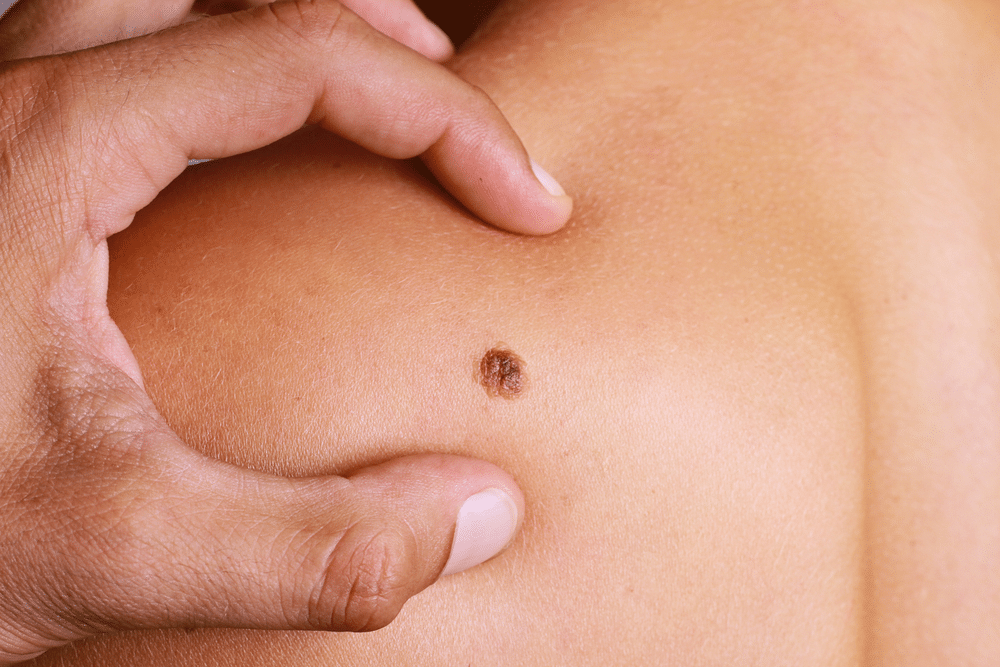
Mole removal takes out a pigmented skin growth for cosmetic or medical reasons. Cosmetic reasons include a mole that catches on clothing, shaving or jewellery, or one that simply bothers you. Medical reasons mean a doctor wants it examined.
According to NHS guidance on moles, you should see a GP if a mole changes size, shape or colour, is painful or itchy, is inflamed, bleeding or crusty, or if a new or unusual mark hasn’t gone away after a few weeks.
Moles are also easily confused with other small skin lesions, which is covered in how skin tags and warts differ and are treated.
How moles are removed
The method is chosen to suit the mole, its depth and its position. Most are done in clinic under local anaesthetic, a form of minimally invasive surgery that doesn’t need a hospital stay.
Surgical excision
The mole is cut out, usually with a small margin, and the wound closed with stitches. This is the method that gives a complete sample for laboratory analysis, so it is the usual choice when there is any doubt about the mole.
Shave removal
Raised moles can be shaved level with the skin. It leaves no stitches and heals as a graze, but some pigment can be left behind and the mole may regrow, so it suits certain clearly harmless moles only.
Laser and cryotherapy
Both destroy the mole tissue, which means nothing is left to send for analysis. Because of that, they are generally reserved for lesions a doctor is already confident are harmless.
Mole removal cost and NHS funding
Private mole removal in the UK is commonly quoted at roughly £250 to £500 per mole. Simple shave removal sits at the lower end, while surgical excision with stitches and laboratory analysis sits higher, and central London specialist clinics can charge more. Professor Hindocha’s fee is quoted individually in writing after consultation.
Ask whether the quote covers the consultation, the laboratory analysis and aftercare, as these are sometimes charged separately. Many clinics reduce the price when several moles are removed in one visit.
On the NHS, a suspicious mole is removed and tested at no cost. Harmless moles are not usually treated for appearance, and one local NHS policy on benign skin lesions says removal is only considered for specific problems such as regular bleeding, repeated infection or pain. Policies vary by area.
Recovery and scarring
You can usually go home straight away. Stitches, if used, are typically removed after a week or two, and your clinic will explain how to keep the wound clean and protected in the meantime.
Every method leaves some mark, and a scar takes months to settle. How to minimise scarring after surgery covers sun protection and scar care. Tell your surgeon beforehand if you have ever had keloid scars.
How Lux Plastic Surgery approaches mole removal
Professor Sandip Hindocha, FRCS (Plast), GMC-registered Consultant Plastic Surgeon and NHS Clinical Director, examines each mole first and chooses the method to suit it. Anything with a clinical concern is sent for analysis after removal. Consultations take place at clinics in Bedford, London, and Manchester.
You can read more about the mole removal service or send an enquiry through the contact page.
This article is for general information only and does not constitute medical advice. Prices are indicative and vary by clinic and method, so always request a written quote. If a mole has changed, see your GP.
FAQ
How much does mole removal cost in the UK?
Private mole removal is commonly quoted at roughly £250 to £500 per mole, depending on the method, the clinic and whether laboratory analysis is included.
Does mole removal leave a scar?
Yes, every method leaves some mark. Its size and appearance depend on the method, the mole’s depth and its position on your body.
Is mole removal painful?
The area is numbed with local anaesthetic, so you should feel pressure but not pain. Mild soreness afterwards is normal.
Can a mole grow back after removal?
It can, particularly after shave removal, where pigment may be left behind. Tell your doctor about any regrowth, especially if it looks unusual.
Can I get a mole removed on the NHS?
Yes if it is suspicious and your GP refers you. Harmless moles are not usually removed on the NHS for cosmetic reasons.