Navigating scar treatments in the UK can feel genuinely confusing. Walk into any chemist and you’ll find shelves stacked with creams, oils, and patches all promising dramatic results, yet the clinical evidence behind many of them is surprisingly thin.
Meanwhile, medical-grade options ranging from steroid injections to laser resurfacing are available through private clinics, but knowing which is right for your specific scar is another matter entirely. This guide cuts through the noise by examining the most trusted scar treatment methods, explaining the science behind each one, and helping you build a realistic plan that suits your skin, your scar type, and your goals.
Key Takeaways
| Point | Details |
|---|---|
| Scar type matters | Each scar type responds best to specific treatments, so choose carefully. |
| Combine methods for results | Combining evidence-based therapies often improves effectiveness and reduces risk of recurrence. |
| Consistency is essential | Long-term commitment to your chosen method is key to seeing visible improvements. |
| Know when to seek help | Professional consultation ensures safe, personalised solutions for complex or persistent scars. |
How to evaluate scar treatment options
Not all scars are equal, and neither are the treatments designed for them. Before choosing any method, it helps to understand what kind of scar you’re dealing with. The main types include hypertrophic scars, which are raised and red but stay within the original wound boundary; keloid scars, which grow beyond it; acne scars, which often appear as pits or rolling texture; and surgical scars, which vary widely depending on technique and healing.
Several personal factors shape how well any treatment will work for you:
- Skin tone: Darker skin tones are more prone to post-inflammatory hyperpigmentation and keloid formation, so certain laser settings or aggressive treatments carry greater risk.
- Scar age: Newer scars (under two years) are often more responsive to treatment than older, fully matured ones.
- Location: Scars over joints or high-movement areas are harder to treat and more prone to widening.
- Sensitivity: Reactive skin may not tolerate certain topical agents or physical treatments without irritation.
Your treatment goals matter too. Some people want to flatten a raised scar, others want to fade discolouration, and some simply want to improve comfort or mobility. Being clear on your objective helps narrow the options considerably. Scar treatments explained in a structured way can make this process far less daunting.
It’s also worth knowing that certain groups carry a higher risk of developing keloid or hypertrophic scars. Those of South Asian or African origin, and people between the ages of 10 and 30, are statistically more susceptible. As early intervention is key for best outcomes, high-risk individuals should act quickly and seek specialist input rather than waiting to see how a scar develops.
Finally, NHS provision covers conservative options such as silicone, steroid injections, and pressure therapy. More advanced procedures are typically available through effective scar treatments offered at private clinics.
Pro Tip: Combining two or more methods, such as silicone sheets alongside massage, often produces better results than relying on a single treatment alone. Adherence to the protocol, not just choosing the right treatment, is frequently the deciding factor in outcomes.
Top scar treatment methods and how they work
Now that you know what to consider, let’s examine the specialist scar treatment methods and how they work.
Silicone gel sheets and gels are among the most well-researched options available. They work by hydrating the scar tissue and regulating collagen production. Silicone gel sheeting improves scar texture, colour, and symptoms in hypertrophic and keloid scars. The catch is commitment: sheets need to be worn for 12 to 24 hours per day, often for several months.
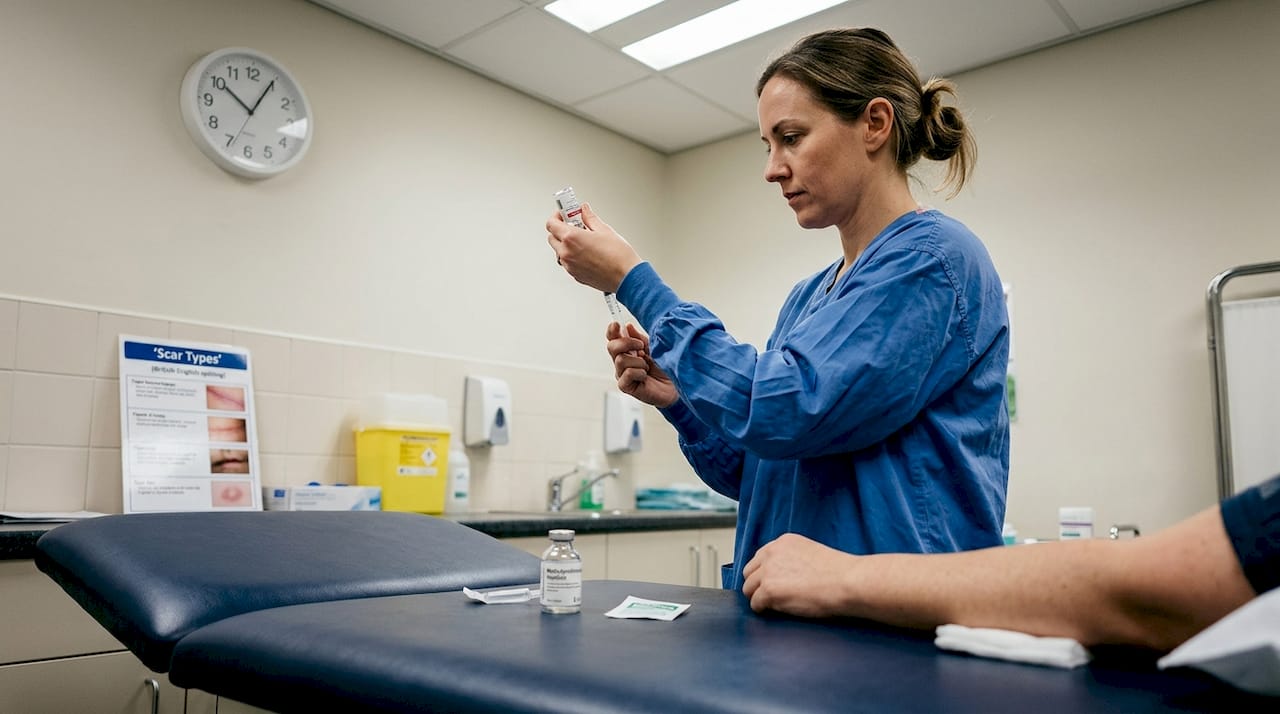
Steroid (corticosteroid) injections are a well-established medical treatment for raised scars. Injected directly into the scar tissue, they break down excess collagen and reduce inflammation. Steroid injections are first-line for keloid and hypertrophic scars on the NHS. Typically three to six sessions are needed, spaced four to six weeks apart, though recurrence is possible after treatment ends.
Scar massage is simple but often overlooked. Using a hypoallergenic moisturiser or oil, gentle circular pressure applied to the scar for five to ten minutes daily can improve texture and pliability. Scar massage with sun protection supports mobility and flatness when started after the wound has fully healed, usually around six to eight weeks post-surgery.
Here’s a quick overview of additional methods:
- Laser therapy: PDL (pulsed dye laser) targets redness; fractional CO2 works on deeper texture changes. Typically three to five sessions at a private clinic.
- Cryotherapy: Freezes keloid tissue, often combined with steroid injections for improved effect.
- Surgery: Reserved for specific cases where other options have failed; not suitable for keloids as it carries a risk of making them worse.
- Sun protection (SPF50+): Essential during scar maturation to prevent permanent discolouration.
Pro Tip: Never start massage or silicone therapy until your wound is completely closed and healed. Applying pressure or occlusive materials to open skin can introduce infection and worsen scarring. For more on scar treatments and how to sequence them properly, consult with a specialist before beginning.
Comparing scar treatments: Effectiveness, risks, and access
With each treatment method outlined, it’s helpful to see how they stack up to help you make an informed choice.
| Treatment | Evidence quality | NHS available? | Typical cost (private) | Main risk |
|---|---|---|---|---|
| Silicone gel/sheets | Moderate to strong | Yes | £20–£80 per month | Skin irritation |
| Steroid injections | Moderate to strong | Yes | £100–£300 per session | Skin thinning, pigmentation |
| Scar massage | Moderate | Yes (self-managed) | Minimal | None if done correctly |
| Laser therapy | Moderate | No | £200–£600 per session | Burns, pigmentation |
| Cryotherapy | Moderate | Limited | £150–£400 per session | Blistering, pigmentation |
| Surgical revision | Variable | Rarely | £1,500–£5,000+ | Recurrence, new scarring |
| Microneedling | Moderate | No | £150–£400 per session | Infection, pigmentation |
As NHS and clinical reviews confirm, the evidence base across all these treatments is moderate rather than definitive, largely because scar studies are difficult to standardise. That does not mean treatments don’t work; it means individual results genuinely vary and realistic expectations matter.
Key considerations when comparing options:
- Time commitment: Silicone requires daily use for months; injections need clinic visits every four to six weeks.
- Tolerance for downtime: Laser and surgery involve recovery periods; topical and massage therapies do not.
- Skin tone and type: Laser skin resurfacing needs to be calibrated carefully for darker skin tones to avoid hyperpigmentation.
- Financial planning: Private treatments can add up quickly; spreading sessions over time can help manage cost.
“The best scar treatment is the one you’ll actually stick to, combined thoughtfully with others where your specialist advises it.”
For complex or raised scars that haven’t responded to conservative measures, scar revision surgery may be an option worth exploring with a qualified surgeon.
Practical decision guide: Which scar treatment is right for you?
Now that the main options and comparisons are clear, here’s a step-by-step guide to choosing what’s realistic for your needs.
- Identify your scar type. Is it raised (hypertrophic or keloid), flat and discoloured, pitted (acne scarring), or textural? Each category has different first-line recommendations.
- Consider the scar’s age. Scars under two years old are generally more treatable. Start conservative methods early for the best chance of improvement.
- Begin with the least invasive option. For most raised scars, that means silicone sheets or gels plus daily SPF50+ protection. Add massage once healing is complete.
- Give it time before escalating. Most topical treatments need at least eight to twelve weeks of consistent use before you can judge their effectiveness. Switching too quickly wastes both time and money.
- Escalate with medical guidance. If conservative measures plateau, speak with a GP or specialist about steroid injections or laser therapy. Lasers are preferred for certain deep scars, microneedling for superficial or darker skin, and treatment combinations work best for complex presentations.
- Consult a specialist if your scar is worsening. Rapidly growing keloids, painful scars, or those restricting movement warrant prompt professional assessment rather than continued self-management.
- Follow your plan consistently. Sporadic use of any treatment produces sporadic results. Build the routine into your daily habits.
Pro Tip: If you have a history of keloid scarring, tell your surgeon or GP before any procedure, including minor ones like mole removal. Planning choosing cosmetic procedures safely from the outset is far easier than managing a difficult keloid after the fact. Ask your clinic about post-procedure scar management protocols before committing to any treatment.
For those ready to move beyond self-managed care, professional scar revision offers access to surgical and non-surgical methods tailored to your specific presentation.
Beyond the surface: What most guides miss about scar treatments
Here’s a truth most scar treatment articles won’t tell you: the treatment itself is rarely the weak link. Adherence is. Silicone sheets need to be worn for 12 to 24 hours a day, every day, for three to six months. Most people manage two or three weeks before slipping. Steroid injections need follow-up sessions at the right intervals. Massage needs to be done daily with proper technique. The protocol demands more consistency than most people expect, and that gap between expectation and reality accounts for a huge proportion of disappointing outcomes.
Another thing worth saying plainly: there is no single remarkable treatment. The most effective outcomes we see come from staged, combined approaches. Silicone plus massage plus sun protection plus, where appropriate, medical intervention. Not one perfect product.
Pursuing “complete removal” of a difficult scar is also a mindset worth challenging. For keloid and hypertrophic scars especially, the realistic aim is meaningful improvement, not perfection. Chasing a flawless result often leads people into unnecessary procedures and, sometimes, recurrence of the very problem they were trying to fix. For in-depth scar treatment advice grounded in clinical reality, a candid conversation with an experienced specialist is worth far more than any online search.
Explore specialist scar and aesthetic treatments
If you’ve worked through this guide and still feel uncertain about your best path forward, that’s a very reasonable place to be. Scar treatment is genuinely nuanced, and individual skin responses vary more than any article can fully account for.
At Lux Plastic Surgery, Professor Sandip Hindocha and the clinical team offer personalised consultations to assess your scar type, history, and goals, then build a realistic, evidence-based plan around your specific needs. Whether you’re exploring scar revision surgery services or browsing the full list of cosmetic treatments available across Bedford, London, and Manchester, expert guidance makes all the difference. Book a consultation and take the guesswork out of your scar care journey.
FAQ
How long does it take for scar treatments to show results?
Most treatments require several months before visible improvement is noticeable. Silicone requires adherence for best results, often over months, with six to twelve weeks being a realistic minimum for any topical approach.
Are NHS scar treatments effective?
Yes, for many scar types they are. NHS provides conservative treatments such as silicone, steroid injections, and pressure therapy, though advanced laser or microneedling options are mostly available through private clinics.
Can you completely remove a scar?
Complete removal is rarely achievable. Most scars can be significantly improved in appearance and texture, but surgical revision available privately does not guarantee the scar will disappear fully, particularly with keloid types.
Are home remedies like vitamin E oil effective?
The evidence is weak. NHS and clinical reviews find little support for vitamin E oil or similar home remedies producing meaningful improvement compared to medical-grade silicone or corticosteroid treatment.