Medically reviewed by Professor Sandip Hindocha, GMC-registered Consultant Plastic Surgeon and NHS Clinical Director. Articles are reviewed against current UK guidance from the GMC, BAAPS and BAPRAS.
TL;DR: Loose or excess skin on the stomach is common after pregnancy, major weight loss, or simply with age, and it happens because stretched skin loses its elastic recoil, not because fat is still present. Diet, exercise, and firming creams can improve muscle tone and very mild skin laxity, but they cannot remove skin that has lost its structure. For moderate to significant excess skin, a tummy tuck or panniculectomy is the only treatment that removes it permanently.
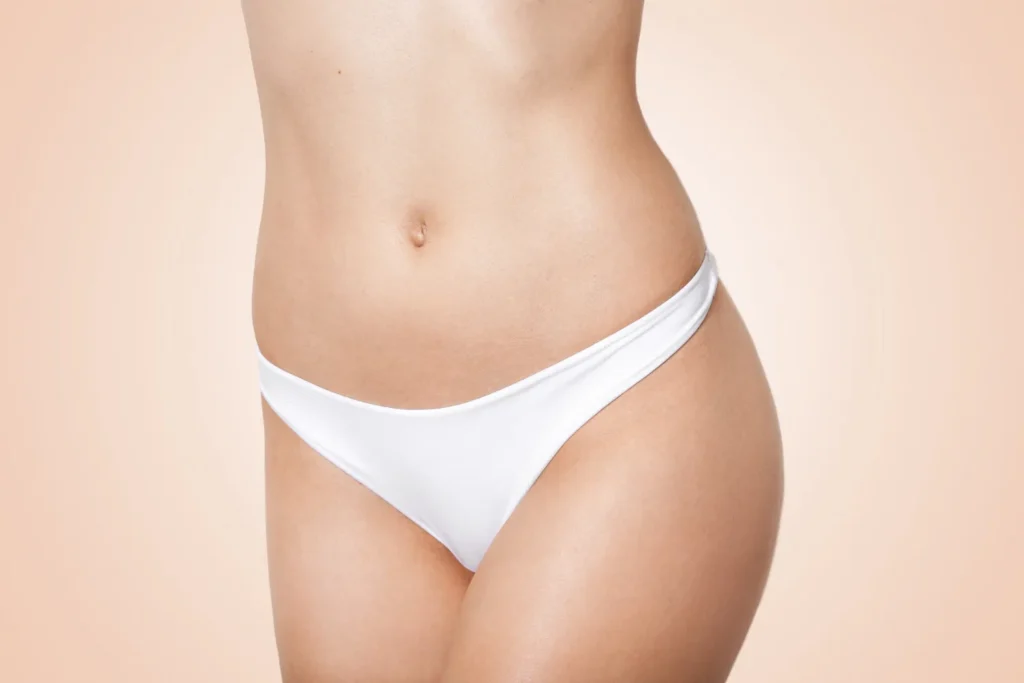
If you’ve been left with loose, hanging skin on your stomach after losing weight, having children, or simply getting older, no amount of sit-ups is going to fix it on its own. Loose stomach skin happens because the skin itself, not just the fat underneath it, has been stretched past the point where it can spring back.
Getting rid of excess skin on your stomach means treating the skin, and for anything beyond mild sagging, that means surgery.
That’s not always the answer people are hoping for, and there are things worth trying first depending on how much skin is involved. This guide covers why stomach skin stays loose, what genuinely helps, and when it’s time to talk to a surgeon about body contouring rather than try another cream or gadget.
Key takeaways
| Point | Details |
| Skin, not just fat | Excess stomach skin remains because collagen and elastin have broken down, not because fat is still present. |
| Exercise tones muscle, not skin | Core training strengthens the muscles under the skin but cannot restore skin elasticity. |
| Non-surgical treatments have limits | Radiofrequency and similar devices modestly tighten mild laxity; they don’t remove a significant overhang. |
| Surgery is the only permanent fix | A tummy tuck or panniculectomy physically removes the excess skin. |
| Timing matters | Waiting until your weight has been stable for several months gives the most reliable result. |
Why does loose skin stay on the stomach

Skin is elastic, but only up to a point. When the abdomen is stretched significantly, whether from pregnancy, weight gain, or carrying extra weight for a long period, the collagen and elastin fibres that give skin its snap-back ability become damaged. Once that structure is lost, the skin doesn’t return to its previous shape even after the fat underneath it is gone.
Pregnancy is one of the most common causes, particularly after carrying a large baby, twins, or more than one pregnancy. Significant weight loss is another, whether through diet and exercise, bariatric surgery, or a prescribed weight loss medication. Generally, the more weight lost and the faster it comes off, the more likely the skin is to be left behind.
Ageing plays a role too, since collagen and elastin production naturally decline over time. That’s why skin laxity tends to increase even without any change in weight. Genetics also matter, since two people who lose the same amount of weight can end up with very different amounts of loose skin.
For a closer look at the more severe end of this, where the excess skin hangs as a distinct fold known as a panniculus, see our guide to apron belly causes and treatment.
Why exercise and creams don’t remove loose skin
This is the part most people don’t want to hear, but it’s worth being straightforward about. Sit-ups, planks, and other core exercises strengthen the abdominal muscles underneath the skin. They do not tighten the skin itself. You can have a strong, flat core and still have a fold of loose skin sitting over the top of it, because the two are entirely different tissues.
Firming creams and lotions containing retinol or caffeine can temporarily improve the surface texture and hydration of the skin, but their effect doesn’t reach deep enough to rebuild collagen structure that has already broken down. The same applies to massage and dry brushing. They may make skin feel smoother, but they will not remove an overhang of excess tissue.
Pro Tip: if you’re still losing weight, hold off on judging your skin until your weight has been stable for several months. Some mild improvement in skin tone happens naturally as swelling settles, even though it won’t resolve a significant overhang.
Non-surgical treatments for mild excess skin
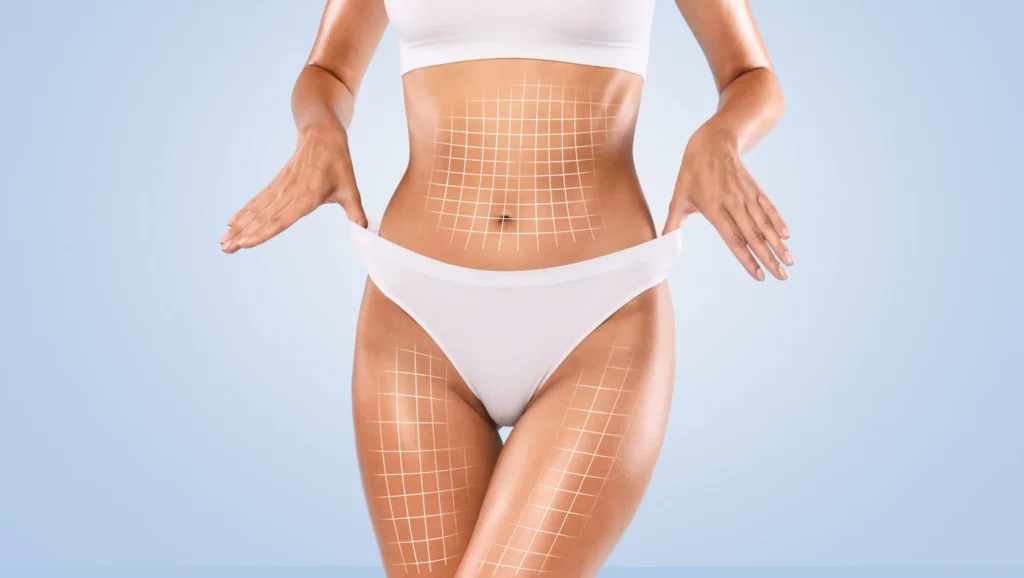
If your skin is lax rather than hanging in a visible fold, a handful of non-surgical treatments can offer a modest improvement:
- Radiofrequency skin tightening. Heats the deeper layers of skin to stimulate some collagen remodelling over a course of sessions. Best suited to early-stage laxity.
- Microneedling with radiofrequency. Combines controlled micro-injury with heat for a similarly modest tightening effect.
- High-intensity focused ultrasound (HIFU). Another energy-based option that can improve mild sagging without surgery.
- Compression garments. Provide support and a smoother silhouette under clothing, without making any lasting change to the skin.
These options are worth exploring if your excess skin is genuinely mild, meaning some looseness rather than a fold that hangs or causes irritation.
If you already know your skin overhangs enough to rub, chafe, or not tuck into clothing, non-surgical treatments are unlikely to get you the result you’re after. It’s worth going straight to a surgical consultation instead.
When surgery is the only way to remove excess stomach skin
Surgery is the only treatment that physically removes excess skin rather than trying to tighten it in place. Two procedures do this: abdominoplasty (tummy tuck) and panniculectomy. Which one applies to you depends on how much skin is involved and whether the abdominal muscles have separated, which a surgeon such as Professor Sandip Hindocha will assess at consultation.
A tummy tuck removes the excess skin and fat, repairs separated abdominal muscles if needed, and repositions the belly button, giving both a functional and a cosmetic improvement. Read more about what a tummy tuck procedure actually involves.
A panniculectomy is a narrower procedure. It removes only the overhanging skin and fat, without muscle repair or navel repositioning, and is typically considered when the priority is relieving skin irritation, infection, or restricted movement rather than reshaping the abdomen.
Cost varies significantly depending on which procedure is appropriate, how much skin needs removing, and whether muscle repair is required, so it isn’t something we’d want to put a single figure on here. Our tummy tuck cost guide breaks down the variables that typically affect price in the UK.
Non-surgical treatments vs surgery for excess stomach skin
| Approach | What it does | Best suited to |
| Diet and exercise | Reduces body fat, strengthens core muscle | Everyone, but won’t remove existing loose skin |
| Firming creams | Improves surface texture and hydration | Very mild, early-stage laxity |
| Radiofrequency / HIFU | Modest collagen stimulation and tightening | Mild laxity without a hanging fold |
| Panniculectomy | Removes excess overhanging skin and fat | Skin irritation, infection, restricted movement |
| Abdominoplasty (tummy tuck) | Removes skin, repairs muscle separation, repositions navel | Moderate to significant excess skin, especially with muscle separation |
Signs it’s time to see a plastic surgeon
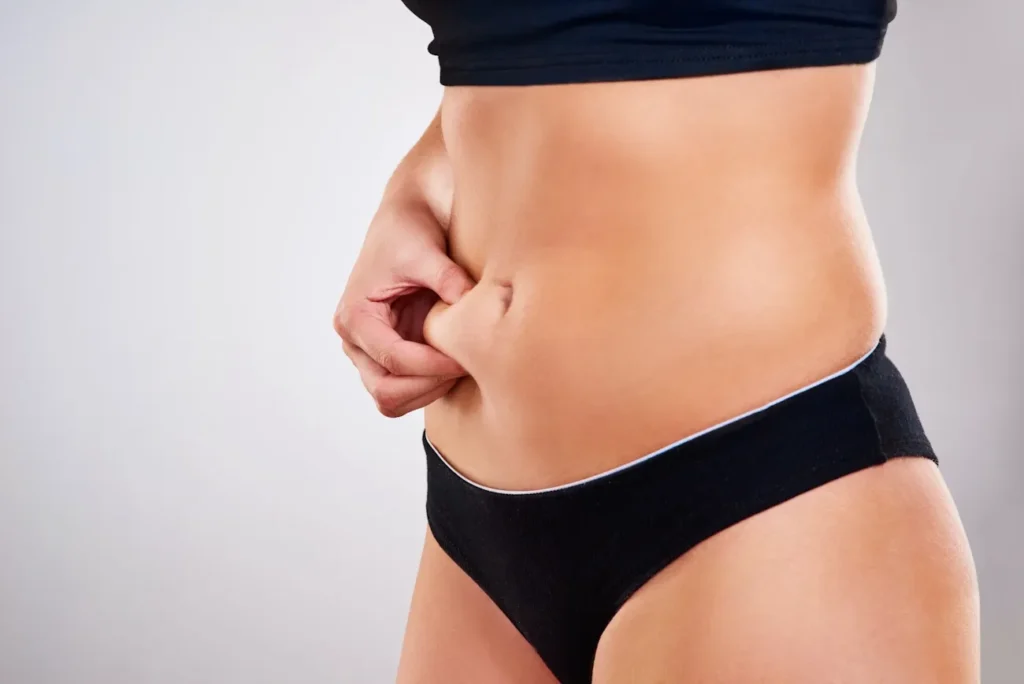
A few signs suggest non-surgical options and lifestyle changes have taken you as far as they can:
- The skin folds over your waistband or underwear regardless of what you wear.
- You get recurring rashes, soreness, or irritation under the fold.
- Your weight has been stable for six to twelve months and the skin hasn’t improved.
- There’s a persistent bulge or dome in your abdomen that exercise doesn’t shift, which can point to separated muscles rather than fat or skin alone.
If any of these sound familiar, it’s worth booking a consultation rather than waiting. Our guide on why patients seek abdominoplasty covers candidacy and recovery in more detail.
My perspective on excess stomach skin
Almost every patient who comes to me about their stomach has already tried everything. Different diets, a personal trainer, months of consistent exercise. They’re not looking for a shortcut, they’re looking for an honest answer about why none of it worked on the skin itself.
The most common misconception I hear is that the skin will eventually catch up if someone just keeps at it a bit longer. For mild cases, there’s some truth to that.
For skin that’s been stretched significantly, by a large baby, a big weight loss, or several years of extra weight, it won’t. That’s not a failure of effort. It’s simply what happens to skin once its structure has broken down.
What I’d encourage anyone in this position to do is get an honest assessment before spending more time and money on treatments that were never going to reach the actual problem. Sometimes that means non-surgical options genuinely are enough. Often, for anyone with a real overhang, it means talking about a tummy tuck or panniculectomy sooner rather than later.
— Lux
How Lux Plastic Surgery can help
Lux Plastic Surgery offers consultant-led assessment and body contouring in Bedford, London, and Manchester, performed by Professor Sandip Hindocha, GMC-registered Consultant Plastic Surgeon and NHS Clinical Director.
Every consultation starts with an honest assessment of your skin, muscle tone, and goals, so you know whether non-surgical treatment, a panniculectomy, or a full tummy tuck is the right fit, rather than being sold whichever is easiest. To discuss your options, book a consultation with Lux Plastic Surgery directly.
This article is for informational purposes only and does not constitute medical advice. Consult a GMC-registered specialist before proceeding with any surgical or non-surgical treatment.
FAQ
How can I get rid of excess skin on my stomach without surgery?
Non-surgical treatments such as radiofrequency, microneedling with radiofrequency, and HIFU can modestly tighten mild skin laxity by stimulating collagen. They don’t remove a genuine overhang of excess skin, which requires a panniculectomy or tummy tuck.
Does losing weight slowly prevent loose stomach skin?
Losing weight gradually gives skin more time to retract and generally results in less laxity than rapid weight loss. It doesn’t guarantee no loose skin, since age, genetics, and how much weight is lost also play a significant role.
What’s the difference between a tummy tuck and a panniculectomy?
A panniculectomy removes only the excess overhanging skin and fat. A tummy tuck (abdominoplasty) also repairs separated abdominal muscles and repositions the belly button, giving a more complete functional and cosmetic result.
Will exercise tighten loose stomach skin?
Exercise strengthens the abdominal muscles underneath the skin and reduces body fat, but it cannot restore elasticity to skin that has already lost its structure. A strong core can sit underneath loose skin without changing its appearance.
How much does it cost to remove excess stomach skin?
Cost depends on which procedure is appropriate, how much skin is removed, and whether muscle repair is needed, so it varies significantly between patients. A consultation is the only way to get an accurate figure for your situation.