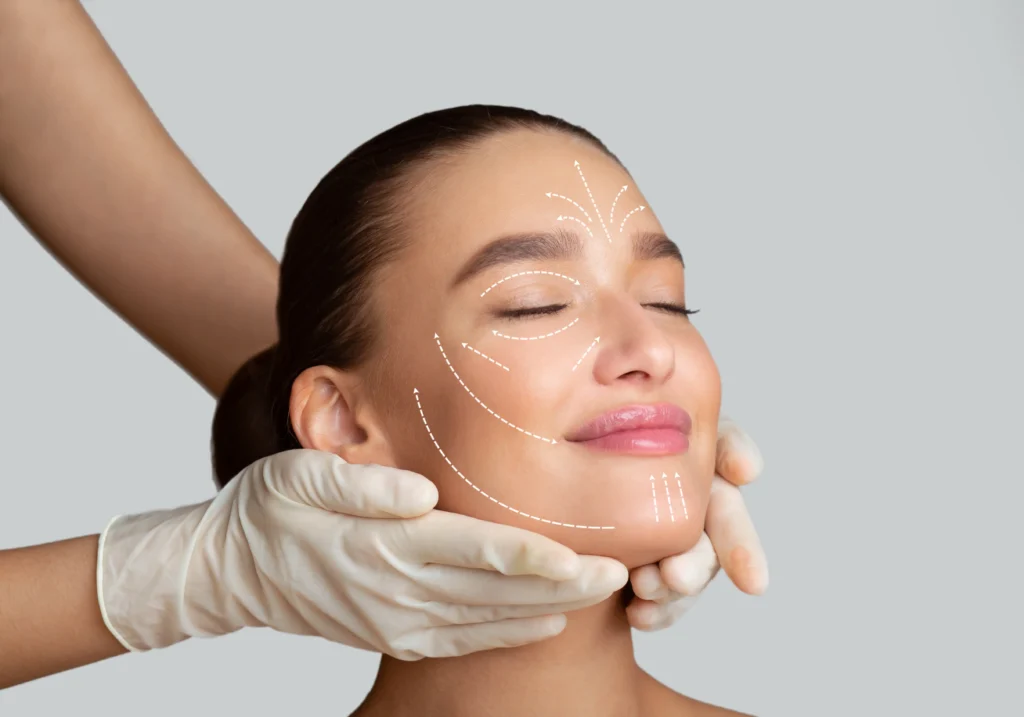
High-intensity focused ultrasound treatment, known clinically as HIFU, is a non-invasive cosmetic procedure that uses focused sound waves to stimulate collagen production for skin tightening and rejuvenation without incisions, lasers, or radiation. Collagen is the structural protein responsible for skin firmness and elasticity, and its gradual decline from the mid-thirties onwards is the primary driver of skin laxity. HIFU addresses this directly by delivering controlled energy to deep skin layers, triggering the body’s own repair response. Regulatory bodies including the NHS and BAAPS recognise focused ultrasound therapy as an established non-surgical option for facial and body rejuvenation. This guide explains how the treatment works, who it suits, what the procedure involves, and what realistic outcomes look like.
How does high-intensity focused ultrasound treatment work?
HIFU delivers focused sound waves to targeted layers beneath the skin surface, generating heat at precise depths without affecting the overlying tissue. The thermal effect triggers a wound-healing response in the dermis and the superficial musculoaponeurotic system (SMAS), the same tissue layer addressed in a surgical facelift. This stimulates the production of new collagen fibres, which gradually tighten and lift the skin over the following weeks and months.
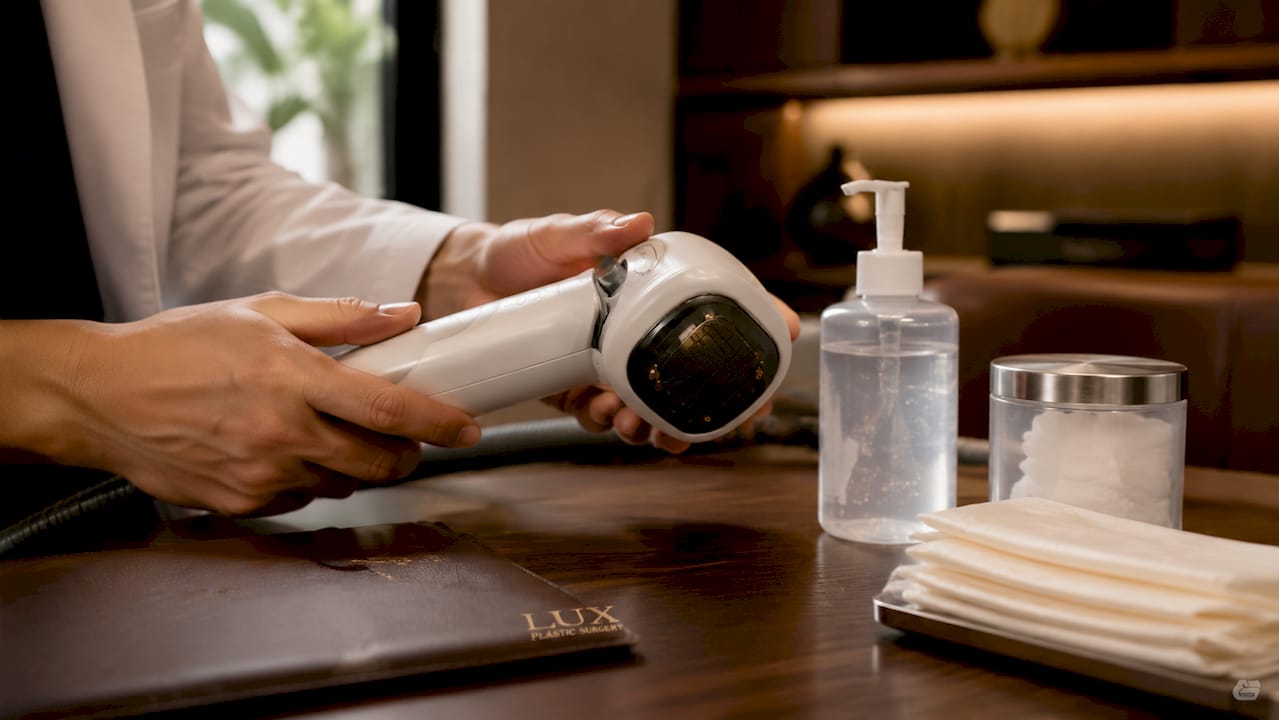
The distinction between cosmetic and medical HIFU is significant. Cosmetic HIFU uses lower energy levels than medical applications such as tumour ablation or neurological treatment. Lower energy stimulates collagen without destroying tissue, which is why the cosmetic version carries a substantially lower risk profile than ultrasound ablation treatment used in oncology.
Modern devices use ultrasound imaging to visualise the treatment area in real time. MR-guided focused ultrasound provides real-time thermal and positional feedback, enabling the practitioner to confirm that energy is reaching the correct depth. This level of monitoring represents a meaningful advance in treatment safety and consistency.
Key features of how focused ultrasound therapy works:
- Sound waves are focused to a precise focal point beneath the skin, much like a magnifying glass concentrates light.
- Heat is generated only at the focal point, leaving surrounding tissue undisturbed.
- The SMAS layer, typically at 4.5 mm depth, and the dermis at 3 mm and 1.5 mm depths are the primary targets.
- Collagen remodelling begins immediately but visible results develop gradually over 2–3 months.
- Imaging guidance allows the practitioner to adjust depth and intensity in real time.
Pro Tip: Ask your practitioner to show you the imaging screen during treatment. Seeing the target depth confirmed in real time is a straightforward way to verify that the device is calibrated correctly for your tissue.
Who is suitable for high-intensity focused ultrasound treatment?
HIFU suits adults who have mild to moderate skin laxity and are beginning to notice the early signs of ageing, typically from the mid-thirties onwards. It is not a replacement for surgical intervention in patients with significant tissue excess or deep structural changes. The ideal candidate has good baseline skin quality and realistic expectations about gradual, natural-looking improvement.
Common treatment areas include the face, jawline, neck, décolletage, and certain body areas such as the abdomen and inner thighs. Patients seeking non-surgical facial rejuvenation often find HIFU a well-tolerated first step before considering more involved procedures. The treatment is also used to maintain results following a surgical facelift.
Certain conditions make HIFU unsuitable. A thorough pre-treatment consultation is the only reliable way to assess individual suitability, and no reputable practitioner should proceed without one.
Contraindications include:
- Active skin infections, open wounds, or cystic acne over the treatment area.
- Implanted electrical devices such as pacemakers or defibrillators.
- Pregnancy or breastfeeding.
- Severe or active inflammatory skin conditions such as eczema or psoriasis over the target zone.
- Metal implants or fillers in the treatment area that could interfere with energy delivery.
- Significant skin laxity that would be better addressed surgically.
Patients who are unsuitable for HIFU may benefit from alternative non-invasive options such as radiofrequency skin tightening, injectable collagen stimulators, or, where laxity is more advanced, a surgical versus non-surgical assessment with a consultant plastic surgeon.
What does the HIFU procedure involve?
HIFU is an outpatient procedure. Sessions typically last 30–90 minutes depending on the size of the area being treated, with a full face and neck treatment at the longer end of that range. Outpatient focused ultrasound procedures allow patients to return to normal activity on the same day in most cases.
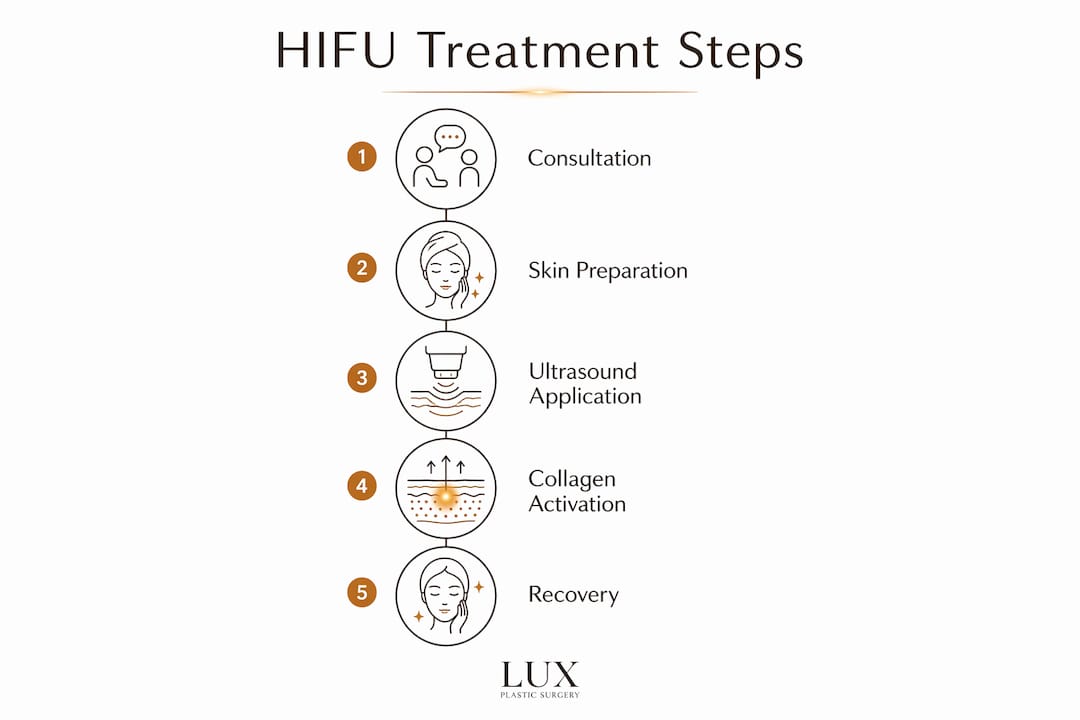
The procedure follows a consistent sequence:
- Consultation and consent. The practitioner reviews your medical history, confirms suitability, and documents baseline photographs.
- Skin preparation. The treatment area is cleansed thoroughly. No shaving or invasive preparation is required for cosmetic facial HIFU, which distinguishes it clearly from neurological applications of the technology.
- Ultrasound gel application. Gel is applied to the skin to ensure good contact between the transducer and the surface.
- Transducer placement. The handheld ultrasound transducer is moved systematically across the treatment zone, delivering focused energy to each target depth in sequence.
- Real-time monitoring. The practitioner uses the device’s imaging function to confirm correct positioning throughout.
- Post-treatment review. The skin is assessed immediately after. Mild redness or slight swelling is normal and typically resolves within a few hours.
Most patients describe a warm, tingling, or prickling sensation during energy delivery. Discomfort is most noticeable over bony areas such as the jawline. A topical numbing cream can be applied beforehand if sensitivity is a concern, though many patients complete the session without it.
Pro Tip: Avoid anti-inflammatory medications such as ibuprofen for 48 hours before your appointment. The mild inflammatory response triggered by HIFU is part of the collagen-stimulating mechanism, and suppressing it prematurely may reduce your results.
What are the benefits, risks, and realistic expectations?
The primary benefit of non-invasive ultrasound therapy is a gradual improvement in skin firmness, texture, and lift without surgical recovery. Skin tightening and lifting develop over 2–3 months as new collagen matures, with some patients noticing continued improvement for up to six months after a single session. This gradual timeline is a feature, not a limitation. Results look natural precisely because they develop at the pace of the body’s own biology.
HIFU does not replicate the results of a surgical facelift. The table below sets out a practical comparison to help set realistic expectations.
| Feature | HIFU | Surgical facelift |
|---|---|---|
| Anaesthesia | None required | General or local with sedation |
| Downtime | Minimal, same day return | 2–4 weeks |
| Visible improvement | Gradual over 2–3 months | Immediate, with swelling |
| Longevity of results | 12–18 months typically | 5–10 years |
| Suitable for significant laxity | No | Yes |
| Risk of scarring | Negligible | Low but present |
Common mild side effects include temporary redness, swelling, and tenderness at the treatment site. These typically resolve within 24–72 hours. A small number of patients experience temporary numbness or tingling along the treatment path, which resolves without intervention in most cases.
Serious complications are rare when treatment is performed by a qualified practitioner using a properly calibrated device. The risk of burns or nerve injury is low but not zero, which is why practitioner selection matters considerably. Patient-specific treatment planning improves outcomes by predicting thermal effect zones with up to 92% accuracy, reducing the variability between patients.
Focused ultrasound therapy is not a permanent solution. Most patients benefit from a maintenance session every 12–18 months to sustain results as the natural ageing process continues. Combining HIFU with injectable treatments or a structured skincare programme can extend the interval between sessions.
The advantages of non-surgical aesthetics are well documented for patients who are not yet ready for surgery or who wish to delay it. HIFU sits at the more clinically substantive end of the non-surgical spectrum, with a mechanism of action that addresses structural tissue rather than surface appearance alone.
What is the recovery like, and how much does HIFU cost?
HIFU requires no significant recovery period. Most patients return to work and social activities on the same day. The absence of incisions means there is no wound care, no dressings, and no restriction on physical activity beyond the immediate post-treatment period.
Post-treatment care is straightforward:
- Avoid direct sun exposure for at least one week after treatment and apply SPF 30 or higher daily.
- Do not use exfoliating acids, retinoids, or abrasive skincare products for 5–7 days.
- Avoid saunas, steam rooms, and intense heat for 48 hours.
- Stay well hydrated to support the skin’s healing response.
- Attend any follow-up appointments your practitioner recommends to assess progress.
Mild redness or tenderness may persist for 24–48 hours. Swelling, if present, is usually subtle and resolves within a few days. Bruising is uncommon but possible, particularly over the jawline and neck.
Treatment costs in the UK typically range from £1,000 to £2,500 depending on the area treated and the clinic. A full face and neck session sits at the higher end of that range. Smaller areas such as the brow or jawline alone cost less. Consultation fees may apply separately and should be confirmed at the time of booking.
Choosing a GMC-registered specialist for this procedure is not optional. The NHS and BAAPS both advise patients to verify the qualifications of any practitioner performing energy-based cosmetic treatments. A practitioner working outside a regulated clinical environment, or using an uncertified device, significantly increases the risk of adverse outcomes. The cost of treatment from a qualified specialist reflects the clinical infrastructure, device maintenance, and professional indemnity that protect you as a patient.
Key takeaways
High-intensity focused ultrasound treatment is the most clinically substantive non-surgical option for skin tightening, delivering collagen stimulation at structural tissue depth without incisions, anaesthesia, or downtime.
| Point | Details |
|---|---|
| Mechanism of action | Focused sound waves heat deep skin layers, triggering collagen production without damaging the surface. |
| Ideal candidate | Adults with mild to moderate skin laxity, typically from the mid-thirties, who are not yet suitable for surgery. |
| Results timeline | Visible improvement develops gradually over 2–3 months and may continue for up to six months. |
| Cost range | UK treatment costs range from £1,000 to £2,500 depending on the area and clinic. |
| Practitioner selection | A GMC-registered specialist using a certified device is the single most important factor in safe outcomes. |
Professor Hindocha’s view on HIFU in cosmetic practice
HIFU is one of the few non-surgical treatments I recommend with genuine confidence, because the mechanism is sound and the evidence base is credible. That said, I see a consistent pattern in consultations: patients arrive having read about HIFU online and expecting results equivalent to a surgical facelift. That expectation needs to be corrected early, and it is one of the reasons I insist on a thorough consultation before any treatment plan is agreed.
The most common misconception I encounter is the conflation of cosmetic HIFU with the medical applications of focused ultrasound used in oncology or neurology. They share a technology platform but operate at fundamentally different energy levels and with entirely different clinical goals. Cosmetic HIFU stimulates. Medical HIFU ablates. Patients who understand this distinction approach their treatment with far more realistic expectations and, in my experience, report higher satisfaction.
I am also cautious about the proliferation of HIFU devices in non-clinical settings. The technology requires proper calibration, imaging capability, and a practitioner who understands tissue anatomy. A device operated by someone without that grounding is not the same treatment, regardless of what the marketing says. When patients ask me how to choose a provider, my answer is always the same: verify GMC registration, ask to see the device certification, and ensure the consultation includes a genuine suitability assessment rather than a sales conversation.
The future of focused ultrasound in cosmetic practice is promising. Advances in patient-specific modelling are improving the predictability of outcomes, and the integration of real-time imaging is making treatments both safer and more consistent. For the right patient, HIFU remains one of the most clinically credible options in non-surgical facial rejuvenation.
— Lux
Non-surgical skin tightening at Lux Plastic Surgery
Lux Plastic Surgery offers consultant-led non-surgical aesthetic treatments across Bedford, London, and Manchester, directed by Professor Sandip Hindocha, GMC-registered Consultant Plastic Surgeon and NHS Clinical Director.

Every patient begins with a comprehensive consultation to assess suitability, discuss realistic outcomes, and agree a bespoke treatment plan. Professor Hindocha’s approach to non-surgical aesthetic treatments prioritises clinical accuracy and natural-looking results over volume. If HIFU is appropriate for you, it will be recommended on clinical grounds. If an alternative approach would serve you better, that will be the recommendation instead. To discuss your suitability and receive personalised pricing, book a consultation with the Lux Plastic Surgery team today.
This article is for informational purposes only and does not constitute medical advice. Consult a GMC-registered specialist before proceeding with any cosmetic treatment.
FAQ
What is high-intensity focused ultrasound treatment?
High-intensity focused ultrasound treatment is a non-invasive cosmetic procedure that uses focused sound waves to heat deep skin layers, stimulating collagen production for gradual skin tightening and lifting without incisions or anaesthesia.
How long does it take to see results from HIFU?
Results develop gradually as new collagen matures, with most patients noticing visible improvement over 2–3 months after treatment and some continuing to see changes for up to six months.
Is HIFU suitable for everyone?
HIFU is not suitable for patients with pacemakers, active skin infections, pregnancy, or significant skin laxity that would be better addressed surgically. A pre-treatment consultation with a qualified specialist is required to confirm suitability.
How much does HIFU cost in the UK?
Treatment costs in the UK typically range from £1,000 to £2,500 depending on the area treated and the clinic. Consultation fees may apply separately.
How does cosmetic HIFU differ from medical focused ultrasound?
Cosmetic HIFU uses lower energy levels to stimulate collagen without destroying tissue, whereas medical focused ultrasound, used in oncology and neurology, operates at higher energy levels to ablate targeted tissue. The two applications share a technology platform but have entirely different clinical goals.