Abdominoplasty is a surgical procedure that removes excess abdominal skin and fat while repairing separated or weakened abdominal muscles, producing a flatter, firmer abdominal contour. Adults most commonly seek the procedure after pregnancy, significant weight loss, or to correct diastasis recti, a condition in which the rectus abdominis muscles separate along the midline. The reasons for tummy tuck surgery extend beyond appearance. Functional improvements, including restored core strength, reduced lower back pain, and relief from skin-fold irritation, are equally compelling motivations. Abdominoplasty is one of the most frequently performed body-contouring procedures globally, with a 37% increase in use compared to pre-pandemic levels. That figure reflects a genuine shift in how adults understand the procedure: not as a shortcut, but as a reconstructive step following significant bodily change.
Why seek abdominoplasty: who is this procedure actually for?
Abdominoplasty is not a weight-loss procedure. Plastic surgeons, including those at Lux Plastic Surgery, consistently clarify that abdominoplasty is a body-contouring and functional repair surgery intended for individuals already at a stable weight. This distinction matters because the procedure’s long-term success depends on the abdominal tissues remaining stable after surgery.
The most common physical indicators that prompt adults to consider the procedure include:
- Excess skin and soft tissue following significant weight loss, bariatric surgery, or multiple pregnancies that cannot be resolved through exercise or diet
- Diastasis recti, the separation of the rectus abdominis muscles, which causes a visible abdominal bulge, weakened core function, and in many cases chronic lower back pain
- Skin-fold irritation, where overhanging abdominal skin causes persistent rashes, moisture-related dermatitis, or hygiene difficulties
- Loss of abdominal tone disproportionate to body weight, where the abdominal wall has lost structural integrity that no amount of exercise can restore
Contraindications are equally important to understand. Adults with unstable weight, plans for future pregnancy, active smoking habits, or uncontrolled medical conditions are not suitable candidates at the time of assessment. Pregnancy after abdominoplasty can reverse muscle repair and skin tightening, negating many of the surgery’s benefits. Surgeons therefore advise completing childbearing before proceeding.
A formal medical assessment with a GMC-registered consultant is the only way to confirm suitability. This includes a review of BMI, skin quality, muscle integrity, and overall health. Realistic expectations are part of that conversation. Abdominoplasty improves contour and function; it does not produce a different body type or substitute for a healthy lifestyle.
Pro Tip: If you are within 10 kg of your target weight but have persistent loose skin or a palpable muscle gap along the midline, you are likely in the right range to begin a formal surgical consultation. Waiting until you are at your absolute lowest weight is not always necessary, but stability over at least six months is.
The distinction between a mini and full tummy tuck is also relevant at this stage. A mini abdominoplasty addresses the lower abdomen only, below the navel, and is suited to patients with limited excess skin and no significant muscle separation above the umbilicus. A full abdominoplasty addresses the entire abdominal wall, repositions the navel, and includes comprehensive muscle repair. Your surgeon will recommend the appropriate approach based on your anatomy, not your preference.
For a detailed overview of what abdominoplasty involves, including functional indications and physical effects, Lux Plastic Surgery provides a complete patient guide.
How do mini, full, and lipoabdominoplasty procedures compare?
The three principal approaches to abdominoplasty differ in surgical scope, incision length, recovery duration, and the range of concerns they address. Understanding these differences helps patients enter their consultation with informed questions.
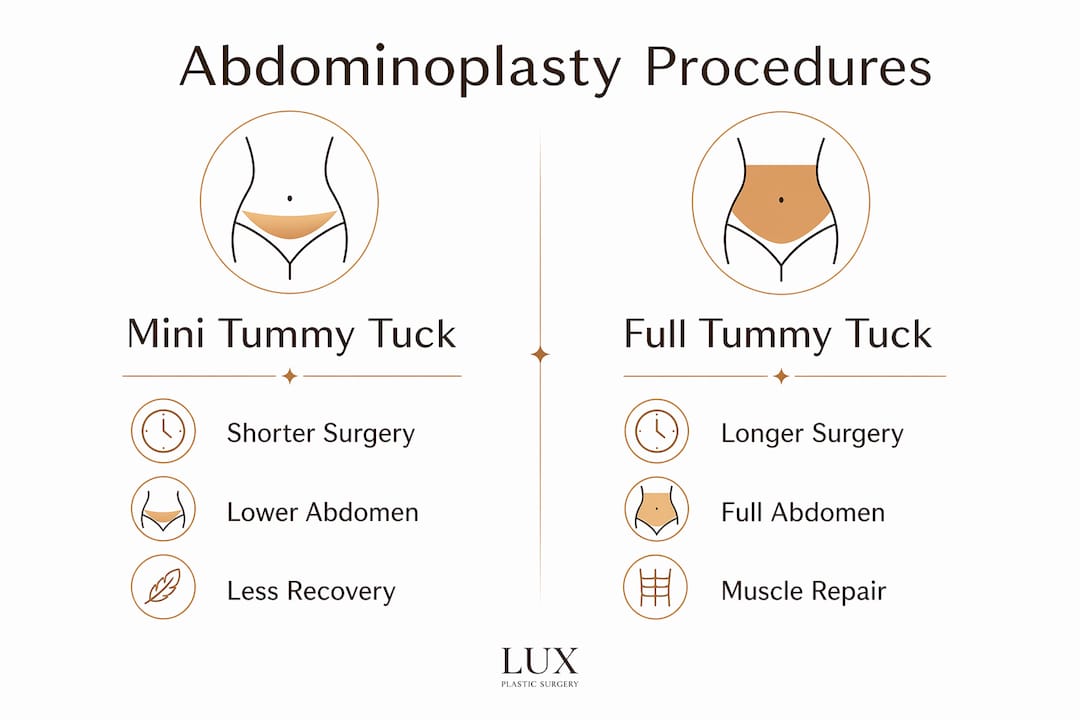
| Procedure | Duration | Area treated | Muscle repair | Recovery to light activity | Typical indication |
|---|---|---|---|---|---|
| Mini abdominoplasty | 1.5 to 2 hours | Lower abdomen only | Limited or none | 3 to 4 weeks | Mild lower abdominal laxity, no significant diastasis |
| Full abdominoplasty | 2.5 to 3 hours | Entire abdominal wall | Full midline repair | 4 to 6 weeks | Post-pregnancy or post-weight-loss with diastasis recti |
| Lipoabdominoplasty | 3 to 4 hours | Abdominal wall plus flanks | Full midline repair | 5 to 6 weeks | Patients requiring both skin excision and fat contouring |
A full tummy tuck takes approximately 2.5 to 3 hours and a mini tummy tuck 1.5 to 2 hours, with both typically performed as outpatient procedures requiring same-day discharge. This means most patients return home the same day, though they will require a responsible adult to accompany them and remain with them for the first 24 hours.
Lipoabdominoplasty combines skin excision and muscle repair with simultaneous liposuction of the flanks and lateral abdomen. This approach produces more comprehensive contouring but involves a longer operative time and a slightly extended recovery. It is particularly suited to patients whose abdominal fullness extends beyond the central panel.
The choice between procedures is not a matter of patient preference alone. Anatomy, skin quality, the degree of muscle separation, and the distribution of excess tissue all inform the surgical plan. A consultant will assess these factors at your pre-operative appointment and recommend the approach most likely to produce a proportionate, lasting result.
What does tummy tuck recovery involve, and what are realistic timelines?
Recovery from abdominoplasty follows a predictable sequence of phases, though individual experience varies based on the extent of surgery, general health, and adherence to post-operative instructions. Understanding the timeline in advance reduces anxiety and supports better outcomes.
Weeks 1 to 2: rest and drain management. The first fortnight is the most physically demanding phase. Swelling, bruising, and discomfort are at their peak. Postoperative drains are commonly used for 5 to 10 days to prevent fluid accumulation, and their removal marks a significant milestone in early recovery. Patients must limit mobility, avoid lifting, and attend wound checks as directed.
Weeks 2 to 4: gradual mobilisation. Discomfort reduces substantially. Most patients can manage light daily tasks, including short walks, by the end of week two. Driving is not permitted until full, unrestricted movement is possible and pain medication has been discontinued.
Weeks 4 to 6: return to light activity. By this stage, recovery occurs in phases with light activities resuming around four to six weeks. Office-based work, gentle walking, and most daily activities are manageable. Strenuous exercise, heavy lifting, and abdominal-loading movements remain restricted.
Week 8: approximately 80% healed. The majority of swelling has resolved. The abdominal contour becomes more apparent, though the final result is not yet visible. Patients often notice a significant improvement in how clothing fits at this stage.
Months 6 to 12: scar maturation and full resolution. Scars continue to fade and soften throughout this period. Swelling in the lower abdomen, which can persist longer than patients expect, resolves fully by around twelve months. The final aesthetic result is assessed at this point.
One aspect of recovery that surprises many patients is the posture requirement. Patients must maintain a slightly flexed posture for one to two weeks post-surgery to protect abdominal muscle repair and prevent wound dehiscence. This includes sleeping in a reclined position, sometimes described as a “beach chair” posture, to minimise tension on the repair site. It is non-intuitive but clinically critical.
Compression garments worn 24 hours a day for the first two to four weeks reduce swelling, manage fluid redistribution, and support tissue healing. These are medical necessities, not optional accessories. Patients who remove them prematurely risk increased oedema and suboptimal healing.

Pro Tip: Prepare your recovery space before surgery. A reclining chair or adjustable bed, a firm pillow for positioning, and easy access to your compression garment supplies will reduce unnecessary movement during the first week. For further guidance, Lux Plastic Surgery’s post-operative care advice covers the key stages in detail.
What are the primary benefits of abdominoplasty?
The abdominoplasty advantages that motivate patients to proceed are both aesthetic and functional. Understanding both categories helps set realistic expectations and clarifies why the procedure is considered reconstructive in many clinical contexts.
Aesthetic benefits:
- A flatter, firmer abdominal profile that is proportionate to the rest of the body
- Removal of excess skin that creates visible bulging or overhanging tissue, particularly below the navel
- Improved fit of clothing, including trousers, swimwear, and fitted garments that previously caused discomfort or self-consciousness
- Reduction of stretch marks located on the excised skin panel, typically below the umbilicus
Functional benefits:
- Repair of diastasis recti restores core muscle integrity, which directly improves posture and reduces the chronic lower back pain associated with a weakened abdominal wall
- Removal of overhanging skin eliminates the moisture and friction that cause persistent skin-fold dermatitis and hygiene difficulties
- Improved core stability supports physical activity, making exercise more comfortable and effective post-recovery
Psychological benefits:
The health and psychological benefits of body-contouring surgery are well-documented. Patients consistently report improved body image, greater confidence in social and intimate settings, and a stronger sense of alignment between how they feel and how they appear. For many adults who have experienced significant bodily change through pregnancy or weight loss, this psychological dimension is as significant as the physical outcome.
One important caveat applies to all of the above. Long-term results depend on maintaining stable weight, and significant fluctuations or ageing may affect outcome permanence. Abdominoplasty produces durable results when supported by a consistent lifestyle, but it does not make the abdomen immune to the effects of weight gain or further pregnancy.
What practical considerations should patients know before proceeding?
Preparing for abdominoplasty requires more than booking a consultation. Several lifestyle and medical factors directly influence both surgical safety and the longevity of results.
Weight stability. Patients should be at a stable weight for a minimum of six months before surgery. Maintaining a healthy lifestyle and weight stability is the single most important factor for sustaining results long term. Significant weight gain after surgery will stretch the repaired tissues and compromise the outcome.
Family planning. Adults who intend to have further children should delay surgery until their family is complete. Pregnancy after surgery will stretch repaired structures and may reverse the benefits of the procedure entirely.
Smoking cessation. Smoking impairs wound healing, increases the risk of infection, and raises the likelihood of skin necrosis at the incision margins. Most surgeons require patients to stop smoking for a minimum of six weeks before and six weeks after surgery.
Risks and complications. Potential complications include wound infection, haematoma, seroma formation, delayed wound healing, hypertrophic scarring, and changes in abdominal sensation. These risks are reduced but not eliminated by careful patient selection and experienced surgical technique. A GMC-registered consultant will discuss your individual risk profile at consultation.
Aftercare compliance. Compression garment use, activity restrictions, and attendance at follow-up appointments are not optional. Patients who do not follow post-operative instructions consistently report higher rates of complications and less satisfactory aesthetic outcomes.
For adults considering non-surgical alternatives before committing to surgery, non-invasive skin tightening options exist, though they address only mild laxity and cannot repair muscle separation or remove significant excess skin.
Key takeaways
Abdominoplasty delivers lasting aesthetic and functional improvements when performed on well-selected patients who maintain a stable weight and follow structured post-operative care.
| Point | Details |
|---|---|
| Candidacy requires stable weight | Patients should be within a stable weight range for at least six months before surgery. |
| Functional repair is a primary benefit | Diastasis recti correction restores core strength and reduces chronic lower back pain. |
| Recovery follows a defined timeline | Most patients return to light activity by weeks four to six, with full results visible at twelve months. |
| Pregnancy reverses surgical results | Adults planning further children should complete their family before proceeding with surgery. |
| Lifestyle maintenance preserves outcomes | Weight stability after surgery is the single most important factor for long-term results. |
Professor Hindocha’s perspective on patient selection and realistic outcomes
The most common misconception I encounter in consultations is that abdominoplasty is primarily a cosmetic procedure for people who want a flatter stomach. That framing misses the clinical reality. A significant proportion of the patients I assess have genuine functional impairment: weakened core musculature following multiple pregnancies, chronic lower back pain attributable to diastasis recti, or persistent skin-fold dermatitis that has not responded to conservative management. For these patients, surgery is reconstructive in its intent, even when it also produces aesthetic improvement.
What determines a successful outcome is not surgical technique alone. Patient selection, honest expectation-setting, and post-operative commitment are equally important. I have seen technically excellent operations produce disappointing results because the patient returned to strenuous activity too early, or because significant weight gain followed within two years of surgery. Conversely, patients who approach recovery with discipline and maintain their weight consistently report outcomes that hold well for many years.
My advice to anyone considering this procedure is straightforward. Be honest with your surgeon about your lifestyle, your plans, and your expectations. If you are not yet at a stable weight, or if you are considering further pregnancies, the right decision is to wait. The procedure will still be available to you when the timing is right, and the results will be considerably better for it. A consultation is not a commitment to surgery. It is an opportunity to understand whether surgery is the right choice for you, and when.
— Lux
Take the next step with Lux Plastic Surgery
Lux Plastic Surgery offers personalised abdominoplasty assessments with Professor Sandip Hindocha, GMC-registered Consultant Plastic Surgeon, FRCS (Plast), and NHS Clinical Director, at clinics in Bedford, London, and Manchester. Every patient receives a thorough pre-operative assessment covering anatomy, candidacy, procedure options, and realistic outcomes before any surgical plan is agreed.

Whether you are exploring body contouring options for the first time or ready to proceed with a formal consultation, Lux Plastic Surgery provides the clinical expertise and structured aftercare to support you at every stage. For a broader overview of what to expect, the plastic surgery options and safety guide is a useful starting point. Contact the clinic to book your consultation.
This article is for informational purposes only and does not constitute medical advice. Consult a GMC-registered specialist before making any decisions about surgical treatment.
FAQ
What is abdominoplasty and how does it differ from liposuction?
Abdominoplasty removes excess abdominal skin and repairs separated muscles, while liposuction removes localised fat deposits without addressing skin laxity or muscle integrity. The two procedures target different concerns and are sometimes combined.
Who is the best candidate for a tummy tuck?
The best candidates are adults at a stable weight with excess abdominal skin, diastasis recti, or both, who have completed childbearing and are non-smokers with no significant medical contraindications.
How long does tummy tuck recovery take?
Most patients return to light activity within four to six weeks, reach approximately 80% healing by eight weeks, and see their final result, including full scar maturation, at around twelve months post-surgery.
Will abdominoplasty help with weight loss?
Abdominoplasty is not a weight-loss procedure. It removes excess skin and repairs muscles in patients already at or near their target weight. Significant weight loss should be achieved before surgery, not through it.
What happens to abdominoplasty results if I become pregnant afterwards?
Pregnancy after abdominoplasty stretches the repaired abdominal muscles and skin, which can reverse the surgical improvements. Surgeons advise completing your family before undergoing the procedure to protect the long-term outcome.