A cosmetic tummy tuck is not available on the NHS. What the NHS will occasionally fund is a related but narrower operation, an apronectomy, and only when excess skin is causing a documented medical problem rather than a cosmetic one. Whether you qualify depends on your weight history, your symptoms, and the specific policy your local Integrated Care Board (ICB) applies.
At a glance:
- Cosmetic tummy tucks: not funded by the NHS under any circumstances
- What might be funded: an apronectomy, after major, sustained weight loss where excess skin is causing infections, ulceration, or significant difficulty with daily activities
- How to find out: speak to your GP, who can refer you and, if appropriate, submit an Individual Funding Request (IFR) to your local ICB
Is a tummy tuck ever funded on the NHS?

Almost never for cosmetic reasons, no. Surgery done purely to improve the shape or tone of the abdomen sits outside what the NHS funds, regardless of how much it might improve your confidence or how frustrating diet and exercise have been.
Funding becomes possible only in a specific, narrower situation: significant excess skin left after major weight loss that is causing a genuine medical problem. Even then, it’s assessed case by case, and there’s no guarantee of approval.
What’s the difference between a tummy tuck and an NHS apronectomy?
A private abdominoplasty removes excess skin and fat and usually repairs the abdominal muscles too, aiming for a flatter, more contoured shape. It’s a cosmetic and functional operation combined.
An apronectomy, sometimes called a panniculectomy, removes the overhanging fold of skin and fat (the “apron” or pannus) that’s causing a specific problem, such as recurrent infection. It doesn’t tighten the muscles and isn’t designed to reshape the abdomen, so the aesthetic result is more modest than a full tummy tuck.
Why doesn’t the NHS fund cosmetic abdominoplasty?
NHS funding decisions are based on clinical need and value for money across the whole population, not individual preference. Cosmetic procedures are treated as low priority for funding compared to conditions with a clear, measurable health impact, such as cancer treatment or stroke care.
Removing excess skin for appearance alone, however understandable the motivation, doesn’t meet that bar. It only becomes fundable when the skin itself is causing a documented clinical problem rather than a cosmetic one.
When might the NHS fund excess skin removal?

Policies vary between ICBs, but most follow a similar shape. Three things generally need to be true at once.
Significant, sustained weight loss
You typically need to have lost a large amount of weight, often, though not always, following bariatric surgery, and to have kept it off. Most ICBs want to see a healthy BMI maintained for a minimum period, commonly 12 to 24 months, before they’ll even consider an application.
Documented skin problems
The excess skin needs to be causing a recorded medical issue, not just discomfort you can describe verbally. Recurrent infections or cellulitis that haven’t responded to antibiotics, persistent ulceration, or significant fluid leakage from the skin fold are the kinds of evidence ICBs look for.
Difficulties with everyday activities
Some policies will also fund treatment where the overhanging skin is significantly limiting mobility or basic daily tasks, assessed using a standardised scale rather than a general sense of inconvenience. Your GP or the assessing clinician will usually document this formally as part of your application.
What are typical NHS funding criteria?
Every ICB writes its own policy, so the exact numbers differ by area. As one real example, NHS Bedfordshire, Luton and Milton Keynes’ body contouring policy requires the following before an application will even be considered.
| Requirement | What it typically means |
|---|---|
| Weight loss history | Starting BMI of 45 or above, now maintained between 18 and 27 for at least 24 months (or a 20-point drop on the BMI scale, sustained for 24 months) |
| No prior skin removal | The same area of excess skin hasn’t already been treated surgically |
| Documented pathology | At least a year of recorded problems, such as recurrent infection or ulceration, unresponsive to standard treatment |
| Or, functional impairment | Excess skin causing significant, measurable difficulty with daily activities |
| Evidence | Photographs and clinical records to support the application |
This is one ICB’s policy, shown as a worked example, not a national standard. Your own area may set different thresholds, so it’s worth asking your GP for the specific criteria that apply where you live.
How do you apply for NHS-funded skin removal surgery?

Talk to your GP first
Your GP is the starting point for every route into NHS funding. Bring a clear account of your weight history, any skin-related symptoms, and how they’re affecting you day to day, since this shapes what they can refer you for.
Get referred and assessed
If your GP agrees there may be a case, they’ll refer you to a plastic surgery or general surgery clinic for a formal assessment. The specialist will examine the affected area, review your history, and record the evidence needed to support an application.
The Individual Funding Request
Because this surgery isn’t routinely funded, most cases go through an Individual Funding Request, submitted by your clinician rather than by you directly. The panel reviews whether your case meets the local policy, or, if it doesn’t quite fit, whether there’s a strong enough clinical argument for an exception.
Funding must be approved before any surgery is booked or you’re placed on a waiting list. Applications typically take several weeks to be reviewed, though this varies by ICB and how complete the supporting evidence is.
Does NHS funding depend on where you live?
Yes, and this is one of the more frustrating parts of the process. Each ICB sets its own criteria, so a patient who qualifies in one part of the country may not qualify in another with an otherwise similar history.
Bodies representing plastic surgeons, including BAPRAS, have long criticised this variation as a form of postcode rationing, and have pushed for more consistent national guidance. In practice, though, the local policy where you’re registered with a GP is what decides your case.
What happens if your funding request is refused?
A refusal isn’t necessarily final. If your clinician has new clinical evidence that wasn’t included in the original application, such as further documented infections or a specialist assessment completed after the first decision, they can ask the panel to reconsider.
Separately, most ICBs allow a process review, a challenge to how the decision was reached rather than the decision itself, usually within a set window such as 12 weeks. This has to be submitted in writing and supported by the clinician who made the original request, so it’s a conversation to have with them rather than something you can do alone.
Can you get NHS funding after pregnancy alone, or only after major weight loss?
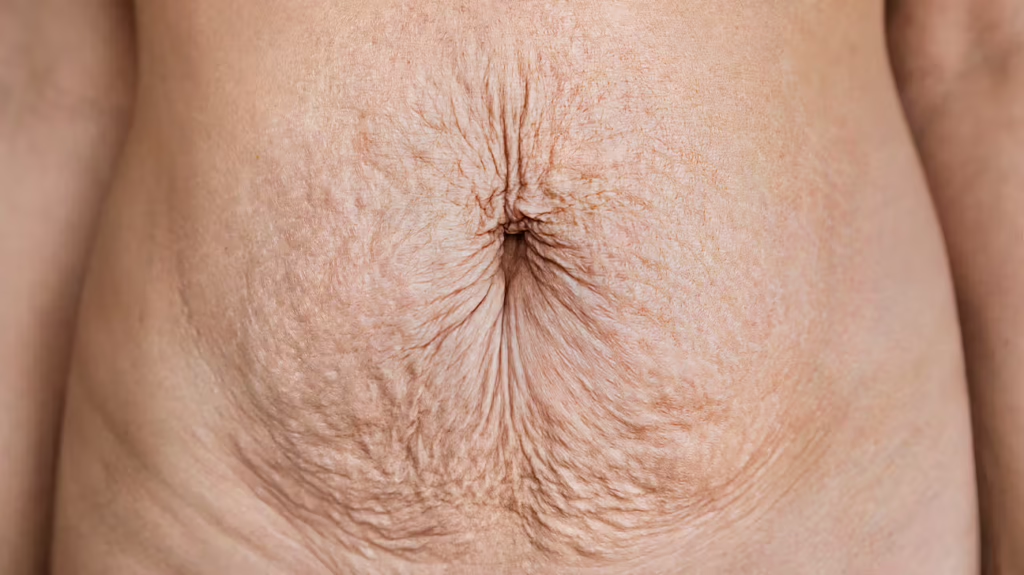
Loose skin after pregnancy is extremely common, and on its own it almost never meets NHS funding criteria. Most policies are built around major, sustained weight loss, frequently following bariatric surgery, rather than the more moderate changes typical after childbirth.
If pregnancy has left you with excess skin that hasn’t improved over time, that’s a genuine and common concern, but for most patients it falls into private treatment rather than NHS funding, unless it’s also causing the kind of documented medical problems described above.
Can men get NHS-funded excess skin removal too?
Yes. NHS funding criteria are based on weight history and documented medical need, not gender, so men are assessed against exactly the same policy as women in their area.
In practice, men often present with excess skin across the abdomen and flanks following major weight loss, and the same evidence requirements apply: a stable, healthy weight maintained for a set period, and a clear medical rather than cosmetic reason for surgery.
How is an NHS apronectomy different from a private abdominoplasty in practice?
Beyond the funding route, the operations themselves aren’t quite the same. An NHS apronectomy is designed to solve a specific medical problem, so the surgical goal is removing the overhanging skin safely, not sculpting the waistline.
Private surgery typically goes further, tightening the underlying muscles and shaping the overall contour, which is why it’s classed as cosmetic even when performed on someone who has also lost a significant amount of weight. Some patients choose to have an NHS apronectomy first and consider a private procedure afterwards if they want further refinement.
What are your options if you don’t qualify for NHS funding?
Most people asking about a tummy tuck on the NHS end up looking at private surgery once they understand how narrow the funding criteria are. That’s a normal outcome, not a sign that your concern isn’t valid.
Privately, you have full control over technique and timing rather than being assessed against a funding policy. It’s worth understanding what typically drives the cost before you commit, and discussing your goals directly with a GMC-registered consultant plastic surgeon at consultation.
Considering abdominoplasty at Lux Plastic Surgery?

Lux Plastic Surgery offers consultant-led abdominoplasty in Bedford, London, and Manchester, performed by Professor Sandip Hindocha, FRCS (Plast), GMC-registered Consultant Plastic Surgeon and NHS Clinical Director. If NHS funding isn’t an option in your case, a private consultation will give you a clear, honest picture of what surgery can realistically achieve.
The Lux Plastic Surgery body contouring page covers the procedures available, and the complete abdominoplasty guide explains what the operation involves. To arrange a consultation, contact the team directly through the website. This article is for general information only and does not constitute medical advice. NHS funding policies vary by area and change over time, so always confirm current criteria with your GP or local ICB.
FAQ
Is a tummy tuck ever free on the NHS?
A cosmetic tummy tuck is not funded by the NHS under any circumstances. A related, more limited procedure called an apronectomy can occasionally be funded after major weight loss where excess skin is causing a documented medical problem.
What is an NHS apronectomy?
An apronectomy removes the overhanging fold of excess skin and fat from the lower abdomen without tightening the underlying muscles. It’s a functional procedure aimed at resolving problems like recurrent infection, rather than reshaping the abdomen.
How long does an Individual Funding Request take?
Timescales vary by ICB and depend on how complete the supporting evidence is, but applications typically take several weeks to review. Your clinician’s office is the best source for a realistic timeframe in your area.
Can I get NHS funding for loose skin after just one pregnancy?
This is unlikely on its own. NHS funding criteria are generally built around major, sustained weight loss rather than the changes typical after a single pregnancy, unless the skin is also causing a documented medical problem.
What happens if my GP won’t refer me?
If your GP doesn’t think your case meets the local funding policy, ask them to explain which specific criteria aren’t met. If your circumstances change, for example your weight or symptoms progress, you can ask them to review the decision again.