TL;DR:
- Abdominoplasty removes excess skin and fat while tightening abdominal muscles to restore contour and function. It is most suitable for those with stable weight, skin laxity, and rectus diastasis after pregnancy or weight loss. Recovery involves several weeks of rest and support, with lasting aesthetic and functional benefits.
Abdominoplasty, commonly known as a tummy tuck, is a surgical procedure that removes excess abdominal skin and fat while tightening the underlying muscles to restore contour and function. Surgeons perform it most often after pregnancy, significant weight loss, or ageing has left the abdomen with loose skin, weakened muscles, or stubborn fat deposits that diet and exercise cannot address. The procedure targets both aesthetics and physical function, making it one of the most requested body contouring surgeries in the UK. At Lux Plastic Surgery, Professor Sandip Hindocha performs abdominoplasty with a focus on natural, proportionate results tailored to each patient’s anatomy and goals.
What does the abdominoplasty procedure involve?
Abdominoplasty is best understood as a combined skin, fat, and muscle procedure rather than a simple excision. That distinction matters because it explains both the results patients can achieve and the recovery they should expect.
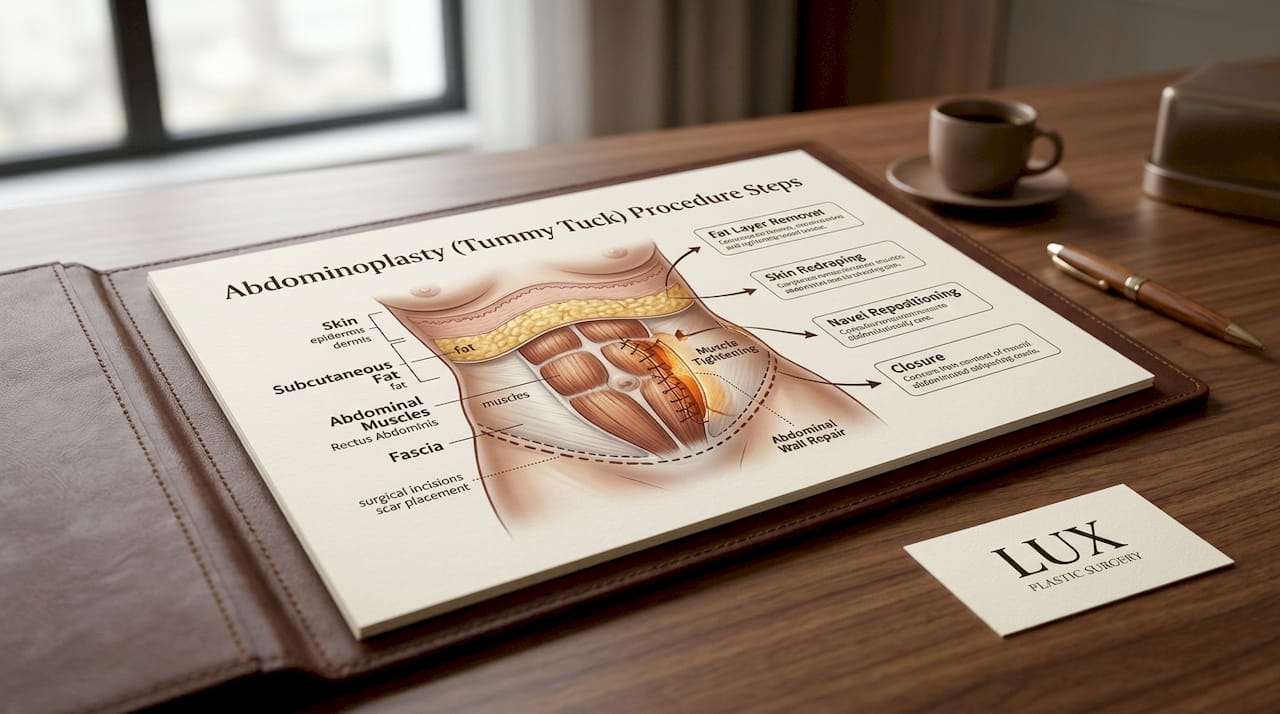
The core surgical steps
The operation begins with a horizontal incision placed low on the abdomen, typically within the bikini line, to minimise visible scarring. The surgeon then lifts the abdominal skin flap upwards to expose the underlying muscle layer. Where rectus diastasis (midline muscle separation) is present, the surgeon performs plication, which means suturing the two columns of the rectus abdominis muscle back together to restore core strength and a flatter profile. Excess skin and fat are then excised, and the belly button is repositioned through a new opening to maintain a natural appearance.
Surgical planning also considers the abdominal blood supply zones, known as Huger zones. Preserving these blood supply zones guides safe flap elevation and reduces the risk of wound healing complications. Surgeons also assess whether abdominal laxity stems from diastasis recti or an underlying hernia, as each requires a different repair approach.
Variations of the procedure
Not every patient requires the same operation. The main variations include:
- Full abdominoplasty: Addresses the entire abdomen from hips to pubis, with umbilicus repositioning and full muscle repair. Suited to patients with significant skin laxity above and below the navel.
- Mini abdominoplasty: Targets only the lower abdomen below the navel. Suitable for patients with mild laxity and no need for umbilicus repositioning.
- Modified abdominoplasty: A middle ground between full and mini, adjusted to the patient’s specific anatomy.
- Fleur-de-lis abdominoplasty: Adds a vertical incision for patients with significant horizontal and vertical skin excess, often following massive weight loss.
Pro Tip: If you have had a previous caesarean section, your surgeon can often incorporate the existing scar into the abdominoplasty incision, reducing the total scar burden.
How does abdominoplasty compare to panniculectomy and liposuction?
Choosing between abdominoplasty and related procedures depends entirely on what you want to achieve. The three procedures share some overlap but serve distinct purposes.
Panniculectomy removes hanging skin (the pannus) from the lower abdomen but does not include muscle repair or belly button repositioning. It is primarily a functional procedure, often performed to relieve skin fold infections, rashes, or mobility problems caused by a large overhanging apron of skin. Abdominoplasty, by contrast, is designed for aesthetic contouring alongside functional improvement, which is why it includes plication of the rectus muscles and umbilicoplasty.
Liposuction targets fat deposits only. It does not remove skin or tighten muscles, so it is appropriate for patients with good skin elasticity who want to reduce localised fat. When skin laxity is present alongside excess fat, liposuction alone will worsen the appearance of loose skin rather than improve it.
| Procedure | Removes excess skin | Tightens muscles | Repositions navel | Primary goal |
|---|---|---|---|---|
| Abdominoplasty | Yes | Yes | Yes | Aesthetic contouring and function |
| Panniculectomy | Yes | No | No | Functional skin removal |
| Liposuction | No | No | No | Fat reduction |
Combined procedures are common. Many patients benefit from liposuction performed alongside abdominoplasty to refine the flanks and waist, and some opt for a mummy makeover that includes breast surgery in the same operative session.
Pro Tip: If your primary concern is a functional skin overhang causing hygiene or mobility issues, ask your surgeon whether panniculectomy may be partially covered by your insurer before committing to a full abdominoplasty.
What are the main benefits and risks of abdominoplasty?
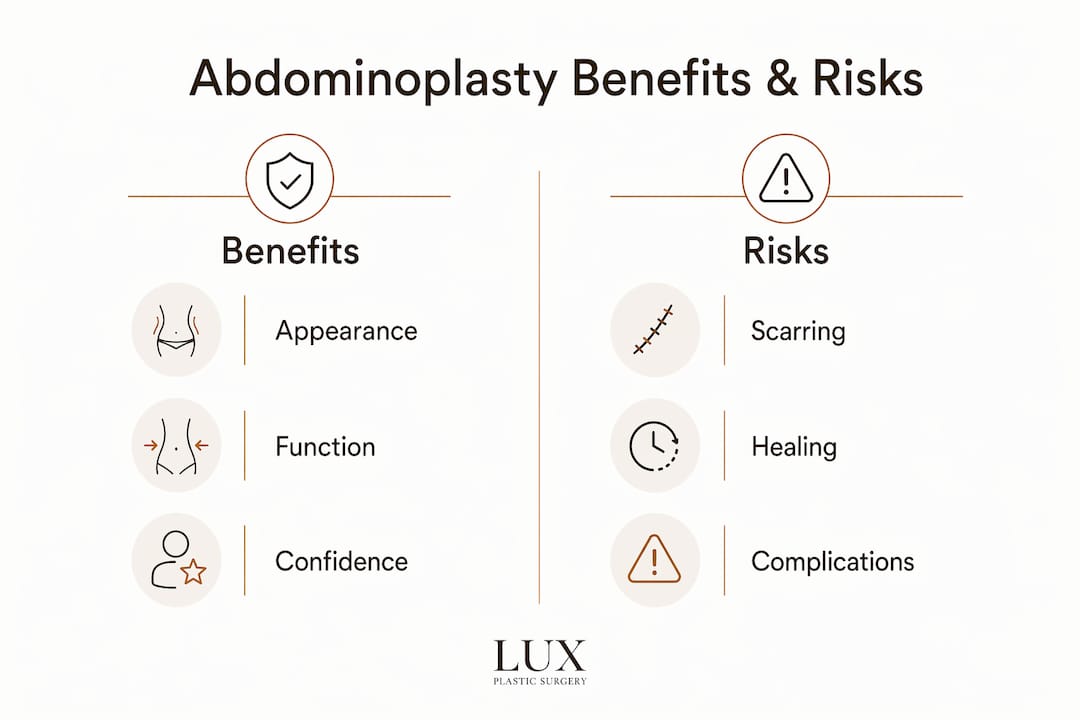
The benefits of abdominoplasty extend well beyond appearance. Contour restoration improves abdominal wall function and stability, which can reduce lower back pain associated with rectus diastasis and improve posture. Patients who have experienced urinary stress incontinence after pregnancy sometimes report improvement following muscle repair, though this is a secondary benefit rather than a primary indication.
The psychological gains are equally significant. Many patients report enhanced confidence and improved body image following surgery, particularly those who felt their abdomen no longer reflected their fitness efforts or weight loss achievements. Feeling comfortable in clothing and during physical activity has a measurable impact on overall wellbeing.
The risks, however, deserve equal attention:
- Seroma: Fluid accumulation beneath the skin flap is the most common complication, often managed with drainage in the weeks following surgery.
- Wound healing issues: Tension on the incision line, smoking, or poor blood supply can delay healing or cause wound breakdown.
- Scarring: All abdominoplasty patients will have a permanent scar. Skilled placement and post-operative scar management minimise its visibility.
- Contour irregularities: Asymmetry or uneven contour can occur, particularly if liposuction is combined without precise technique.
- Venous thromboembolism (VTE): Meticulous patient selection and surgical technique are critical to minimise this rare but serious risk. Compression stockings, early mobilisation, and anticoagulation protocols are standard precautions.
Patient selection is the single most important factor in risk reduction. Smokers, patients with uncontrolled diabetes, and those with a very high BMI face significantly elevated complication rates and are typically advised to optimise their health before surgery.
What does recovery from abdominoplasty look like?
Recovery from abdominoplasty is more demanding than many patients anticipate, largely because of the muscle tightening component. Postoperative discomfort differs from skin-only procedures precisely because the repaired muscles create a tightness that takes weeks to ease. Understanding this timeline helps patients plan realistically.
A typical recovery follows this progression:
- Days 1 to 7: Rest at home with drains in place to prevent seroma. Patients walk in a slightly bent position to reduce tension on the incision. Pain is managed with prescribed analgesia.
- Weeks 2 to 3: Drains are usually removed. Swelling and bruising remain significant. Light walking is encouraged, but lifting and strenuous activity are prohibited.
- Weeks 4 to 6: Most patients return to desk-based work. The abdomen feels tight and numb in patches. Compression garments are worn throughout this period.
- Weeks 6 to 12: Gradual return to exercise begins, starting with walking and progressing to low-impact activity. Core exercises are reintroduced only with surgical clearance.
- Months 3 to 6: Final results become visible as swelling fully resolves. Scars continue to mature and fade for up to 18 months.
Following aftercare protocols carefully is not optional. Patients who ignore activity restrictions or skip compression garment use face higher rates of seroma, wound complications, and suboptimal scarring. Practical recovery guidance from your surgical team should be treated as clinical instruction, not general advice.
Who is an ideal candidate for abdominoplasty?
The ideal candidate for abdominoplasty has realistic expectations, is in good general health, and presents with one or more of the following:
- Excess abdominal skin following pregnancy or significant weight loss
- Rectus diastasis causing functional weakness or a persistent abdominal bulge
- Stubborn lower abdominal fat that has not responded to sustained diet and exercise
- Skin laxity that makes liposuction alone an unsuitable option
- Stable weight for at least six months prior to surgery
Women who have completed their families are the most common candidates, but demand from men is rising sharply. Male abdominoplasty demand is increasing, often driven by men who have lost significant weight through GLP-1 medications like Ozempic or through bariatric surgery and are left with excess skin and deflated muscle tone. Male patients typically seek a firmer, healthier-looking abdomen rather than an exaggerated six-pack, and surgeons may combine abdominoplasty with muscle etching techniques to enhance definition. Scar placement is also a specific consideration for men, as the absence of a bikini line means the incision must be positioned with male clothing and swimwear in mind.
Patients planning future pregnancies are advised to delay abdominoplasty, as pregnancy will stretch the repaired muscles and skin again, compromising results. Similarly, those planning further significant weight loss should reach a stable goal weight before surgery to avoid revision procedures.
Pro Tip: If you have recently lost weight rapidly through medication or surgery, wait at least 12 months at a stable weight before consulting for abdominoplasty. Skin continues to retract during this period, and operating too soon may mean removing less than is ultimately possible.
Key takeaways
Abdominoplasty delivers lasting aesthetic and functional results by addressing skin, fat, and muscle simultaneously, making it distinct from all other abdominal contouring procedures.
| Point | Details |
|---|---|
| Procedure scope | Abdominoplasty removes excess skin and fat while repairing abdominal muscles and repositioning the navel. |
| Distinct from alternatives | Panniculectomy removes skin only; liposuction removes fat only. Neither repairs muscles or repositions the navel. |
| Recovery timeline | Full recovery takes three to six months, with muscle tightening making early weeks more demanding than skin-only surgery. |
| Candidate profile | Best suited to patients with stable weight, skin laxity, and rectus diastasis following pregnancy or weight loss. |
| Male demand rising | Men increasingly seek abdominoplasty post-weight loss, often combined with muscle etching for enhanced definition. |
What I have learned from years of abdominal contouring work
The conversation around abdominoplasty has shifted considerably. Patients arrive better informed than ever, but one misconception persists: many still think of it as purely cosmetic. The functional dimension, particularly the repair of rectus diastasis, is genuinely life-changing for patients who have lived with core weakness, back pain, or a persistent abdominal bulge that no amount of exercise could resolve. That is not a marketing claim. It is what patients tell us months after surgery when they describe being able to exercise without discomfort for the first time in years.
The rise of male patients is the most notable trend we are seeing in 2026. Men who have lost significant weight through GLP-1 medications are arriving with realistic expectations and a clear goal: to look proportionate, not sculpted. The surgical approach for these patients requires careful thought around scar placement and the degree of muscle etching, and the results can be genuinely transformative.
What patients consistently underestimate is recovery. The muscle repair component creates a tightness that surprises people who have had other surgeries. I always tell patients to plan for six weeks of genuine rest and to arrange practical support at home for at least the first two weeks. Those who do this have a far smoother experience than those who try to return to normal life too quickly. Thorough consultation, honest expectation-setting, and a personalised surgical plan are what separate a good outcome from a great one.
— Lux
Explore abdominoplasty at Lux Plastic Surgery
Lux Plastic Surgery offers expert abdominoplasty and body contouring services performed by Professor Sandip Hindocha, an award-winning consultant with extensive experience in post-pregnancy and post-weight loss body contouring. Every patient receives a personalised consultation covering surgical planning, realistic outcome discussion, and a tailored aftercare programme.

Whether you are considering a tummy tuck in Bedford, exploring combined procedures such as a mummy makeover, or researching post weight loss contouring options after significant weight change, Lux Plastic Surgery provides the clinical expertise and personalised care to guide you from first consultation through to full recovery. Book your consultation today to receive a thorough assessment and a clear, honest picture of what abdominoplasty can achieve for you.
FAQ
What is the difference between a tummy tuck and abdominoplasty?
Tummy tuck and abdominoplasty are two names for the same procedure. Abdominoplasty is the clinical term; tummy tuck is the common name used in everyday conversation.
How long does abdominoplasty recovery take?
Most patients return to desk-based work within four to six weeks and resume full physical activity by three months. Final results, including scar maturation, take up to 18 months to fully develop.
What is male abdominoplasty and how does it differ?
Male abdominoplasty follows the same core surgical principles but requires specific consideration of scar placement and may be combined with muscle etching techniques to achieve a firmer, more defined abdominal contour suited to male anatomy.
Is abdominoplasty right for me if I plan to lose more weight?
Abdominoplasty is best performed once you have maintained a stable weight for at least six months. Operating before reaching your goal weight increases the likelihood of needing revision surgery.
What does abdominoplasty cost in the UK?
The cost of a tummy tuck in the UK varies depending on the extent of the procedure, the surgeon’s experience, and the clinic’s location. A thorough consultation with a qualified surgeon is the most reliable way to receive an accurate, personalised cost estimate.