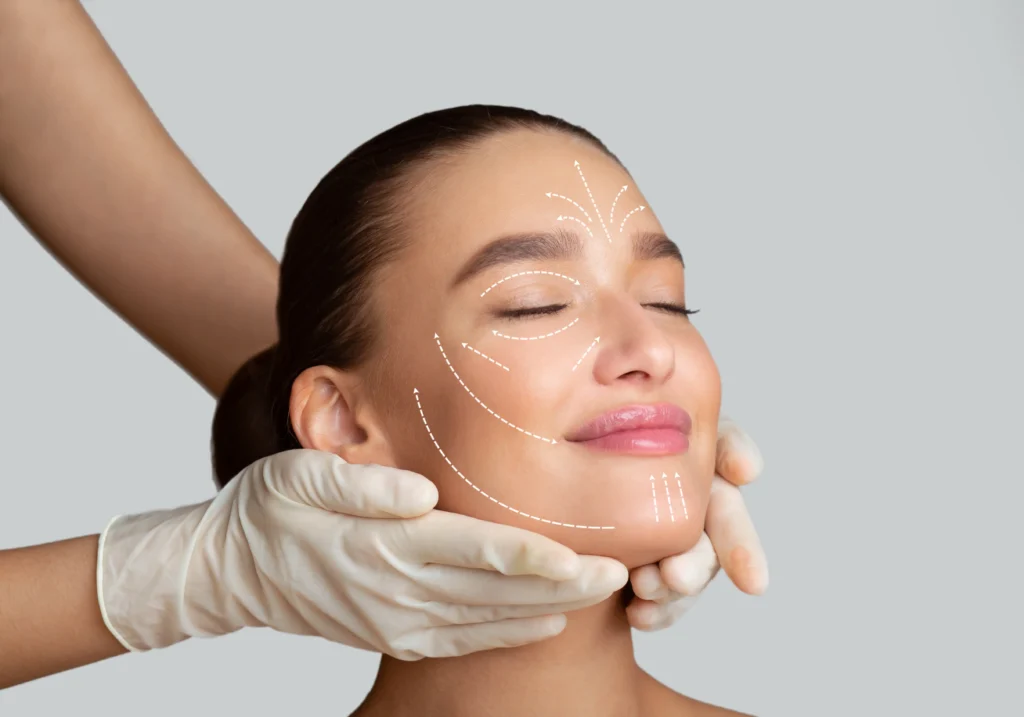
Personalised aesthetic care is a tailored treatment approach that considers your unique facial anatomy, skin type, and personal goals to achieve the safest and most natural results. In the UK, the British Association of Aesthetic Plastic Surgeons (BAAPS) and the General Medical Council (GMC) both emphasise that patient safety and informed consent depend on individual clinical assessment, not standardised protocols. Choosing bespoke aesthetics over generic treatments means your clinician evaluates your bone structure, skin quality, and medical history before recommending anything. The result is a plan built around you, not around a price list or a trending procedure. This guide explains the clinical reasoning behind personalised care, the risks of one-size-fits-all approaches, and what a thorough consultation should actually involve.
Why choose personalised aesthetic care over generic treatments?
Personalised aesthetic care is defined as a treatment plan built from a comprehensive clinical assessment of your anatomy, skin quality, and ageing patterns rather than a standard menu of procedures. Skin type, muscle tone, and bone architecture all require customised dosing and product selection to produce natural results. No two patients present identically, which is why a protocol designed for one person can produce the wrong outcome in another.
Generic treatment approaches carry specific, well-documented risks. Overfilling with dermal filler, for example, produces the “pillow face” effect: a loss of natural facial contour caused by applying volume without regard for underlying structure. Frozen expressions from excessive botulinum toxin are equally common when dosing is not calibrated to individual muscle strength. These outcomes are not simply aesthetic failures. They can require corrective treatment, additional cost, and in some cases, medical intervention.

The advantages of tailored aesthetic care extend beyond appearance. A clinician who assesses your full medical history can identify contraindications, flag medications that affect healing, and adjust technique accordingly. Personalised care reduces the incidence of asymmetry and overfilling that generic approaches routinely produce. That reduction in complications is the clearest clinical argument for bespoke treatment.
Pro Tip: Ask any prospective clinician to explain how they would adapt their approach to your specific anatomy. A clinician who gives the same answer to every patient is not practising personalised care.
What should a bespoke aesthetic consultation involve?
A genuine aesthetic consultation is a planning session, not a sales meeting. The distinction matters clinically and practically. A consultation focused only on procedure name and price leaves the patient without the information needed to give meaningful informed consent.
A thorough bespoke consultation covers the following areas:
- Full anatomical evaluation. The clinician examines facial symmetry, skin laxity, volume distribution, and bone structure. For body procedures, this includes assessment of tissue quality and proportionality.
- Detailed medical history review. This includes current medications, previous treatments, allergies, and any history of autoimmune conditions or bleeding disorders.
- Goal alignment and expectation setting. The clinician discusses what is achievable within your anatomy and timeframe, and explains why certain requests may not produce the result you expect.
- A written treatment plan. A genuine planning session produces a documented plan detailing procedure rationale, sequencing, and recovery expectations. Written plans improve patient satisfaction by 34% compared to verbal summaries alone.
- Discussion of alternatives. A reputable clinician presents non-surgical and surgical options where both are appropriate, explaining the trade-offs of each.
A genuine aesthetic planning session involves producing a bespoke written document explaining the ‘why’, ‘how’, and recovery expectations of chosen treatments. Without this document, a patient cannot meaningfully compare clinicians or make a fully informed decision.
Consultation duration over 45 minutes correlates with better patient outcomes, enabling thorough examination and goal alignment. Longer consultations also reduce revision rates. If your appointment lasts fifteen minutes and ends with a booking form, that is a commercial transaction, not a clinical assessment.
Consulting multiple clinicians before committing to treatment helps patients compare different approaches and philosophies. This is not disloyalty to a clinician. It is sound medical decision-making. Lux Plastic Surgery encourages patients to take the time they need before proceeding. Understanding why personalised treatment plans produce safer outcomes is part of that process.
What clinical governance standards underpin safe personalised care?
Clinical governance is the framework that holds aesthetic clinics accountable for patient safety. It covers assessment, consent, documentation, infection control, and emergency preparedness. Not every clinic that markets itself as “medically led” meets the standards required by the Care Quality Commission (CQC).
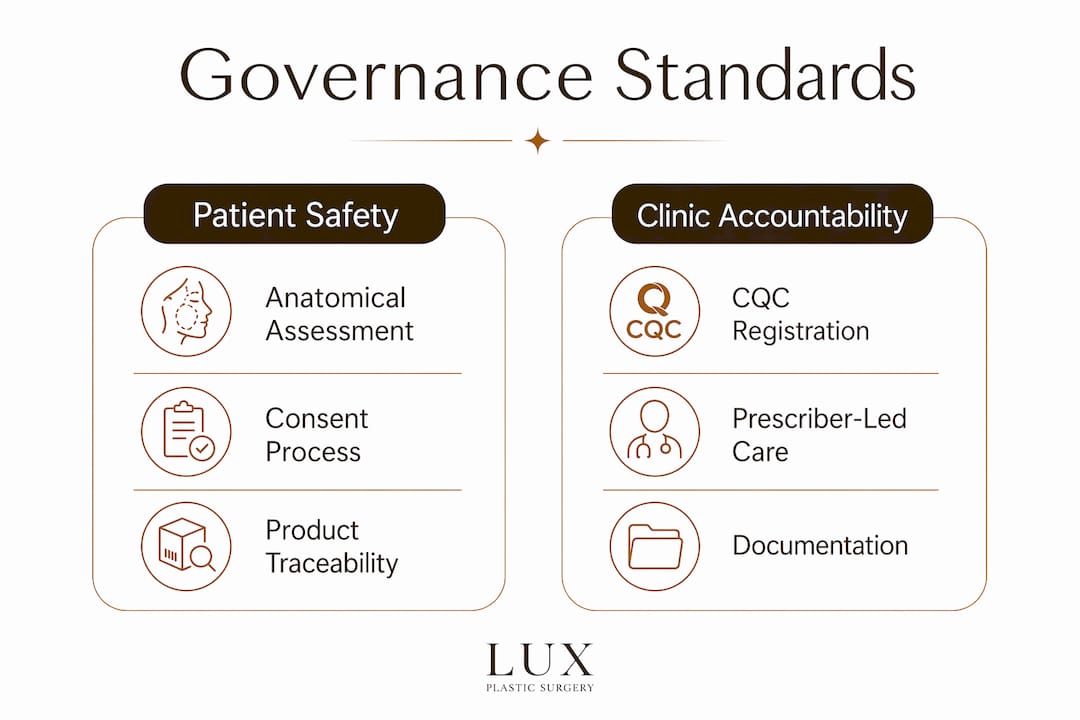
CQC registration requires clinics to demonstrate documented consent processes, product traceability, and the capacity to manage adverse events. CQC-registered clinics follow strict governance protocols that include documented consent, product traceability, and emergency preparedness for patient safety. This oversight exceeds the standards of many non-registered aesthetic providers. Patients should verify CQC registration before attending any clinic for injectable or surgical treatment.
The table below summarises the key governance standards patients should expect from a reputable personalised aesthetic provider.
| Governance area | What to expect from a reputable clinic |
|---|---|
| Patient assessment | Full anatomical and medical history review before any treatment |
| Informed consent | Written consent form with time to consider, not signed on the day of treatment |
| Product traceability | Batch numbers recorded for all injectables used |
| Emergency preparedness | Hyaluronidase on site for filler reversal; trained staff for adverse events |
| Aftercare provision | Named clinician contact for post-treatment concerns |
Prescriber-led care ensures that each treatment recommendation is clinically informed and individually considered. This model is adopted by advanced clinics operating in CQC-registered environments. At Lux Plastic Surgery, all treatment plans are directed by Professor Sandip Hindocha, a GMC-registered Consultant Plastic Surgeon, NHS Clinical Director, and Fellow of the Royal College of Surgeons (Plastic Surgery), with over 150 published papers. That level of clinical authority is not incidental. It is the foundation of safe, personalised care.
Pro Tip: Before booking, ask the clinic for their CQC registration number and check it directly on the CQC website. This takes two minutes and confirms the clinic meets nationally mandated safety standards.
What are the long-term benefits of tailored aesthetic treatment?
The most significant long-term benefit of bespoke aesthetic treatment is that results age well. Generic treatments applied without regard for facial harmony tend to look dated or unnatural within months. A personalised plan, by contrast, works with your natural structure rather than against it.
The practical advantages of tailored aesthetic care include:
- Proportionate, balanced results. Personalised plans focus on overall facial harmony rather than isolated features. Volume is added where anatomy supports it, not where a trend dictates it.
- Reduced risk of complications. Treatments calibrated to your skin type, muscle tone, and medical history carry a lower risk of adverse reactions, asymmetry, and overcorrection.
- Longer-lasting outcomes. Staged planning optimises safety, natural appearance, and longevity of results. A layered approach, improving skin health first, structural support second, and detail refinement last, extends the life of each treatment.
- Emotional wellbeing. Personalised aesthetic care acknowledges emotional context, tailoring treatments to restore confidence aligned with a patient’s lifestyle, not just their appearance. Clinicians who understand your motivations are better placed to manage expectations and support you through recovery.
- Cost efficiency over time. A well-planned bespoke programme avoids the cycle of corrective treatments that poorly planned generic care often creates. Patients who invest in a thorough initial plan typically spend less over five years than those who book individual treatments reactively.
Personalised plans prevent over-treatment and unnatural looks by focusing on overall facial harmony and longevity, not quick fixes. This is the clearest argument against trend-driven aesthetics. Procedures chosen because they are popular, rather than because they suit your anatomy, rarely produce results that stand the test of time. Understanding the full range of aesthetic medicine options available to you is the first step towards making a decision grounded in clinical evidence rather than social media.
A staged, multi-modality plan might begin with a course of medical-grade skin treatments to improve texture and tone, followed by structural support with botulinum toxin or filler, and conclude with a surgical procedure if the patient’s goals require it. This sequencing is not arbitrary. Each stage prepares the tissue for the next, reducing risk and improving the final result. The impact of individualised aesthetic services on preventing excessive or unnatural enhancements is well recognised across clinical practice. Choosing the right aesthetic clinic is therefore as important as choosing the right procedure.
Key takeaways
Personalised aesthetic care produces safer, more natural, and longer-lasting results than generic treatment because it is built on individual clinical assessment, documented planning, and regulated governance.
| Point | Details |
|---|---|
| Assessment is foundational | Every bespoke plan begins with anatomy, skin quality, and medical history review, not a procedure menu. |
| Written plans matter | A documented treatment plan improves patient satisfaction and supports fully informed consent. |
| CQC registration is non-negotiable | Verify a clinic’s CQC registration before any injectable or surgical treatment to confirm safety standards. |
| Staged treatment extends results | A layered approach, skin health first, then structure, then refinement, optimises longevity and reduces complications. |
| Emotional context shapes outcomes | Clinicians who understand your motivations and lifestyle deliver results that align with your confidence and wellbeing. |
What I have observed after years of personalised aesthetic practice
The most common misconception I encounter is that personalised care simply means choosing from a longer menu of treatments. It does not. Personalised care means that the clinician’s starting point is your anatomy, not their preferred technique.
Patients who arrive having researched a specific procedure online often have a fixed idea of what they want. My responsibility is not to validate that idea uncritically. It is to assess whether that procedure will achieve what they are hoping for, given their specific anatomy and skin quality. Frequently, the answer is that a different approach, or a staged combination of approaches, will produce a better result. That conversation requires time, clinical knowledge, and honesty. It cannot happen in a fifteen-minute appointment.
The patients who report the highest satisfaction are not those who received the most treatment. They are those who received the right treatment, at the right time, in the right sequence. Over-treatment is one of the most preventable complications in aesthetic medicine, and it is almost always the result of a plan that was not personalised. A clinician who tells you that you need more than you came in for, without a clear clinical rationale, is not practising in your interest.
My advice is straightforward. Seek a clinician who produces a written plan, who can explain the reasoning behind every recommendation, and who is registered with the GMC. Ask to see their CQC registration. Take time between consultation and treatment. And if a clinician makes you feel that urgency is required, treat that as a warning sign, not a reason to proceed.
This article reflects the professional opinion of Lux Plastic Surgery and is not medical advice. Consult a GMC-registered specialist before proceeding with any aesthetic treatment.
— Lux
Personalised aesthetic care at Lux Plastic Surgery
Lux Plastic Surgery offers bespoke treatment planning across surgical and non-surgical procedures, led by Professor Sandip Hindocha at clinics in Bedford, London, and Manchester. Every patient receives a comprehensive clinical assessment before any treatment is recommended. The full range of plastic surgery and aesthetic services is available to explore, from body contouring and breast surgery to facial procedures and non-surgical options.
Patients considering non-surgical routes can review the advantages of non-surgical aesthetics in detail before their consultation. For those weighing surgical options, the safe cosmetic surgery steps guide provides clear, risk-aware information to support informed decision-making. To arrange a consultation with Professor Hindocha, contact Lux Plastic Surgery directly. This article is for informational purposes only and does not constitute medical advice. Always consult a GMC-registered specialist.
FAQ
What is personalised aesthetic care?
Personalised aesthetic care is a treatment approach built on individual clinical assessment of anatomy, skin quality, and personal goals rather than a standard procedure list. It produces more natural results and reduces the risk of complications compared to generic protocols.
How do I know if a clinic offers genuine bespoke treatment?
A genuine bespoke clinic produces a written treatment plan after consultation, holds CQC registration, and employs GMC-registered prescribers. If a clinic cannot provide these, its claim to personalised care is not clinically substantiated.
Why does consultation length matter for aesthetic treatments?
Consultations lasting over 45 minutes correlate with better patient outcomes and lower revision rates. A short appointment does not allow sufficient time for anatomical assessment, medical history review, and meaningful goal alignment.
What are the risks of generic aesthetic treatments?
Generic treatments carry a higher risk of overfilling, asymmetry, frozen expressions, and results that age poorly. These outcomes arise when dosing and product selection are not calibrated to individual anatomy and skin type.
Is personalised aesthetic care more expensive?
Bespoke treatment planning may carry a higher initial consultation cost, but patients who follow a well-structured personalised plan typically require fewer corrective treatments over time. The long-term cost is generally lower than reactive, unplanned treatment.