The single most important thing you can do after liposuction is follow your surgeon’s postoperative instructions without improvising. Recovery is not passive. What you do in the first six weeks shapes your final result, and the patients who heal well are almost always the ones who take the compression garment, rest, and follow-up appointments seriously.
The core practices that support safe, effective healing:
- Wear your compression garment day and night for the first two weeks, then during waking hours for a further 4–6 weeks
- Drink plenty of water throughout the day to reduce swelling and support tissue repair
- Walk gently from the first day to promote circulation, but avoid anything strenuous
- Take prescribed medications as directed and avoid aspirin or anti-inflammatory drugs unless your surgeon approves them
- Attend every follow-up appointment, even when you feel well
- Report any fever, unusual pain, or abnormal discharge to your surgical team promptly
- Do not smoke or drink alcohol during the recovery period
How compression garments reduce swelling and support your new shape
Compression garments are not optional comfort wear. They apply consistent, graduated pressure to the treated area, which reduces fluid accumulation, supports the skin as it adheres to the underlying tissue, and helps your body settle into its new contour. Worn correctly, they are one of the most effective tools in your post-liposuction care.
According to NHS guidance, you should wear the garment continuously, day and night, for the first two weeks. After that, wearing it during waking hours for a further 4–6 weeks is standard practice. You may remove it briefly to shower, but replace it promptly.
Skin under a compression garment can become dry, irritated, or prone to rashes, particularly during warmer months. Keep the area clean and dry, and check the skin daily for any signs of breakdown.
Pro Tip: Once your wounds have fully healed, apply a mild, non-perfumed moisturiser such as E45 to the skin beneath the garment. This reduces the risk of dryness and skin breakdown during the extended wear period.
A few practical points on garment management:
- Keep a spare garment so you can wash one while wearing the other; interruptions in wear during the first weeks can prolong swelling
- Wash garments according to the manufacturer’s instructions to maintain their compression level
- Contact your surgical team if the garment feels excessively tight, causes numbness, or leaves deep pressure marks
For detailed guidance on incision care and scar management alongside garment use, the liposuction scar care guide at Lux Plastic Surgery covers the full picture.
What to eat, drink, and take during your recovery
Hydration is the foundation of post-liposuction healing. Adequate fluid intake helps flush the anaesthetic from your system, reduces swelling, and supports the cellular repair processes that rebuild tissue. Aim for water as your primary drink throughout the day.

Diet matters too. A varied intake rich in protein supports tissue regeneration, while vitamins C and E and antioxidant-rich foods support skin repair and reduce oxidative stress at the wound site. The Royal Marsden NHS Foundation Trust advises patients to maintain a diet full of vitamins and protein to support wound healing after liposuction procedures.
Alcohol and smoking both impair healing. BAAPS recommends stopping smoking at least six weeks before surgery, and the same logic applies after: smoking constricts blood vessels, reduces oxygen delivery to healing tissue, and raises the risk of wound complications. Alcohol thins the blood and interacts with pain medication.
On medications:
- Take prescribed antibiotics and painkillers as directed by your surgeon
- Avoid aspirin and anti-inflammatory drugs for at least two weeks pre-operatively, and confirm with your surgeon when it is safe to resume them post-operatively
- If you were anaemic before surgery or experienced significant blood loss, discuss iron supplementation with your surgeon
- Always tell your surgical team about any supplements you take, including herbal remedies, as some affect clotting
Balancing rest and movement after surgery
The early recovery phase is a period of controlled inflammation. Your body is actively repairing tissue, and how you move during this time either supports or disrupts that process.

Gentle walking from the first day after surgery is encouraged. It promotes circulation, reduces the risk of deep vein thrombosis, and prevents the stiffness that comes with complete bed rest. Short, slow walks around the house are sufficient in the first few days.
What to avoid is equally clear. NHS guidance advises against strenuous activities for 10–12 weeks. Returning to the gym, lifting heavy objects, or engaging in high-impact exercise before that point risks prolonged swelling, fluid accumulation (seromas), and disruption to the healing tissue. Gentle exercise such as light walking can typically resume around weeks 3–4, but always confirm with your surgeon before progressing.
Activity guidelines by phase:
- Days 1–3: Rest at home with short, gentle walks. Have someone with you for the first 24 hours if you had a general anaesthetic
- Week 1–2: Continue gentle walking; avoid driving until your surgeon clears you
- Weeks 3–4: Light activity may increase; avoid anything that raises your heart rate significantly
- Weeks 10–12: Strenuous exercise and heavy lifting may resume, subject to your surgeon’s assessment
Returning to work depends on the extent of your procedure, with recovery time varying accordingly.
Liposuction recovery timeline: what to expect week by week
Recovery from liposuction follows a broadly predictable path, though individual variation is real. BAPRAS notes that common symptoms including stiffness, pain, swelling, bruising, and numbness resolve progressively over one to six months. Understanding the stages helps you distinguish normal healing from signs that warrant attention.
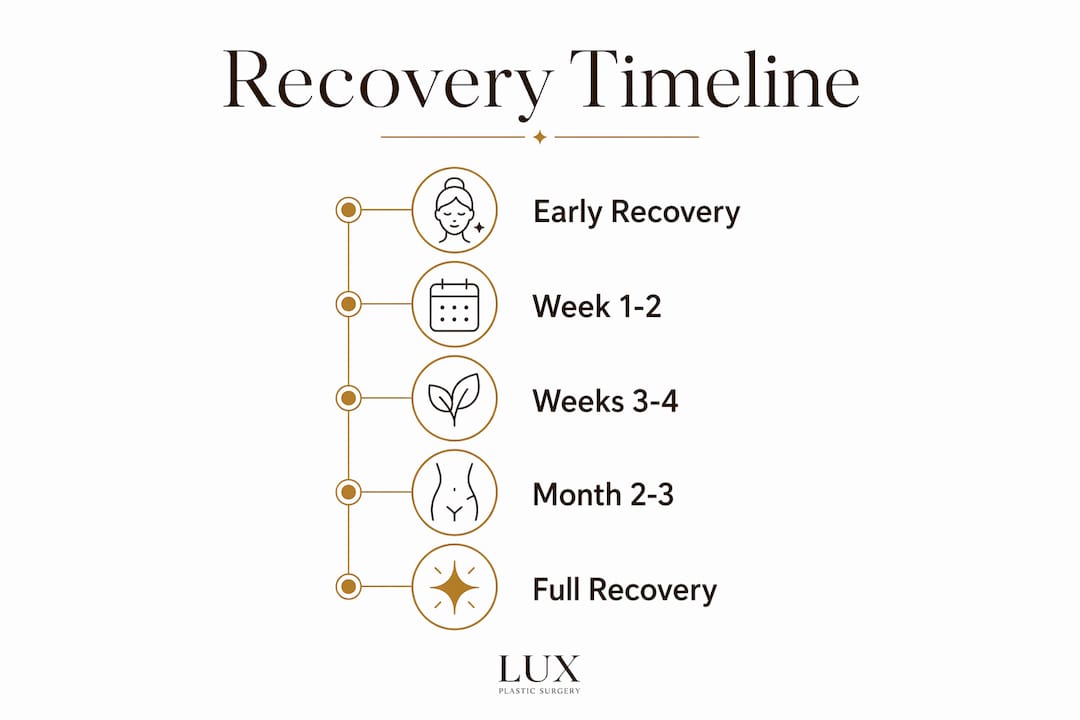
| Phase | Timeframe | What to expect |
|---|---|---|
| Early recovery | Days 1–3 | Swelling, bruising, discomfort; rest at home with gentle walking |
| Initial healing | Weeks 1–2 | Compression garment worn day and night; stitches trimmed or removed at 5–10 days |
| Active healing | Weeks 3–4 | Continued swelling and possible lumpiness; light activity may increase |
| Ongoing resolution | Months 2–3 | Bruising largely resolved; skin lumpiness reducing; gradual return to normal activity |
| Final result | Months 3–6 | Swelling fully resolves; contour becomes visible; results emerge |
Stitches are typically removed or trimmed at your first outpatient appointment, usually 5–10 days after surgery. Dissolvable stitches may not require removal at all. Attend this appointment regardless of how well you feel, as your surgeon will assess the wound, check for early complications, and advise on the next phase of recovery.
Do not skip follow-up appointments. They are not a formality. They are the mechanism by which your surgeon monitors your progress and catches problems before they become serious.
How to recognise complications and when to contact your surgeon
Most liposuction recoveries proceed without serious incident, but knowing what to watch for means you can act quickly if something changes. The distinction between expected discomfort and a warning sign is usually clear once you know what to look for.
Contact your surgical team promptly if you notice any of the following:
- A fever or feeling generally unwell
- Increasing pain rather than gradually improving pain
- Redness, warmth, or a burning sensation around the wound
- Unusual or increasing fluid leakage from the incision sites
- Swelling that worsens after the first week rather than settling
- A firm lump that appears suddenly and feels different from the general lumpiness of healing tissue
BAAPS advises that deep bruising and skin lumpiness during recovery are normal and may take up to six months to fully resolve. Massage is sometimes recommended to help, but only after your surgeon has confirmed that the wounds have healed sufficiently. Early aggressive massage can be counterproductive and may worsen bruising.
For genuine emergencies, including difficulty breathing, chest pain, or signs of a severe allergic reaction, call 999 immediately. For concerns that are worrying but not acute, your surgical team’s contact number is the right first call. Do not wait for a scheduled appointment if something feels wrong.
Expert guidance from Professor Sandip Hindocha and UK clinical standards
Recovery from liposuction is not simply a matter of waiting. It requires active participation in a structured aftercare plan, and the quality of that plan depends heavily on the expertise of the surgeon who designed it.
Professor Sandip Hindocha, GMC-registered Consultant Plastic Surgeon, NHS Clinical Director, and Fellow of the Royal College of Surgeons (Plastic Surgery), brings over 100 published papers to his clinical practice. His approach to liposuction recovery emphasises patient education, realistic expectation-setting, and close postoperative communication.
The professional bodies that set standards for liposuction in the UK are consistent in their guidance. BAAPS and BAPRAS both emphasise the importance of choosing a surgeon on the GMC Specialist Register, attending pre-operative consultations where risks are discussed transparently, and following postoperative instructions without modification. The NHS reinforces that choosing a GMC-registered surgeon is the single most important step a patient can take to protect their safety.
Lux Plastic Surgery operates across Bedford, London, and Manchester, with all procedures performed or directly supervised by Professor Hindocha. For patients considering liposuction or currently in recovery, the post-surgery recovery guide and the body contouring service page provide further clinical detail.
Lymphatic drainage massage, when timed correctly and performed by a qualified therapist, can support swelling reduction in the weeks after surgery. The benefits of lymphatic massage are well documented in the wellness literature, though any massage therapy should be discussed with your surgeon before you begin.
Book a consultation with Lux Plastic Surgery

Whether you are preparing for liposuction or managing your recovery, personalised guidance from a GMC-registered specialist makes a measurable difference to your outcome. Professor Hindocha and the team at Lux Plastic Surgery offer thorough pre- and post-operative consultations across Bedford, London, and Manchester, with care tailored to your anatomy, your procedure, and your recovery timeline.
To understand your options fully before committing, the plastic surgery options and safety guide provides a clear starting point.
This article is for informational purposes only and does not constitute medical advice. Always consult a GMC-registered specialist before making decisions about cosmetic surgery or your postoperative care.
Key takeaways
Consistent compression garment wear, adequate hydration, and strict adherence to activity restrictions are the three practices that most directly determine the quality and speed of liposuction recovery.
| Point | Details |
|---|---|
| Compression garment wear | Wear day and night for two weeks, then during waking hours for a further 4–6 weeks. |
| Activity restrictions | Avoid strenuous exercise for 10–12 weeks; gentle walking from day one is encouraged. |
| Recovery timeline | Final results can take up to six months to emerge as swelling fully resolves. |
| Complication awareness | Report fever, increasing pain, or abnormal discharge to your surgical team promptly. |
| Surgeon selection | Choose a surgeon on the GMC Specialist Register for safe, transparent postoperative care. |
FAQ
How can you speed up recovery from liposuction?
Wear your compression garment consistently, stay well hydrated, eat a protein-rich diet, and walk gently from the first day. Attending all follow-up appointments and avoiding smoking and alcohol also accelerates healing.
Why do you look bigger three weeks after liposuction?
Swelling and fluid retention in the treated area are normal at this stage and do not indicate that the procedure has failed. This temporary enlargement resolves progressively, with final results typically visible by months three to six.
What are the key do’s and don’ts after liposuction?
Do wear your compression garment, rest adequately, walk gently, and follow your medication schedule. Do not smoke, drink alcohol, take aspirin without approval, or engage in strenuous exercise for at least 10–12 weeks.
What are the most difficult days after liposuction?
Days one to three are typically the most uncomfortable, with peak swelling, bruising, and discomfort. Symptoms improve progressively from the end of the first week, though some lumpiness and tightness can persist for several months.