If you’re researching liposuction, the question of liposuction scars is probably near the top of your list. And understandably so. The early weeks after surgery can look alarming: lumpy skin, firmness beneath the surface, and small incision marks that seem far more visible than you expected. But here’s what most pre-surgery guides fail to tell you clearly. Much of what you see in those first weeks is not permanent scarring. It’s swelling, fibrosis, and your body doing exactly what it should. Understanding the difference changes everything about how you approach recovery.
Key Takeaways
| Point | Details |
|---|---|
| Early lumps are normal | Firm lumps and swelling are part of normal healing and usually soften within months after liposuction. |
| Scar types vary | Scars can be flat or raised, influenced by your skin type and healing response. |
| Combination treatments work best | Using multiple therapies like corticosteroids and lasers provides superior scar reduction results. |
| Patience is essential | Final scar appearance emerges slowly; give your body time to remodel tissue. |
| Professional care helps | Consult experts for personalised scar management to achieve optimal healing. |
Understanding the healing process after liposuction
The body’s response to liposuction follows a predictable pattern, even when it doesn’t feel that way. In the first week, swelling and bruising peak as your tissues react to the trauma of the procedure. This is normal. What surprises many patients is what comes next: a period of internal firmness and lumpiness that can persist for several weeks.
This firmness is caused by fibrosis, which is the formation of internal scar tissue as your body repairs itself. Swelling peaks and fibrosis causes lumps and bumps that soften progressively over 3 to 6 months. The skin surface may look uneven long before the final result is visible.
Here’s what the typical liposuction healing timeline looks like:
- Weeks 1 to 2: Swelling and bruising at their worst; incision sites are fresh and most visible
- Weeks 3 to 6: Fibrosis sets in; skin may feel hard or lumpy beneath the surface
- Months 2 to 3: Swelling reduces noticeably; contour begins to emerge
- Months 3 to 6: Scar tissue softens; incision scars fade from pink to pale
- Month 6 onwards: Final results visible; most liposuction incision scars are small and discreet
One practical tip: don’t judge your results by how you look on any single day. Swelling fluctuates with activity, salt intake, and sleep position. Tracking your progress with weekly photos taken in the same lighting gives a far more accurate picture than daily mirror checks. Our recovery tips for liposuction cover this in detail.
What causes liposuction scars and types to expect
Every liposuction procedure requires small incisions, typically 3 to 5 millimetres, through which the cannula (a thin tube used to remove fat) is inserted. These are deliberately kept small to minimise scarring. But small does not mean invisible, and how your body heals those incisions depends on several factors beyond the surgeon’s control.

The biological process is straightforward. When skin is cut, the body produces collagen to close the wound. In most people, this results in a flat, pale scar that becomes barely noticeable over time. In others, the body overproduces collagen, specialist to raised or thickened scars. Fibroproliferative conditions like hypertrophic scars or keloids can occur depending on individual factors including genetics, skin tone, and post-operative care.
The main scar types you may encounter after liposuction:
- Flat, pale scars: The most common outcome. These fade steadily over months and are often barely visible within a year.
- Hypertrophic scars: Raised, firm scars that stay within the boundary of the original incision. More common in people with darker skin tones or a history of raised scarring.
- Keloid scars: Raised scars that extend beyond the incision edges. Less common but more challenging to treat, with a strong genetic component.
Several factors influence which type of scar you develop:
- Genetics: A family history of keloids significantly raises your personal risk
- Skin tone: Darker skin tones are statistically more prone to hypertrophic and keloid scarring
- Incision location: Areas under tension or friction, such as the inner thighs, tend to scar more noticeably
- Post-operative care: Infection, sun exposure, and poor wound care all worsen scar outcomes
- Surgical technique: Experienced surgeons place incisions in natural skin folds or less visible areas where possible
Understanding your personal risk profile before surgery is one of the most valuable conversations you can have with your surgeon. It allows for proactive scar management from day one. You can read more about scar formation and skin types to understand how your skin’s biology plays a role.
Proven treatments and care options to minimise liposuction scars
Liposuction scar treatment is not a one-product solution. The most effective approach layers multiple strategies, starting with simple at-home care and escalating to clinical treatments if needed.
At-home and early-stage care:
- Silicone gels and sheets: Among the best products for liposuction scars in the early stages, silicone creates a moist environment that regulates collagen production. Use consistently for at least 12 weeks for measurable results.
- Gentle massage: Once incisions are fully closed, massaging the area for 5 to 10 minutes daily helps break down fibrosis and improve skin texture. Lymphatic drainage massage, ideally performed by a trained therapist, accelerates this process.
- Compression garments: Wearing your compression garment as directed reduces swelling and applies gentle pressure to healing tissue, which supports flatter scar formation.
Clinical treatments for persistent or raised scars:
- Intralesional corticosteroid injections: Injected directly into raised scar tissue, these reduce inflammation and flatten hypertrophic scars. Multiple sessions are typically required.
- Laser therapy: Pulsed dye laser targets redness; fractional lasers improve texture and skin tone. Often used in combination with other treatments.
- Microneedling: Creates controlled micro-injuries that stimulate collagen remodelling, improving texture and softness of established scars.
Combination therapies including corticosteroids, 5-FU, and laser provide the best outcomes in scar reduction and recurrence prevention. Topical care alone is often insufficient for raised or stubborn scars. When scars remain raised, lasers, microneedling, and corticosteroids outperform prolonged topical routines.
Pro Tip: Start silicone gel or sheeting as soon as your surgeon confirms the incisions are fully healed, usually around 2 to 3 weeks post-surgery. Earlier application consistently produces better outcomes than waiting until scars are already established.
| Treatment | Best for | Onset of results | Requires clinic visit |
|---|---|---|---|
| Silicone gel/sheets | Flat and early raised scars | 6 to 12 weeks | No |
| Massage | Fibrosis, texture | 4 to 8 weeks | No (or therapist) |
| Corticosteroid injections | Hypertrophic, keloid | 4 to 8 weeks | Yes |
| Laser therapy | Redness, texture | 2 to 4 sessions | Yes |
| Microneedling | Texture, skin tone | 3 to 6 sessions | Yes |
Explore our full guide to skin scar treatments and scar care methods for more detail on each option.
Comparing scar treatment approaches: pros, cons and timelines
Choosing the right treatment means understanding not just what works, but what works for your scar type within a realistic timeframe. Here’s a direct comparison:
| Treatment | Pros | Cons | Typical duration |
|---|---|---|---|
| Silicone gel/sheets | Accessible, evidence-based, low cost | Requires consistency; slower results | 3 to 6 months daily use |
| Corticosteroid injections | Effective for raised scars, fast acting | Requires repeat clinic visits; risk of skin thinning | 3 to 6 sessions |
| Laser therapy | Targets redness and texture precisely | Cost; multiple sessions needed | 3 to 6 sessions |
| Microneedling | Improves texture and tone | Not suitable for active raised scars | 3 to 6 sessions |
| Combination therapy | Best overall outcomes | Higher cost; requires professional oversight | Ongoing, tailored plan |
Key considerations when choosing your approach:
- Flat, pale scars respond well to silicone and massage alone
- Raised or red scars benefit from early clinical intervention rather than waiting
- Combination treatments reduce scar volume and recurrence more effectively than single therapies
- Keloid-prone patients should discuss preventative treatment with their surgeon before surgery, not after
Understanding your options helps you set realistic expectations and stick to your plan. See our overview of types of scar treatments for a broader breakdown.
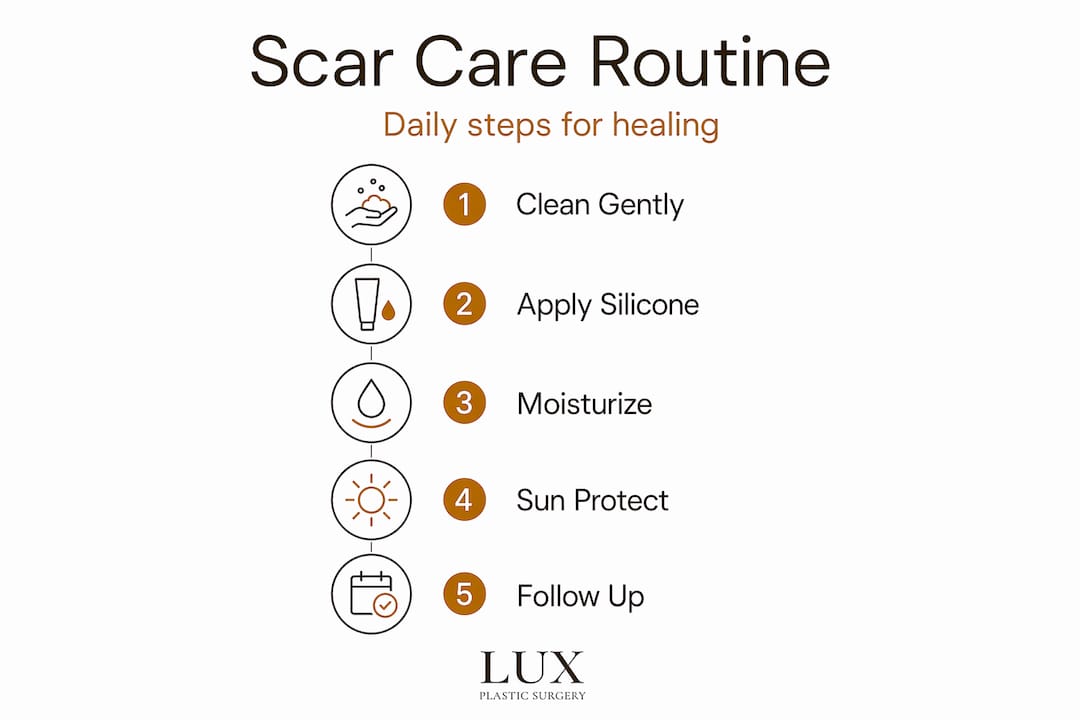
Daily care best practices for scar healing post-liposuction
Aftercare for liposuction scars is where many patients lose ground. The clinical procedure goes well, but inconsistent daily habits slow healing or worsen the final result. These are the practices that genuinely make a difference:
- Keep incisions clean and moisturised once the initial healing phase is complete. Dry, cracked skin around a scar disrupts the remodelling process.
- Protect scars from the sun rigorously. UV exposure causes post-inflammatory hyperpigmentation, making scars darker and more visible. Use SPF 50 on any exposed scar for at least 12 months post-surgery.
- Use silicone-based products consistently rather than switching between different creams. Silicone is the most evidence-backed topical option available without a prescription.
- Avoid smoking. Smoking reduces blood flow to healing tissue, impairs collagen synthesis, and significantly worsens scar outcomes. This is not a minor factor.
- Eat for skin repair. Vitamin C supports collagen production; zinc supports wound healing; protein provides the raw material for tissue repair. A balanced diet is genuinely part of your scar care plan.
- Massage as directed. Gentle massage, sun avoidance, and a healthy lifestyle support scar resolution and improve outcomes post-surgery.
Pro Tip: Apply SPF to your scar even on cloudy days and even if the scar is under clothing that you might remove. Scars that are repeatedly exposed to UV without protection during the first year are significantly harder to fade later.
The importance of scar aftercare extends well beyond the first few weeks. Consistent habits over months are what separate patients who are delighted with their results from those who remain self-conscious about their scars. Our scar healing tips offer a practical framework to follow throughout recovery.
Why patience and tailored care are key to true scar healing
Here is the perspective that most pre-surgery content skips entirely. Patients often make their worst decisions about scar management in the first six weeks, precisely because that’s when things look most alarming and the temptation to intervene aggressively is strongest.
Early post-op firmness and lumps can mislead patients into believing their scars are permanent, when in reality internal remodelling continues for months with proper care. Rushing to aggressive treatments before the scar has matured can actually disrupt the natural healing process and produce worse outcomes.
The patients who achieve the best long-term scar results share a common trait: they follow a structured, evolving plan rather than reacting to how things look on any given day. That means starting with conservative measures, monitoring progress consistently, and escalating to clinical treatments only when warranted. Combination or in-office treatments targeting different scar features consistently outperform prolonged at-home routines in stubborn scarring, but the timing of those interventions matters enormously.
The other factor that is consistently undervalued is communication with your surgeon. Scar care is not a set-and-forget prescription. It requires regular review, honest assessment, and the willingness to adjust the approach as the scar evolves. Surgeons who offer structured follow-up appointments are not just being thorough; they are giving you a meaningful clinical advantage. Our guide to scar minimisation strategies reflects this philosophy throughout.
How Lux Plastic Surgery supports your scar care journey
Managing liposuction scars well starts before you even have surgery. At Lux Plastic Surgery, Professor Sandip Hindocha takes a personalised approach from your very first consultation, assessing your skin type, scar history, and treatment goals to build a care plan that minimises scarring from the outset.

Our expert plastic surgery services include access to advanced combination scar treatments, structured follow-up care, and patient education resources that empower you to manage your healing proactively. Whether you need guidance on daily aftercare or clinical intervention for a raised scar, our team provides timely support at every stage. Explore our scar minimisation guide and expert scar treatment options to see how we approach scar care, then book a consultation to discuss your individual needs.
FAQ
How long do liposuction scars typically take to fade?
Liposuction scars usually become less visible over 3 to 6 months as swelling and fibrosis soften, but full healing may take up to a year depending on your skin type and how consistently you follow aftercare guidance.
Can raised scars from liposuction be treated effectively?
Yes. Raised scars such as hypertrophic scars respond well to combination treatments including corticosteroids, laser therapy, and microneedling when administered under professional care and tailored to the scar’s characteristics.
Does VASER liposuction reduce scarring compared to traditional methods?
VASER typically produces less bruising due to ultrasound energy but uses similar small incisions, so scar appearance ultimately depends more on your individual healing response and post-operative care than on the technique itself.
What daily practices help minimise liposuction scar visibility?
Keeping scars clean, applying silicone gels consistently, protecting from sun exposure with SPF 50, performing gentle massage, and maintaining good nutrition all contribute meaningfully to better scar healing and a less visible final result.