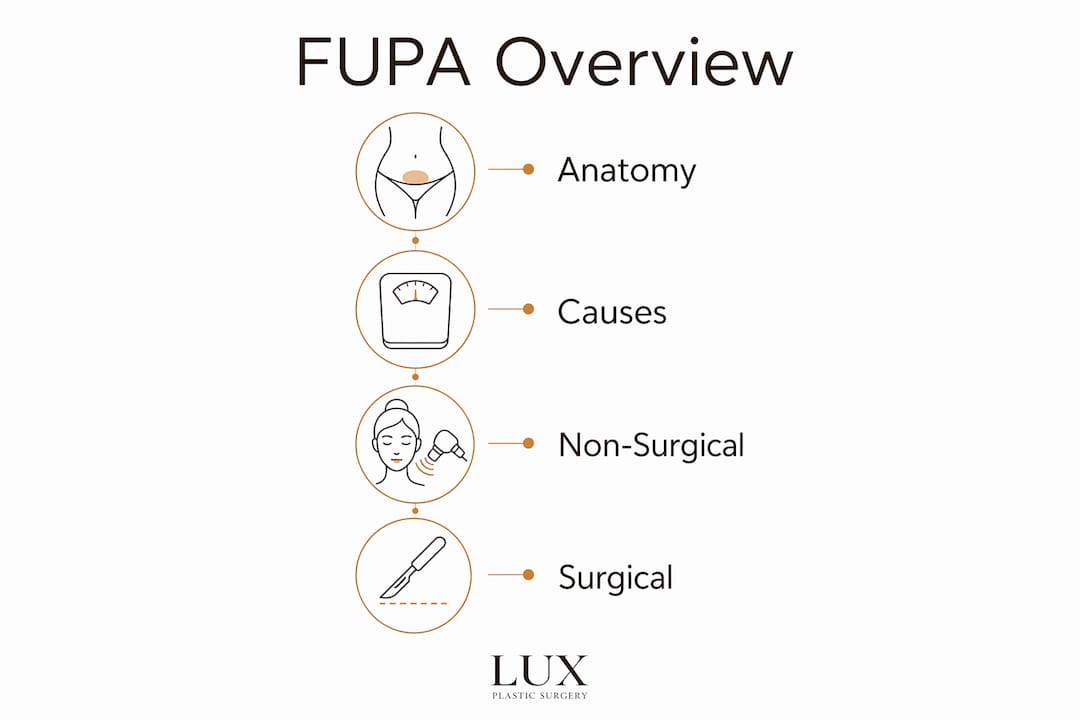
FUPA is defined as Fat Upper Pubic Area, a colloquial abbreviation describing the soft fatty tissue that sits over the mons pubis, the rounded mound of tissue above the pubic bone. The term is widely used informally but carries no medical diagnosis. Clinically, the area is known as the mons pubis, and the fat it contains is normal human anatomy with genuine physiological functions. For many people, the fupa meaning becomes relevant when this area becomes more prominent due to weight change, pregnancy, or ageing, prompting questions about body image and whether aesthetic treatment is appropriate. This article explains the anatomy, causes, and options available in the UK.
What is the FUPA area, anatomically speaking?
The mons pubis is a pad of subcutaneous fat overlying the pubic symphysis, the joint where the two halves of the pelvis meet. This tissue is present in all adults and serves a protective and hormonal role. In women, oestrogen directs fat storage to this region as part of normal reproductive physiology. The fat here is subcutaneous, meaning it sits directly beneath the skin rather than around internal organs.
Clinically, there is an important distinction between different tissue types in this region:
- Subcutaneous fat sits just below the skin and is the primary component of the mons pubis. It responds, to some degree, to diet and exercise.
- Visceral fat surrounds internal organs deeper in the abdomen. It does not contribute directly to the mons pubis appearance but can push the lower abdomen forward.
- Skin laxity refers to loose or excess skin, which is separate from fat volume and requires a different treatment approach.
- Panniculus is the clinical term for excess skin and fat that hangs significantly below the natural contour, often seen after major weight loss or multiple pregnancies.
Understanding which tissue type is involved is the first step in any clinical assessment. A prominent mons pubis caused by subcutaneous fat alone is treated differently from one complicated by skin laxity or a scar-induced shelf. This distinction is what separates a useful consultation from a generic one.
The informal fupa definition conflates all of these tissue types into one term. That is not a criticism of the language, but it does mean that anyone seeking treatment needs a proper clinical evaluation rather than a self-diagnosis based on a slang term.
What causes the FUPA to become more prominent?
A prominent mons pubis develops through several distinct pathways, and in most people more than one factor is at work simultaneously.
- Weight gain. Subcutaneous fat accumulates across the body, including the mons pubis. The distribution is partly determined by genetics, which means two people with identical body weight may have very different amounts of fat in this region.
- Hormonal changes. Oestrogen directs fat storage to the lower abdomen and pubic area. Perimenopause and menopause alter this hormonal balance, often causing fat redistribution toward the abdomen and mons pubis even without overall weight gain.
- Pregnancy. The lower abdominal wall stretches significantly during pregnancy. After delivery, the skin and underlying tissues may not fully return to their previous position, leaving a more prominent contour.
- Caesarean section scarring. A C-section scar can tether the skin to the underlying fascia, creating a shelf effect above the scar line. This is a structural issue, not purely a fat issue, and it requires a different surgical approach.
- Ageing. Skin loses elasticity with age. The supportive ligaments of the mons pubis also relax, allowing the tissue to descend and become more visible.
- Genetic predisposition. Genetics plays a critical role in where the body stores fat and how readily it releases it. For many people, fat in the pubic area persists despite consistent exercise and a healthy diet. This is not a failure of willpower. It is a biological reality.
Pro Tip: If the mons pubis appears more prominent when seated than when standing, the cause is likely a combination of skin laxity and fat rather than fat alone. This distinction matters significantly for treatment planning.
A prominent mons pubis is usually not dangerous in itself. Clinicians advise caution about interpreting it as a health risk without a full assessment. That said, significant central adiposity, which includes excess fat in the lower abdomen, is associated with metabolic risk factors. Any concern about overall abdominal fat should be discussed with a GP rather than addressed through cosmetic surgery alone.
What treatment options exist for reducing the FUPA area?
Treatment selection depends entirely on what is causing the prominence. Fat volume, skin laxity, and scar-induced deformity each require a different approach, and many patients present with a combination of all three. The combination of fat and skin laxity guides whether liposuction, monsplasty, or a combined abdominoplasty is most appropriate.

Non-surgical approaches
Non-surgical fat reduction techniques, including high-intensity focused ultrasound (HIFU), can reduce modest volumes of subcutaneous fat without incisions. These approaches suit patients with mild prominence and good skin elasticity. The limitation is that they cannot address skin laxity or scar-related shelving. Results are gradual and typically require multiple sessions. Lux Plastic Surgery offers non-surgical fat reduction options for patients who are not ready for or do not require surgery.
Surgical options
| Procedure | Best suited for | Key consideration |
|---|---|---|
| Liposuction | Predominantly fatty volume, good skin tone | Does not address skin laxity |
| Monsplasty | Skin laxity, mild to moderate fat, post-pregnancy changes | Scar placement requires careful planning |
| Abdominoplasty with monsplasty | Significant skin laxity, C-section shelf, post-weight-loss changes | Longer recovery, broader contouring effect |
Liposuction removes subcutaneous fat through small cannulas. It produces good results when skin tone is adequate to contract after fat removal. When skin laxity is present, liposuction alone can worsen the appearance by leaving loose skin without the underlying volume to support it.
Monsplasty directly excises excess skin and fat from the mons pubis. It is particularly effective after pregnancy or C-section where a shelf deformity has formed. The scar is placed low, typically within the bikini line, but its final position depends on individual anatomy and surgical planning.
Abdominoplasty is indicated when there is significant lower abdominal skin laxity alongside mons pubis changes. Surgeons frequently combine the two procedures because the tension vectors of an abdominoplasty affect the mons pubis position. Addressing both areas together produces a more natural contour than treating them separately.
Surgeons assess the mons pubis in both standing and seated positions before planning treatment. The appearance changes substantially between postures. Failing to account for both can result in a step-off deformity, where the treated area looks acceptable standing but unnatural when seated. This is a detail that separates experienced body contouring surgeons from those with less specialised training.
Pro Tip: Ask your surgeon to assess you in both standing and seated positions during your consultation. If they only assess you standing, the surgical plan may not account for how the area looks in everyday postures.
In the UK, liposuction to the mons pubis typically costs between £2,500 and £5,000. Monsplasty ranges from £3,000 to £6,000. Combined abdominoplasty with monsplasty can range from £6,000 to £12,000 depending on complexity and the surgeon’s experience. BAAPS and BAPRAS both advise that patients should prioritise surgeon credentials and clinical safety over cost when selecting a provider. These figures are indicative and vary by clinic, region, and individual anatomy.
How does the FUPA term affect body image and patient expectations?
The term FUPA carries a range of attitudes in internet culture, from self-deprecating humour to body-positive reclamation. This social context shapes how patients feel when they first raise the subject with a clinician. Some feel embarrassed using the term. Others use it matter-of-factly. Neither response is wrong.
Several points are worth understanding clearly:
- The mons pubis is a normal anatomical structure. Its presence is not a sign of poor health or inadequate fitness.
- Fat persistence in this area is often genetically predetermined. It does not reflect a person’s effort or discipline.
- Cosmetic surgery addresses appearance, not health status. A patient who is otherwise well and at a stable weight can be an appropriate candidate for treatment without any medical indication.
- Realistic expectations matter. Surgery can reduce volume and improve contour, but it cannot change underlying anatomy, prevent future weight fluctuation, or guarantee a specific aesthetic outcome.
- Medical professionals advise focusing on overall health rather than the appearance of this area in isolation. Cosmetic treatment is most satisfying when it addresses a specific, stable concern rather than a broader dissatisfaction with body weight.
Professor Sandip Hindocha, GMC-registered Consultant Plastic Surgeon and NHS Clinical Director at Lux Plastic Surgery, emphasises that patients benefit most from a consultation that separates the emotional weight of the term from the clinical reality. The mons pubis is a treatable area, and the options are well established. What matters is matching the right procedure to the right patient at the right time.
Body image concerns linked to the pubic area are common and legitimate. They do not require justification. At the same time, a good surgeon will explore whether the concern is isolated or part of a broader pattern of body dissatisfaction, because the latter is better addressed through psychological support alongside, or instead of, surgery.
Key takeaways
FUPA describes the fat over the mons pubis, a normal anatomical area whose prominence is shaped by genetics, hormones, and life events, and which can be addressed surgically or non-surgically depending on the underlying tissue type.
| Point | Details |
|---|---|
| FUPA is not a medical diagnosis | The term describes the mons pubis region informally; clinical assessment determines the actual tissue involved. |
| Causes are multifactorial | Weight gain, hormonal shifts, pregnancy, C-section scarring, and genetics all contribute independently. |
| Treatment depends on tissue type | Fat alone suits liposuction; skin laxity or scarring requires monsplasty or abdominoplasty. |
| Posture assessment is critical | Surgeons must evaluate the area standing and seated to avoid unnatural results post-procedure. |
| Expectations should be realistic | Surgery improves contour but does not alter genetics or prevent future weight changes. |
What I have learned from treating this area
The patients I see at Lux Plastic Surgery who are concerned about the mons pubis region often arrive having spent years assuming the problem is one they should be able to fix through diet and exercise alone. When it does not respond, they feel they have failed. That belief is almost always incorrect.
Genetics determines where fat is stored and how resistant it is to mobilisation. For a significant proportion of people, the pubic area is one of the last places the body releases fat, regardless of overall fitness. Recognising this shifts the conversation from self-blame to informed decision-making.
The other misconception I encounter regularly is that this is a simple liposuction case. In practice, the mons pubis is one of the more technically demanding areas to treat well. The interplay between fat volume, skin elasticity, scar tissue from previous surgery, and the way the area behaves in different postures means that a thorough assessment is non-negotiable. I have seen results from inadequate assessments that looked acceptable in photographs but created visible step-off deformities in everyday movement.
My view is that the fupa explanation patients find online is a reasonable starting point for understanding the term, but it should not be the basis for a treatment decision. A proper consultation, with a GMC-registered surgeon who assesses you in multiple positions and discusses your full medical history, is the only reliable foundation for a good outcome. The procedure itself is often straightforward. The planning is where the work happens.
— Lux
Considering treatment for the mons pubis area
Lux Plastic Surgery offers personalised consultations for patients concerned about the mons pubis region, led by Professor Sandip Hindocha, GMC-registered Consultant Plastic Surgeon, FRCS (Plast), and NHS Clinical Director. Clinics are available in Bedford, London, and Manchester.

Whether your concern involves excess fat, skin laxity, or post-surgical changes, the team at Lux Plastic Surgery will assess your anatomy thoroughly and recommend a treatment plan matched to your specific presentation. Options include liposuction, monsplasty, and combined body contouring procedures for more complex cases. For a full overview of surgical and non-surgical options, visit the plastic surgery options guide on the Lux Plastic Surgery website. To book a consultation, contact the clinic directly.
This article is for informational purposes only and does not constitute medical advice. Consult a GMC-registered specialist before making any treatment decisions.
FAQ
What does FUPA stand for?
FUPA stands for Fat Upper Pubic Area. It is an informal term describing the soft tissue over the mons pubis, which is the medically recognised name for this anatomical region.
Is having a FUPA a medical problem?
A prominent mons pubis is not a medical diagnosis and is not inherently dangerous. Clinicians recommend addressing overall health rather than treating the area as an isolated concern unless a specific cosmetic or functional issue is present.
Can exercise alone reduce the FUPA area?
Exercise can reduce overall body fat, but genetics largely determines whether the pubic area responds. For many people, fat in this region persists despite consistent training, making surgical options the most reliable route to a lasting change in contour.
What is the difference between liposuction and monsplasty for this area?
Liposuction removes fat volume and suits patients with good skin tone. Monsplasty removes excess skin and fat directly, making it the better option when skin laxity or a C-section shelf is present. A surgeon will assess which approach, or combination, is appropriate for your anatomy.
How much does treatment for the FUPA area cost in the UK?
Liposuction to the mons pubis typically costs between £2,500 and £5,000 in the UK. Monsplasty ranges from £3,000 to £6,000, and combined abdominoplasty with monsplasty can range from £6,000 to £12,000 depending on complexity and the surgeon’s experience. BAAPS advises prioritising surgeon credentials over cost.