An earring caught on a towel, a toddler’s grab, or years of heavy earrings can leave an earlobe split or stretched into a long slit. It is a small injury that people often live with for years before they find out it can usually be repaired in a short procedure under local anaesthetic.
The repair itself is simple in principle. What decides a good result is the stitching technique, because a poorly closed lobe can heal with a notch, and a lobe that has stretched may need more than a single stitch line.
Here’s how earlobes tear and stretch, how they are repaired, when you can wear earrings again, and what repair costs in the UK.
Earlobe repair at a glance
| Point | Details |
|---|---|
| What it treats | Torn or split earlobes, and lobes stretched by heavy earrings or gauges. |
| Anaesthetic | Usually local anaesthetic, as a short outpatient procedure. |
| Technique matters | The method used affects whether the lobe heals smoothly or with a notch. |
| Re-piercing | Only after full healing, and your surgeon will say when. |
| Typical private cost | Roughly £400 to £1,200 per earlobe, depending on the clinic and complexity. |
| NHS | Generally treated as cosmetic and not routinely available. |
How earlobes tear or stretch
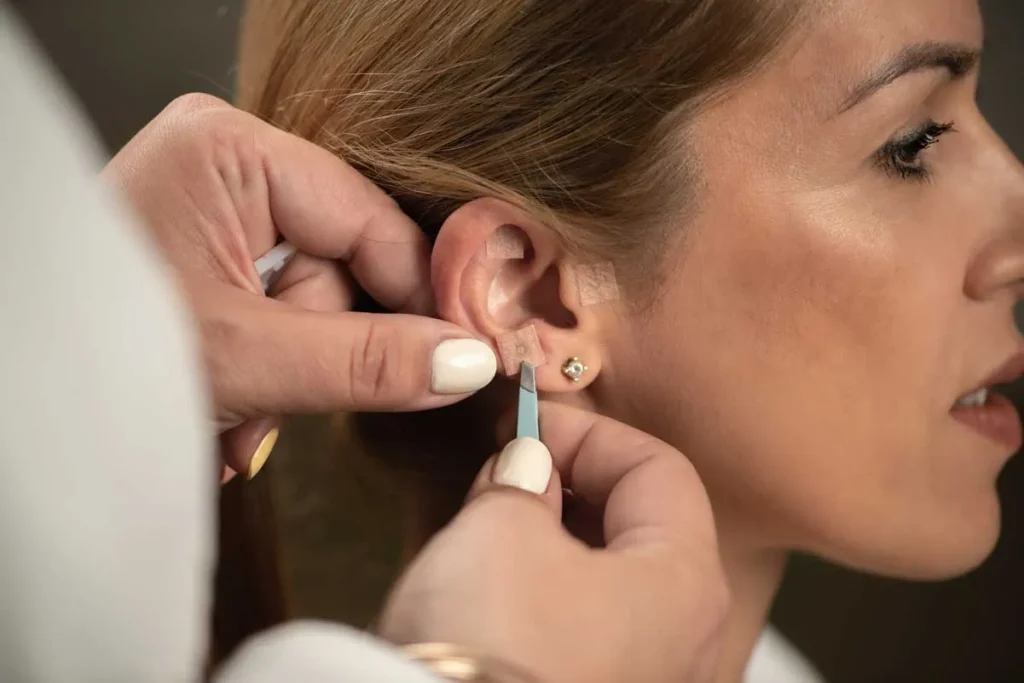
The earlobe is soft tissue with no cartilage, so it has little to resist a sudden pull. A caught earring can tear straight through the piercing, and heavy earrings worn for years can slowly drag the hole downward until the lobe elongates or splits.
Stretching with gauges or tunnels does the same thing more quickly. Ear injury more broadly is covered in our guide to otoplasty and ear correction surgery, though earlobe repair is a different, smaller operation.
Torn versus stretched: two different repairs
A torn lobe is split, often through one piercing site. The repair removes the scarred edges of the split and closes it in layers. A stretched lobe is intact but enlarged, with a wide hole or an elongated, thin lobe, and may need tissue trimmed and reshaped as well as closed.
Small stretches may shrink on their own if you stop wearing heavy jewellery. Larger ones usually do not, and that is when surgery is considered.
What the operation involves
The procedure is normally done under local anaesthetic and takes a short time. The surgeon numbs the lobe, removes the skin lining the old piercing or split so that fresh edges can heal together, and closes the wound with fine stitches, often in more than one layer.
You go home the same day. Stitches are usually removed after about a week unless dissolvable ones are used, and your surgeon will explain how to look after the area.
Will the repair hold?
A well-planned repair usually does. The risk is a notch at the bottom edge, where a straight line of scar can contract and pull. To reduce that, surgeons may use an offset or zig-zag closure that breaks up the scar line.
That is one reason to choose an experienced surgeon over a quick, cheap fix, a theme developed in why surgical expertise matters. Ask how they close the lobe and what they do to avoid a notch.
When can you pierce your ears again?
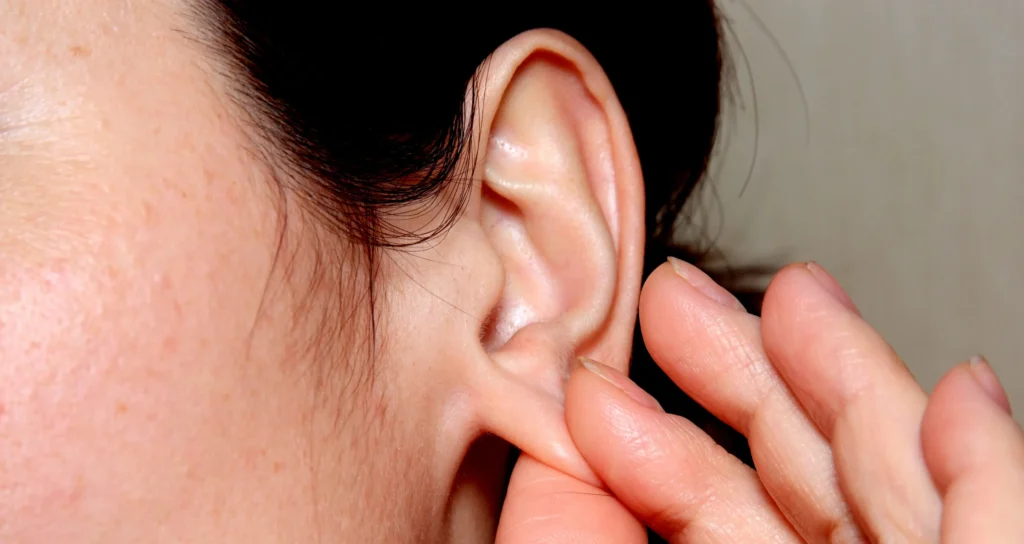
Not straight away. The lobe has to heal fully first, which commonly takes at least a couple of months, and your surgeon will confirm when it is safe. Piercing too early risks reopening the repair.
If you want to wear earrings again, ask about placing the new piercing slightly away from the scar line, and choose lighter jewellery so the problem does not return.
Risks and scarring
Possible problems include a notched or uneven lobe, infection, a visible scar and the repair coming apart. Some people are prone to raised, thickened keloid scars, particularly on the ears, so tell your surgeon if you or your family have had them.
Scars on the lobe usually fade well, and what scar revision involves and costs shows the options if one does not.
Recovery, week by week
In the first days, expect tenderness, mild swelling and a small dressing. Keep the lobe clean and dry, and avoid sleeping on that side. Stitches typically come out around a week, after which the lobe looks and feels much more normal.
Over the following weeks the scar softens and fades. Avoid pulling or knocking the ear, and keep jewellery out until your surgeon says otherwise.
What does earlobe repair cost?
UK private clinics commonly quote from about £400 for a single earlobe, with some listing £500 to £1,200 per lobe and lower prices for repairing both together. Price depends on how much tissue needs reshaping and who does the surgery.
These are indicative figures, not a Lux quote. Cosmetic repair is generally not funded by the NHS or private insurance, so budget for it yourself. NHS advice on choosing who will do your procedure is a useful checklist before you compare quotes.
Having your earlobes assessed at Lux

At Lux Plastic Surgery, earlobe repair is carried out by Professor Sandip Hindocha, FRCS (Plast), Consultant Plastic Surgeon (GMC number 6122218). He examines the lobe and explains which approach suits it, and the fee is quoted individually in writing after consultation. Consultations take place at clinics in Bedford, London and Manchester.
You can read more about ear surgery at Lux or contact Lux to arrange a consultation. Whether a repair is suitable for you is decided after examination.
This article is for general information only and does not constitute medical advice. Prices are indicative and vary by surgeon and complexity, so always request a written quote.
FAQ
Can a torn earlobe be repaired?
Yes. A short operation under local anaesthetic removes the scarred edges and closes the lobe so it can heal together.
Can a stretched earlobe go back to normal?
Small stretches may shrink on their own. Larger ones usually need surgery to trim and reshape the lobe.
How much does earlobe repair cost?
Often from around £400 per earlobe, and up to about £1,200 at some clinics. Ask for a written quote after assessment.
When can I get my ears pierced again?
Only once the lobe has fully healed, which commonly takes a couple of months. Your surgeon will tell you when it is safe.
Will the repair leave a scar?
Yes, but it is usually small and fades well. Tell your surgeon if you tend to form keloid scars.