Breast enlargement, the clinical term for which is augmentation mammoplasty, is a surgical or non-surgical procedure designed to increase breast volume, improve shape, and restore symmetry. The procedure is performed using silicone implants, saline implants, or autologous fat transfer, and it remains one of the most commonly requested cosmetic procedures in the UK private sector. Whether you are considering it after pregnancy, significant weight loss, or simply to address a longstanding concern about proportion, understanding your options in full is the most important step you can take before booking a consultation.
What methods are available for breast enlargement?
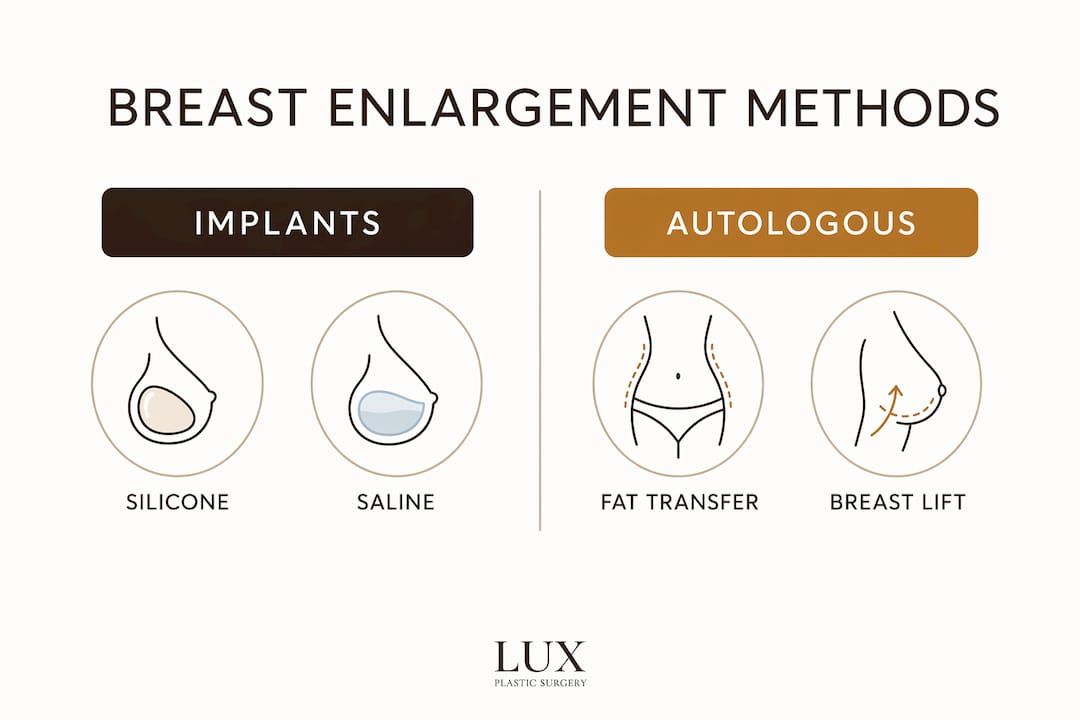
Breast enlargement in the UK is achieved through three principal methods: silicone gel implants, saline implants, and fat transfer augmentation. Each carries a distinct set of clinical characteristics, and the right choice depends on your anatomy, the degree of volume change you want, and your tolerance for future revision surgery.
Silicone versus saline implants
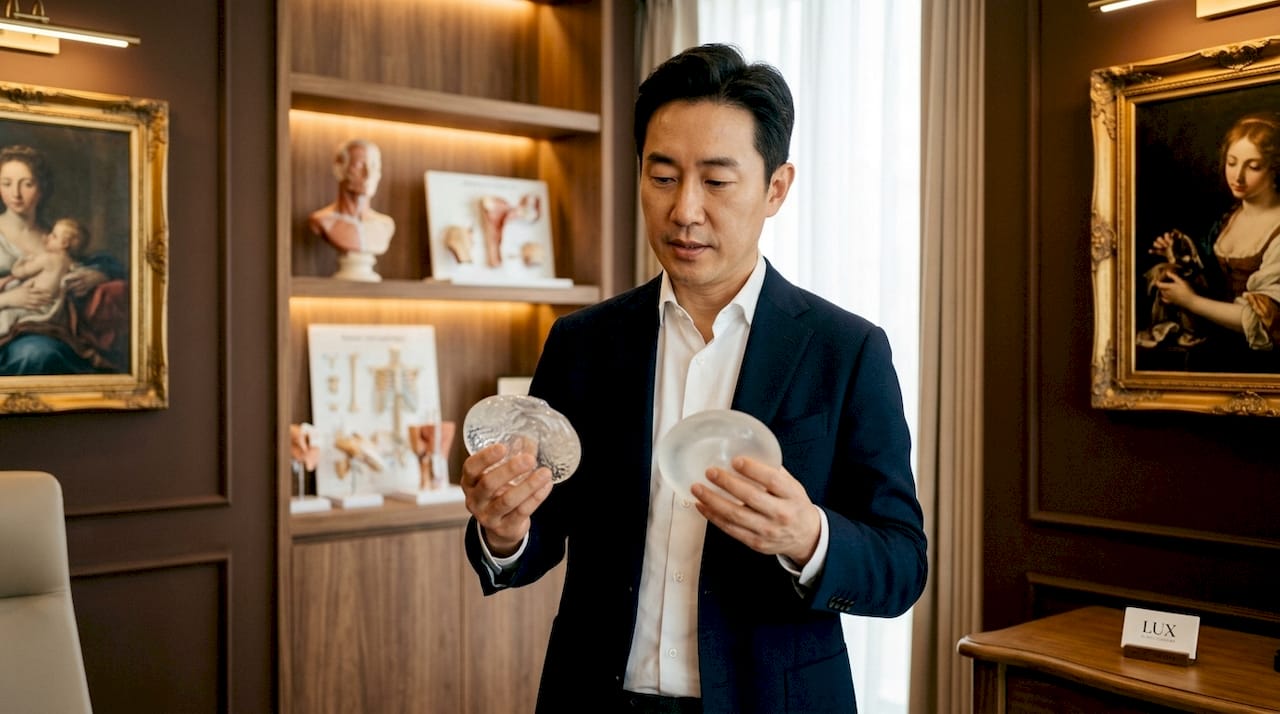
Silicone implants tend to maintain shape better and more closely mimic the feel of natural breast tissue. The cohesive gel variants, sometimes called “gummy bear” implants, hold their form even if the outer shell is compromised. Saline implants, by contrast, are firmer to the touch and deflate visibly and immediately if ruptured, which makes rupture detection straightforward. That single characteristic is a meaningful clinical advantage for patients who want certainty about implant integrity over time.
Implant placement can be submuscular (beneath the pectoral muscle), subglandular (above the muscle but beneath the breast tissue), or subfascial (beneath the fascial layer of the muscle). Each position affects the final appearance, recovery duration, and the likelihood of certain complications such as capsular contracture. Submuscular placement generally produces a more natural upper-pole slope and is associated with lower rates of capsular contracture, though it typically involves a longer initial recovery.
Fat transfer as a breast enhancement technique
Fat transfer augmentation uses liposuction to harvest fat from the abdomen, flanks, or thighs, which is then processed and injected into the breast. The result is a subtle, natural-looking increase, typically no more than one cup size. This approach suits patients who want modest enlargement without implants, and it carries the added benefit of body contouring at the donor site. For detailed information on this technique, the fat transfer process at Lux Plastic Surgery covers the clinical steps and realistic outcomes in full.
| Method | Feel and appearance | Rupture detection | Volume change possible | Typical revision need |
|---|---|---|---|---|
| Silicone implants | Natural, soft | MRI scan required | Moderate to significant | Every 15-20 years |
| Saline implants | Firmer | Immediate deflation | Moderate to significant | Every 15-20 years |
| Fat transfer | Very natural | Not applicable | Subtle (up to one cup) | Possible top-up needed |
Pro Tip: Ask your surgeon about 3D imaging at your consultation. This technology allows you to visualise likely outcomes before committing to a specific implant size or shape, which significantly reduces post-operative disappointment.
A breast lift is frequently combined with implants when there is significant ptosis (sagging), particularly after pregnancy or substantial weight loss. Combining the two procedures in a single operative session reduces total anaesthetic exposure and overall recovery time compared with staging them separately.
Who is suitable for breast enlargement?
Candidacy for augmentation mammoplasty is determined by a combination of physical health, psychological readiness, and realistic expectations. No reputable surgeon will proceed without a thorough assessment of all three.
The physical criteria most surgeons apply include:
- Being in good general health with no active infection or uncontrolled medical conditions
- Being a non-smoker, or willing to stop smoking for a minimum of six weeks before and after surgery
- Having fully developed breast tissue, which typically means being aged 18 or over (21 or over for silicone implants in many UK clinics)
- Having stable body weight, as significant fluctuations after surgery affect the long-term result
- Not being pregnant or breastfeeding at the time of surgery
Psychological suitability is equally important. The best implant size depends on body frame, existing tissue coverage, and patient lifestyle rather than an arbitrary cup size target. Patients who arrive at consultation with a fixed number in mind, regardless of their anatomy, are more likely to be dissatisfied with the outcome. A good surgeon will redirect that conversation towards proportional improvement.
Skin quality, chest wall shape, and the degree of existing asymmetry all influence which technique and implant profile will produce the most balanced result. Women with very little existing breast tissue may find that a submuscular placement provides better coverage and a more natural contour than a subglandular approach. Those with adequate tissue may have more flexibility in placement choice.
Pro Tip: Bring reference photographs to your consultation, but treat them as a starting point for discussion rather than a blueprint. Your surgeon needs to work with your anatomy, not someone else’s.
Surgeon selection is the single most important factor in achieving a safe and satisfying outcome. Verify that your surgeon is on the GMC Specialist Register for plastic surgery and is a member of BAAPS (British Association of Aesthetic Plastic Surgeons) or BAPRAS (British Association of Plastic, Reconstructive and Aesthetic Surgeons).
What are the risks and long-term considerations?
All surgery carries risk, and breast augmentation is no exception. Understanding the full risk profile before consenting to surgery is not optional. It is the foundation of informed decision-making.
The most commonly reported complications include:
- Capsular contracture: The body forms scar tissue around any implant. When this tightens excessively, it can distort the shape of the breast and cause discomfort. It is the most frequent reason for revision surgery.
- Infection: Most cases are managed with antibiotics, but severe infection may require temporary implant removal.
- Haematoma and seroma: Collections of blood or fluid around the implant that may need drainage.
- Changes in nipple sensation: Temporary or permanent altered sensation affects a proportion of patients, though most changes resolve within twelve months.
- Scarring: Incision placement (inframammary fold, periareolar, or axillary) determines scar location and visibility.
Breast implants are not lifetime devices. Implants typically last around 20 years, and most patients will require at least one revision or replacement procedure during their lifetime. Plan for this from the outset, both financially and practically.
Implant warranties rarely cover complications such as capsular contracture or rupture beyond a typical ten-year period, which means long-term patient vigilance is not optional. Annual self-examination and periodic imaging, either ultrasound or MRI, are the standard of care for monitoring implant integrity.
On the question of breastfeeding, most women with implants can breastfeed successfully. However, certain incision placements, particularly periareolar incisions around the nipple, carry a slightly elevated risk of breastfeeding difficulties due to potential disruption of the milk ducts. If preserving breastfeeding capacity is a priority, discuss incision placement explicitly with your surgeon before the procedure.
The psychological impact of surgery is real in both directions. Most patients report improved confidence and body image following augmentation. A small number experience regret, particularly if their expectations were not aligned with achievable outcomes. Pre-operative psychological screening and honest communication with your surgeon are the most effective safeguards.
How much does breast enlargement cost in the UK?
Breast enlargement in the UK is not available on the NHS except in rare reconstructive cases. All cosmetic augmentation is funded privately, and costs vary considerably depending on the technique, the surgeon’s experience, and the clinic’s location.
Typical cost ranges as of 2026 are as follows:
| Procedure | Typical UK cost range |
|---|---|
| Silicone implants | £4,500 to £8,000 |
| Saline implants | £3,500 to £6,000 |
| Fat transfer augmentation | £4,000 to £7,000 |
| Combined implant and lift | £6,000 to £10,000 |
These figures typically include the surgeon’s fee, anaesthetist’s fee, hospital or theatre costs, and a defined period of post-operative follow-up. They do not always include the cost of pre-operative assessments, compression garments, or any revision surgery that may be required.
The process from initial consultation to discharge generally follows this sequence:
- Initial consultation: Clinical assessment, discussion of goals, review of medical history, and 3D imaging where available.
- Pre-operative assessment: Blood tests, anaesthetic review, and consent process, usually two to four weeks before surgery.
- Surgery: Typically performed under general anaesthetic and takes one to two hours.
- Immediate recovery: One night in hospital is standard for most implant procedures; day-case fat transfer is possible in some clinics.
- Follow-up appointments: At one week, six weeks, and three to six months post-operatively.
Financing options are offered by many UK clinics, including interest-free credit over twelve months. Treat any financing arrangement with the same scrutiny you would apply to the surgery itself. Confirm that the repayment terms do not extend beyond the period covered by your post-operative care package.
What does recovery from breast enlargement involve?
Recovery from augmentation mammoplasty follows a predictable pattern for most patients, though individual experience varies depending on the technique used, implant placement, and general health.
Most patients require one to two weeks off work, with avoidance of strenuous upper body activity recommended for four to six weeks. Final results settle over three to six months as swelling resolves and the implants descend into their natural position.
The key recovery milestones and care recommendations are:
- Days 1 to 7: Rest, limited arm movement, and wearing a supportive surgical bra at all times. Discomfort is typically managed with prescribed analgesia.
- Weeks 1 to 2: Return to light desk-based work is usually possible. Driving is not recommended until you can perform an emergency stop without hesitation.
- Weeks 2 to 6: Gradual return to daily activities. Avoid lifting anything heavier than a kettle. Continue wearing the support garment as directed.
- Weeks 6 onwards: Return to exercise, including upper body training, with your surgeon’s clearance.
- Months 3 to 6: Scars continue to mature and fade. Silicone scar gel or sheeting can be introduced once wounds are fully healed.
Wound care is straightforward but requires consistency. Keep incision sites clean and dry, avoid submerging them in water until fully healed, and protect scars from sun exposure for at least twelve months to minimise pigmentation changes.
Pro Tip: Sleep on your back with your upper body slightly elevated for the first two weeks. This reduces swelling and pressure on the implants during the critical early healing phase.
A common misconception is that implants “drop” immediately after surgery. In reality, the settling process takes several months, and the final result at six weeks looks markedly different from the result at six months. Patience during this period is not passive. It is part of the clinical process.
For a detailed walkthrough of what to expect at each stage, the step-by-step augmentation guide at Lux Plastic Surgery covers the process from first consultation through to long-term follow-up.
Key takeaways
Breast enlargement is a safe and effective procedure when performed by a qualified consultant plastic surgeon, but it requires thorough pre-operative assessment, realistic expectations, and a clear understanding of long-term maintenance.
| Point | Details |
|---|---|
| Three main methods exist | Silicone implants, saline implants, and fat transfer each suit different anatomies and goals. |
| Implants are not permanent | Most implants last around 20 years; plan for at least one revision procedure during your lifetime. |
| Costs range from £3,500 to £10,000 | The final figure depends on technique, surgeon experience, and whether a combined procedure is needed. |
| Recovery takes up to six months | Visible swelling resolves by six weeks, but final results settle between three and six months post-operatively. |
| Surgeon credentials are non-negotiable | Verify GMC Specialist Register status and BAAPS or BAPRAS membership before consenting to any procedure. |
A considered view on breast enlargement decisions
The single question I am asked most often by patients at Lux Plastic Surgery is: “How do I know what size is right for me?” The honest answer is that size is the wrong starting point entirely.
What actually determines a satisfying outcome is proportion. A patient with a narrow chest wall and minimal existing tissue who requests a large implant volume is not going to achieve the natural result she is picturing. The anatomy sets the parameters, and the surgeon’s job is to work within them to produce the best possible outcome for that specific person. Managing expectations towards proportional aesthetic improvement rather than perfection consistently produces higher patient satisfaction than chasing a specific cup size.
The other area where I see patients make avoidable mistakes is in the selection of their surgeon. The UK cosmetic surgery sector is not uniformly regulated. Any registered medical practitioner can legally perform cosmetic surgery in the UK, regardless of specialist training. That fact should alarm anyone considering a procedure. Checking that your surgeon holds a Certificate of Completion of Training in plastic surgery and appears on the GMC Specialist Register takes five minutes and could be the most consequential thing you do in this entire process.
I also want to address the question of timing. Many women consider breast enlargement after completing their family, which is sensible. Pregnancy and breastfeeding alter breast volume and shape, and a procedure performed before those changes occur may not maintain its result. If there is any possibility of future pregnancy, that conversation needs to happen at your consultation, not after the surgery.
Finally, do not underestimate the value of the consultation process itself. A thorough pre-operative consultation is not a formality. It is where the clinical relationship is established, where your anatomy is properly assessed, and where the realistic parameters of your outcome are set. If a consultation feels rushed or your questions are not answered fully, that is important information about the care you are likely to receive post-operatively.
— Lux
Explore breast augmentation at Lux Plastic Surgery
Lux Plastic Surgery offers consultant-led breast augmentation in Bedford, with access to London and Manchester, under the direct care of Professor Sandip Hindocha, GMC-registered Consultant Plastic Surgeon and NHS Clinical Director. Every patient receives a personalised assessment covering implant type, placement, incision approach, and realistic outcome expectations before any decision is made. The clinic offers both implant-based and fat transfer options, with 3D imaging available to support pre-operative planning. To discuss your goals in a confidential clinical setting, book a personalised breast augmentation consultation with Professor Hindocha directly. This article does not constitute medical advice. Consult a GMC-registered specialist before making any clinical decision.
FAQ
What is the difference between breast enlargement and augmentation?
Breast enlargement is the commonly used descriptive term; augmentation mammoplasty is the clinical name for the same procedure. Both refer to surgery or fat transfer performed to increase breast volume and improve shape.
How long do breast implants last?
Breast implants last approximately 20 years on average, though this varies by individual. Most patients will require at least one revision or replacement procedure during their lifetime.
Can I breastfeed after breast enlargement surgery?
Most women with implants breastfeed successfully. Periareolar incisions carry a slightly higher risk of breastfeeding difficulties, so discuss incision placement with your surgeon if this is a concern.
Is breast enlargement available on the NHS?
Cosmetic breast augmentation is not available on the NHS. It is funded privately in all cases except those involving reconstructive surgery following mastectomy or significant congenital asymmetry.
What should I look for when choosing a breast surgeon in the UK?
Confirm that your surgeon is on the GMC Specialist Register for plastic surgery and holds membership of BAAPS or BAPRAS. These credentials confirm specialist training and adherence to professional standards in the UK.