Choosing the right breast surgery is rarely straightforward. The top breast surgery options span a wide spectrum, from cosmetic augmentation to complex post-mastectomy reconstruction, and the decision depends on your health history, body type, goals, and the expertise of your surgical team. With so many procedures available, and so much conflicting information online, it pays to understand exactly what each option involves before you sit down with a surgeon. This guide covers every major category with the depth you need to make a confident, informed choice.
Key takeaways
| Point | Details |
|---|---|
| Implants carry similar risks | Saline and silicone implants have comparable risk profiles; monitoring and long-term care matter more than fill type. |
| Flap reconstruction suits complex cases | Autologous tissue techniques are particularly well suited where radiation has damaged tissue or a natural feel is the priority. |
| Breast lift changes shape, not size | Mastopexy reshapes and lifts without adding volume; many patients combine it with augmentation for complete results. |
| Hybrid approaches offer flexibility | Combining implants with autologous tissue suits patients with limited donor fat or post-radiation tissue changes. |
| Surgeon experience is decisive | Surgical volume and specialist expertise directly influence outcomes across all breast surgery types. |
1. Saline implants for augmentation and reconstruction
Saline implants are filled with sterile salt water and inserted empty before being inflated once in position. This means the incision is slightly smaller than with pre-filled silicone implants. They feel firmer than natural breast tissue, which some patients prefer and others find less convincing.
The clearest advantage of saline is rupture detection. If a saline implant fails, the body absorbs the fluid safely and the breast deflates visibly within days. There is no ambiguity. That transparency makes monitoring considerably simpler than with silicone.
Key considerations for saline implants:
- Firmer feel than silicone, particularly noticeable in slimmer patients with less natural tissue coverage
- Rupture is immediately apparent, which removes the need for routine MRI surveillance
- Lower shell volume allows smaller incisions at the time of surgery
- Suitable for both cosmetic augmentation and implant-based breast reconstruction
Pro Tip: If you are considering saline implants for augmentation and have limited natural tissue coverage, discuss the rippling risk with your surgeon. This is more visible in leaner patients and worth factoring into your decision.
2. Silicone implants: feel, risks, and monitoring requirements
Silicone implants use cohesive silicone gel and are widely regarded as the closer match to natural breast tissue in terms of feel and movement. They are the more popular choice for both augmentation and reconstruction in the UK.
The risk profiles of both implant types are broadly comparable, covering rupture, infection, and capsular contracture. The critical difference is that silicone ruptures can be silent. The gel may stay within the implant shell or migrate slowly without any visible change. Because of this, silicone rupture requires imaging for detection, with routine MRI or ultrasound monitoring recommended from around five to six years post-surgery.
Many patients focus heavily on the saline versus silicone debate when the monitoring and follow-up commitments are equally worth understanding. Both types may require replacement over a lifetime, and budgeting for that is part of responsible planning. You can read more about choosing between implant types before your consultation.
3. Autologous tissue reconstruction: flap techniques explained
Autologous reconstruction uses your own tissue, typically skin, fat, and sometimes muscle, transplanted from another part of the body to reconstruct the breast after mastectomy. Free-flap microsurgery is complex with a longer recovery than implant-based options, but it often produces results that feel the most natural and age alongside your body.
The most commonly used flap techniques are compared below:
| Flap type | Tissue source | Muscle involvement | Recovery (approx.) |
|---|---|---|---|
| DIEP flap | Abdomen | None (perforator only) | 6 to 8 weeks |
| TRAM flap | Abdomen | Partial or full rectus | 6 to 10 weeks |
| Latissimus dorsi | Upper back | Latissimus muscle | 4 to 6 weeks |
| TUG / PAP flap | Inner thigh | Gracilis or none | 5 to 8 weeks |
The DIEP flap is currently the gold standard for many surgeons because it spares the abdominal muscles entirely, reducing the risk of long-term abdominal weakness. The TRAM flap achieves similar results but sacrifices more muscle, which matters greatly for patients who are physically active.
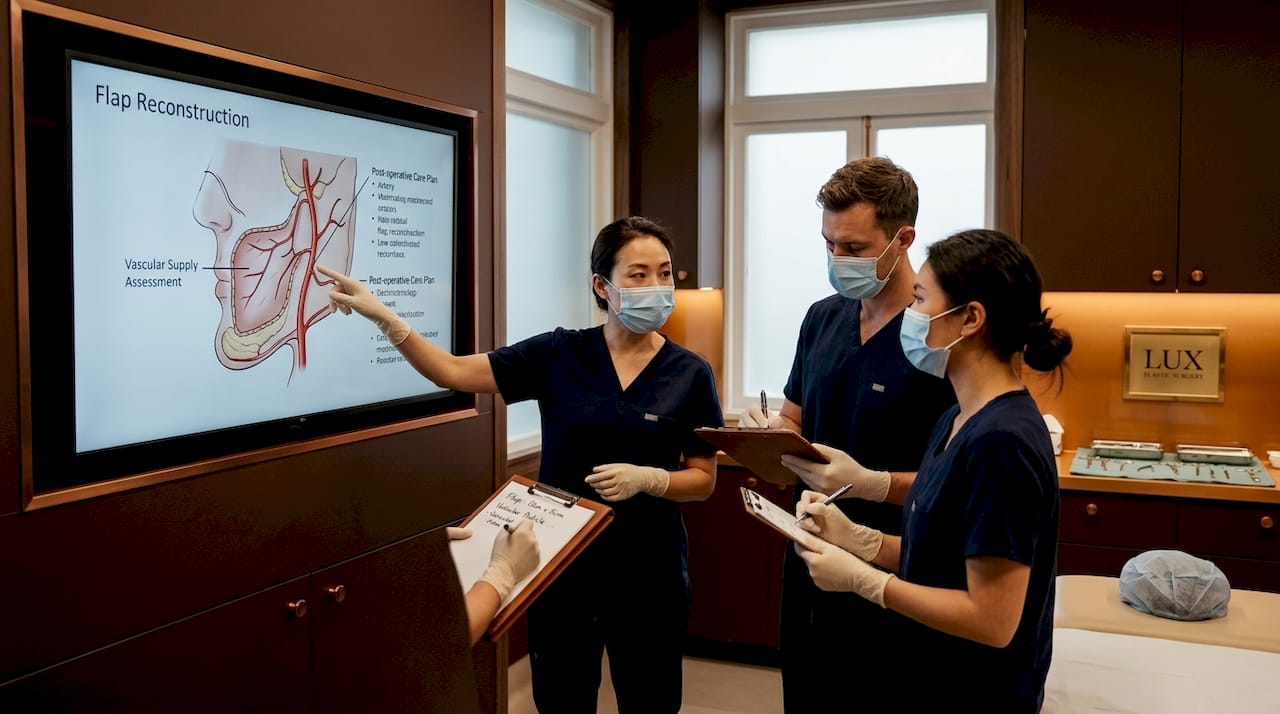
Free flap reconstruction can replace tissue damaged by radiation, which is a significant clinical advantage for patients who have undergone radiotherapy. Implants placed in irradiated tissue carry a higher risk of complications. Autologous tissue, by contrast, brings its own blood supply, making it a stronger option in those cases.
4. Breast lift (mastopexy): reshaping without changing size
A breast lift addresses ptosis, the medical term for sagging, by removing excess skin and repositioning the nipple and areola higher on the breast mound. It does not add or significantly reduce volume. For many women after pregnancy, breastfeeding, or weight loss, it is the procedure that makes the greatest difference to how they feel in clothes and in confidence.
Common indications and procedure details:
- Nipples pointing downward or sitting below the breast crease
- Excess skin creating a deflated or elongated appearance
- Asymmetry worsened by volume loss
- Desire to restore pre-pregnancy breast shape without augmentation
The incision pattern varies with the degree of lift required. A periareolar incision suits mild ptosis. Moderate cases typically need a lollipop incision. Significant sagging requires an anchor pattern with a horizontal scar along the crease. Scars from mastopexy fade over one to two years but remain visible. For those considering this procedure, the breast lift surgery page at Luxplasticsurgery covers incision options and expected scarring in detail.
Risks include rare but serious nipple and areola vascular complications, along with lasting changes to nipple sensation. Smoking significantly raises vascular risk, and most surgeons require cessation well before surgery.
Pro Tip: If you are also considering adding volume, a combined augmentation mastopexy is an option, but it is technically more demanding than either procedure alone. Choosing a surgeon with significant experience in combined cases is worth prioritising.
5. Hybrid and staged reconstruction: combining techniques
Hybrid reconstruction combines an implant with a small amount of autologous tissue in a single procedure. It is particularly useful when a patient has limited body fat for a full flap reconstruction but wants a more natural result than an implant alone can provide, or when post-radiation changes make a purely implant-based approach higher risk.
Hybrid approaches are indicated after radiation or with limited body fat, offering a middle ground between the simplicity of implant reconstruction and the complexity of a full free-flap procedure.
Staged reconstruction follows a different logic:
- Tissue expansion phase. A silicone balloon expander is placed beneath the chest muscle at the time of mastectomy.
- Gradual inflation. Over several weeks, the expander is filled with saline during repeated outpatient clinic visits, gradually stretching the skin to create space.
- Second-stage surgery. The expander is replaced with a permanent implant or a flap is used to complete the reconstruction.
The staged approach spreads the physical and emotional demands of reconstruction over time, which suits patients who need to recover from chemotherapy or radiotherapy before definitive surgery. The trade-off is the number of procedures and clinic visits required over what can be a year or longer.
6. Comparing top breast surgery options side by side
Understanding the differences at a glance can help you frame the right questions for your surgeon. The table below compares the four main categories.
| Procedure | Recovery time | Natural feel | Scarring | Best suited for |
|---|---|---|---|---|
| Saline implant | 2 to 6 weeks | Moderate | Minimal | Augmentation, slimmer builds |
| Silicone implant | 2 to 6 weeks | High | Minimal | Augmentation and reconstruction |
| Autologous (flap) | 6 to 10 weeks | Very high | Donor site and breast | Post-mastectomy, irradiated tissue |
| Hybrid reconstruction | 4 to 8 weeks | High | Moderate | Limited donor fat, post-radiation |
| Mastopexy (lift) | 2 to 4 weeks | N/A | Moderate, fades | Ptosis, post-pregnancy, weight loss |
The best reconstruction option depends on surgeon expertise, technical demands, and clinical factors including prior radiation and available tissue. Personal preference is one input among many. Discussing all criteria openly with a specialist, rather than arriving with a fixed idea, consistently leads to better outcomes.
Decision-making in breast reconstruction is highly individualised, with anatomy, health history, and goals all shaping the final plan. For patients considering surgical options after weight loss, the article on restoring breast shape after weight loss at Luxplasticsurgery offers useful context.
My perspective on choosing the right breast surgery
I have reviewed the outcomes of hundreds of breast surgery cases, and the single most consistent finding is this: the procedure matters less than the surgeon performing it. A technically demanding DIEP flap in the right hands delivers extraordinary results. The same procedure with a surgeon who lacks the volume and experience can lead to complications that take years to resolve.
What I find most patients underestimate is the monitoring commitment that comes with implants. Silicone ruptures are silent, and long-term surveillance imaging is not optional. It is a recurring cost and commitment over decades. Patients who go in understanding this make much better decisions than those who learn about it after the fact.
I also see too many people treat the saline versus silicone choice as the central question, when it is actually one of the less consequential decisions. The more important questions are about surgeon experience, whether your tissue has been irradiated, what your lifestyle looks like during recovery, and what realistic long-term maintenance looks like. Get those answers first. The fill type conversation is secondary.
If there is one emerging trend worth watching, it is the growth of perforator flap techniques that preserve muscle entirely. For younger patients especially, protecting abdominal strength for decades to come is a genuine quality-of-life consideration. Ask your surgeon specifically about DIEP versus TRAM if reconstruction is on the table.
— Gregg
Ready to explore your breast surgery options with an expert?
At Luxplasticsurgery, Professor Sandip Hindocha brings award-winning expertise to every breast surgery consultation in Bedford, London, and Manchester. Whether you are considering augmentation, reconstruction, or a lift, the approach is always bespoke, with your health, goals, and long-term results at the centre of every decision.

Start by reading the plastic surgery options and safety guide to understand the full picture before your first consultation. If you want a deeper overview of procedures and what to expect from recovery, the types of plastic surgery guide is an excellent next step. When you are ready to take action, book a consultation directly through Luxplasticsurgery and speak with a specialist who can assess your individual needs with precision.
FAQ
What are the top breast surgery options available in the UK?
The main options are saline implants, silicone implants, autologous flap reconstruction, hybrid reconstruction, and mastopexy. The right choice depends on your goals, health history, and whether the procedure is cosmetic or reconstructive.
Which breast implant type is safest, saline or silicone?
Neither implant type is categorically safer than the other. Both carry similar risks including rupture and capsular contracture. The key difference is that silicone ruptures may be silent and require routine imaging to detect.
Is breast reconstruction surgery covered by the NHS?
Breast reconstruction after mastectomy is generally available on the NHS for eligible patients. Cosmetic procedures such as augmentation and lift are typically self-funded. A specialist consultation will clarify your specific eligibility and options.
What is the recovery time for breast surgery?
Recovery varies by procedure. Implant-based surgery typically takes two to six weeks, while autologous flap reconstruction can require six to ten weeks or longer. Following plastic surgery recovery guidance and your surgeon’s specific aftercare plan supports faster, safer healing.
Can men have breast surgery?
Yes. Breast surgery types for men most commonly include gynaecomastia correction, which removes excess breast tissue and reshapes the chest. Some men also undergo chest reconstruction following gender-affirming mastectomy. A specialist consultation is the first step to assessing which procedure is appropriate.