Breast reduction always leaves a scar, and the honest starting point is accepting that trade-off before surgery rather than being surprised by it afterwards. The scars are a direct result of removing excess skin and tissue to reshape and lift the breast, and while they fade substantially over the first year, they don’t disappear completely. For most patients, the relief from back, neck, and shoulder pain makes that trade worthwhile, but it’s worth understanding exactly what to expect.
Key takeaways
| Point | Details |
|---|---|
| Scarring is unavoidable | Removing excess skin and tissue always leaves a scar; the pattern depends on the technique used. |
| Technique determines scar extent | Anchor, vertical, and periareolar approaches leave progressively less scarring, but suit different amounts of reduction. |
| Scars mature over about a year | Expect red and raised scars for the first six weeks, softening over months, fading to a pale line by around 12 months. |
| Evidence-based care helps | Silicone sheeting, sun protection, and a supportive bra measurably improve how scars settle. |
| Most patients find it worthwhile | Relief from back, neck, and shoulder pain is the main reason satisfaction remains high despite permanent scarring. |
Why Breast Reduction Leaves Scars
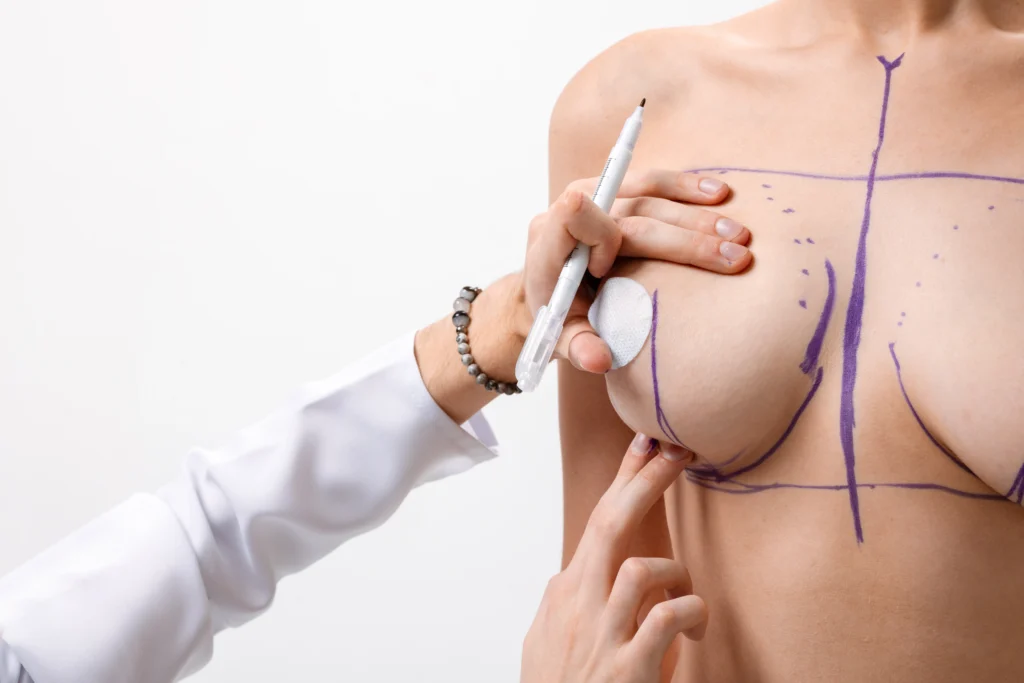
Breast reduction works by removing excess glandular tissue, fat, and skin, then reshaping and lifting what remains. That removal has to happen through an incision, and any incision through skin heals as a scar. There’s no version of this surgery that avoids it.
What varies enormously is how much scarring you end up with, and that comes down to how much tissue needs to be removed and which incision pattern your surgeon uses to achieve it.
The Three Main Incision Patterns and Their Scars
Surgeons choose a technique based on how much reduction you need and your breast shape, not personal preference alone.
| Technique | Scar pattern | Best suited for |
|---|---|---|
| Anchor (inverted-T) | Around the areola, vertically down to the breast crease, and along the crease itself | Larger reductions and significant sagging, where the most tissue needs repositioning |
| Vertical (lollipop) | Around the areola and vertically down to the crease, without the horizontal scar | Moderate reductions with less severe sagging |
| Periareolar | Limited to the edge of the areola | Small reductions or lift-dominant cases with minimal tissue removal |
The anchor technique gives the most predictable, dramatic reshaping for larger reductions, which is why it remains the most commonly used approach despite leaving the most extensive scarring. A surgeon who offers you a less invasive pattern than your anatomy needs isn’t doing you a favour, since an underpowered technique can mean a less supported result over time.
What Breast Reduction Scars Look Like Over Time
Scar appearance follows a fairly predictable arc, even though the pace varies from person to person.
- Weeks 1 to 6: Scars are red, slightly raised, and can feel firm as the wound actively heals
- Months 2 to 6: Redness gradually fades and the raised texture softens
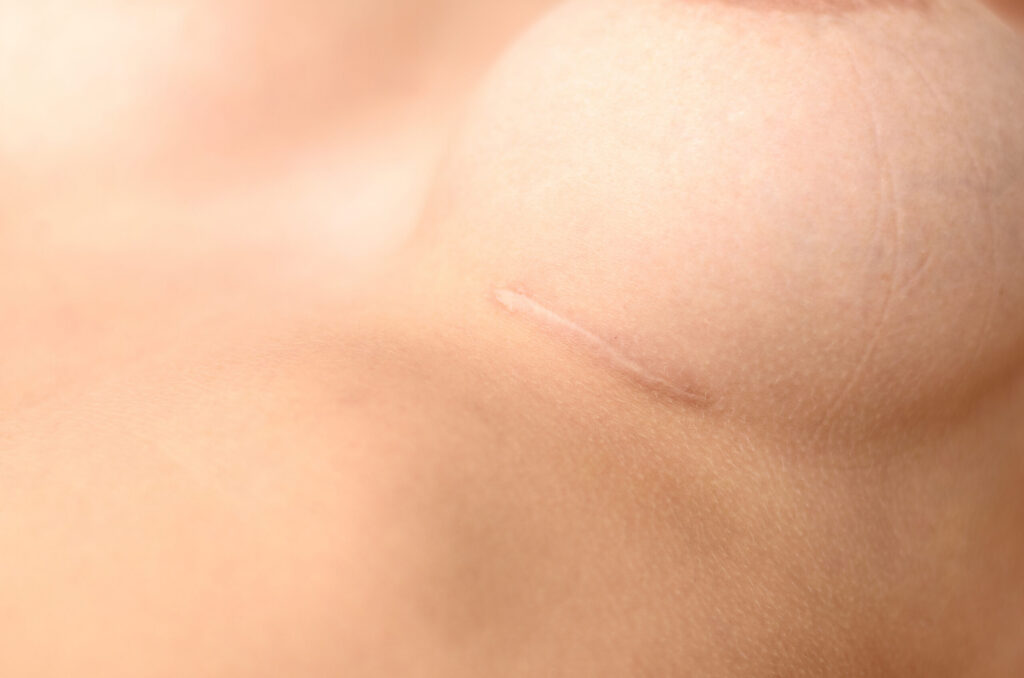
- Around 12 months: Scars typically settle into a pale, flat line, though full maturation can continue slightly beyond this
A small number of patients form thicker, raised scars unpredictably, regardless of how well they follow aftercare guidance. Genetics plays a real role here, and it’s worth mentioning any personal or family history of raised scarring to your surgeon before surgery.
Evidence-Based Ways to Minimise Your Scars
Plenty of products claim to erase scars, so it’s worth focusing on what the evidence actually supports.
Silicone gel sheeting has the strongest evidence base once the wound has closed, producing a measurable reduction in scar thickness and colour in treatment studies, though the evidence for preventing raised scars from forming in the first place is weaker and less consistent. It’s still widely recommended as a reasonable first-line option given how low-risk it is.
Beyond silicone, a few other measures make a real difference. A supportive, well-fitted, non-wired bra worn for six to eight weeks reduces tension on the healing incisions. Keeping new scars out of direct sun for several months prevents pigmentation changes. Not smoking matters too, since smoking measurably slows wound healing and worsens scar quality.
For scars that remain thickened or tethered once fully healed, some surgeons use fat grafting as an adjunct treatment, transferring a small amount of your own fat beneath the scar to soften its texture and improve how it moves with the surrounding tissue. This is a secondary refinement considered later, not something offered at the time of your original surgery.
When to Get Your Scars Checked by a Specialist

Most healing follows the expected pattern, but a few signs are worth flagging to your surgical team rather than waiting to see if they settle on their own.
- A scar that keeps growing, itching, or becoming more raised well past the six-week mark
- Redness, warmth, or discharge suggesting infection
- Any part of the wound reopening or failing to close properly
- A scar that feels tight enough to restrict movement or comfort
Early review gives your surgeon the best chance of intervening effectively, whether that means a change in dressing, a course of silicone therapy, or, in persistent cases, a scar revision.
Talk to a Specialist About Breast Reduction
Lux Plastic Surgery offers consultant-led breast surgery in Bedford, London, and Manchester, performed by Professor Sandip Hindocha, FRCS (Plast), GMC-registered Consultant Plastic Surgeon and NHS Clinical Director. Every patient is shown exactly where their scars will sit and why, based on their own anatomy, before any decision is made.
If scarring is your main hesitation about breast reduction, that’s a conversation worth having directly at consultation rather than a reason to rule surgery out. This article is for general information only and does not constitute medical advice. Individual results vary, and all surgery carries risks that should be discussed fully with your surgeon during a consultation.
FAQ
Do breast reduction scars ever fully disappear?
No, but they fade substantially. Most scars settle into a thin, pale line within about a year, and can be concealed by normal underwear and swimwear, though they remain visible on close inspection.
Which breast reduction technique leaves the least scarring?
The periareolar technique leaves the least visible scarring but only suits small reductions. Larger reductions generally need the vertical or anchor technique, which leave more extensive scars in exchange for a more predictable, better-supported result.
Does silicone gel actually work on surgical scars?
Evidence supports silicone gel sheeting for improving the thickness and colour of scars once a wound has closed. Its ability to prevent raised scars from forming in the first place is less consistently supported, but it remains a reasonable, low-risk option.
Can breast reduction scars be removed later?
They can’t be removed entirely, but persistent or thickened scars can sometimes be improved through scar revision or fat grafting once fully healed, typically considered a year or more after the original surgery.