“Breast reconstruction” sounds like one operation. It isn’t. It’s a family of very different procedures, and the price tag for one can be three times higher than another, depending entirely on which technique your case needs.
Most patients having reconstruction after a mastectomy have it funded by the NHS. So the real question behind “how much does this cost” usually isn’t about affordability at all. It’s about why someone chooses to pay privately in the first place.
Here’s what drives the price, what to budget if you do go private, and why NHS access matters more here than for most other procedures on this site.
Key takeaways
| Point | Details |
|---|---|
| The price range is unusually wide | Implant-based reconstruction costs far less than autologous flap surgery like DIEP. |
| Implant-based reconstruction: roughly £8,000–£15,000 | Uses a tissue expander and/or implant, often over more than one stage. |
| Autologous flap reconstruction: roughly £15,000–£25,000+ | Microsurgical techniques like DIEP take far longer and need a specialist team. |
| NHS funding is the norm after mastectomy | Most eligible patients are offered reconstruction on the NHS, immediate or delayed. |
| Private route buys speed and choice | Faster access and surgeon selection are the usual reasons to self-fund instead. |
What counts as breast reconstruction surgery?
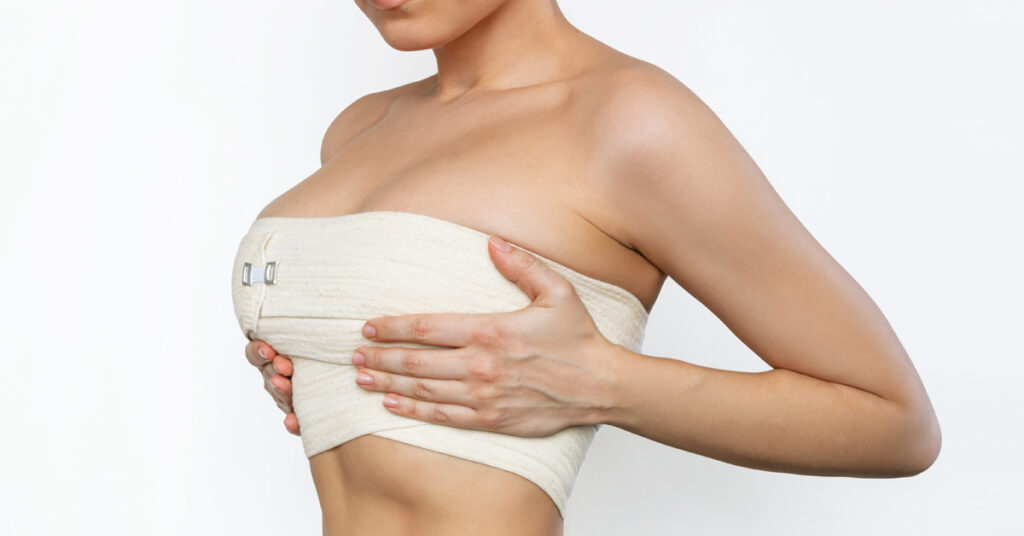
Breast reconstruction rebuilds the shape of a breast after a mastectomy, whether performed immediately alongside the mastectomy or delayed until after chemotherapy or radiotherapy has finished. A complete guide to breast surgery options covers where reconstruction sits alongside augmentation, lift, and asymmetry correction in more depth.
Two broad approaches exist: implant-based reconstruction, using a tissue expander and/or a permanent implant, and autologous reconstruction, which uses your own tissue transplanted from elsewhere on the body, most commonly the abdomen.
Why the price range is so wide
Implant-based reconstruction is broadly similar in complexity to augmentation surgery, just performed on tissue that’s already been through a mastectomy. Autologous flap reconstruction is major microsurgery, moving skin, fat, and blood vessels from one part of the body and reconnecting them under a microscope.
That difference in surgical complexity, not the size or shape of the result, is what separates a £10,000 procedure from a £20,000 one.
Breast reconstruction cost UK: what to budget
Costs vary considerably by technique, clinic, and how many stages your case needs. These figures reflect typical UK private pricing rather than a fixed quote.
Implant-based reconstruction
Implant-based reconstruction typically costs £8,000 to £15,000 privately. Many cases need two stages, first placing a tissue expander, then swapping it for a permanent implant once the skin has stretched enough, which adds to the total.
Autologous flap reconstruction
DIEP, TRAM, and latissimus dorsi flap reconstruction typically cost £15,000 to £25,000 or more privately, reflecting the length of the operation, the need for a microsurgical team, and a longer hospital stay of several days.
Nipple and areola reconstruction
This final stage is usually carried out separately, months after the main reconstruction, as a relatively minor outpatient procedure. Privately, it typically adds £500 to £2,000 depending on whether tattooing is included.
What decides the price within each type

Number of stages
A single-stage, direct-to-implant procedure costs less than a two-stage expander-then-implant approach, since each additional operation adds its own theatre and aftercare fees.
Surgeon and team expertise
Microsurgical flap reconstruction needs a team experienced in reconnecting small blood vessels under a microscope. That specialist expertise carries a premium over standard implant surgery.
Hospital stay and aftercare
Flap reconstruction typically requires five to seven nights in hospital, compared with one or two for implant-based surgery. Extended inpatient care is a significant part of what separates the two price bands.
Is breast reconstruction available on the NHS?
Yes, and for most patients this is the route they’ll actually use. According to Cancer Research UK, anyone having a mastectomy should be offered reconstruction, either immediately alongside the mastectomy or delayed until later treatment is complete, where clinically appropriate.
The NHS target for referral to treatment is 18 weeks, though delayed reconstruction typically involves a longer wait by design, since surgeons usually recommend waiting around six months after the original surgery to allow healing.
Why someone would still choose to pay privately
Speed is the most common reason. Going private can reduce the wait to weeks rather than months, which matters to patients keen to move past treatment. Choosing a specific surgeon or technique not offered locally on the NHS is another common driver.
Some patients also pay privately for refinement surgery beyond what NHS commissioning covers, such as additional shaping once the core reconstruction is complete and healed.
Why DIEP flap surgery costs so much more than an implant
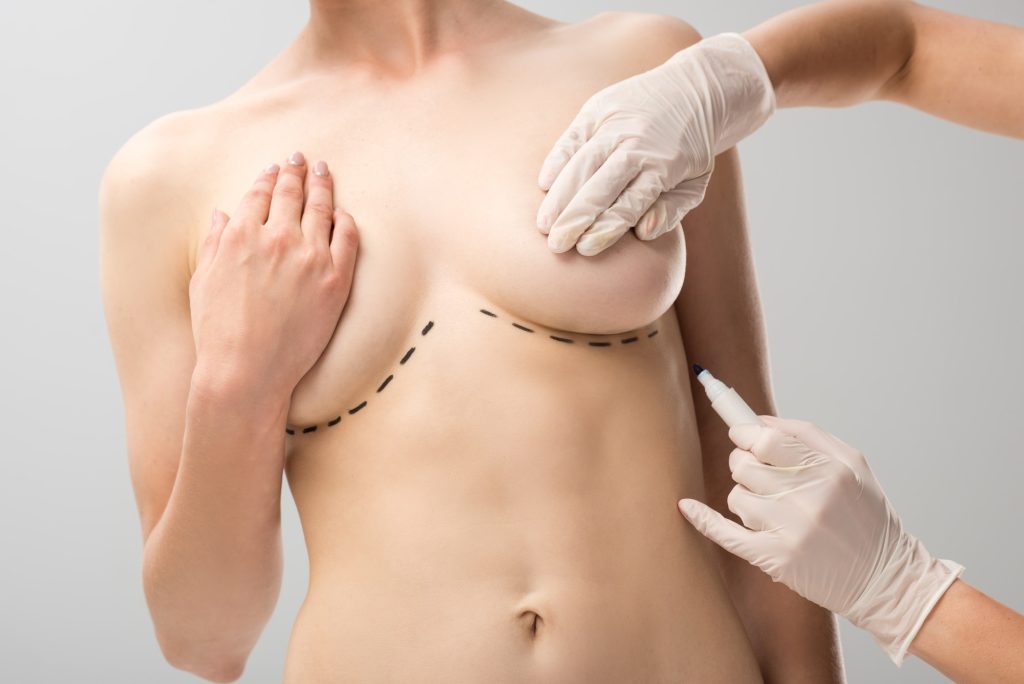
A UK study analysing cost variation in DIEP flap reconstruction, published in the Journal of Plastic, Reconstructive & Aesthetic Surgery, found the procedure’s cost is shaped heavily by imaging method, operating time, and whether the patient needs intensive care afterward.
Even within NHS-costed care, that study found meaningful variation between hospitals using different protocols. In private practice, the same variables, plus surgeon fees and facility standard, explain why one DIEP quote can look very different from another.
Reconstruction vs cosmetic augmentation: don’t confuse the two price guides
These figures are not comparable to standard cosmetic augmentation pricing. A breast augmentation cost guide covers elective implant surgery on healthy, unoperated tissue, which is a simpler procedure than reconstruction and priced accordingly lower.
If a quote for reconstruction looks close to an augmentation price, ask exactly what’s included and whether it accounts for the tissue changes a mastectomy leaves behind.
What happens if an implant needs replacing later
Implants used in reconstruction, like any implant, aren’t guaranteed to last a lifetime. Breast implant removal costs are worth understanding before you commit to an implant-based approach, since rupture or capsular contracture years later would mean a further procedure.
Autologous reconstruction avoids this particular long-term consideration, since there’s no implant to eventually fail, which some patients factor into their choice of technique.
How to compare quotes for breast reconstruction
Confirm whether a quote covers one stage or the full planned course, including any nipple reconstruction. Ask what happens if additional revision surgery is needed once healing settles.
For flap reconstruction specifically, check the surgical team’s experience with microsurgery, since outcomes and complication rates vary meaningfully by volume of cases performed.
What to expect on the day and during recovery

Implant-based reconstruction usually involves one to two nights in hospital, with most patients back to light activity within two to six weeks. Flap reconstruction is a longer road, with five to seven nights inpatient and six to ten weeks before returning to normal activity.
Sensation in the reconstructed breast takes time to return, if it returns fully at all, and this is worth discussing openly with your surgeon before choosing a technique.
How Lux Plastic Surgery approaches breast reconstruction
Professor Sandip Hindocha, FRCS (Plast), GMC-registered Consultant Plastic Surgeon and NHS Clinical Director, offers breast reconstruction surgery at clinics in Bedford, London, and Manchester. Every consultation starts with an honest conversation about which technique actually suits your circumstances, whether you’re coming through the NHS pathway or exploring private options. For private surgery, Professor Hindocha’s fee is quoted individually in writing after consultation.
To arrange a consultation, send an enquiry through the contact page.
This article is for general information only and does not constitute medical advice. Costs and outcomes vary by individual circumstances, technique, and surgeon, so treat all figures here as general guidance rather than a personal quote.
FAQ
How much does breast reconstruction surgery cost in the UK?
Implant-based reconstruction typically costs £8,000 to £15,000 privately, while autologous flap reconstruction like DIEP typically costs £15,000 to £25,000 or more, depending on the number of stages needed.
Is breast reconstruction available on the NHS?
Yes. Anyone having a mastectomy should be offered reconstruction, either immediately or delayed until other treatment is complete, subject to clinical suitability.
Why would someone pay privately if the NHS covers it?
Mainly for speed, since private treatment can reduce waiting times to weeks rather than months, or to choose a specific surgeon or technique not available through the NHS pathway locally.
Which is better, implant-based or flap reconstruction?
Neither is universally better. Flap reconstruction often suits patients with irradiated tissue or those wanting a fully natural-tissue result, while implant-based surgery means a shorter operation and recovery.
Does reconstruction cost include nipple reconstruction?
Usually not. Nipple and areola reconstruction is typically a separate procedure carried out months later, adding roughly £500 to £2,000 to the overall private cost.