Nobody prices this in at the first consultation. When you’re weighing up augmentation, the conversation is about size, shape, and how natural the result will look, not about what happens fifteen or twenty years later when the implants themselves need attention. Implants aren’t lifetime devices, and removal or exchange is a cost most patients only think about once it’s already relevant.
Here’s what that actually costs, and what changes the figure.
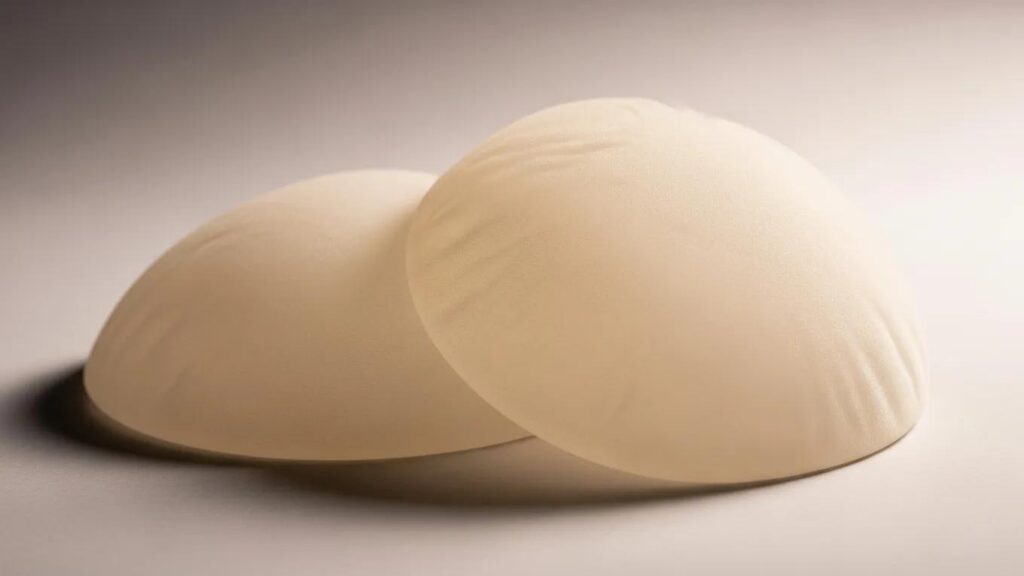
Key takeaways
| Point | Details |
|---|---|
| Removal alone typically costs £3,000-£4,500 | Removing both implants without replacing them, before any capsulectomy is added. |
| Adding capsule removal raises the price | En bloc or total capsulectomy typically pushes the total to £4,500-£7,000. |
| Exchange costs more than removal alone | Replacing old implants with new ones often starts from £6,000 and can run higher with a lift. |
| NHS funding exists for specific medical reasons | Rupture, severe capsular contracture, recurrent infection, or BIA-ALCL can qualify; preference alone doesn’t. |
| Insurance rarely covers this | Most private medical insurance treats implant removal as cosmetic unless a clear medical complication is documented. |
How much does breast implant removal cost privately in the UK?
Removing both implants without replacing them typically costs £3,000 to £4,500, covering the surgeon’s fee, anaesthetist, theatre time, and standard follow-up. Removing a single implant, less common but sometimes needed for a one-sided complication, tends to sit at the lower end of that range.
These figures assume a simple removal. Once a capsulectomy or additional procedure is added, the price moves considerably, which is covered in the next section.
Removal alone vs removal with capsulectomy
The capsule is the layer of scar tissue your body forms around any implant. Leaving it in place after removal is sometimes appropriate, but where it’s thickened, calcified, or a suspected source of symptoms, a surgeon will usually recommend removing it too.
A total or en bloc capsulectomy, removing the capsule as a single piece along with the implant, adds meaningfully to theatre time and typically brings the total to £4,500 to £7,000. It’s more involved than removal alone, and not every patient needs it.
Removal vs exchange: why replacing costs more than removing

Exchange surgery, removing old implants and fitting new ones, typically starts from around £6,000 and can run to £8,000 or more once a breast lift is added to manage skin laxity left behind by the original implants.
The jump in price reflects a substantially longer operation: the old implants and capsule need to come out, the pocket is often reshaped, and new implants are then placed and positioned, effectively two procedures layered into one.
What drives your individual quote
Beyond the broad category of surgery you need, several specific factors shape the number a surgeon actually gives you.
The condition of the capsule
A thin, healthy capsule takes far less time to manage than one thickened by years of capsular contracture. Severe cases, particularly Baker grade III or IV, add real theatre time and therefore cost.
Whether a lift is needed
Skin stretched by years of implants doesn’t always spring back once they’re gone. Where a lift is needed to address the resulting laxity, it’s usually quoted as an addition to the removal fee rather than folded in for free.
Surgeon’s experience and hospital fees
A surgeon with specific experience in explant and revision work, rather than augmentation alone, often charges more, generally reflecting a lower complication rate on a technically different operation. Hospital and facility overheads vary by location on top of this.
Can you get breast implant removal on the NHS?
Sometimes, but only for specific medical reasons. Per BLMK ICB’s Breast Surgery Policy, NHS-funded removal is considered where there’s implant leakage or rupture, severe capsular contracture confirmed by a specialist, recurrent infection or seroma, or a diagnosis of breast implant-associated anaplastic large cell lymphoma.
Wanting your implants out for personal reasons alone doesn’t meet that threshold. And if your original surgery was private, the same policy expects you to ask your private provider first; the NHS route only opens up if that provider truly can’t offer the care you need.
Where funding is agreed, it covers removal only, not replacement. Reinserting new implants afterwards, if that’s what you want, is treated as a separate, privately funded decision.
BIA-ALCL: when removal is medically urgent, not just a preference
Breast implant-associated anaplastic large cell lymphoma is a rare cancer of the immune system linked to certain textured implants. Per MHRA guidance, it typically presents as persistent swelling or fluid build-up around an implant, often years after the original surgery.
If you notice new, persistent swelling, pain, or a change in shape around an existing implant, that’s worth having assessed promptly rather than assuming it’s routine ageing of the implant. It’s a rare outcome, but an important one to rule out early.
Choosing removal without replacement
A growing number of patients choose to have implants removed and simply not replaced, sometimes described as going flat or going natural. The skin and remaining breast tissue determine how this settles; younger skin with good elasticity often adapts reasonably well, while years of stretch can leave visible laxity.
Where that laxity is the main concern rather than volume itself, a lift addresses it directly without adding implants back in; what actually causes sagging and what fixes it covers that distinction if you’re weighing up whether you need one.
If a lift is the direction you’re leaning, it helps to see the figures for that procedure on its own terms rather than guessing; what a breast lift costs in the UK runs through that separately.
How to compare quotes without missing hidden costs
A quote that sits well below the range above is worth questioning. It usually means the capsule isn’t being addressed even though it should be, or that follow-up care and garments are billed separately rather than included.
Ask specifically whether the quote includes capsulectomy if you need one, histopathology fees if capsule tissue is being sent for analysis, and how many follow-up appointments are covered. These details vary more between clinics for this procedure than for most others.
Costs that don’t show up on the headline price
A few costs are easy to miss when comparing figures rather than sitting through a full consultation.
- Histopathology analysis of the removed capsule, sometimes billed separately from the surgical fee
- A supportive sports bra, typically worn for around six weeks
- Additional follow-up appointments beyond what’s included in the package
- Time off work, generally one to two weeks depending on how physical the role is
- A later lift procedure, if skin laxity turns out to need addressing once swelling has settled
Budgeting for recovery
Surgery is typically done under general anaesthesia and takes around three hours, with most patients going home the same day. A supportive sports bra is worn for roughly six weeks while swelling resolves and tissue settles into its new shape.
Most patients take one to two weeks off physically demanding work. Missed income and help at home during that window are worth factoring into your overall budget alongside the surgical fee itself.
Financing options
Most private clinics offer finance through a third-party provider, spreading the total over 12 to 60 months, usually with interest unless a promotional 0% period applies. Some allow a deposit at consultation with the balance due closer to surgery.
It’s worth checking with your insurer regardless of what you expect the answer to be, since removal prompted by a documented medical complication is occasionally treated differently from a purely elective request.
Questions worth asking before you book
Ask directly whether your quote includes a capsulectomy if one turns out to be needed, what happens if the surgeon finds more scarring than expected once they’re operating, and whether the price changes if you decide on a lift during the same consultation rather than afterwards.
It’s also worth revisiting what the original surgery actually involved, since understanding how the implants were placed shapes what removing them requires; what a boob job really involves covers that groundwork if it’s been a while since your first consultation.
Talk to a Specialist About Breast Implant Removal
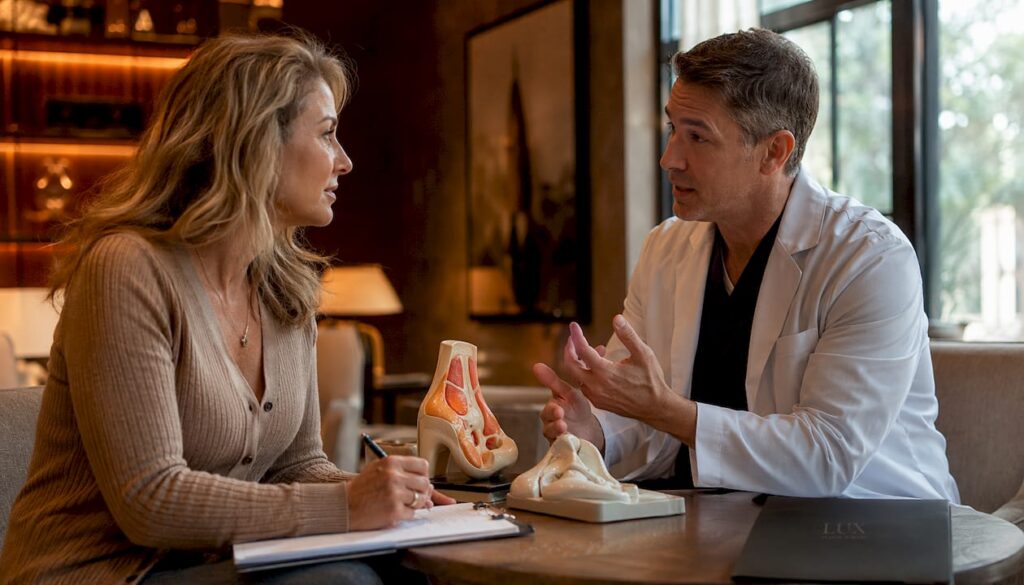
Professor Sandip Hindocha, FRCS (Plast), GMC-registered Consultant Plastic Surgeon and NHS Clinical Director, offers breast implant removal and exchange at clinics in Bedford, London, and Manchester. Consultations start with an honest look at whether removal alone, a capsulectomy, or exchange is the right fit for your anatomy and goals. Professor Hindocha’s fee is quoted individually in writing after consultation.
To arrange a consultation, send an enquiry through the contact page.
This article is for general information only and does not constitute medical advice. Prices vary by clinic, location, and individual anatomy, so treat all figures here as general market context rather than a quote.
FAQ
How much does breast implant removal cost in the UK?
Removal alone typically costs £3,000 to £4,500. Adding a capsulectomy usually brings the total to £4,500 to £7,000, and exchange for new implants often starts from £6,000 or more.
Can I get breast implant removal on the NHS?
Only for specific medical reasons, including implant rupture, severe capsular contracture, recurrent infection, or BIA-ALCL. Wanting implants removed for personal preference alone isn’t usually funded.
Do I have to remove the capsule as well as the implant?
Not always. It depends on the capsule’s condition. A thin, healthy capsule can sometimes be left in place, while a thickened or symptomatic one is usually removed alongside the implant.
Will my breasts sag after implant removal?
It depends on skin elasticity and how long the implants were in place. Some patients settle well without further surgery, while others need a separate lift to address resulting laxity.
Is breast implant removal covered by private medical insurance?
Rarely, unless removal is prompted by a documented medical complication rather than personal preference. It’s worth checking directly with your insurer rather than assuming either way.