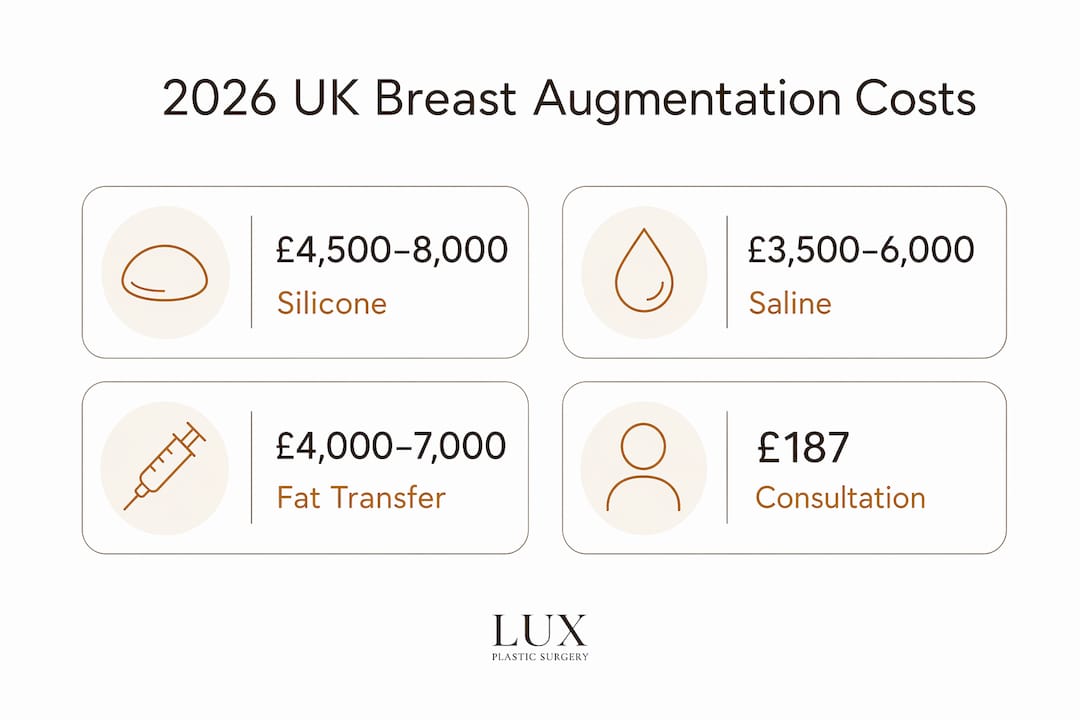
Breast augmentation in the UK costs between £3,500 and £8,000 in 2026, depending on the implant type, surgical technique, and clinic chosen. Silicone implants, the most widely used option, range from £4,500 to £8,000, while saline implants typically fall between £3,500 and £6,000. Fat transfer augmentation sits between £4,000 and £7,000, though combining fat transfer with implants can push costs to £10,000 or more. Professor Hindocha’s fee is quoted individually in writing after consultation.
Professor Sandip Hindocha, GMC-registered Consultant Plastic Surgeon and FRCS (Plast), notes that price alone should never be the deciding factor. The quality of surgical expertise, implant selection, and aftercare provision all shape both the financial and clinical outcome.
Financing options, including monthly payment plans, are available at many private clinics, making the procedure accessible to a broader range of patients. This guide covers what drives those costs, how to pay safely, and what to expect over the longer term. For a broader overview of your options, the complete guide for UK women is a useful starting point.
How much is breast augmentation in the UK?
The cost of breast augmentation surgery in the UK is not a single fixed figure. It reflects a combination of implant type, surgeon grade, facility standards, and the geographical location of the clinic.
Silicone, saline, and fat transfer: what each costs
Silicone implants dominate the UK market because they closely replicate the feel of natural breast tissue and are available in a wide range of profiles and volumes. Silicone augmentation costs £4,500 to £8,000, with premium implant brands and London-based clinics sitting at the upper end. Saline implants are less common in the UK and generally cost less, between £3,500 and £6,000, though their firmer texture makes them a less popular choice among patients seeking a natural result.
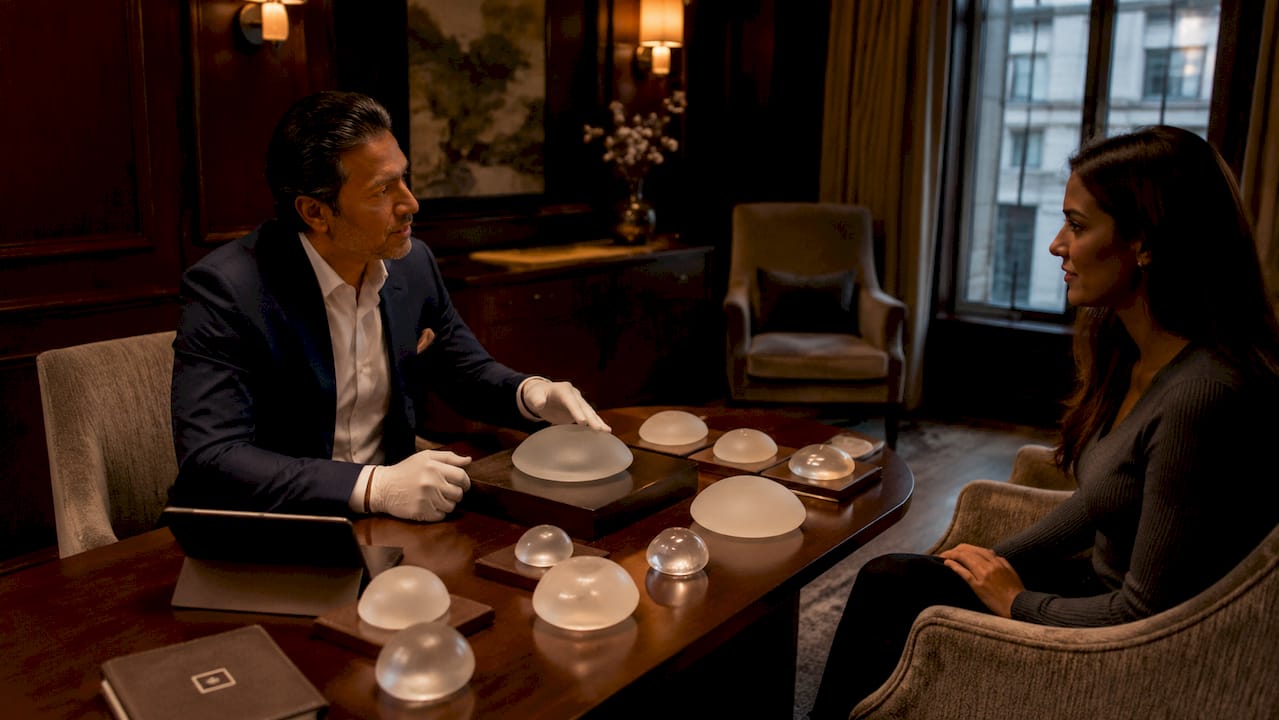
Fat transfer augmentation, which uses liposuction to harvest fat from another area of the body before injecting it into the breasts, costs £4,000 to £7,000. This technique suits patients who want a modest increase in volume without an implant. Combined implant and fat transfer procedures, used to achieve more complex reshaping, start at £6,000 and can reach £10,000.
Cost comparison by procedure type
| Procedure type | Typical UK cost range (2026) |
|---|---|
| Silicone implants | £4,500 to £8,000 |
| Saline implants | £3,500 to £6,000 |
| Fat transfer augmentation | £4,000 to £7,000 |
| Implant plus fat transfer | £6,000 to £10,000 |
What else affects the final price?
Several variables push costs above or below the midpoint. Surgeon experience and professional accreditation carry a significant premium. A GMC-registered consultant plastic surgeon with BAAPS membership will charge more than a less credentialled practitioner, and that difference reflects genuine clinical value. Facility type matters too. Procedures carried out in a fully accredited private hospital with overnight care cost more than those in a day-surgery unit.
Initial consultation fees average around £187, and this is separate from the surgical quote. Anaesthesia fees, post-operative garments, and follow-up appointments are often itemised rather than bundled. Implant brand also influences price. Established manufacturers with long-term safety data command higher fees than lesser-known alternatives.
How to finance breast augmentation surgery safely in the UK
Most patients fund breast augmentation privately, either through savings, a personal loan, or a clinic payment plan. Each route carries different financial implications, and understanding them before committing is prudent.
Payment plans and monthly financing
Many private clinics offer in-house payment plans. Monthly finance options start from approximately £69 to £89 per month, depending on the clinic, implant brand, and loan term. These plans reduce the upfront barrier but carry interest, meaning the total amount paid over the term will exceed the quoted surgical fee. Always request the Annual Percentage Rate (APR) in writing before signing any finance agreement.
Personal medical loans from high-street lenders or specialist healthcare finance providers are an alternative. These typically offer fixed interest rates and defined repayment periods, which makes budgeting more predictable. Avoid using high-interest credit products such as store cards or revolving credit facilities for a procedure of this cost.
Private health insurance rarely covers cosmetic breast augmentation. Where insurance does apply, such as in breast reconstruction following cancer treatment, patients should be aware that shortfalls and excess payments are common. Confirming the precise scope of any insurance coverage before proceeding avoids unwelcome surprises at the point of billing.
Pro Tip: Ask the clinic to provide a fully itemised written quote before your consultation ends. Confirm whether the fee includes anaesthesia, post-operative appointments, compression garments, and at least one revision consultation. If any of these are excluded, factor them into your total budget.
Key questions to ask when discussing payment
- What is the total all-inclusive cost, and what is excluded from the quoted fee?
- What APR applies to any payment plan, and what is the total repayable amount?
- Is revision surgery included if the outcome requires adjustment within a defined period?
- Are follow-up appointments and post-operative garments included in the price?
- What happens to the payment plan if the procedure is postponed or cancelled?
What to expect from surgical outcomes and long-term costs
Breast augmentation produces lasting results for most patients, but it is not a permanent, maintenance-free procedure. Understanding the long-term picture before surgery prevents financial and clinical surprises later.
Recovery timeline and typical milestones
Most patients return to light activity within one to two weeks of surgery. Strenuous exercise and heavy lifting are restricted for four to six weeks. Swelling resolves gradually over three to six months, and the final aesthetic result becomes fully apparent only once the implants have settled. Scarring fades over twelve to eighteen months, though it does not disappear entirely.
| Recovery milestone | Typical timeframe |
|---|---|
| Return to desk work | 1 to 2 weeks |
| Driving and light activity | 2 to 3 weeks |
| Resuming exercise | 4 to 6 weeks |
| Implants fully settled | 3 to 6 months |
| Scars at their lightest | 12 to 18 months |
| Potential implant review | 10 to 15 years |
Revision surgery and implant replacement
Implants are not lifetime devices. Most manufacturers recommend a clinical review at ten years, and some patients choose replacement at that point even without complications. Revision or replacement surgery typically costs as much as the original procedure and is rarely included in the initial quoted fee. Budgeting for this possibility from the outset is a sound financial decision.
Complications such as capsular contracture, implant displacement, or asymmetry may require earlier intervention. The risk of these events is lower when surgery is performed by an experienced, accredited surgeon. As Professor Hindocha notes, surgeon expertise directly reduces the likelihood of complications that generate additional costs down the line.
Pro Tip: When comparing clinic quotes, ask specifically whether the fee includes a ten-year implant review and what the clinic’s policy is on revision surgery within the first twelve months. These two questions reveal more about a clinic’s standards than any brochure.
How to choose a reputable breast augmentation clinic in the UK
Selecting the right clinic is the single most consequential decision in the entire process. It determines both the safety of the procedure and the quality of the result.
Credentials and accreditation to verify
The minimum standard for any surgeon performing breast augmentation in the UK is GMC registration on the Specialist Register for plastic surgery. Membership of BAAPS (British Association of Aesthetic Plastic Surgeons) or BAPRAS (British Association of Plastic, Reconstructive and Aesthetic Surgeons) indicates a further commitment to professional standards and ongoing training. Clinic accreditation by the Care Quality Commission (CQC) confirms that the facility meets regulated safety and governance requirements.
Transparent pricing is itself a quality signal. Reputable clinics provide itemised written quotes and do not pressure patients to commit at the first consultation. A thorough consultation should include a physical assessment, a discussion of implant options, a review of before-and-after photographs, and a clear explanation of risks. If any of these elements are absent, that is a reason to seek a second opinion.
Lux Plastic Surgery, led by Professor Hindocha in Bedford, London, and Manchester, exemplifies this standard. Every patient receives a personalised consultation before any surgical plan is agreed. For guidance on selecting a safe private provider, the clinic’s published guidance is worth reviewing.
NHS versus private breast augmentation
The NHS does not fund cosmetic breast augmentation. It may fund breast reconstruction following mastectomy or in cases of significant congenital asymmetry, but eligibility criteria are strict and waiting times are long. For the overwhelming majority of patients, private treatment is the only route. This makes the quality of the private provider you choose all the more consequential.
Clinic evaluation checklist
- GMC registration on the Specialist Register for plastic surgery confirmed
- BAAPS or BAPRAS membership verified
- CQC-accredited facility
- Itemised written quote provided before any commitment is requested
- Before-and-after gallery reviewed with realistic patient examples
- Independent patient reviews assessed across multiple platforms
- Post-operative care plan and emergency contact protocol explained clearly
What common mistakes to avoid when budgeting for breast augmentation?
Patients who approach the financial side of breast augmentation without adequate preparation frequently encounter costs they did not anticipate. Several patterns recur consistently.
Underestimating the total cost
The quoted surgical fee is rarely the total cost. Consultation fees, pre-operative blood tests, post-operative garments, prescription medications, and follow-up appointments are frequently itemised separately. Add these together and the actual expenditure can exceed the headline figure by several hundred pounds. Patients who budget only for the surgical quote often find themselves managing unexpected expenses during recovery, which adds stress at an already demanding time.
Revision surgery is the largest potential hidden cost. As noted above, implant replacement costs are comparable to the original procedure. A patient who spends £5,500 on initial surgery should hold in mind that a revision, if needed, could cost a similar amount. This is not a reason to avoid surgery. It is a reason to plan honestly.
Choosing on price alone
The lowest quoted price for breast augmentation in the UK is not a bargain if it reflects reduced surgical expertise, unaccredited facilities, or inferior implant brands. Complications arising from substandard surgery generate costs that far exceed any initial saving. The relationship between surgeon quality and long-term cost liability is direct. Spending more with an accredited, experienced consultant reduces the statistical likelihood of revision surgery and associated expenses.
Pro Tip: Before committing to any clinic, prepare a written budget that includes the surgical fee, all itemised extras, a contingency of 15 to 20 per cent for unexpected costs, and a separate provision for potential revision surgery within ten years. Presenting this budget to the clinic and asking them to confirm which items are covered gives you a clear picture of the true financial commitment.
Ignoring financing terms
Monthly payment plans appear affordable in isolation. A plan at £89 per month over 36 months totals £3,204 before interest. At a representative APR of 14.9 per cent, the total repayable amount rises considerably above the original surgical fee. Reading the full finance agreement, including the total amount repayable and the consequences of missed payments, is not optional. It is the minimum due diligence required before signing.
Key takeaways
Breast augmentation in the UK costs between £3,500 and £8,000 depending on implant type, with silicone implants, surgeon expertise, and long-term revision costs being the three factors that most significantly shape the total financial commitment.
| Point | Details |
|---|---|
| UK cost ranges by type | Silicone: £4,500 to £8,000. Saline: £3,500 to £6,000. Fat transfer: £4,000 to £7,000. |
| Hidden costs to budget for | Consultation, anaesthesia, garments, and follow-up appointments are often excluded from headline quotes. |
| Revision surgery costs | Implant replacement typically costs as much as the original surgery and is rarely included in initial fees. |
| Financing caution | Monthly plans reduce upfront cost but increase total expenditure. Always confirm the APR and total repayable amount. |
| Clinic selection standard | Verify GMC registration, BAAPS or BAPRAS membership, and CQC accreditation before committing to any provider. |
What I have observed about cost transparency in breast augmentation
Across years of consulting with patients considering breast augmentation, the pattern I see most often is not financial recklessness. It is a lack of information at the point when it matters most. Patients arrive having compared headline prices from several clinics, but very few have compared what those prices actually include.
The consultation fee is where this becomes apparent. A patient who has been quoted £4,800 at one clinic and £6,200 at another may assume the lower figure represents better value. When we work through what each quote contains, the picture frequently reverses. The higher fee often includes anaesthesia, post-operative garments, two follow-up appointments, and a twelve-month revision policy. The lower fee covers the surgery alone.
Implant selection is another area where I see patients underserved by the information they receive before committing. Not all silicone implants are equivalent. Established manufacturers with long-term safety data, documented rupture rates, and robust replacement warranties represent a different clinical proposition from less well-documented alternatives. The difference in implant cost between a premium brand and a lesser-known one may be a few hundred pounds within the overall surgical fee. That difference is worth paying.
My consistent advice to patients is to treat the consultation as a structured interview. Arrive with a written list of questions. Ask for a fully itemised quote in writing. Ask what the revision policy is. Ask which implant brand is being used and why. A surgeon who cannot answer these questions clearly, or who discourages you from asking them, is telling you something important about how the rest of the process will be managed.
The patients who report the highest satisfaction are not necessarily those who spent the most. They are those who understood what they were paying for, chose their surgeon on clinical grounds, and had realistic expectations about both the result and the recovery. That combination is available at a range of price points. The work is in finding it.
— Lux
Considering breast augmentation at Lux Plastic Surgery?
Lux Plastic Surgery offers consultant-led breast augmentation in Bedford, London, and Manchester, with every surgical plan directed by Professor Sandip Hindocha, FRCS (Plast), GMC-registered Consultant Plastic Surgeon and NHS Clinical Director. Consultations are thorough, unhurried, and fully transparent on pricing. Patients receive an itemised written quote before any decision is requested.
If you are weighing your options and want a clear clinical picture of what breast augmentation involves, our breast augmentation surgery page sets out the procedure, the process, and what to expect at every stage. To understand the full range of surgical options available, the breast surgery overview provides a useful reference. Book a private consultation to receive advice tailored to your anatomy, your goals, and your budget.
This article is for informational purposes only and does not constitute medical advice. Consult a GMC-registered specialist before making any decisions about surgical treatment.
FAQ
How much does breast augmentation cost in the UK in 2026?
Breast augmentation in the UK costs between £3,500 and £8,000 in 2026, depending on implant type and clinic. Silicone implants sit at the higher end of this range, while saline implants are generally less expensive.
Are there monthly payment plans for breast augmentation?
Yes. Many private clinics offer finance plans starting from approximately £69 to £89 per month. Always confirm the APR and total repayable amount before signing any finance agreement, as interest increases the overall cost above the quoted surgical fee.
Does the NHS fund breast augmentation surgery?
The NHS does not fund cosmetic breast augmentation. Funding may be available for breast reconstruction following mastectomy or in cases of significant congenital asymmetry, but eligibility is strictly assessed and waiting times are considerable.
How much does revision or replacement surgery cost?
Revision surgery and implant replacement typically cost as much as the original procedure and are rarely included in the initial quoted fee. Patients should budget for this possibility, particularly given that implants are not lifetime devices and a clinical review is recommended at around ten years.
What credentials should I look for in a breast augmentation surgeon?
Look for GMC registration on the Specialist Register for plastic surgery, membership of BAAPS or BAPRAS, and a CQC-accredited facility. These credentials confirm that the surgeon and clinic meet regulated UK standards for safety and professional practice.