The belly button, known medically as the umbilicus or navel, is a permanent scar marking the site where the umbilical cord once connected you to the placenta. Every person has one, yet no two look identical. Shape, depth, and texture vary considerably between individuals, and those differences are driven by anatomy, genetics, and life events rather than chance. This guide explains what determines navel appearance, how to keep it healthy, which conditions to watch for, and when cosmetic procedures may be worth considering.
What determines the shape of belly buttons?
The umbilical sheath is the primary structure that explains why most navels are innies. It is a circumferential sleeve of collagen fibres that anchors the navel inward against the abdominal fascia. That inward pull creates the concavity most people recognise as a typical belly button. Understanding this structure also informs surgical planning, because the layering of those fibres affects how safely a surgeon can work around the navel.
Outies are far less common and are not caused by how the midwife or obstetrician cuts the cord. Extra scar tissue or a small umbilical hernia during healing pushes the navel outward instead. Many outies reduce in prominence over time, particularly after pregnancy, as the surrounding tissue settles.
Beyond the innie and outie distinction, navels are classified by shape into several recognised types:
- Vertical oval: an elongated opening running top to bottom, the most common shape in adults
- Horizontal oval: a wider, flatter opening running side to side
- Hooded: a fold of skin overhangs the upper edge, often deepening with age or weight gain
- Round: a symmetrical circular opening, less common but entirely normal
- Deep set: a narrow, recessed navel where the opening sits well below the skin surface
Genetics, skin tension, and abdominal muscle tone all influence which category a person falls into. Life events shift things further. Pregnancy stretches the skin and fascia around the navel, often causing temporary hooding or making a mild hernia more visible. Most of those changes soften as hormones stabilise and muscle tone returns in the months after delivery.
Pro Tip: If your navel shape has changed noticeably after pregnancy or significant weight change, give it at least 12 months before drawing conclusions. The body’s natural recovery often resolves concerns that initially seem permanent.

How to clean your belly button properly
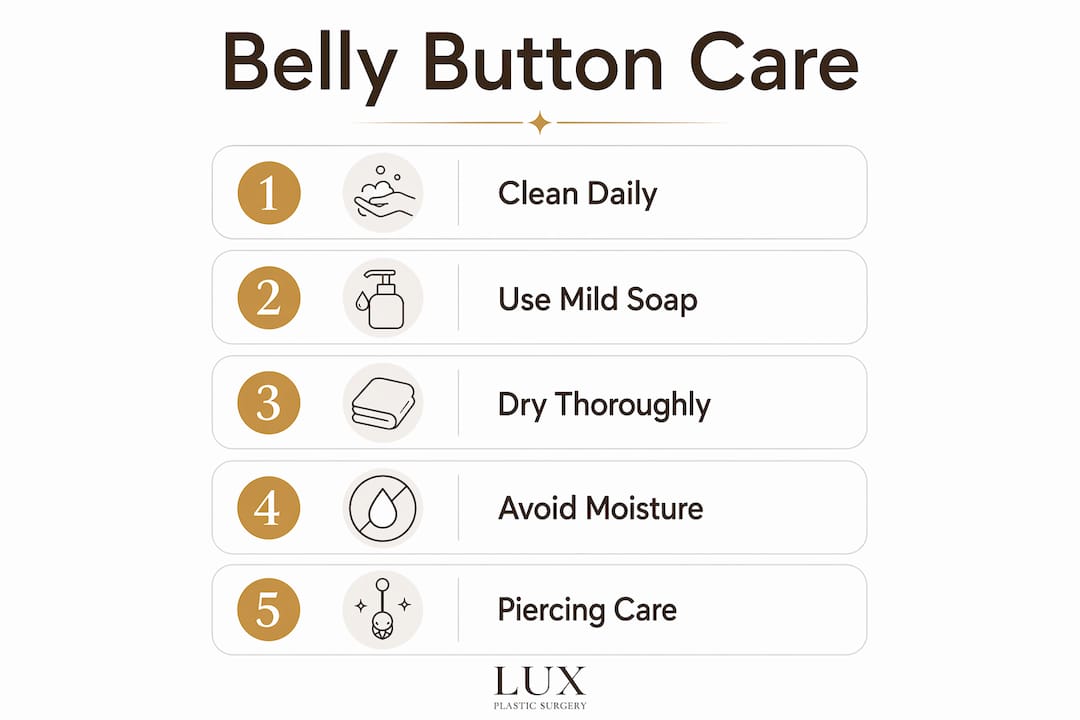
Daily cleaning with mild soap and warm water is sufficient for maintaining navel hygiene in most adults. Harsh chemicals such as isopropyl alcohol or hydrogen peroxide are unnecessary and can strip the skin’s natural barrier, leaving it more vulnerable to irritation. Gentle is always better here.
The method matters as much as the frequency. Follow these steps for thorough, safe cleaning:
- Wet the area with warm water in the shower or bath.
- Apply a small amount of mild, fragrance-free soap to a clean fingertip or soft lint-free cloth.
- Clean gently inside the navel, working around any folds or recesses.
- Rinse thoroughly to remove all soap residue.
- Pat completely dry with a clean towel, paying attention to any deep creases.
Cotton swabs can leave fibres trapped inside the navel’s crevices, causing irritation and increasing infection risk. Use a clean fingertip or lint-free cloth instead. This detail is frequently absent from standard patient hygiene advice, yet it makes a meaningful difference.
Moisture is the single biggest risk factor for navel infections. Applying lotions or creams inside the navel traps moisture and accelerates bacterial and fungal growth rather than soothing the skin. Keep the interior dry at all times, and avoid letting water pool there after bathing.
Navel piercings require additional care. Sterile saline solution applied twice daily is the recommended standard for pierced belly buttons during the healing period. Avoid rotating the jewellery, submerging in public pools, or using alcohol-based products on the site. Healing typically takes 6–12 months for a navel piercing, considerably longer than most people expect.
Pro Tip: After showering, use a hairdryer on its lowest, coolest setting held at arm’s length to dry a deep or hooded navel thoroughly. This is particularly useful in warm weather when moisture accumulates quickly.
Common health issues and when to seek advice
Most navel conditions are minor and resolve with improved hygiene. A small number require medical attention. Knowing the difference prevents unnecessary anxiety and avoids delayed treatment.
The following conditions are the most frequently encountered:
- Bacterial infection: Characterised by redness, warmth, swelling, and a thick discharge that may be yellow or green. A foul odour is a reliable early indicator. Poor hygiene and trapped moisture are the primary causes.
- Fungal infection (candidiasis): Presents as a red, itchy rash inside the navel, sometimes with a white or cottage-cheese-like discharge. Warm, moist conditions favour fungal growth, making deep or hooded navels more susceptible.
- Umbilical hernia in infants: A soft bulge near the navel caused by a gap in the abdominal wall muscles. Umbilical hernias commonly resolve between three and five years of age without intervention. Parents should monitor for any change in size, colour, or tenderness, which would warrant prompt review by a GP.
- Umbilical granuloma: A small, moist lump of scar tissue that can form in newborns after the cord stump separates. It is not painful but requires treatment, typically with silver nitrate application by a healthcare professional.
- Cyst formation: Epidermoid cysts can develop within the navel and present as a firm, painless lump. They are benign but may become infected and require removal if they enlarge or cause discomfort.
Seek medical advice if you notice persistent redness that spreads beyond the navel, discharge that does not clear within a few days of improved hygiene, or any lump that grows or becomes tender. A GP can assess whether the cause is infectious, structural, or requires referral. Self-treating with over-the-counter antifungals is reasonable for a suspected mild fungal infection, but a confirmed bacterial infection requires prescription antibiotics.
Healthy belly buttons come in many shapes, and anatomical variety is entirely normal. Patients often present concerned about appearance when the real issue is hygiene rather than structure. Addressing the hygiene first almost always resolves the concern.
What cosmetic procedures can change belly button appearance?
Navel appearance changes for several reasons beyond genetics. Pregnancy, significant weight loss, and abdominal surgery are the most common triggers. Understanding what drives those changes helps set realistic expectations about whether they will resolve naturally or whether a cosmetic procedure is appropriate.
Cosmetic reshaping of the navel depends significantly on abdominal muscle tone and skin elasticity rather than superficial appearance alone. A surgeon assessing the navel must evaluate the underlying fascia, the condition of the umbilical sheath, and the quality of the surrounding skin before recommending any procedure. This is why a thorough consultation matters more than photographs alone.
The table below outlines the main cosmetic options relevant to navel appearance:
| Procedure | What it addresses | Typical context |
|---|---|---|
| Umbilicoplasty | Reshapes the navel opening, removes excess skin or scar tissue | Standalone procedure for shape concerns |
| Abdominoplasty (tummy tuck) | Repositions or reconstructs the navel as part of full abdominal contouring | Post-pregnancy or post-weight-loss body contouring |
| Hernia repair with aesthetic closure | Corrects an umbilical hernia and closes with attention to cosmetic outcome | Functional repair with aesthetic consideration |
| Scar revision | Improves the appearance of scar tissue distorting the navel | Following previous surgery or injury |
Timing is critical. Patients should wait until weight and family goals are stable before pursuing cosmetic navel reshaping. A further pregnancy or substantial weight change after surgery will alter the result. Most surgeons advise waiting at least 12 months after the final pregnancy and reaching a stable weight before proceeding.
Abdominoplasty, which involves repositioning the navel as part of abdominal contouring, is the most comprehensive option for patients with significant skin laxity or muscle separation following pregnancy. The navel is detached, the abdominal skin is tightened, and the navel is then repositioned and resutured. The aesthetic outcome depends heavily on the surgeon’s understanding of the umbilical sheath anatomy and their ability to recreate a natural-looking concavity.
Standalone umbilicoplasty is a shorter procedure suited to patients whose concern is limited to the navel itself, without significant skin laxity elsewhere. Recovery is quicker, but the scope of change is more modest. Patients considering body contouring options should discuss both approaches with a GMC-registered consultant plastic surgeon to determine which is appropriate for their anatomy and goals.
Key takeaways
The belly button is a permanent anatomical scar whose shape is determined by the umbilical sheath, genetics, and life events, and maintaining it requires gentle hygiene, thorough drying, and timely medical review when infection signs appear.
| Point | Details |
|---|---|
| Shape is anatomy, not accident | The umbilical sheath anchors the navel inward; outies result from extra scar tissue or a small hernia. |
| Dryness prevents infection | Moisture trapped by lotions or poor drying is the leading cause of bacterial and fungal navel infections. |
| Cotton swabs cause harm | Fibres left by cotton swabs irritate the navel; use a clean fingertip or lint-free cloth instead. |
| Timing matters for cosmetic procedures | Wait until weight and family plans are stable before pursuing navel reshaping to protect the surgical result. |
| Most hernias in infants resolve naturally | Umbilical hernias in children commonly close without treatment by age three to five. |
What I have learned from years of treating navel concerns
Patients often arrive at a consultation embarrassed to raise the subject of their navel. They assume it is too minor to mention, or they worry they will be told their concern is trivial. Neither is true. The navel is a genuinely complex anatomical structure, and the concerns people bring, whether about shape, hygiene, infection, or post-pregnancy changes, are all clinically legitimate.
What strikes me most consistently is how much anxiety is caused by normal variation. The range of healthy navel shapes is wide. A deep-set navel, a slightly asymmetric opening, or a navel that has shifted position after pregnancy are not signs of a problem. They are signs of a body that has lived. I find that explaining the role of the umbilical sheath, and why it creates the shapes it does, immediately reassures patients who have spent years assuming something was wrong.
On the hygiene side, the most common mistake I see is over-treatment. Patients apply antiseptic wipes, alcohol solutions, or thick moisturisers inside the navel in an attempt to keep it clean or soothe irritation. These products almost always make things worse. Mild soap, warm water, and thorough drying are genuinely all that is needed. Simplicity is not a compromise here. It is the correct clinical approach.
For patients considering cosmetic options, my consistent advice is patience. Post-pregnancy changes in particular deserve at least a year before any surgical decision is made. Muscle tone returns, hormones settle, and the navel often improves considerably on its own. When surgery is appropriate, the outcome is far better when the underlying anatomy has stabilised. Rushing into a procedure before the body has finished its own recovery rarely serves the patient well.
The navel is a small structure with a surprisingly significant role in how people feel about their abdomen. Treating it with the same clinical attention we give to any other area of the body is not excessive. It is simply good medicine.
— Lux
Considering cosmetic navel care with Lux Plastic Surgery
Lux Plastic Surgery offers consultant-led assessments for patients with concerns about navel appearance, whether following pregnancy, weight change, or previous surgery.

Professor Hindocha, GMC-registered Consultant Plastic Surgeon and NHS Clinical Director, brings extensive experience in abdominal anatomy and cosmetic outcomes to every consultation. Patients receive bespoke advice based on their individual anatomy rather than a standard protocol. For those weighing their options, the safe cosmetic surgery guide from Lux Plastic Surgery outlines the steps involved in making a well-informed, risk-aware decision. To discuss your concerns with a specialist, book a consultation through the Lux Plastic Surgery website. This article does not constitute medical advice. Consult a GMC-registered specialist before pursuing any cosmetic procedure.
FAQ
Why do most people have an innie rather than an outie?
The umbilical sheath pulls the navel inward against the abdominal wall, creating the concave shape known as an innie. Outies occur when extra scar tissue or a small umbilical hernia pushes the navel outward during healing.