Lipomas removal is the surgical excision of benign fatty tumours from beneath the skin, typically performed under local anaesthesia in an outpatient setting. A lipoma is a slow-growing, soft lump composed of fat cells enclosed within a fibrous capsule. The procedure, formally termed lipoma excision, removes both the fatty mass and its surrounding capsule to prevent recurrence. Most patients return home the same day. When performed by a GMC-registered consultant plastic surgeon such as Professor Sandip Hindocha at Lux Plastic Surgery, the procedure is safe, effective, and leaves a minimal scar.
What causes lipomas and when should removal be considered?
A lipoma forms when fat cells multiply abnormally within a fibrous capsule just beneath the skin. The exact cause remains unclear, though genetics and minor trauma to soft tissue are recognised contributing factors. Lipomas are not cancerous and do not become malignant. They grow slowly and can appear anywhere on the body, most commonly on the shoulders, neck, back, and upper arms.
Most lipomas are entirely harmless and require no treatment. Observation is appropriate for small, asymptomatic lumps that show no signs of change. Lipomas do not resolve on their own and are not reduced by diet or lifestyle changes. Treatment decisions rest entirely on symptom burden and the patient’s wishes.
Removal becomes appropriate in the following circumstances:
- The lump is growing noticeably over weeks or months
- It causes pain, tenderness, or pressure on nearby nerves
- It limits movement or causes functional impairment
- It irritates overlying skin through friction or pressure
- The patient has cosmetic concerns about its appearance
- The lump is large, deep, or located near vital structures
Pro Tip: Any lump that feels hard, is fixed to underlying tissue, grows rapidly, or is accompanied by systemic symptoms such as fatigue or weight loss warrants urgent specialist assessment. These features are not typical of a lipoma and require imaging to exclude malignancy.
A specialist assessment is the correct first step for any new or changing lump. Large or deep lipomas require imaging-based planning to safeguard nerves, blood vessels, and muscles before surgery proceeds. A consultant plastic surgeon will examine the lump, take a clinical history, and advise on whether removal is indicated.
What are the main lipoma removal techniques?
Lipoma excision is not a single technique. Three principal methods exist, each with distinct advantages and limitations. The choice depends on lipoma size, depth, location, and the surgeon’s clinical judgement.
Surgical excision: the gold standard
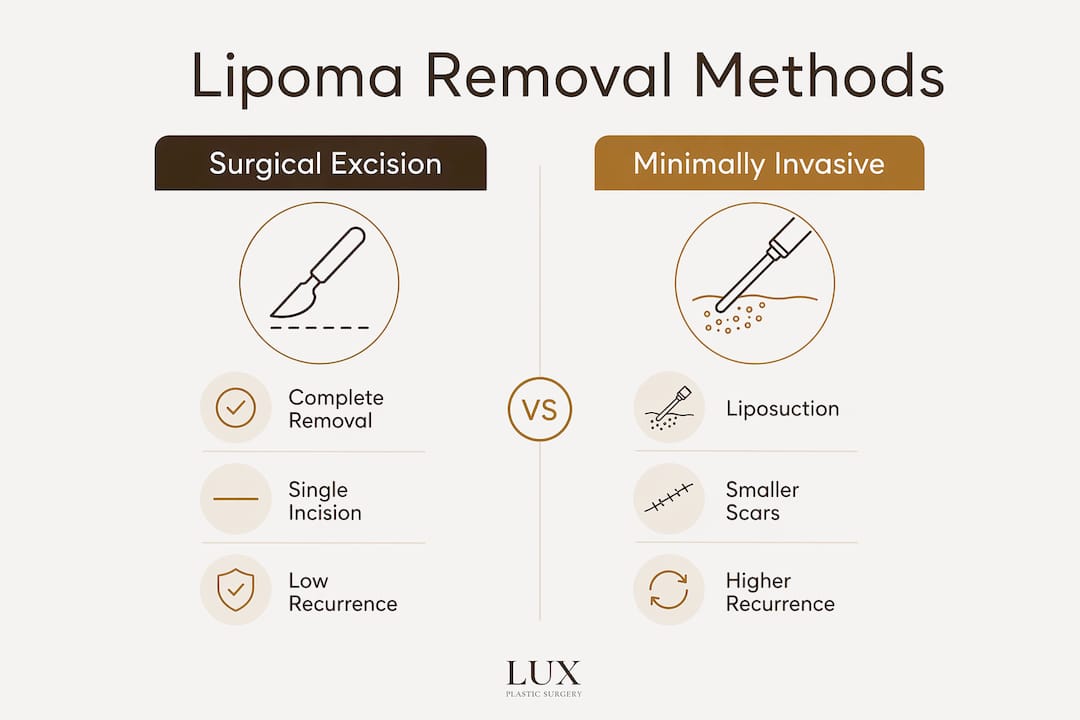
Traditional surgical excision removes the lipoma and its capsule as a single intact unit. Complete capsule removal is the clinical priority because leaving any capsule behind is the primary cause of recurrence. The surgeon makes an incision directly over the lump, dissects around the capsule, and lifts the entire structure free. The wound is then closed in layers. Pathological examination of the excised tissue confirms the diagnosis and excludes any unexpected findings.
Liposuction-assisted removal
Liposuction uses a cannula to aspirate fat cells through a small puncture rather than an open incision. The resulting scar is smaller, but the technique fragments the lipoma during removal. Liposuction risks leaving the fibrous capsule intact, which increases the likelihood of recurrence. It is generally reserved for very large lipomas where a long excision scar would be cosmetically unacceptable, and it is used selectively rather than as a routine approach.
The MOQIF technique
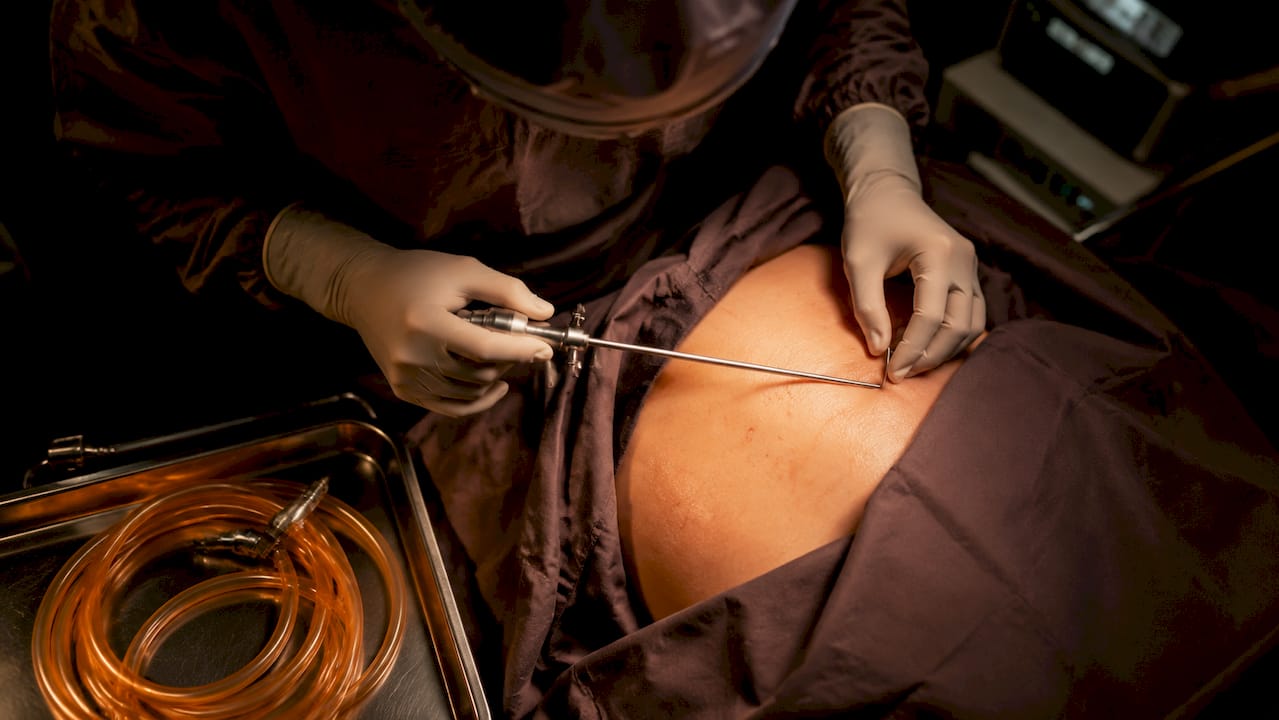
The Minimal One-Quarter Incision and Four-Step (MOQIF) technique represents a significant advance in lipoma surgery. It uses hydrodissection to separate the lipoma from surrounding tissue by injecting fluid, preserving superficial structures and improving surgical precision. The lipoma is then delivered intact through a small incision. Research from Seoul National University shows the MOQIF method achieves complete excision through incisions averaging 1.69 cm for lipomas averaging 6.8 cm in size, with zero recurrence at nearly nine months of follow-up. That combination of minimal scarring and complete removal is clinically significant.
| Technique | Incision size | Capsule removed | Recurrence risk | Best suited for |
|---|---|---|---|---|
| Surgical excision | Matches lipoma length | Yes, intact | Low | Most lipomas |
| Liposuction | Very small puncture | Often incomplete | Higher | Very large lipomas |
| MOQIF | Approximately one quarter of lipoma diameter | Yes, intact | Very low | Moderate to large lipomas |
Specialists prioritise complete capsule removal for clinical success rather than minimal scarring alone. A smaller scar is a welcome outcome, but it must not come at the cost of leaving residual tissue behind.
Pro Tip: Always ask your surgeon whether the excised tissue will be sent for pathological examination. Histology confirms the diagnosis and provides reassurance that no unexpected cellular changes are present.
What to expect during and after lipoma removal surgery
Lipoma surgical removal is an outpatient procedure. Patients arrive, have the procedure performed under local anaesthesia, and return home the same day. General anaesthesia is rarely required unless the lipoma is very large or located in a surgically complex area.
The procedure follows a consistent sequence. The surgeon marks the site, administers local anaesthetic, makes the incision, dissects carefully around the capsule, and removes the lump intact. The wound is closed with sutures, dressed, and the patient receives written aftercare instructions before discharge.
Post-operative recovery is generally straightforward. Typical expectations include:
- Mild soreness and bruising around the wound site for several days
- Swelling that peaks within the first 48 hours and subsides gradually
- Applying ice packs for 15–20 minutes each hour during the initial recovery period to reduce swelling
- Keeping the wound dry and avoiding baths or hot tubs for four weeks post-operatively
- Avoiding strenuous physical activity until the surgeon confirms healing is complete
- Attending a follow-up appointment to assess the wound and review pathology results
Wound care is the patient’s primary responsibility during recovery. Keeping the site clean and dry, changing dressings as instructed, and watching for signs of infection such as increasing redness, warmth, or discharge are the key tasks. Lux Plastic Surgery’s guidance on plastic surgery recovery provides practical advice applicable to lipoma excision aftercare.
Complications are uncommon when surgery is performed by an experienced consultant. Possible issues include seroma (fluid collection), haematoma (blood pooling), wound infection, and scarring. Nerve injury is rare. Diligent aftercare significantly reduces the risk of wound complications and supports the best possible cosmetic outcome.
What are the risks and why self-treatment is dangerous?
Lipoma excision carries a low complication rate when performed by a qualified surgeon in a clinical setting. The most clinically significant risk is recurrence, which results from incomplete capsule removal rather than from the lipoma regrowing. Careful surgical technique and pathology confirmation are the two factors that most reliably prevent recurrence.
Patients sometimes consider self-treatment when they believe a lump is straightforward to remove. This is a serious error in judgement. Attempting to squeeze, cut, or drain a lipoma at home carries severe risks including deep infection, permanent scarring, and missed diagnosis of a malignant tumour. A lump that looks and feels like a lipoma may not be one. Only histological examination of excised tissue can confirm the diagnosis with certainty.
The risks associated with professional lipoma surgery include:
- Seroma: fluid accumulation beneath the skin, usually resolving without intervention
- Haematoma: blood pooling in the wound cavity, occasionally requiring drainage
- Wound infection: managed with antibiotics; rare when sterile technique is used
- Scarring: all incisions leave a scar; experienced surgeons minimise this through careful closure
- Recurrence: low when the capsule is removed completely; higher with liposuction or incomplete excision
- Nerve or vessel injury: rare and more likely with deep or anatomically complex lipomas
No infections or nerve injuries were reported in the MOQIF study cohort, which reflects the safety achievable with specialist surgical technique. Choosing a GMC-registered consultant plastic surgeon is the single most effective step a patient can take to reduce operative risk.
How much does lipoma removal cost in the UK?
Private lipoma removal in the UK typically costs between £275 and £500, excluding the initial consultation fee. That range reflects straightforward, single-lipoma excision under local anaesthesia. Multiple lipomas, larger lesions, or anatomically complex locations will increase the cost.
NHS funding for lipoma removal is limited. The NHS covers excision when a lipoma causes pain, functional impairment, or rapid growth that raises clinical concern. Cosmetic removal is not routinely funded. Waiting times on the NHS can be considerable, and patients may have limited choice of surgeon or technique.
Factors that affect the cost of private treatment include:
- Size and depth of the lipoma
- Number of lipomas to be removed in a single session
- Location on the body and surgical complexity
- Anaesthetic requirements
- Surgeon’s experience and clinic setting
| Treatment pathway | Typical cost | Waiting time | Surgeon choice |
|---|---|---|---|
| NHS (medically necessary) | No patient cost | Months | Limited |
| Private clinic | £275–£500 per lipoma | Days to weeks | Full choice |
| Private multi-lipoma session | Variable, discuss at consultation | Days to weeks | Full choice |
A specialist consultation is the appropriate starting point for any patient considering private treatment. The surgeon will assess the lipoma, confirm the diagnosis, discuss technique options, and provide a clear cost breakdown before any commitment is made.
Key takeaways
Surgical excision remains the gold standard for lipomas removal because it is the only technique that reliably removes the capsule intact, confirms the diagnosis through pathology, and delivers a low recurrence rate.
| Point | Details |
|---|---|
| Excision removes the capsule | Complete capsule removal is the primary factor in preventing lipoma recurrence. |
| MOQIF offers minimal scarring | The MOQIF technique achieves full excision through incisions averaging 1.69 cm with zero recurrence reported. |
| Self-treatment is dangerous | Attempting home removal risks infection, scarring, and missed diagnosis of malignancy. |
| NHS covers medical need only | Cosmetic lipoma removal is not routinely funded; private treatment costs £275–£500 per lipoma. |
| Aftercare determines outcomes | Keeping the wound dry for four weeks and applying ice packs reduces swelling and supports healing. |
A consultant’s perspective on lipoma removal
Most lipomas I see in clinic do not need removing. They are benign, stable, and cause no harm. Patients often arrive having lived with a lump for years, and the honest clinical answer is frequently: watch and wait. That said, when removal is indicated, whether for pain, growth, or cosmetic concern, it is one of the most satisfying procedures in plastic surgery. It is technically straightforward, the results are immediate, and patients leave with a clear diagnosis.
What concerns me most is the number of patients who arrive having attempted some form of self-treatment. I have seen infections requiring hospital admission, significant scarring, and, on one occasion, a patient who had been squeezing a lump that turned out not to be a lipoma at all. The clinical lesson is simple: any lump deserves a proper assessment before any intervention.
The MOQIF technique has genuinely changed what is achievable for patients who are anxious about scarring. Delivering a large lipoma through an incision less than 2 cm in length, with the capsule intact and the tissue sent for histology, is a good outcome by any measure. The technique requires specific training and experience, but the results justify that investment.
My advice to any patient considering lipoma excision is to choose a GMC-registered consultant plastic surgeon, not a general practitioner performing minor surgery in a community setting. The difference in technique, aftercare, and diagnostic rigour is material. At Lux Plastic Surgery, every excision is performed to consultant standard, with pathology as standard practice.
— Lux
Lipoma removal at Lux Plastic Surgery
Lux Plastic Surgery offers consultant-led lipoma excision in Bedford, London, and Manchester, performed by Professor Sandip Hindocha, GMC-registered Consultant Plastic Surgeon and NHS Clinical Director.

Every patient receives a thorough pre-operative assessment, a clear explanation of technique options, and written aftercare guidance. Pathological examination of excised tissue is standard practice at Lux Plastic Surgery. For patients considering their options, the plastic surgery explained guide provides a clear overview of what consultant-led surgical care involves. To discuss lipoma removal or book a consultation, visit the Lux Plastic Surgery services page.
This article is for informational purposes only and does not constitute medical advice. Consult a GMC-registered specialist before making any treatment decision.
FAQ
What is a lipoma and is it dangerous?
A lipoma is a benign fatty lump enclosed in a fibrous capsule beneath the skin. It is not cancerous and does not become malignant, though any new or changing lump should be assessed by a specialist to confirm the diagnosis.
Is lipoma removal always necessary?
Removal is not always necessary. Asymptomatic, stable lipomas can be safely monitored without treatment. Excision is advised when a lipoma grows, causes pain, limits movement, or is a source of cosmetic concern.
How long does recovery after lipoma surgery take?
Most patients experience mild soreness for a few days and resume normal activities within one to two weeks. The wound should be kept dry for four weeks, and strenuous exercise should be avoided until the surgeon confirms full healing.
Can lipomas come back after removal?
Recurrence is uncommon when the capsule is removed completely during excision. Liposuction carries a higher recurrence risk because it may leave capsule tissue behind. The MOQIF technique reports zero recurrence in published clinical data.
Are there any home remedies that remove lipomas?
No home remedy removes a lipoma. Lipomas do not regress spontaneously and cannot be dissolved by diet, supplements, or topical treatments. Attempting to squeeze or cut a lipoma at home risks serious infection, scarring, and missed diagnosis.