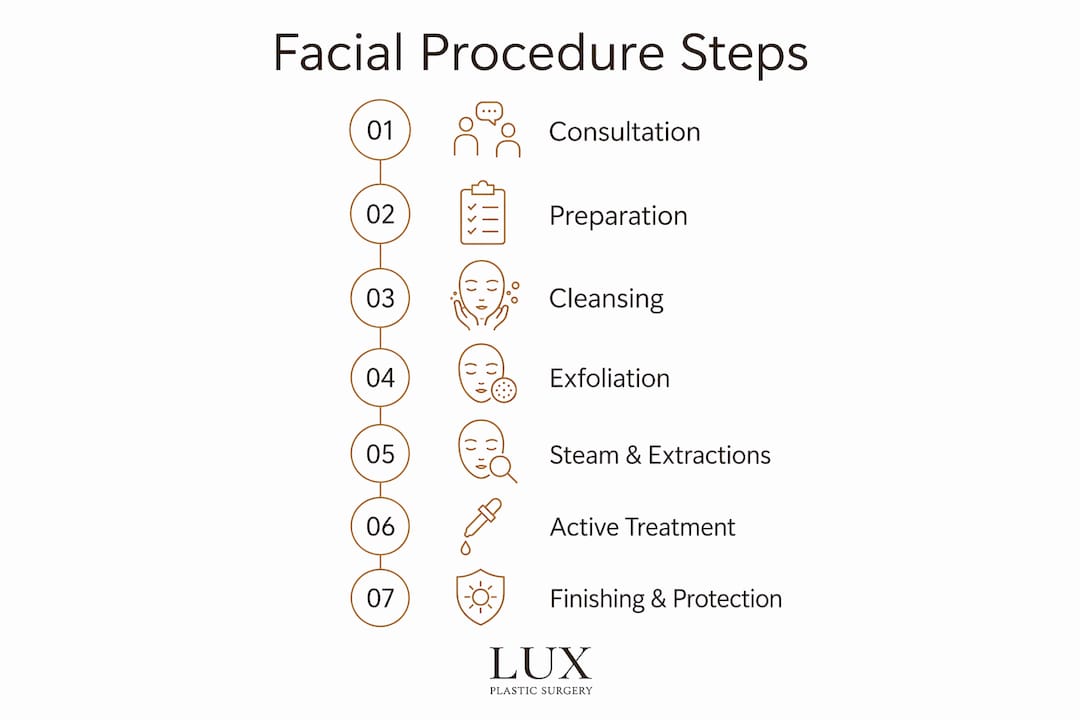
A facial procedure step by step is a structured clinical sequence covering assessment, preparation, active treatment, and aftercare, designed to achieve safe and measurable aesthetic improvement. Whether you are considering a non-surgical skin treatment or a surgical facial rejuvenation, understanding each phase protects you from avoidable risks and helps you set realistic expectations. This guide follows the full process from your first consultation through to recovery, with reference to UK regulatory bodies including the GMC, BAAPS, and BAPRAS. Professor Sandip Hindocha, GMC-registered Consultant Plastic Surgeon and NHS Clinical Director at Lux Plastic Surgery, directs the clinical framework underpinning this article.
What does the initial consultation involve?
The initial consultation is the most consequential stage of any facial aesthetic procedure. It is where clinical suitability is established, risks are communicated, and a personalised treatment plan is created. Skipping or rushing this stage is the single most common factor in poor outcomes.
A thorough structured patient consultation covers medical history, facial anatomy assessment, psychological screening, risk explanation, expectation setting, and informed consent. Each of these elements serves a distinct purpose. Medical history review identifies contraindications such as autoimmune conditions, blood-thinning medications, or a history of keloid scarring. Facial anatomy assessment maps bone structure, skin laxity, fat distribution, and muscle movement to guide treatment selection.
Psychological readiness is assessed with equal rigour. Practitioners trained in line with BAAPS and BAPRAS guidance are expected to identify patients whose motivations may not align with realistic outcomes. A patient seeking to reverse grief or relationship difficulties through aesthetic change is not a suitable candidate, regardless of their physical suitability.
Verifying practitioner credentials before committing to any procedure is non-negotiable. GMC and BAPRAS registration are primary indicators that a surgeon has relevant experience and adheres to current safety standards. You can verify GMC registration directly through the GMC’s online register at no cost. For non-surgical treatments, check that the practitioner holds a prescribing licence and works under medical supervision.
The consultation concludes with documentation. For injectable or implant-based procedures, a Patient Decision Checklist is a regulatory requirement. This document confirms that formal risk communication has taken place, including discussion of complications such as vascular occlusion from fillers or BIA-ALCL associated with certain implant types. Signing this checklist is not a formality. It is evidence that you have understood and accepted the specific risks of your chosen procedure.
Pro Tip: Ask your practitioner to show you their GMC registration number and their clinic’s CQC certificate before your first appointment. Any reputable provider will share these without hesitation.
Key questions to raise at your consultation:
- What is the practitioner’s specific experience with this procedure?
- What are the most common complications, and how are they managed?
- What happens if I am unhappy with the result?
- Is a cooling-off period offered before I commit?
- Are before-and-after photographs from real patients available?
Choosing the right clinic begins well before the treatment room. The Lux Plastic Surgery guide on selecting the right aesthetic clinic outlines the specific questions and checks that protect patients at this stage.
What preparation is required before a facial procedure?
Preparation for a facial aesthetic procedure operates on two levels: what the patient does in the weeks before treatment, and what the clinic must have in place on the day. Both matter equally for safety and outcome quality.
Patient preparation typically begins two to four weeks before the procedure date. Follow these steps in sequence:
- Stop blood-thinning supplements and medications. Aspirin, ibuprofen, fish oil, vitamin E, and St John’s Wort all increase bruising risk. Discuss any prescription medications with your practitioner before stopping them.
- Avoid alcohol for at least 48 hours before treatment. Alcohol dilates blood vessels and impairs healing.
- Increase hydration. Well-hydrated skin responds more predictably to both topical and injectable treatments.
- Avoid sun exposure and tanning beds for two weeks prior. Active UV damage or a recent tan increases the risk of post-inflammatory hyperpigmentation following laser or chemical treatments.
- Pause retinoids and exfoliating acids. Tretinoin, glycolic acid, and salicylic acid thin the skin barrier. Most practitioners advise stopping these five to seven days before any resurfacing or injectable treatment.
- Attend a patch test if required. Chemical peels and certain laser protocols require a patch test at least 48 hours before full treatment.
- Arrange transport home. Even non-surgical procedures involving sedation or significant swelling require someone to accompany you.
On the clinic side, regulatory compliance with the CQC in England, or the RQIA in Northern Ireland, is a baseline safety indicator. A compliant facility maintains sterile technique, holds emergency medications including adrenaline and hyaluronidase, and operates under a clinical governance framework. Patients are entitled to ask whether a clinic holds its current registration certificate.
The choice between surgical and non-surgical options also shapes preparation requirements significantly. Surgical facial procedures such as a facelift or rhinoplasty require pre-operative blood tests, anaesthetic assessment, and a minimum fasting period. Non-surgical treatments such as botulinum toxin or dermal fillers require none of these, but they carry their own preparation protocols, particularly around anticoagulants and skin condition. For a detailed walkthrough of the non-surgical route, the Lux Plastic Surgery non-surgical facelift guide covers each preparatory stage clearly.
Pro Tip: Take dated photographs of your face from three angles (front, left, right) before any treatment. These become your personal baseline and are invaluable at follow-up appointments for assessing change objectively.
What are the step-by-step phases of the facial procedure itself?
A standard professional facial lasts 45 to 60 minutes and follows a structured sequence. This means the treatment is not improvised. Each step builds on the last, and omitting any phase reduces the clinical value of those that follow.
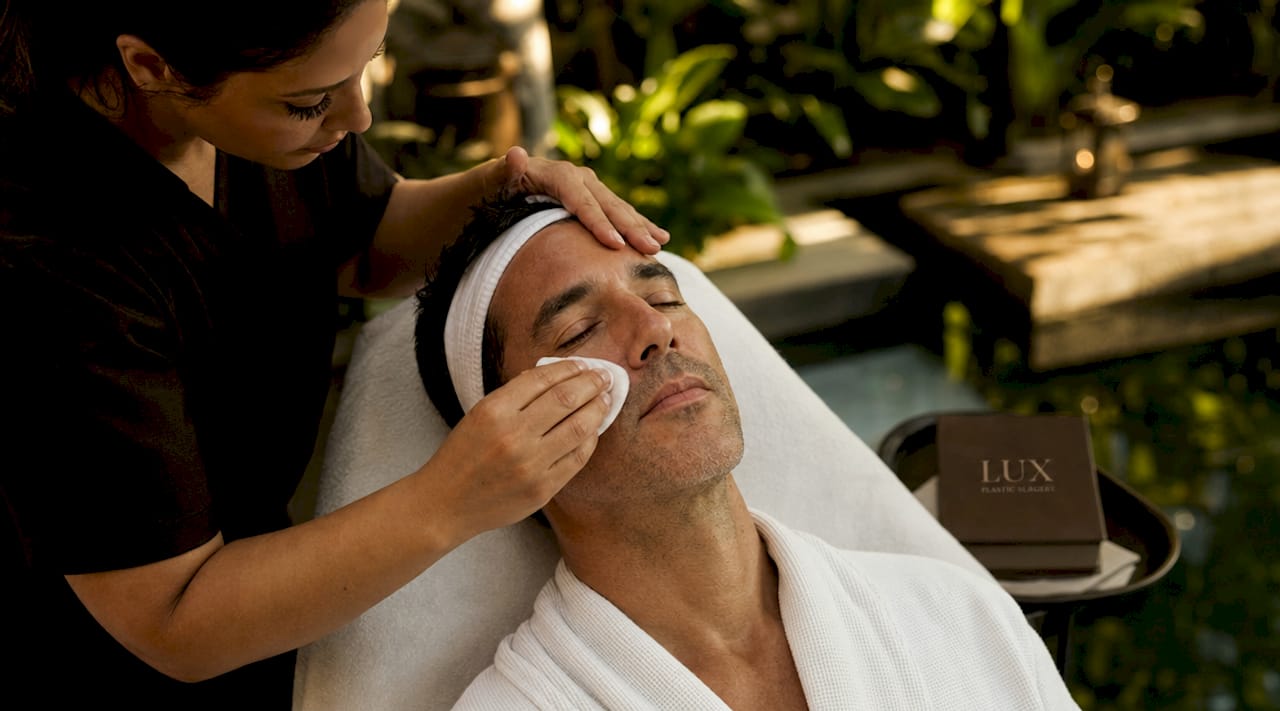
Phase 1: cleansing and skin analysis
The procedure begins with a double cleanse to remove make-up, sebum, and surface debris. The practitioner then performs a skin analysis under magnification or with a Woods lamp to identify dehydration, pigmentation, congestion, and vascular changes. This analysis directly informs which active ingredients and techniques are used in the steps that follow.
Phase 2: exfoliation
Exfoliation removes the outermost layer of dead skin cells, allowing subsequent products and treatments to penetrate more effectively. The method varies by skin type. Enzymatic exfoliants suit sensitive or rosacea-prone skin. Mechanical exfoliation with a dermaplaning blade or microdermabrasion device suits thicker, more resilient skin. Chemical exfoliation using glycolic, lactic, or salicylic acid suits oily or acne-prone skin.
Phase 3: steam and extractions
Controlled steam softens the follicular contents and prepares the skin for extractions. Extractions remove comedones and milia using sterile technique. This phase is omitted in patients with active inflammatory acne, broken capillaries, or rosacea, where steam and pressure would worsen the condition.
Phase 4: active treatment
This is the most variable phase and the one most tailored to individual goals. Professional facial steps at this stage include masking, toning, serum application, eye cream, moisturiser, and facial massage. In a clinical setting, this phase may also include:
- Botulinum toxin injections (commonly referred to as Botox, though this is a brand name) to relax dynamic lines at the forehead, glabella, and periorbital area
- Hyaluronic acid dermal fillers to restore volume in the mid-face, lips, or tear troughs
- Chemical peels at varying depths (superficial, medium, or deep) to address pigmentation, texture, and fine lines
- Microneedling to stimulate collagen via controlled dermal injury
- Laser or IPL treatments targeting pigmentation, vascular lesions, or skin laxity
For injectable procedures, anatomical knowledge is the primary safety variable. Vascular occlusion, the most serious complication of filler treatment, occurs when product is inadvertently injected into or compresses a blood vessel. Practitioners trained in facial anatomy and vascular mapping, and who stock hyaluronidase on site, are significantly better placed to manage this complication if it occurs.
Phase 5: finishing and sun protection
The procedure closes with application of a calming serum, moisturiser, and broad-spectrum SPF. Sun protection is not optional at this stage. Freshly treated skin is more susceptible to UV-induced pigmentation, and omitting SPF after any resurfacing or injectable treatment increases the risk of post-inflammatory hyperpigmentation.
The table below summarises the key differences between surgical and non-surgical facial procedures to help you understand what each pathway involves.
| Feature | Surgical procedures | Non-surgical procedures |
|---|---|---|
| Anaesthesia | General or local with sedation | Topical or local only |
| Recovery time | 4 to 8 weeks typically | Hours to days |
| Duration of results | Years to permanent | Months to 18 months |
| Reversibility | Not reversible | Partially reversible (fillers) |
| Regulatory oversight | GMC, CQC, BAPRAS | GMC, CQC, prescribing licence |
| Risk profile | Higher, includes surgical risks | Lower, but vascular risk with injectables |
Pro Tip: If you are having injectable treatment, ask specifically whether hyaluronidase is held on site. Its absence is a red flag regardless of how experienced the practitioner claims to be.
How does recovery proceed after a facial procedure?
Recovery from a facial procedure varies considerably depending on whether the treatment was non-surgical or surgical, and on individual factors such as skin sensitivity, age, and adherence to aftercare instructions.
For non-surgical treatments, most patients experience redness, mild swelling, and sensitivity for 24 to 72 hours. Bruising following injections can persist for up to two weeks. These are expected responses, not complications. The distinction matters because patients who mistake normal post-treatment inflammation for a problem sometimes seek unnecessary intervention.
For surgical facial procedures, recovery timelines are considerably longer. A facelift or rhinoplasty typically requires four to eight weeks before social presentability is restored, with full resolution of swelling taking up to twelve months. Patients with implants require scheduled follow-up including MRI or ultrasound monitoring at intervals specified by their surgeon.
Post-procedure care instructions to follow consistently:
- Avoid direct sun exposure for a minimum of two weeks and apply SPF 50 daily thereafter
- Do not apply make-up to treated areas for 24 to 48 hours following injectables, or as directed following resurfacing
- Sleep with your head elevated for the first three to five nights to reduce swelling
- Avoid strenuous exercise for 48 hours following injectables, or for four to six weeks following surgery
- Do not use retinoids, exfoliating acids, or active skincare until the practitioner confirms the skin barrier has recovered
- Attend all scheduled follow-up appointments, even if you feel well
Recognising warning signs is as important as following standard aftercare. Seek urgent medical attention if you experience increasing pain rather than decreasing pain after day two, skin blanching or mottling following filler treatment, signs of infection including spreading redness or discharge, or visual disturbance following any periorbital treatment.
Aesthetic care is cumulative. Improved skin quality and balance are achieved through progressive treatments under professional guidance, not through a single session. This means your recovery period is also the beginning of your maintenance plan. Most practitioners recommend a review appointment at four to six weeks to assess the outcome and plan any follow-on treatment.
Key takeaways
A safe and effective facial procedure requires verified credentials, structured preparation, a stepwise treatment protocol, and consistent aftercare across every stage of the process.
| Point | Details |
|---|---|
| Consultation is non-negotiable | Medical history, anatomy assessment, and informed consent must precede any treatment. |
| Verify credentials before booking | GMC and BAPRAS registration confirm clinical competence and adherence to safety standards. |
| Preparation affects outcomes | Stopping anticoagulants, avoiding UV, and pausing actives reduces complication risk measurably. |
| Treatment follows a fixed sequence | Cleansing, analysis, exfoliation, active treatment, and SPF application each serve a distinct clinical purpose. |
| Recovery requires active management | Follow-up appointments, sun protection, and recognising warning signs are part of the procedure, not optional extras. |
What I have learnt from years of facial aesthetic practice
The question I am asked most often is not “what treatment do I need?” It is “how do I know I am in safe hands?” That question tells me everything about where patients’ real anxiety lies, and it is the right question to ask.
What concerns me most in the current aesthetic market is not the complexity of the procedures. It is the normalisation of unverified providers and the pressure patients feel to prioritise price over clinical governance. A consultation that lasts fifteen minutes and ends with a treatment plan is not a consultation. It is a sales appointment. The two are not the same, and the difference matters enormously when something goes wrong.
My view on staged treatment planning is also worth stating plainly. Patients who come to me expecting a single procedure to resolve years of volume loss, skin laxity, and textural change are not being served well by anyone who agrees with that expectation. Realistic planning means sequencing treatments in order of clinical priority, allowing recovery between stages, and reassessing at each follow-up. That approach produces better results and fewer complications than attempting everything at once.
The personalised facial treatment guide on the Lux Plastic Surgery website reflects this philosophy directly. It is not a menu. It is a framework for thinking about your face as a whole, over time.
One final point on cost. The cheapest option in aesthetic medicine is rarely the least expensive in the long run. Correcting a poorly placed filler, managing a post-procedure infection, or addressing scarring from an unregulated treatment costs significantly more, financially and physically, than the original procedure would have cost at a reputable clinic. Prioritise credentials and ethical standards over low cost to avoid unsafe aesthetic treatments. That is not a commercial position. It is a clinical one.
— Lux
Explore facial procedures at Lux Plastic Surgery
Lux Plastic Surgery offers a full range of surgical and non-surgical facial treatments, each delivered under the direct oversight of Professor Sandip Hindocha, GMC-registered Consultant Plastic Surgeon and FRCS (Plast). Every treatment plan is built around your anatomy, your goals, and your safety, with consultations available across Bedford, London, and Manchester.

Whether you are considering botulinum toxin, dermal fillers, a surgical facelift, or a combination approach, the process begins with a thorough consultation and a treatment plan that is honest about timelines and outcomes. Explore the full range of facial and aesthetic services at Lux Plastic Surgery, or read the safe cosmetic surgery guide to understand how clinical governance protects you at every stage. To book a consultation, contact the team directly.
This article is for informational purposes only and does not constitute medical advice. Consult a GMC-registered specialist before undergoing any aesthetic procedure.
FAQ
What does a facial procedure step by step involve?
A facial procedure step by step covers consultation, preparation, active treatment (cleansing, exfoliation, steam, extractions, masking, and product application or injectables), and a structured aftercare phase. The exact steps vary depending on whether the procedure is non-surgical or surgical.
How do I verify that my practitioner is qualified?
Check GMC registration through the GMC’s online register and confirm BAPRAS or BAAPS membership for surgical procedures. For non-surgical treatments, the practitioner should hold a prescribing licence and work under medical supervision.
What are the most common risks of facial aesthetic procedures?
Non-surgical risks include bruising, swelling, infection, and vascular occlusion from injectable fillers. Surgical risks include anaesthetic complications, scarring, nerve injury, and asymmetry. All risks should be documented in a Patient Decision Checklist before treatment begins.
How long does recovery take after a facial procedure?
Non-surgical treatments typically require 24 to 72 hours of social downtime. Surgical procedures such as a facelift or rhinoplasty require four to eight weeks before most patients feel socially presentable, with full resolution of swelling taking up to twelve months.
How many treatments are needed to see results?
Aesthetic care is cumulative, and most patients require a series of staged treatments to achieve their goals rather than a single session. Your practitioner should outline a realistic treatment sequence at your initial consultation.