A body lift is a surgical procedure that removes excess skin and underlying fatty tissue to restore a firmer, more contoured body shape. Clinically known as a belt lipectomy or circumferential body lift when performed around the full torso, it is most commonly sought by adults who have experienced significant weight loss or the effects of ageing on skin elasticity. Professor Sandip Hindocha, GMC-registered Consultant Plastic Surgeon and NHS Clinical Director at Lux Plastic Surgery, guides all body contouring assessments at the practice. Organisations including BAAPS and the American Society of Plastic Surgeons (ASPS) recognise body lifting surgery as one of the most transformative procedures available for post-weight-loss body contouring.
What is a body lift and what types are available?
A body lift procedure is not a single, fixed operation. It is a family of surgical techniques, each targeting a different region of the body, and the right choice depends entirely on where excess skin has accumulated and what the patient wants to achieve.
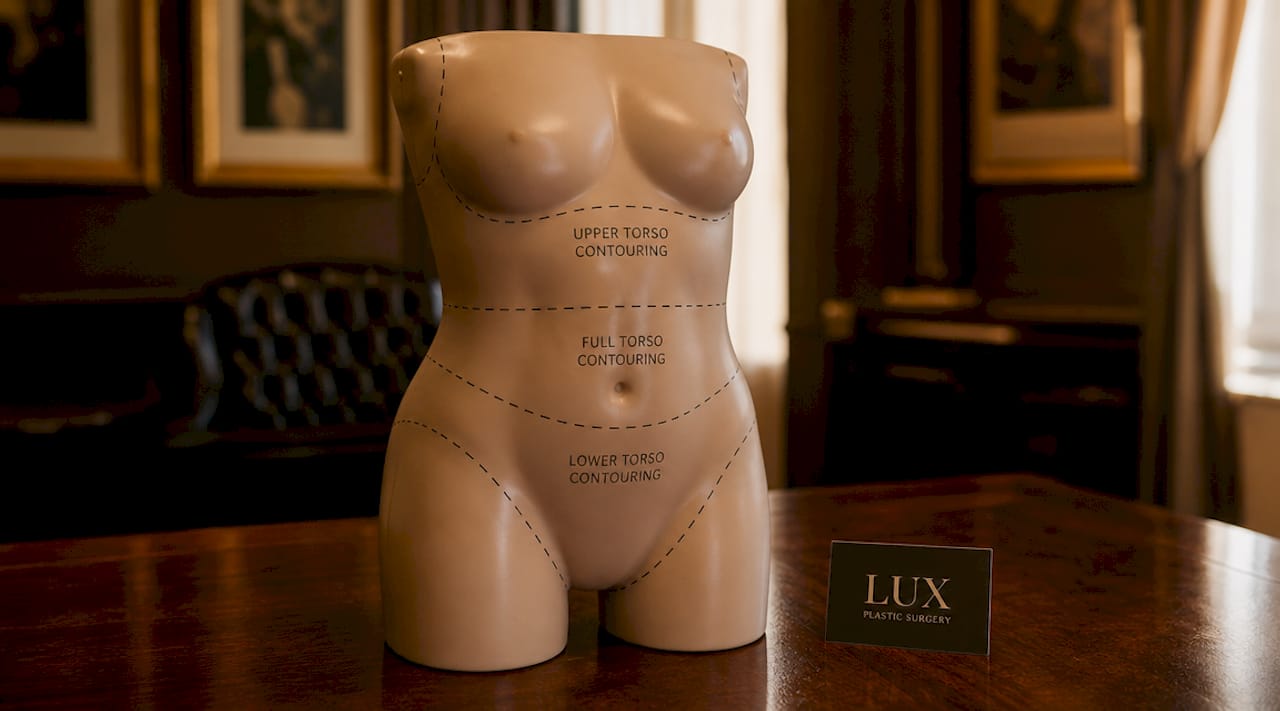
The three principal types are the lower body lift, the upper body lift, and the total body lift. Each has a distinct scope and incision pattern.
| Type | Areas treated | Typical candidates |
|---|---|---|
| Lower body lift (belt lipectomy) | Abdomen, flanks, back, buttocks, outer thighs | Post-bariatric patients, significant weight loss |
| Upper body lift | Upper back, bra-line area, lateral chest | Excess skin above the waist after weight loss |
| Total body lift | Full torso, thighs, buttocks, abdomen | Patients with widespread skin laxity |
The lower body lift is the most frequently performed variant. University of Utah Health describes it as a circumferential procedure that removes sagging tissue and recontours the entire torso at belt level, addressing the abdomen, flanks, back, buttocks, and thighs in a single operative session. This is a meaningful distinction for patients who might otherwise consider a tummy tuck: a tummy tuck addresses only the front of the abdomen, whereas a belt lipectomy treats the stomach, hips, buttocks, and thighs in a three-dimensional approach, suspending lax tissues rather than simply removing skin from the front.
An upper body lift focuses on the back and lateral chest wall, areas that a lower body lift does not address. A total body lift combines elements of both and is typically staged across two or more operative sessions to manage surgical time and recovery safely.
Pro Tip: If you are unsure which type of body lifting surgery applies to your concerns, bring photographs of the areas that trouble you most to your consultation. A surgeon can map the appropriate procedure to your anatomy far more accurately with visual reference.
How is a body lift procedure performed?
The surgical process for a lower body lift follows a well-established sequence, though technique choices vary between surgeons and are tailored to each patient’s anatomy.
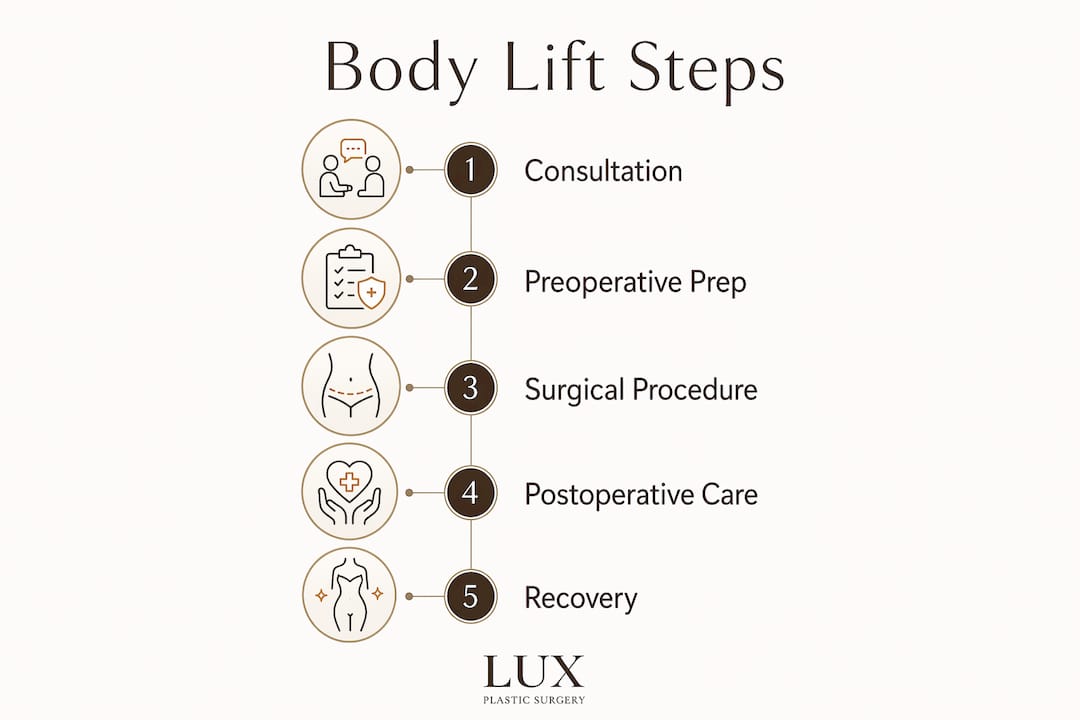
The circumferential incision is placed to run around the entire torso at belt level. Surgeons position it carefully so that the resulting scar sits within the natural waistband line, making it concealable beneath underwear or swimwear. The procedure typically takes around five hours under general anaesthesia.
The key surgical steps are as follows:
- Incision placement. The circumferential incision is marked pre-operatively with the patient standing, so gravity accurately shows where tissue falls.
- Tissue removal. Excess skin and fat between the upper and lower incision lines are excised. Liposuction may be used as an adjunct to refine contours in areas where fat volume, rather than skin laxity, is the primary concern.
- Tissue suspension. The ASPS emphasises that 3D torso recontouring involves suspending the underlying lax tissues, not only removing skin. This is the step that produces lasting lift rather than a flat but unsupported result.
- Wound closure. Layered closure minimises tension on the skin surface, which reduces scar width over time.
- Drain placement. Surgical drains are inserted to prevent fluid accumulation beneath the skin during the early healing phase.
- Compression garment application. A fitted compression garment is applied in theatre and worn continuously during the initial recovery period.
A notable technical advance published in the European Journal of Plastic Surgery in 2026 compared a modified technique using de-epithelialised dermal flaps against the traditional method in 76 female patients. The modified approach reduced complication rates from 50% to 17%, with no recurrence of tissue ptosis at follow-up. This finding matters because it shows that surgical technique selection, not just patient selection, directly determines complication risk.
Pro Tip: When choosing a surgeon for body lifting surgery, ask specifically about their technique for tissue suspension. A surgeon who can explain their approach to the underlying tissue, not just the skin removal, is demonstrating the depth of planning that separates good outcomes from excellent ones.
What are the benefits of body lift surgery?
The benefits of a body lift extend well beyond aesthetics, though the cosmetic improvements are significant and well-documented.
Physically, patients report a tighter, more toned appearance across the treated areas. The removal of sagging skin from ageing or weight loss produces a firmer lower body contour that clothing fits more naturally. For patients who have lost large amounts of weight, the practical benefits are equally important: excess skin folds can cause persistent skin irritation, rashes, and hygiene difficulties that surgery resolves permanently.
“Body lift removes excess loose skin and tightens the support underneath, ideal after major weight loss to improve contour and confidence.” — Liv Hospital
Psychological outcomes are also measurable. The BODY-Q patient-reported outcome tool, which is becoming a gold standard in evaluating body contouring results, consistently shows improvements in body image, psychological well-being, and quality of life following body lift procedures. The 2026 European Journal of Plastic Surgery study found that patients treated with the modified dermal flap technique reported higher BODY-Q satisfaction scores than those treated with the traditional method. Higher satisfaction scores correlate with fewer revision requests and better long-term outcomes.
It is worth being clear about what body lifting surgery cannot do. It is not a weight-loss procedure. It does not address internal fat deposits, and it is not a substitute for reaching and maintaining a stable weight before surgery. Patients who undergo a body lift before their weight has stabilised risk recurrence of skin laxity, which may require further surgery. Non-surgical methods such as radiofrequency skin tightening can improve mild laxity, but they cannot replicate the degree of skin removal and tissue suspension that surgery achieves.
What does body lift recovery time involve?
Body lift recovery time is longer than many patients anticipate, and planning for it thoroughly is as important as the surgical decision itself.
Most patients spend one to two nights in hospital following the procedure. The first two weeks at home are the most demanding phase of recovery, requiring rest, wound care, and limited mobility. Drains typically remain in place for seven to fourteen days, depending on fluid output. The compression garment is worn continuously for the first four to six weeks, then during the day for a further four to six weeks. This is not optional: the garment manages post-operative swelling and supports the new tissue contours while healing progresses.
A realistic recovery timeline looks like this:
- Week 1 to 2: Rest at home. Short, gentle walks are encouraged from day two to reduce the risk of deep vein thrombosis. No driving. Wound care as directed by the surgical team.
- Week 3 to 4: Gradual increase in light activity. Most patients can return to desk-based work at around four weeks, though this depends on individual healing.
- Week 6: Drains removed (if not already). Compression garment transitions to daytime use only.
- Month 3: The majority of swelling has resolved. Scars begin to soften and fade.
- Month 6 to 12: Final results become visible as scars mature and residual swelling fully settles.
Complications are possible with any major surgery. The most common include seroma (fluid accumulation), wound dehiscence, and scar widening. The 2026 study cited above found that technique refinements, specifically the use of de-epithelialised dermal flaps, reduced overall complication rates substantially. Patients should contact their surgical team promptly if they notice increased redness, warmth, or discharge from the wound, or if they develop a fever. Detailed guidance on managing the post-operative period is available in Lux Plastic Surgery’s recovery advice resource.
Body lift vs non-surgical body contouring: which is right for you?
Non-surgical body contouring has expanded considerably as a category, and understanding what it can and cannot achieve is central to making an informed decision.
The main non-surgical techniques currently available in the UK are:
- Radiofrequency (RF) skin tightening. Devices such as Morpheus8 and Thermage deliver controlled heat energy to stimulate collagen remodelling. Effective for mild to moderate skin laxity on the abdomen and thighs.
- High-intensity focused ultrasound (HIFU). Targets deeper tissue layers to produce a tightening effect. Most commonly used on the face and neck but applied to body areas in some protocols.
- Cryolipolysis. Freezes and destroys fat cells without surgery. Addresses localised fat deposits rather than skin laxity. CoolSculpting is the most widely recognised device in this category.
The comparison between surgical and non-surgical approaches is straightforward when framed by the degree of change required:
| Factor | Surgical body lift | Non-surgical contouring |
|---|---|---|
| Degree of skin removal | Significant | Minimal to none |
| Tissue suspension | Yes | No |
| Recovery time | 6 to 12 weeks | Hours to days |
| Durability of results | Long-term with stable weight | Requires maintenance sessions |
| Suitable for excess skin folds | Yes | No |
| Cost (approximate GBP) | £8,000 to £20,000+ | £500 to £3,000 per course |
Non-surgical options are appropriate for patients with mild laxity who are not ready for surgery, or those who want to maintain results between procedures. They are not appropriate substitutes for a body lift when there is significant excess skin. As Lux Plastic Surgery notes, non-surgical techniques offer less invasive options but with limited scope compared to surgical results.
Pro Tip: Non-surgical treatments can complement a surgical body lift rather than replace it. Some patients use radiofrequency treatments to address residual skin laxity in areas not covered by surgery, or to maintain skin quality in the years following their procedure.
Key takeaways
A body lift is the most effective surgical option for removing significant excess skin and restoring body contour after major weight loss or ageing, with outcomes that non-surgical methods cannot replicate.
| Point | Details |
|---|---|
| Definition and scope | A body lift removes excess skin and fat circumferentially, addressing abdomen, flanks, back, buttocks, and thighs. |
| Technique matters | Modified techniques using dermal flaps reduce complication rates from 50% to 17% compared to traditional methods. |
| Recovery planning | Full recovery takes six to twelve months; compression garments and drains are central to the process. |
| Non-surgical limits | Radiofrequency, HIFU, and cryolipolysis treat mild laxity only and cannot replicate surgical skin removal. |
| Patient selection | Stable weight before surgery is a prerequisite; body lifts are not weight-loss procedures. |
What I have learned from planning body lifts with patients
The question patients ask most often is whether they are “ready” for a body lift. In my experience, the answer rarely comes down to anatomy alone. The patients who achieve the best outcomes are those who arrive at consultation having already stabilised their weight for at least twelve months, who have realistic expectations about scarring, and who have genuinely thought through the recovery period rather than treating it as an afterthought.
One misconception I encounter regularly is the belief that a tummy tuck and a lower body lift are broadly equivalent procedures. They are not. A tummy tuck addresses the front of the abdomen. A belt lipectomy works circumferentially, which means the surgical planning, the incision pattern, and the recovery are all substantially different. Patients who have been told they “just need a tummy tuck” when they have significant laxity across the flanks and back are often underserved by that advice.
The 2026 research on de-epithelialised dermal flaps is genuinely encouraging. Halving the complication rate through a technique refinement, without compromising the aesthetic result, is exactly the kind of evidence-based progress that should inform how surgeons approach these procedures. I would encourage any patient researching body lifting surgery to ask their surgeon whether they are familiar with this technique and how they approach tissue suspension in their own practice.
Aftercare is where outcomes are either protected or lost. The compression garment, the drain management, the gradual return to activity. These are not bureaucratic requirements. They are the mechanisms by which the surgical result is preserved during healing. Patients who follow their aftercare protocol carefully, and who attend all follow-up appointments, consistently achieve better long-term results than those who do not.
— Lux
Considering a body lift? Here is how Lux Plastic Surgery can help

Lux Plastic Surgery offers consultant-led assessments for patients considering body contouring in Bedford, London, and Manchester. Professor Sandip Hindocha reviews each patient individually, assessing anatomy, weight history, and personal goals before recommending a surgical or non-surgical plan. There is no standard template: every recommendation is specific to the patient in front of him. If you are researching your options and want a clear, honest clinical opinion on whether a body lift is appropriate for you, a consultation with Professor Hindocha is the right starting point. To understand the full range of plastic surgery options available, visit the Lux Plastic Surgery website or book a consultation directly.
This article is for informational purposes only and does not constitute medical advice. Consult a GMC-registered specialist before making any decisions about surgical or non-surgical procedures.
FAQ
What is a body lift in simple terms?
A body lift is a surgical procedure that removes excess, sagging skin and fat from around the torso to produce a firmer, more contoured body shape. It is most commonly performed after significant weight loss or to address the effects of ageing on skin elasticity.
How does a body lift differ from a tummy tuck?
A tummy tuck addresses only the front of the abdomen, whereas a body lift, specifically a belt lipectomy, works circumferentially to treat the abdomen, flanks, back, buttocks, and thighs in a single procedure. The ASPS describes the belt lipectomy as a three-dimensional torso approach that a tummy tuck cannot replicate.
How long does body lift recovery take?
Most patients return to light desk work at around four weeks, but full recovery, including scar maturation and resolution of residual swelling, takes between six and twelve months. Compression garments are worn for six to twelve weeks post-operatively.
What are the main risks of body lifting surgery?
The most common complications include seroma, wound dehiscence, and scar widening. A 2026 study in the European Journal of Plastic Surgery found that modified surgical techniques using de-epithelialised dermal flaps reduced overall complication rates from 50% to 17% compared to traditional methods.
Am I a suitable candidate for a body lift?
Ideal candidates have reached a stable weight for at least twelve months, are non-smokers, and have realistic expectations about scarring and recovery. A body lift is not a weight-loss procedure and is not appropriate for patients whose weight is still fluctuating.