A lot of men come to a tummy tuck consultation expecting a flat, defined stomach and leave with a very different, but still honest, conversation. The fat that gives many men their “apple” shape often sits behind the abdominal muscle wall, not just under the skin, and surgery simply cannot remove it.
What a tummy tuck actually changes, and what it doesn’t, matters more for men than the marketing usually lets on.
Here’s what’s actually different about the operation, the goals, and the recovery.

Key takeaways
| Point | Details |
|---|---|
| Visceral fat can’t be removed surgically | Men store more fat behind the muscle wall, which liposuction and abdominoplasty cannot touch. |
| A tummy tuck alone won’t create a six-pack | Muscle definition needs separate etching technique and low body fat to begin with. |
| Most male patients arrive post-weight-loss | Bariatric surgery and GLP-1 medications are the most common route in. |
| Combining with gynecomastia surgery is common | Many men address chest and abdomen together in one recovery period. |
| Pricing isn’t gender-based | Men often land in higher price tiers due to the extent of correction needed, not their sex. |
Why male and female tummy tucks aim for different results
Women having a tummy tuck are often working toward a smooth, gently curved waist, sometimes alongside a lift or augmentation elsewhere. Men more often want a flatter, more defined abdomen that reads as athletic, with visible muscle contour rather than a soft curve.
That difference in goal shapes the whole conversation with your surgeon, from how tight the muscle repair needs to be to whether any additional sculpting is worth discussing at the same time.
The six-pack myth: what a tummy tuck can and can’t do
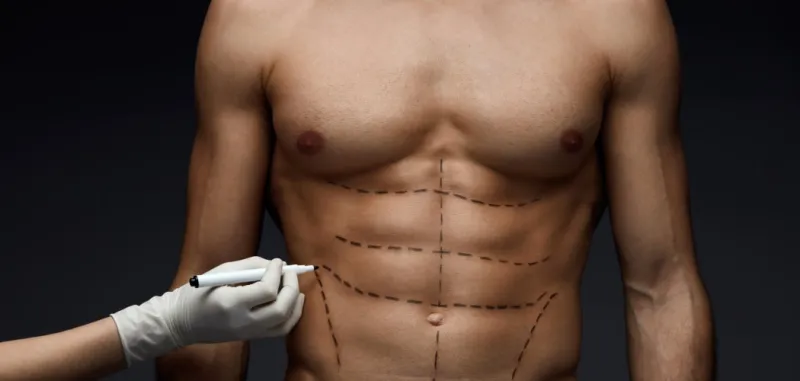
A standard abdominoplasty removes excess skin and fat and tightens the underlying muscle. It does not, on its own, create visible six-pack lines. That’s a separate technique, often called abdominal etching, which uses targeted liposuction to expose the natural contours of the rectus abdominis.
Etching only works well on someone who’s already lean, generally with a body fat percentage in the high teens or below. If you’re carrying significant excess weight, a tummy tuck addressing the skin and muscle comes first, with any etching discussion coming later once you’re closer to your target shape.
Why visceral fat changes the equation for men
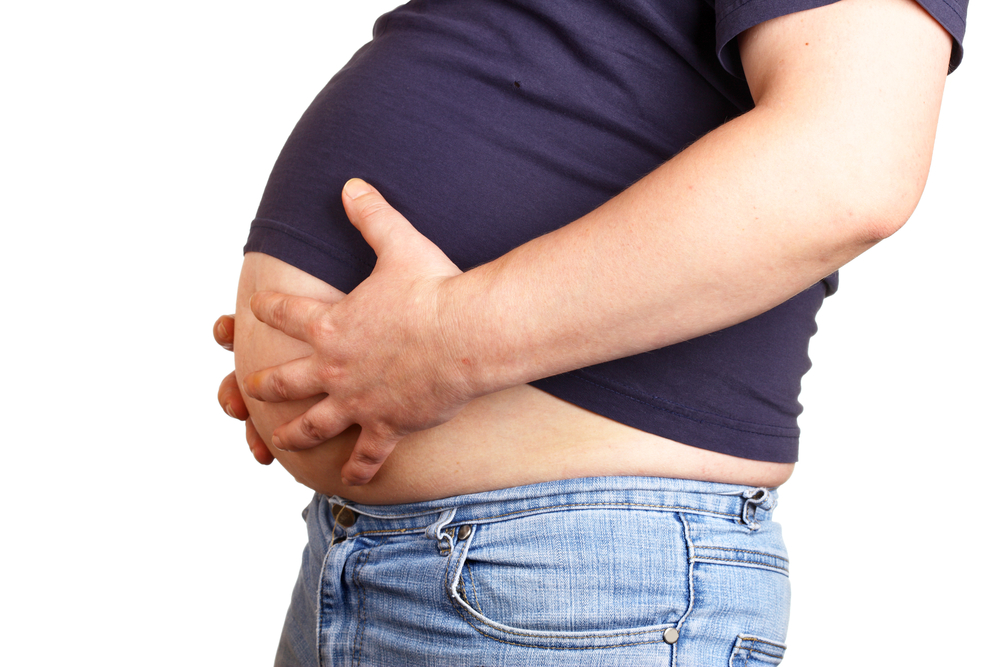
Men are more prone to what’s called android fat distribution, carrying weight centrally around the abdomen, with a larger share of it stored as visceral fat behind the muscle wall rather than in the layer just under the skin. Per a review of sex differences in fat distribution, this pattern is substantially more common in men than in premenopausal women.
Visceral fat can’t be removed by liposuction or excised during abdominoplasty; doing so would mean operating inside the abdominal cavity, which carries risks far beyond what a cosmetic procedure justifies. If a significant share of your excess sits there, the flattest possible result still won’t be perfectly flat, and that’s worth knowing before you set expectations, not after.
Who’s a realistic candidate
The best candidates are at a stable weight, close to where they intend to stay, with the main remaining issue being loose skin, stretched muscle, or stubborn subcutaneous fat rather than significant weight still to lose. Operating before weight has properly stabilised risks needing further surgery later.
Non-smokers tend to heal better and scar less visibly, which matters more on a male frame where the resulting scar sits across an area that’s often on display.
What causes most male cases: major weight loss
The single biggest driver of male abdominoplasty demand right now is significant weight loss, whether through bariatric surgery or GLP-1 medications such as Ozempic. Rapid, substantial weight loss frequently leaves loose skin that no amount of exercise will tighten, since skin that’s been stretched for years loses much of its elasticity.
If that’s the route that’s brought you here, it’s worth understanding how the broader post-weight-loss picture is assessed, since the abdomen is rarely the only area affected; what post-weight-loss surgery actually involves covers that ground in more depth.
Combining tummy tuck with other procedures
Major weight loss rarely affects only the abdomen. A significant number of men booking a tummy tuck are also dealing with excess chest tissue left behind by the same weight change, and addressing both in a coordinated way often makes more sense than treating them as unrelated concerns.
Where that applies, it’s worth discussing at the same consultation rather than booking separately later; what gynecomastia surgery involves sets out what that procedure covers on its own terms.
What happens during surgery
According to BAPRAS patient guidance, a full abdominoplasty is performed under general anaesthetic, with an incision from hip to hip and around the navel. Excess skin and fat is removed, the abdominal muscles are tightened, and the remaining skin is repositioned and closed. Hospital stays typically run two to three days.
A mini abdominoplasty, addressing a smaller area of excess below the navel, is sometimes appropriate if muscle separation and skin laxity are more limited, though it gives a smaller overall effect than the full procedure.
Scar placement and why it matters more on a male frame
The standard incision runs low across the abdomen, hip to hip, and is normally planned to sit below where underwear or swimwear would cover it. On a male frame, where waistbands and swim shorts sit differently than typical women’s clothing, it’s worth discussing exactly where the scar will fall in relation to what you actually wear.
Male skin also tends to be thicker than female skin, which can mean a firmer, more visible scar in the early months, though it generally settles and fades in the same way over the first year.
Recovery timeline

Most patients are mobile from day one, with drains typically removed before discharge. Full exercise is generally back on the table within six weeks, and around four weeks off work is the usual recommendation to allow proper recovery rather than rushing back too soon.
Scars are typically red and slightly raised for the first six weeks, changing over the following months before settling to a paler line, usually over about a year.
Is male tummy tuck available on the NHS?
Rarely, and the criteria are the same regardless of gender. Purely cosmetic abdominoplasty isn’t routinely funded. Exceptions exist in some areas for patients with massive weight loss or abdominal scarring linked to hernias, decided locally rather than nationally, so it’s worth asking your GP what applies where you live rather than assuming either way.
How much does male tummy tuck surgery cost?
Pricing itself isn’t split by gender, though men do often land in the higher tiers, generally reflecting the extent of correction needed rather than anything to do with sex specifically. A full breakdown of current UK price ranges is covered separately; abdominoplasty cost in the UK sets out the figures and what drives them in detail.
Questions worth asking before you book
Ask specifically how much of your excess is likely to be visceral versus removable, whether muscle repair alone will meaningfully flatten your profile, and how the surgeon typically plans scar placement for male patients. A surgeon who’s operated on relatively few men may default to techniques and expectations built around female anatomy without realising it.
This kind of mismatch shows up in more than one procedure; the same default-to-female-technique issue plays out in male rhinoplasty too, and it’s worth being alert to whenever you’re the one asking the questions rather than assuming your surgeon has already thought it through.
Talk to a Specialist About Male Tummy Tuck Surgery
Lux Plastic Surgery’s consultant-led team, headed by Professor Sandip Hindocha, FRCS (Plast), GMC-registered Consultant Plastic Surgeon and NHS Clinical Director, offers tummy tuck surgery at clinics in Bedford, London, and Manchester. Consultations start with an honest assessment of what’s achievable given your own anatomy, not a generic result borrowed from a different body type.
To arrange a consultation, contact the team through the website.
This article is for general information only and does not constitute medical advice. Results vary by individual anatomy and surgical approach, so treat all figures and timelines here as general guidance rather than a personal prediction.
FAQ
Will a tummy tuck give me a six-pack?
Not on its own. A standard tummy tuck removes excess skin and fat and tightens muscle, but visible six-pack lines need a separate etching technique and require you to already be relatively lean.
Why can’t surgery remove all my belly fat?
Some of it is likely visceral fat, sitting behind the abdominal muscle wall rather than under the skin. Liposuction and abdominoplasty can only address fat outside the muscle wall, not inside the abdominal cavity.
Should I combine a tummy tuck with gynecomastia surgery?
Not necessarily, but it’s worth discussing if major weight loss has affected both areas. Many men find addressing chest and abdomen together more efficient than two separate recoveries.
Is male tummy tuck surgery available on the NHS?
Rarely, and only under the same criteria that apply to any patient, such as massive weight loss or abdominal scarring linked to hernias. Purely cosmetic abdominoplasty isn’t routinely funded.
Does a tummy tuck cost more for men?
Pricing isn’t based on gender. Men do sometimes land in higher price tiers, but that reflects the extent of correction needed, often following major weight loss, rather than sex itself.