Gigantomastia is an extreme, rapid, and often bilateral breast enlargement where breast tissue exceeds 800 grams to 2 kilograms per breast, or accounts for 3% or more of total body weight. The condition is classified as pathological, not cosmetic, and is recognised by plastic surgeons, endocrinologists, and bodies including BAAPS and BAPRAS as a medical condition requiring clinical intervention. Physical symptoms range from chronic back pain and skin breakdown to postural deformity. Psychological effects, including anxiety and severely reduced self-esteem, are equally well documented. This guide explains the causes, diagnostic criteria, treatment options, and support resources available to patients in the UK.
What are the causes and symptoms of gigantomastia?
Gigantomastia causes fall into four recognised categories: juvenile onset during puberty, gestational onset during pregnancy, idiopathic onset with no identifiable trigger, and drug-related onset linked to specific medications. Each category carries different clinical implications and influences how treatment is planned. Juvenile gigantomastia, for example, is associated with hormonal hypersensitivity during puberty and carries a higher risk of recurrence after surgery than the gestational form.

Hormonal changes are the most common trigger. During puberty, oestrogen receptors in breast tissue can respond abnormally, producing rapid and disproportionate growth. During pregnancy, a similar mechanism occurs, with some patients experiencing growth of several kilograms of tissue within weeks. Medication-related cases have been linked to drugs including penicillamine, ciclosporin, and certain antipsychotics, though the mechanism is not fully understood.
The symptoms of gigantomastia are wide-ranging and often severely disabling:
- Mastalgia: persistent breast pain that does not resolve with standard analgesics
- Chronic back, neck, and shoulder pain: caused by the mechanical load of excess tissue
- Skin complications: intertrigo, ulceration, and recurrent infections beneath the breast fold
- Postural problems: forward shoulder rounding, thoracic kyphosis, and gait changes
- Restricted mobility: difficulty exercising, dressing, and performing daily tasks
- Psychological distress: anxiety, depression, social withdrawal, and low self-esteem
Gigantomastia differs from macromastia, which describes large but proportionate breasts without the rapid growth, vascular compromise, or functional impairment that define the pathological condition. Rapid tissue expansion can compromise blood supply, leading to necrosis and inflammatory episodes that require urgent clinical evaluation. This is the key clinical distinction: gigantomastia is not simply large breast syndrome but a condition with genuine medical urgency in its more severe presentations.
How is gigantomastia diagnosed?
There is no universal diagnostic threshold for gigantomastia. Diagnosis relies on a combination of tissue weight, the proportion of total body weight affected, and the rapidity of growth. The most widely cited thresholds are tissue exceeding 800 grams to 2 kilograms per breast, or breast mass representing 3% or more of body weight. This distinguishes the condition from macromastia, where tissue volume is large but growth is gradual and proportionate.
The role of specialist assessment
Diagnosis is made by a consultant plastic surgeon, often working alongside an endocrinologist, particularly in juvenile cases. The clinical assessment includes a detailed history of onset and growth rate, physical examination, and documentation of functional impairment. Imaging, including mammography or ultrasound, is used to exclude other pathology such as fibroadenoma, phyllodes tumour, or malignancy before a treatment plan is agreed.
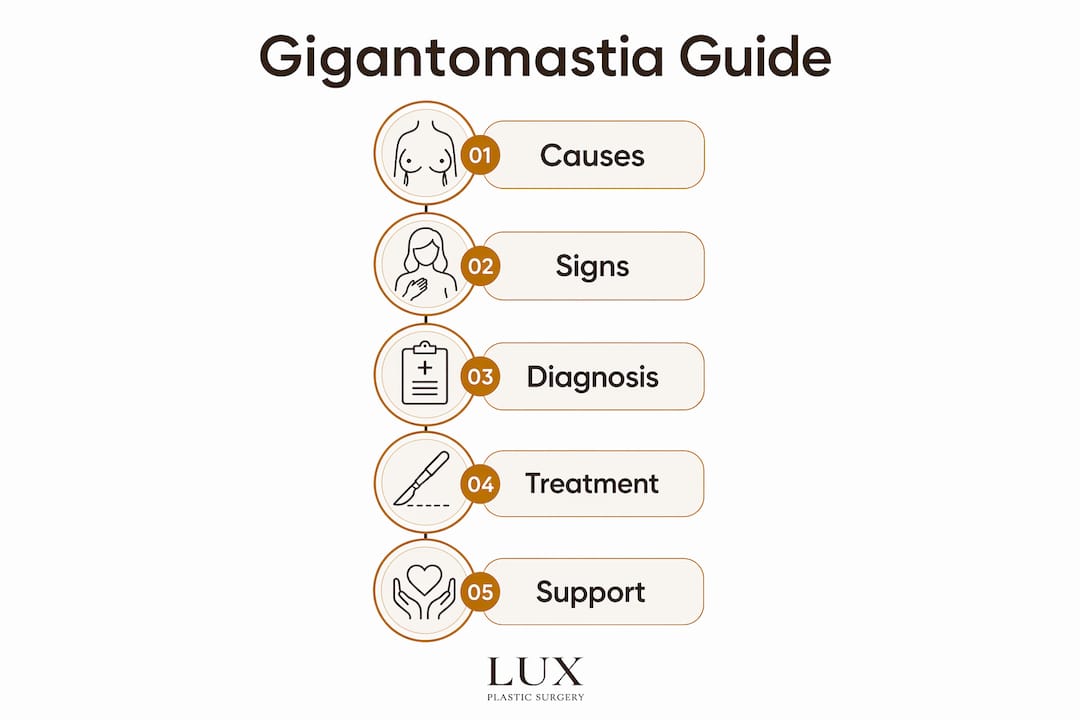
Distinguishing gigantomastia from other breast conditions
The distinction between gigantomastia and macromastia matters clinically because it affects both the urgency of treatment and the likelihood of insurance or NHS funding. Macromastia describes large breasts without the rapid growth or systemic complications seen in gigantomastia. Female breast hypertrophy is a broader term that encompasses both. Gigantomastia is the most severe end of this spectrum and is the form most likely to require surgical intervention on functional grounds.
| Condition | Growth rate | Tissue threshold | Functional impairment |
|---|---|---|---|
| Macromastia | Gradual | Proportionate | Mild to moderate |
| Female breast hypertrophy | Variable | Above average | Moderate |
| Gigantomastia | Rapid | >800g–2kg per breast or ≥3% body weight | Severe |
Documentation is critical at this stage. Insurers and NHS commissioners require evidence of persistent functional impairment before approving funding for surgery. A specialist will record symptom severity, physical findings, and any conservative treatments already attempted.
Pro Tip: Keep a written symptom diary from the point of diagnosis. Record pain scores, skin changes, and any limitations to daily activity. This documentation directly supports funding applications and referral letters.
What treatment options are available for gigantomastia?
Treatment for gigantomastia is determined by the patient’s age, the underlying cause, the severity of symptoms, and whether growth has stabilised. Surgery is the definitive treatment for most adults, but non-surgical approaches play a role in selected cases, particularly in younger patients.
Surgical treatment: breast reduction
Breast reduction surgery is the primary intervention for gigantomastia in adults. The procedure removes excess glandular tissue, fat, and skin, repositions the nipple-areola complex, and reshapes the breast to a size proportionate to the patient’s frame. The surgery typically lasts 2–4 hours under general anaesthesia and is performed as a day case or with one overnight stay.
The main surgical steps are as follows:
- Pre-operative assessment: measurements, photographs, and agreement on target breast volume
- Anaesthesia: general anaesthesia administered by a consultant anaesthetist
- Tissue removal: excess glandular tissue, fat, and skin excised using a technique appropriate to the degree of reduction required
- Nipple repositioning: the nipple-areola complex is moved to a natural position on the reduced breast mound
- Closure: layered sutures close the incisions, typically in an anchor or vertical pattern
- Recovery: compression garment fitted before the patient wakes
Patients should have realistic expectations about permanent scarring. Scars are visible but fade significantly over 12–18 months. The effect on breastfeeding depends on the technique used and the extent of tissue removed. Patients who wish to breastfeed in future should discuss this explicitly with their surgeon before proceeding.
Pro Tip: Ask your surgeon which specific reduction technique they plan to use and why. The choice between an anchor, vertical, or short-scar technique affects both the extent of scarring and the degree of reduction achievable.
Non-surgical and adjunct treatments
Non-surgical options do not resolve gigantomastia but can manage symptoms or delay surgery in specific circumstances. In juvenile gigantomastia, tamoxifen has been used as an adjunct therapy to slow or halt growth before surgical intervention. Tamoxifen is an oestrogen receptor modulator and its use in this context is off-label, requiring close monitoring by an endocrinologist. It is not a standard treatment but shows promise in selected cases where surgery is not yet appropriate due to the patient’s age or ongoing growth.
Addressing the underlying hormonal cause is equally important. Where a medication is identified as the trigger, stopping or substituting that medication may slow growth. Where gestational gigantomastia occurs, growth sometimes partially regresses after delivery, though surgical reduction is usually still required. A multidisciplinary approach involving plastic surgeons, endocrinologists, and mental health professionals produces the best outcomes across all forms of the condition.
What is the recovery after breast reduction surgery?
Recovery from breast reduction for gigantomastia follows a predictable pattern, though the timeline varies with the volume of tissue removed and the patient’s general health. Most patients notice immediate relief from the mechanical load of excess tissue, which is one of the most consistently reported outcomes.
Key recovery milestones include:
- Days 1–3: rest at home, compression garment worn continuously, mild to moderate discomfort managed with prescribed analgesics
- Week 1–2: wound checks, removal of any drains, and assessment of healing; most patients can manage light daily tasks
- Week 4–6: return to desk-based work; driving resumes when the patient can perform an emergency stop without discomfort
- Week 6–8: gentle exercise resumes; upper body activity remains restricted until cleared by the surgeon
- Month 3: the majority of swelling has resolved and the final breast shape begins to settle
Patient satisfaction exceeds 90% following breast reduction, with significant quality-of-life improvements reported within three months of surgery. That figure reflects functional and psychological gains, not aesthetic outcomes alone. Satisfaction relates directly to relief from chronic pain, improved body image, and the ability to return to physical activity. Patients who enter surgery with clear, realistic expectations consistently report the highest satisfaction scores.
Recurrence is a specific concern in juvenile gigantomastia. Growth can resume after surgery if the underlying hormonal trigger is not resolved. This is why endocrinological review before and after surgery is standard practice in younger patients.
What support resources should patients with gigantomastia know about?
Managing gigantomastia well requires more than a single surgical consultation. A structured, multidisciplinary approach gives patients the best chance of a good long-term outcome.
Patients should be aware of the following:
- Plastic surgeon: the lead clinician for surgical planning, technique selection, and post-operative care
- Endocrinologist: particularly important in juvenile and gestational cases to identify and manage hormonal triggers
- GP referral: a documented GP referral strengthens the case for NHS or insurance funding and creates a formal clinical record
- Mental health support: anxiety and depression are common in patients with gigantomastia; a referral to a clinical psychologist or counsellor should be requested if needed
- Symptom documentation: insurance criteria require documented functional impairment lasting at least six months, along with evidence of tissue removal volumes meeting specified thresholds
The burden of proof for funding lies with the patient and their clinical team. Photographs, pain diaries, physiotherapy records, and letters from GPs or specialists all contribute to a successful application. Patients who approach this process systematically are far more likely to secure funding than those who rely on a single consultation letter.
UK patients can seek information from BAAPS and BAPRAS, both of which publish guidance on breast surgery and patient rights. The NHS also provides information on when breast reduction qualifies as a funded procedure, though criteria vary by Integrated Care Board.
Key takeaways
Gigantomastia is a pathological condition requiring clinical diagnosis, multidisciplinary management, and, in most adult cases, surgical breast reduction to restore function and quality of life.
| Point | Details |
|---|---|
| Clinical definition | Tissue exceeding 800g–2kg per breast or 3% of body weight distinguishes gigantomastia from macromastia. |
| Four recognised causes | Juvenile, gestational, idiopathic, and drug-related forms each require different treatment planning. |
| Surgery is the primary treatment | Breast reduction lasts 2–4 hours and achieves patient satisfaction exceeding 90% within three months. |
| Documentation supports funding | Six months of recorded functional impairment is the standard threshold for insurance and NHS coverage approval. |
| Multidisciplinary care matters | Endocrinologists, mental health professionals, and surgeons working together produce the best long-term outcomes. |
A consultant’s perspective on gigantomastia
The patients I see with gigantomastia have almost always been living with significant pain and distress for far longer than necessary. The condition is frequently under-recognised at GP level, partly because the threshold between large breasts and pathological gigantomastia is not always clear, and partly because patients themselves sometimes normalise symptoms that are genuinely disabling.
The most important clinical point I would make is this: gigantomastia is not a cosmetic concern. It is a medical condition with measurable physical consequences, and it deserves the same clinical urgency as any other condition causing chronic pain, skin breakdown, and postural deformity. Patients should feel confident advocating for a specialist referral.
Surgical outcomes are consistently good. The physical and psychological benefits of breast reduction in this group are well documented, and the satisfaction rates reflect genuine improvements in daily function, not simply aesthetic preference. That said, I always spend significant time with patients discussing scarring and the implications for breastfeeding. These are real trade-offs, and patients deserve honest, unhurried conversations about them before they consent to surgery.
The other area I feel strongly about is the juvenile presentation. Young patients with gigantomastia need endocrinological input before surgery, not after. Operating without understanding the hormonal driver risks recurrence and puts the patient through a second major procedure. A thorough pre-operative workup is not a delay to treatment. It is part of the treatment.
If you are experiencing symptoms consistent with gigantomastia, start documenting them now. A detailed record of pain, skin changes, and functional limitations is the single most practical step you can take before your first specialist appointment.
— Lux
Gigantomastia care at Lux Plastic Surgery
Patients with gigantomastia benefit from a consultant-led assessment that takes the full clinical picture into account, not just the surgical question.

At Lux Plastic Surgery, Professor Sandip Hindocha, GMC-registered Consultant Plastic Surgeon and NHS Clinical Director, leads all breast reduction consultations across Bedford, London, and Manchester. Each patient receives a detailed assessment covering symptom history, imaging review, surgical planning, and a frank discussion of outcomes including scarring and recovery. For patients considering their options, the types of plastic surgery available at Lux cover the full range of surgical and non-surgical approaches. To arrange a consultation, contact Lux Plastic Surgery directly through the website.
This article is for informational purposes only and does not constitute medical advice. Consult a GMC-registered specialist before making any decisions about your care.
FAQ
What is gigantomastia?
Gigantomastia is a pathological condition defined by extreme, rapid breast enlargement where tissue exceeds 800 grams to 2 kilograms per breast or accounts for 3% or more of total body weight. It is classified as a medical condition, not a cosmetic concern.
What causes gigantomastia?
The four recognised causes are juvenile onset during puberty, gestational onset during pregnancy, idiopathic onset with no identifiable cause, and drug-related onset linked to specific medications including penicillamine and ciclosporin.
Is breast reduction surgery the only treatment?
Breast reduction surgery is the definitive treatment for most adults. In juvenile cases, tamoxifen may be used as an adjunct to slow growth before surgery, but it is an off-label therapy requiring close endocrinological monitoring and is not a standalone cure.
How long is recovery after breast reduction for gigantomastia?
Most patients return to light daily tasks within two weeks and desk-based work by weeks four to six. Significant quality-of-life improvements are typically reported within three months of surgery.
Will the NHS fund surgery for gigantomastia?
NHS funding criteria vary by Integrated Care Board, but most require documented functional impairment lasting at least six months. Patients should maintain a symptom diary and obtain supporting letters from their GP and any specialists involved in their care.