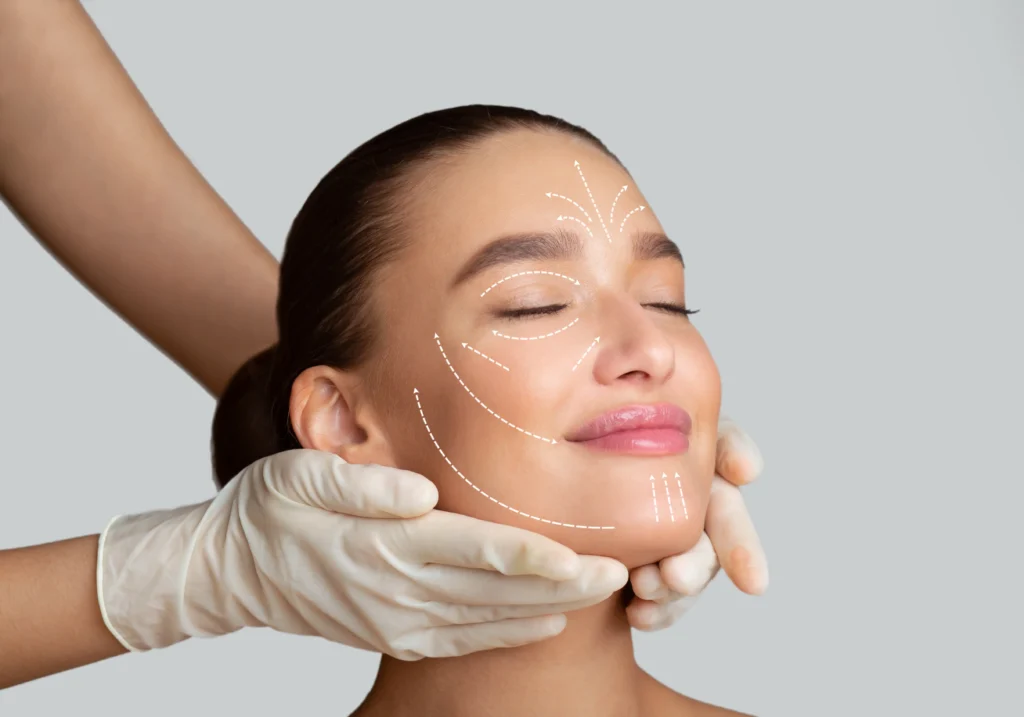
Anti ageing injections are cosmetic medical procedures that reduce visible signs of ageing by either relaxing facial muscles or restoring lost facial volume. The two main categories are neuromodulators, most commonly botulinum toxin (sold under brand names such as Botox), and dermal fillers based on hyaluronic acid, including products such as Juvederm and Restylane. Both are non-surgical, performed in a clinic setting, and require no general anaesthetic. They address different problems: neuromodulators target wrinkles caused by muscle movement, while dermal fillers replace volume that diminishes with age. Understanding which treatment suits your anatomy and your decade of life is the first step towards a result that looks natural rather than treated.
What types of anti ageing injections are available and how do they work?
Neuromodulators and dermal fillers work through entirely different mechanisms, and confusing the two is one of the most common reasons patients are disappointed with their results.
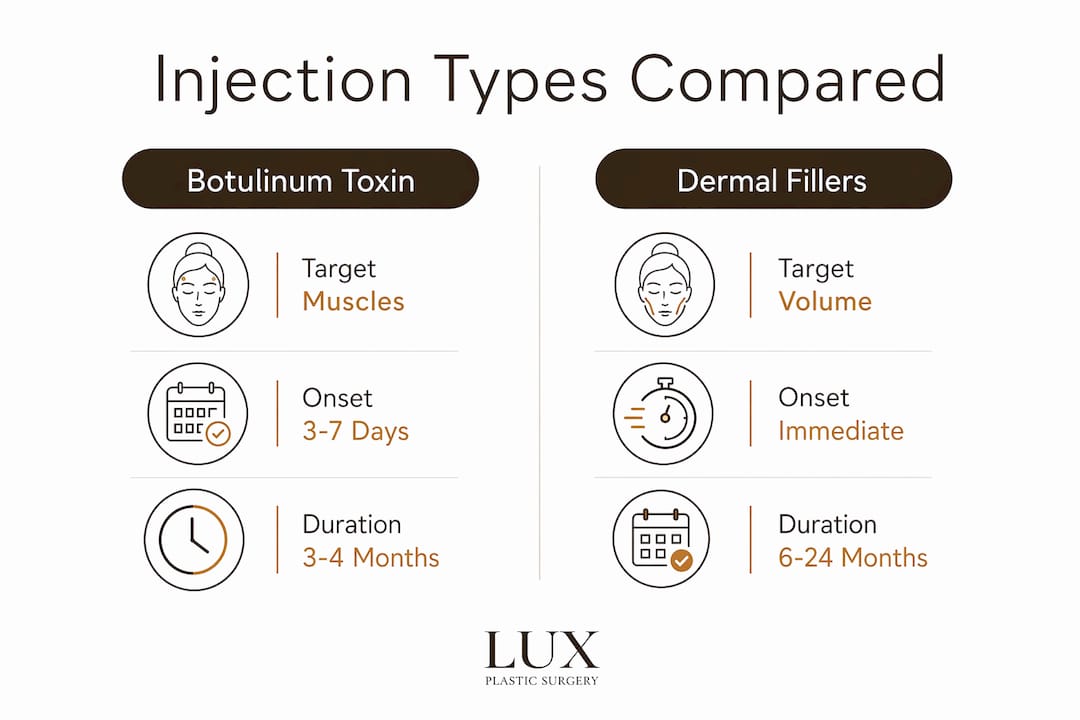
Botulinum toxin temporarily blocks the nerve signals that cause muscles to contract. When injected into specific facial muscles, it reduces the repeated movements that create dynamic wrinkles such as frown lines between the brows, forehead lines, and crow’s feet. The key word is dynamic: botulinum toxin does not soften lines that are visible at rest. Those static lines require a different approach. Full results develop over 10–14 days, and the effect lasts approximately 3–4 months before a repeat treatment is needed.
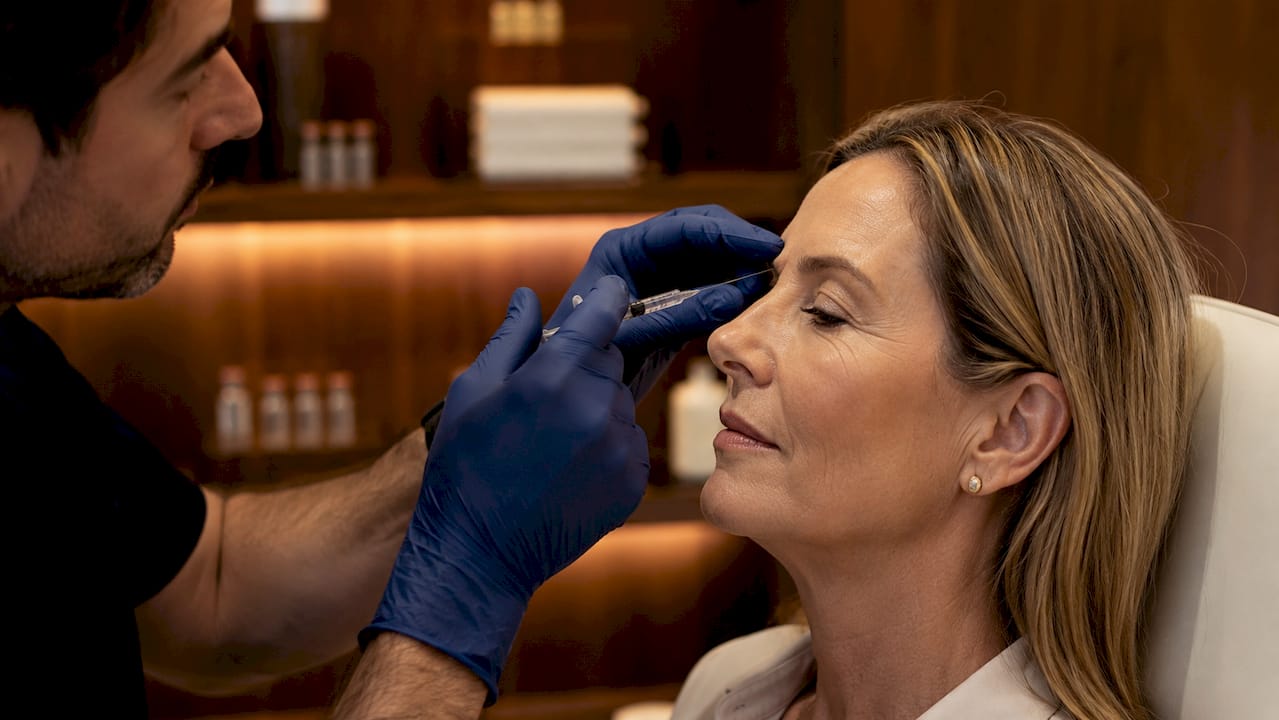
Dermal fillers work by adding physical volume beneath the skin. Hyaluronic acid, a substance naturally present in the body, is the most widely used filler material. Products such as Juvederm and Restylane are injected into areas where fat, bone, and collagen have diminished with age, including the cheeks, lips, nasolabial folds, and under-eye hollows. Dermal fillers provide instant volume restoration, with results lasting 6 months to 2 years depending on the product used and the area treated. The technology behind hyaluronic acid fillers has advanced considerably, with cross-linked formulations offering greater longevity and more predictable tissue integration.
| Treatment type | Primary target | Onset | Duration | Common areas |
|---|---|---|---|---|
| Botulinum toxin | Dynamic wrinkles | 10–14 days | 3–4 months | Forehead, brows, crow’s feet |
| Hyaluronic acid filler | Volume loss, static lines | Immediate | 6–24 months | Cheeks, lips, tear troughs, jawline |
| Collagen stimulators | Skin laxity, structural support | Gradual (weeks) | Up to 2 years | Mid-face, temples, jawline |
Pro Tip: Ask your practitioner to show you a facial anatomy diagram during your consultation. Understanding which muscle or compartment is being treated helps you set realistic expectations and ask better questions.
Most patients describe the sensation of botulinum toxin injections as a brief pinch. Dermal filler injections carry slightly more sensation, particularly in areas with dense nerve supply such as the lips, though topical anaesthetic cream is routinely applied beforehand. The procedure typically takes 10–20 minutes for neuromodulators, with filler treatments taking slightly longer depending on the number of areas addressed.
How should treatment be tailored by age group?
The injectable strategy changes meaningfully by decade, because the anatomical changes driving visible ageing are different at 35 than they are at 55. A treatment plan that suits one age group can look unnatural or fail to address the correct problem in another.
Patients in their 30s
- The primary goal is prevention and early maintenance rather than correction.
- Small amounts of botulinum toxin soften early dynamic lines before they become etched at rest.
- Modest filler volumes address early hollowing under the eyes or subtle flattening of the cheeks.
- Collagen stimulators are rarely indicated at this stage unless there is significant early volume loss.
- Treatments at this decade tend to be conservative, with longer intervals between sessions.
Patients in their 40s
- Bone resorption and fat compartment descent become clinically significant in this decade.
- Structural support with mid-face filler restores the scaffolding that holds overlying tissue in place.
- Collagen stimulators such as poly-L-lactic acid become relevant for patients with early skin laxity.
- Botulinum toxin continues to address dynamic lines, but filler volume requirements typically increase.
- Early intervention is beneficial, though correction remains achievable at any age with a personalised plan.
Patients in their 50s and 60s
- Precision becomes the defining principle. Over-volumising in this decade creates a heavy, unnatural appearance.
- Targeted anatomical support at specific bony landmarks, rather than broad volume addition, produces the most natural results.
- Combination approaches are common: neuromodulators address residual dynamic lines, fillers restore selective structural support, and energy-based devices address skin quality.
- Treatment intervals may shorten as the face requires more active maintenance.
- Realistic expectations are central to the consultation at this stage. Injections improve appearance but do not replicate the result of a surgical facelift.
What does the procedure involve, and what are the risks?
A well-conducted injectable treatment follows a consistent structure regardless of which product is used.
The consultation precedes every treatment. A qualified practitioner assesses your facial anatomy, reviews your medical history, and discusses your goals. Photographs are taken for the clinical record. The practitioner explains which products are appropriate, the volumes involved, and the expected outcome. This stage is not a formality. Successful outcomes depend on understanding facial anatomy and tailoring treatment accordingly.
The treatment itself is brief. Botulinum toxin appointments last 10–20 minutes. Filler appointments run longer, typically 30–45 minutes when multiple areas are treated. Topical anaesthetic cream is applied 20–30 minutes before filler injections. Fine needles or blunt-tipped cannulas are used depending on the area and the practitioner’s technique.
Common side effects include:
- Bruising and swelling at injection sites, usually resolving within 5–7 days.
- Redness and mild tenderness, typically settling within 24–48 hours.
- Asymmetry in the short term as swelling resolves unevenly.
- Headache following botulinum toxin, usually mild and short-lived.
- Eyelid drooping (ptosis) following botulinum toxin, a rare complication that decreases with experienced injectors.
Serious complications are uncommon but include vascular occlusion from filler, which requires immediate treatment with hyaluronidase. This risk underscores why treatment should only be performed by a GMC-registered practitioner with formal training in facial anatomy and emergency management. Risk of side effects declines significantly with injector experience and proper technique.
Pro Tip: Avoid alcohol, aspirin, and ibuprofen for 48 hours before your appointment. These thin the blood and increase bruising. Arnica cream applied after treatment can also reduce bruising duration.
The benefits of facial injectables are well established for appropriate candidates. Recovery is minimal, most patients return to normal activity the same day, and results are visible within days to two weeks. Unlike surgery, the effects are reversible in the case of hyaluronic acid fillers, which can be dissolved with hyaluronidase if the result is unsatisfactory. For a detailed walkthrough of what to expect, the facial procedure patient guide at Lux Plastic Surgery covers preparation, the appointment itself, and aftercare in full.
How do anti ageing injections compare with other treatments?
Injections occupy a specific position in the spectrum of aesthetic treatments. They are not the only option, and for some patients they are not the most appropriate one.
Energy-based devices such as Thermage use radiofrequency energy to stimulate collagen production in the deeper layers of the skin. Thermage produces no downtime and is frequently combined with injectables to address skin laxity that fillers alone cannot correct. The two approaches are complementary rather than competing: injectables restore volume and relax muscles, while energy devices improve skin texture and tightness.
Surgical facelifts address structural changes that no injectable treatment can replicate. Significant skin laxity, jowling, and deep neck banding require surgical repositioning of tissue. The non-surgical facelift options available today can delay the need for surgery and improve the quality of a surgical result when the two are combined, but they do not replace it. Patients should receive honest guidance on this distinction during consultation. For a broader comparison, the surgical vs non-surgical criteria guide at Lux Plastic Surgery sets out the key decision points clearly.
| Treatment | Invasiveness | Recovery | Longevity | Best suited for |
|---|---|---|---|---|
| Botulinum toxin | Minimal | None | 3–4 months | Dynamic wrinkles |
| Hyaluronic acid filler | Minimal | 1–5 days | 6–24 months | Volume loss, static lines |
| Thermage (radiofrequency) | Non-invasive | None | 1–2 years | Skin laxity, texture |
| Surgical facelift | Invasive | 2–4 weeks | 7–10 years | Significant laxity, jowling |
One category that does not appear in this comparison is injectable peptides. Despite significant social media attention, injectable peptides lack large-scale clinical trials proving either safety or effectiveness in humans. Patients should treat claims about these products with caution and seek treatments with an established evidence base.
Key takeaways
The most effective approach to anti ageing injections combines the right product, the correct volume, and a practitioner with formal training in facial anatomy and emergency management.
| Point | Details |
|---|---|
| Two distinct treatment types | Neuromodulators relax muscles for dynamic wrinkles; fillers restore volume for static lines and structural loss. |
| Results vary by product | Botulinum toxin takes 10–14 days to show full effect and lasts 3–4 months; fillers work immediately and last 6–24 months. |
| Age determines approach | Treatment goals shift from prevention in the 30s to structural restoration in the 40s and precision in the 50s and 60s. |
| Injector skill is the primary safety factor | Complications such as eyelid drooping and vascular occlusion decrease significantly with experienced, GMC-registered practitioners. |
| Injections do not replace surgery | For significant skin laxity or jowling, a surgical consultation is more appropriate than increasing injectable volumes. |
What I have learned from treating patients across every decade
Having worked with patients from their early 30s through to their late 60s, the pattern I see most consistently is this: the patients who are happiest with their results are those who came in with a clear understanding of what injections can and cannot do.
The patients who are least satisfied are almost always those who expected injectable treatments to produce a surgical outcome. No amount of filler corrects significant skin laxity. Attempting to do so by increasing volumes produces a heavy, unnatural result that experienced clinicians recognise immediately and patients eventually regret. The dermal filler UK guide at Lux Plastic Surgery addresses this directly, and I would encourage any patient to read it before their first consultation.
The second pattern I observe is that patients in their 40s often wait too long. By the time they present, the structural changes in the mid-face are significant enough that restoration requires more product and more sessions than early intervention would have needed. Starting conservatively in the mid-30s, with small volumes and long intervals, produces better long-term outcomes than attempting to correct a decade of change in a single appointment.
The third thing I would say is that the practitioner matters more than the product. Botox and Juvederm are widely available. The skill to assess your anatomy correctly, place the product in the right plane, and manage a complication if one arises is not. Choose a GMC-registered specialist with formal training and a clear protocol for managing adverse events. Ask to see their complication management policy before you commit to treatment.
This article reflects clinical perspective and does not constitute medical advice. Consult a GMC-registered specialist before proceeding with any aesthetic treatment.
— Lux
Considering anti ageing treatments at Lux Plastic Surgery
Lux Plastic Surgery offers consultant-led injectable treatments in Bedford, London, and Manchester, directed by Professor Sandip Hindocha, GMC-registered Consultant Plastic Surgeon and NHS Clinical Director.

Every patient receives a personalised assessment before any treatment is recommended. Professor Hindocha’s team evaluates facial anatomy, discusses realistic outcomes, and designs a treatment plan suited to your age, skin quality, and goals. The clinic’s full range of aesthetic services includes both neuromodulators and expert dermal fillers, alongside surgical options for patients whose needs extend beyond what injectables can address. To arrange a consultation, contact Lux Plastic Surgery directly through the website.
This content is for informational purposes only and does not constitute medical advice. Consult a GMC-registered specialist before proceeding with any cosmetic treatment.
FAQ
What are anti ageing injections?
Anti ageing injections are cosmetic medical procedures using either botulinum toxin (a neuromodulator) or dermal fillers to reduce wrinkles and restore facial volume. They are non-surgical and performed in a clinic setting without general anaesthetic.
How long do anti ageing injections last?
Botulinum toxin results last 3–4 months; hyaluronic acid fillers last 6 months to 2 years depending on the product and the area treated.
Are anti ageing injections safe?
When performed by a GMC-registered practitioner with formal training in facial anatomy, the risk of serious complications is low. Technique-dependent complications such as eyelid drooping decrease significantly with injector experience.
At what age should I start anti ageing injections?
Treatment in the 30s focuses on prevention with conservative volumes. Structural restoration becomes relevant in the 40s. There is no fixed starting age; a personalised consultation with a qualified specialist is the appropriate first step.
Can injections replace a surgical facelift?
Injections cannot replicate the result of a surgical facelift for patients with significant skin laxity or jowling. They can delay the need for surgery and complement a surgical result, but they are not a substitute for patients with advanced structural change.