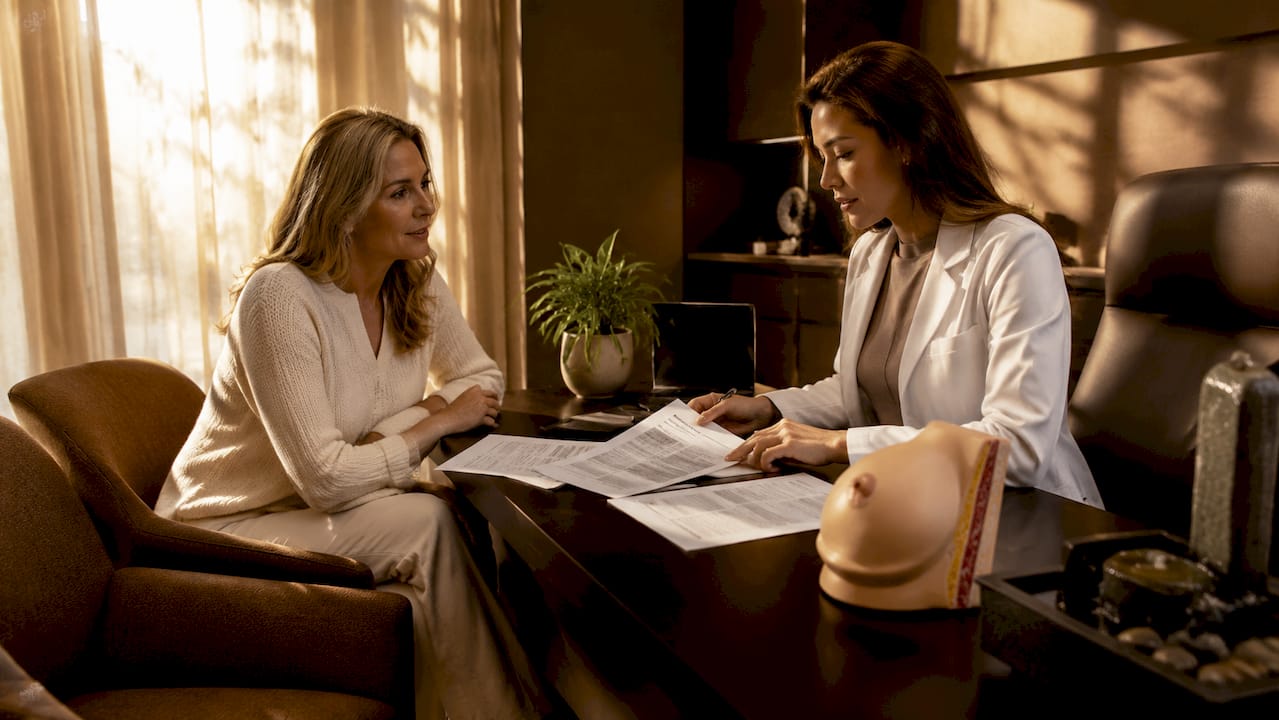
Mastopexy, the clinical term for a breast uplift, is a surgical procedure that removes excess skin, reshapes breast tissue, and repositions the nipple to correct ptosis (drooping). The cost of mastopexy in the UK typically starts around £6,999 and can rise beyond £9,000, depending on surgical complexity, the surgeon’s credentials, and clinic location. Mastopexy does not add volume. It restores shape and position. Patients who want both lift and increased size require a combined procedure, which carries a higher price. Understanding what drives mastopexy prices in the UK is the first step towards making a safe, well-informed decision.
What factors influence the cost of mastopexy in the UK?
Mastopexy prices in the UK vary considerably, and no two quotes are identical. The final figure reflects a combination of clinical, geographical, and procedural variables.
Surgeon experience and credentials
A GMC-registered consultant plastic surgeon with a Fellowship of the Royal College of Surgeons (Plastic Surgery), known as FRCS (Plast), commands higher fees than a general surgeon offering cosmetic procedures. That premium reflects training depth, complication management experience, and outcome quality. Professor Sandip Hindocha, for example, holds FRCS (Plast) and has published over 100 peer-reviewed papers. Choosing a surgeon of that calibre is not a luxury. It is a safety decision.
Clinic location
Higher reputation clinics in London carry higher overheads than practices in Bedford or Manchester, and those costs pass to the patient. A bilateral mastopexy quoted at £9,000 in central London may be available at a comparable standard for less outside the capital. Location alone does not determine quality, but it does affect the base price.
Surgical technique
Different mastopexy techniques require varying incision patterns that affect both scarring and cost. A crescentic or peri-areolar lift suits mild ptosis and involves a shorter, simpler procedure. A vertical (lollipop) incision addresses moderate drooping. An anchor-shaped incision corrects severe ptosis but involves the most extensive dissection and the longest operating time. More complex techniques cost more because they take longer and require greater surgical skill.
Additional procedures
Combining mastopexy with implants or fat transfer adds to the total. A combined mastopexy with augmentation can cost upwards of £10,000 depending on implant type and technique. That figure also reflects the additional anaesthesia time and extended theatre use.
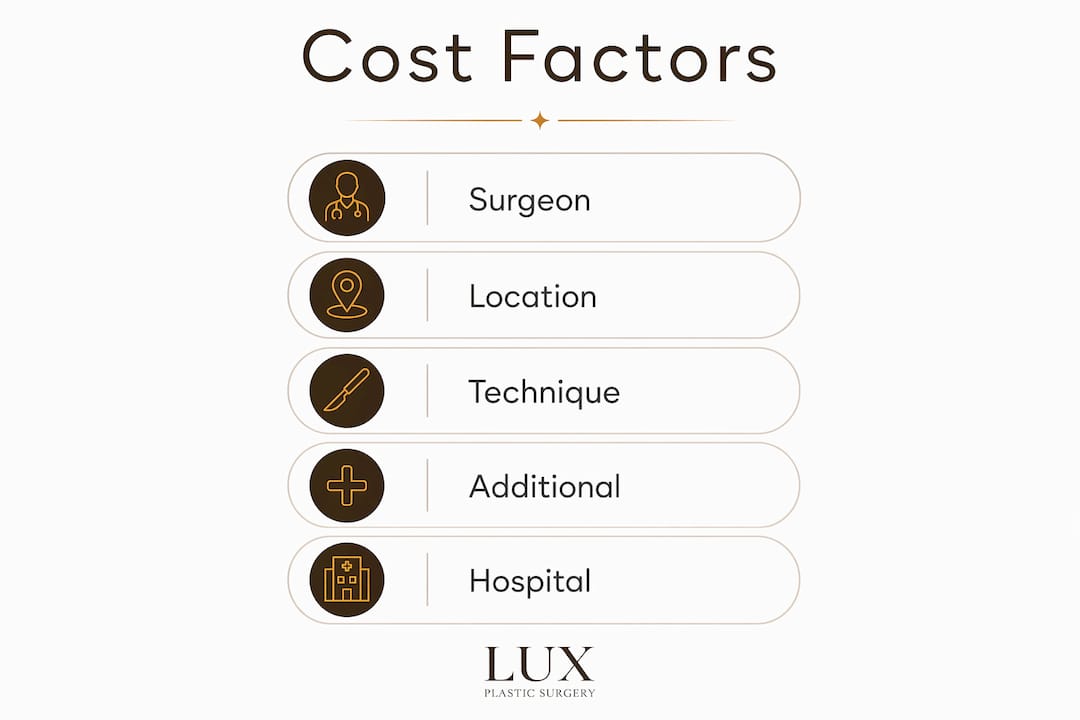
Hospital and anaesthesia fees
Theatre hire, anaesthetist fees, and overnight stay (where required) are sometimes quoted separately. Always confirm whether the price you receive is all-inclusive or itemised.
The key cost components to clarify before signing any agreement are:
- Surgeon’s fee
- Anaesthetist’s fee
- Theatre and hospital facility costs
- Post-operative garments and dressings
- Follow-up appointments
- Any revision or complication management policy
Pro Tip: Ask your surgeon to provide a written, itemised quote before your procedure date. Verbal estimates are not binding and can lead to unexpected charges.
What does mastopexy surgery involve, and how does this affect cost?
Mastopexy involves removing excess skin and reshaping breast tissue but does not add volume unless combined with implants or fat transfer. The procedure is performed under general anaesthesia, typically as a day case or with a one-night hospital stay.
The surgical steps follow a consistent sequence, though the specific technique varies by degree of ptosis:
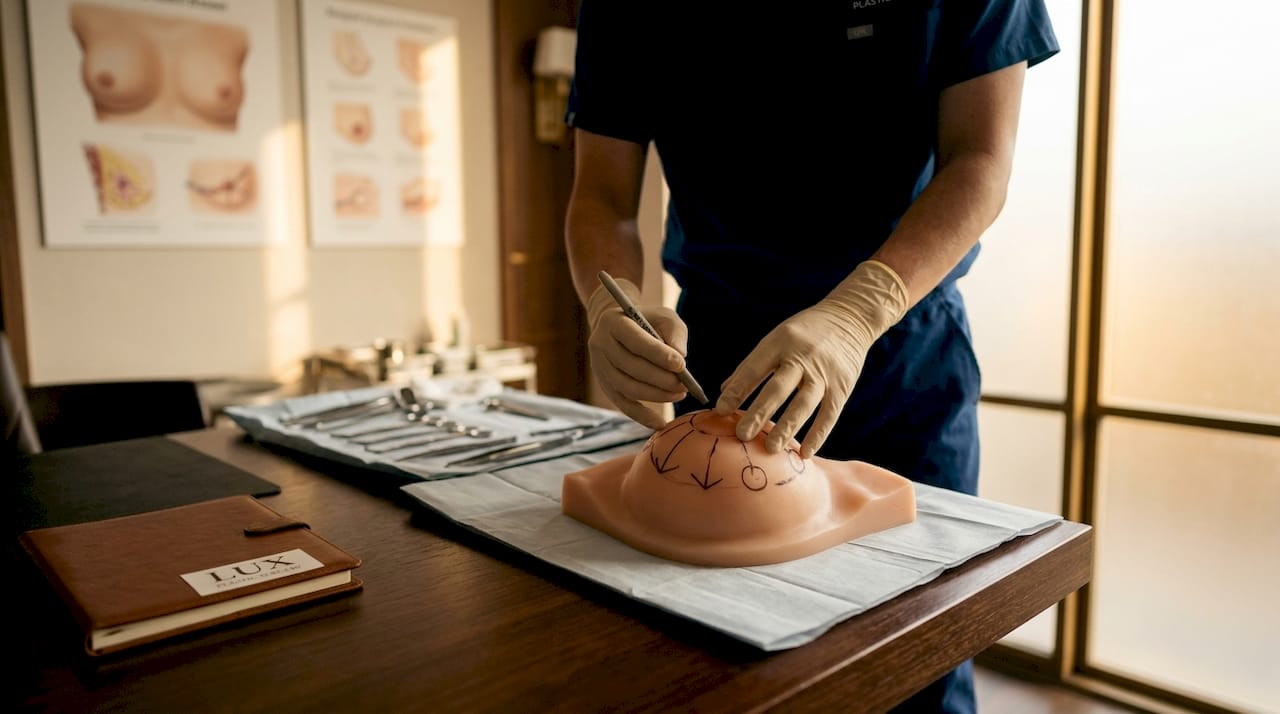
- Marking and planning. The surgeon marks incision lines pre-operatively with the patient standing. This mapping determines how much skin is removed and where the nipple is repositioned.
- Incision and tissue reshaping. The chosen incision pattern is made. Breast tissue is lifted and reshaped internally. The nipple and areola are moved to a higher position on the breast mound.
- Skin removal and closure. Excess skin is excised. The remaining skin is drawn together and sutured in layers. Drains may be placed if required.
- Dressing and support garment. A surgical bra or compression garment is applied immediately post-operatively.
Incision types and their cost implications
The four main incision patterns are crescentic, circum-areolar, vertical (lollipop), and anchor-shaped. Each addresses a different degree of ptosis. The anchor incision, used for the most significant corrections, involves the longest operating time and the highest surgical fee. A peri-areolar lift, by contrast, is shorter and less complex, which is reflected in a lower price point. Unilateral mastopexy (one breast) is available at around £5,495, while bilateral procedures range from approximately £7,395 to £8,000 and above.
Recovery expectations
Recovery after mastopexy involves wearing a supportive bra continuously for 2–3 weeks and avoiding heavy lifting for up to six weeks. Full results emerge over 4–6 months as swelling resolves and scars mature. Patients who require more extensive correction face a longer recovery period. That extended recovery does not directly increase the surgical fee, but it does affect the total practical cost, including time off work and post-operative care.
Pro Tip: Factor lost earnings and childcare costs into your total budget. The surgical fee is only part of the financial picture.
Mastopexy versus augmentation
Mastopexy corrects position and shape. Breast augmentation adds volume using implants. The two procedures address different concerns. A patient with good volume but significant drooping needs mastopexy. A patient with adequate position but insufficient size needs augmentation. Many patients require both, which is why combined procedures are common. Understanding this distinction helps you assess whether the quote you receive reflects the procedure you actually need.
How does mastopexy compare to other breast surgery options in terms of cost?
The table below outlines typical UK pricing for the main breast surgery procedures. These figures reflect general market ranges and are not fixed quotes.
| Procedure | Typical UK cost range | What it addresses |
|---|---|---|
| Mastopexy (bilateral) | £7,395–£9,000+ | Drooping, nipple position, excess skin |
| Mastopexy (unilateral) | £5,495 | Single breast correction |
| Breast augmentation | Varies; often exceeds mastopexy alone | Volume increase using implants |
| Combined mastopexy and augmentation | £10,000+ | Drooping and volume loss together |
Breast augmentation costs in the UK typically exceed those for mastopexy alone, particularly when implants are included. The combined procedure carries the highest price because it involves two distinct surgical goals performed in a single operating session.
Choosing the right procedure for your goals
The correct procedure depends on your anatomy and your goals, not on cost alone. Patients who have experienced significant weight loss often present with both volume loss and ptosis. For this group, a combined approach addresses both concerns in one operation, which can be more cost-effective than two separate procedures. Patients who are considering breast changes after weight loss should discuss both options with a consultant before committing to either.
Mastopexy results often last ten or more years, though ageing, gravity, and weight fluctuation affect longevity. That durability makes the procedure a long-term investment rather than a short-term fix. Augmentation with implants may require revision surgery over time, which adds to the lifetime cost.
Who is a suitable candidate?
Mastopexy is appropriate for patients with drooping breasts and nipples positioned at or below the breast crease. The procedure is not recommended during pregnancy or breastfeeding. Patients should be at a stable weight before surgery, as significant weight changes after the procedure can alter results. Candidacy is confirmed at consultation, not before.
How to plan for mastopexy surgery financially and practically in the UK
Financial planning for mastopexy requires more than comparing headline prices. The consultation is the starting point for both clinical assessment and cost clarity.
The consultation as a diagnostic appointment
Consultation with a specialised plastic surgeon is the diagnostic phase that evaluates anatomy and establishes realistic results before costs are finalised. A surgeon who quotes a firm price before examining you has not assessed your anatomy. That is a warning sign. A thorough consultation includes physical examination, discussion of your goals, review of your medical history, and an explanation of the specific technique recommended for your degree of ptosis. Only after that assessment can a surgeon provide an accurate, personalised quote.
Financing and payment options
Most reputable UK clinics offer finance plans through regulated lenders, allowing patients to spread the cost over 12–60 months. Interest rates and eligibility vary. Always confirm the total repayable amount, not just the monthly instalment. The NHS does not fund mastopexy for cosmetic reasons. Funding may be available in rare cases where ptosis causes significant physical symptoms, but this is assessed on clinical grounds and is not guaranteed.
Choosing a qualified surgeon
The following criteria identify a suitably qualified surgeon for mastopexy in the UK:
- GMC registration (verifiable on the GMC public register)
- FRCS (Plast) qualification or equivalent specialist training in plastic surgery
- Membership of BAAPS (British Association of Aesthetic Plastic Surgeons) or BAPRAS (British Association of Plastic, Reconstructive and Aesthetic Surgeons)
- A practice that operates from a CQC-registered facility
- Willingness to provide before-and-after photographs of previous mastopexy patients
Choosing a surgeon based on price alone carries clinical risk. A lower fee does not mean equivalent training or outcomes. The breast augmentation cost guide from Lux Plastic Surgery outlines the same principle for augmentation patients and applies equally here.
Preparing for the total investment
Beyond the surgical fee, patients should budget for:
- Pre-operative blood tests and medical clearance
- Post-operative garments (surgical bras)
- Prescription medications and wound care products
- Time off work (typically two weeks minimum)
- Transport to and from clinic appointments
- Any follow-up treatments for scar management
A realistic total budget accounts for all of these elements. Patients who plan only for the headline surgical fee often find the actual cost of recovery higher than expected.
Key takeaways
The cost of mastopexy in the UK reflects surgical complexity, technique, and surgeon credentials far more than any single price list can capture.
| Point | Details |
|---|---|
| Typical UK price range | Bilateral mastopexy costs £7,395–£9,000+; unilateral procedures start around £5,495. |
| Technique drives cost | Anchor incisions for severe ptosis cost more than peri-areolar lifts for mild drooping. |
| Combined procedures cost more | Mastopexy with augmentation typically exceeds £10,000 due to extended operating time. |
| Consultation is diagnostic | A surgeon cannot provide an accurate quote without examining your anatomy in person. |
| Choose on credentials, not price | GMC registration, FRCS (Plast), and BAAPS or BAPRAS membership are the minimum standards. |
What I have learned about mastopexy costs after years in consultant-led practice
Patients often arrive at consultation having compared prices online and concluded that the cheapest quote represents good value. That assumption concerns me. Mastopexy is not a commodity. The incision pattern, the internal reshaping of breast tissue, and the repositioning of the nipple-areola complex require a level of surgical judgement that takes years to develop. A lower fee frequently reflects less training, a less experienced team, or a facility that does not meet the standards a CQC-registered hospital provides.
The consultation is where I see the most significant misunderstanding. Patients sometimes treat it as a formality before booking. It is not. The consultation is where I assess the degree of ptosis, the skin quality, the breast volume, and the patient’s realistic expectations. Without that assessment, any price quoted is an estimate based on assumptions, not anatomy. A surgeon who gives you a firm price over the phone or via email before examining you has not done their job.
One thing I would encourage every patient to ask is this: what happens if I need a revision? Reputable surgeons and clinics have a clear policy on revision surgery within a defined period. That policy should be explained at consultation and confirmed in writing. It is part of the total value of the procedure, not a separate conversation for later.
The patients who achieve the best outcomes are those who prioritise surgeon credentials and clinical transparency over headline price. That is not a comfortable message when budgets are tight. But it is the honest one.
— Lux
Mastopexy at Lux Plastic Surgery: consultant-led care with transparent pricing
Lux Plastic Surgery offers mastopexy performed by Professor Sandip Hindocha, GMC-registered Consultant Plastic Surgeon and NHS Clinical Director, with clinics in Bedford, London, and Manchester. Every patient receives a thorough in-person consultation before any surgical plan or cost is confirmed.

Pricing is discussed openly at consultation, with a full written breakdown provided before any commitment is made. For patients weighing their options, the plastic surgery options and safety guide on the Lux Plastic Surgery website provides a clear overview of what to expect from the process. To arrange a consultation and receive a personalised assessment, contact Lux Plastic Surgery directly. This article does not constitute medical advice. Consult a GMC-registered specialist before making any surgical decision.
FAQ
How much does mastopexy cost in the UK?
Bilateral mastopexy in the UK typically costs between £7,395 and £9,000 or more, depending on technique and surgeon credentials. Unilateral procedures start at around £5,495.
Does the NHS fund mastopexy?
The NHS does not fund mastopexy for cosmetic reasons. Funding may be considered in rare cases where ptosis causes significant physical symptoms, assessed on clinical grounds.
How long do mastopexy results last?
Mastopexy results often last ten or more years, though ageing, gravity, and weight changes can affect longevity over time.
What is the difference between mastopexy and breast augmentation?
Mastopexy corrects drooping and repositions the nipple without adding volume. Breast augmentation increases breast size using implants. Patients who need both lift and volume require a combined procedure, which costs upwards of £10,000.
How long is recovery after mastopexy?
Patients wear a supportive bra continuously for 2–3 weeks and avoid heavy lifting for up to six weeks. Full results are visible over 4–6 months as swelling resolves and scars settle.