Effective scar management for men is defined by a multimodal approach combining silicone therapies, intralesional corticosteroid injections, laser treatment, and supportive techniques such as scar massage and pressure garments. No single method eliminates a scar entirely. The top scar treatments for men work by targeting different stages of the healing process, from early collagen overproduction to mature scar remodelling. Male skin tends to be thicker and more sebaceous than female skin, which affects how scars form and respond to treatment. A GMC-registered specialist, such as Professor Sandip Hindocha at Lux Plastic Surgery, can assess scar type, location, and skin characteristics to recommend the most appropriate treatment plan.
1. Silicone gel and sheet therapy
Silicone gel therapy is the most widely recommended non-invasive treatment for hypertrophic and keloid scars. It works by hydrating the stratum corneum, which signals fibroblasts to reduce excess collagen production. The result is a flatter, softer, and less itchy scar over time.
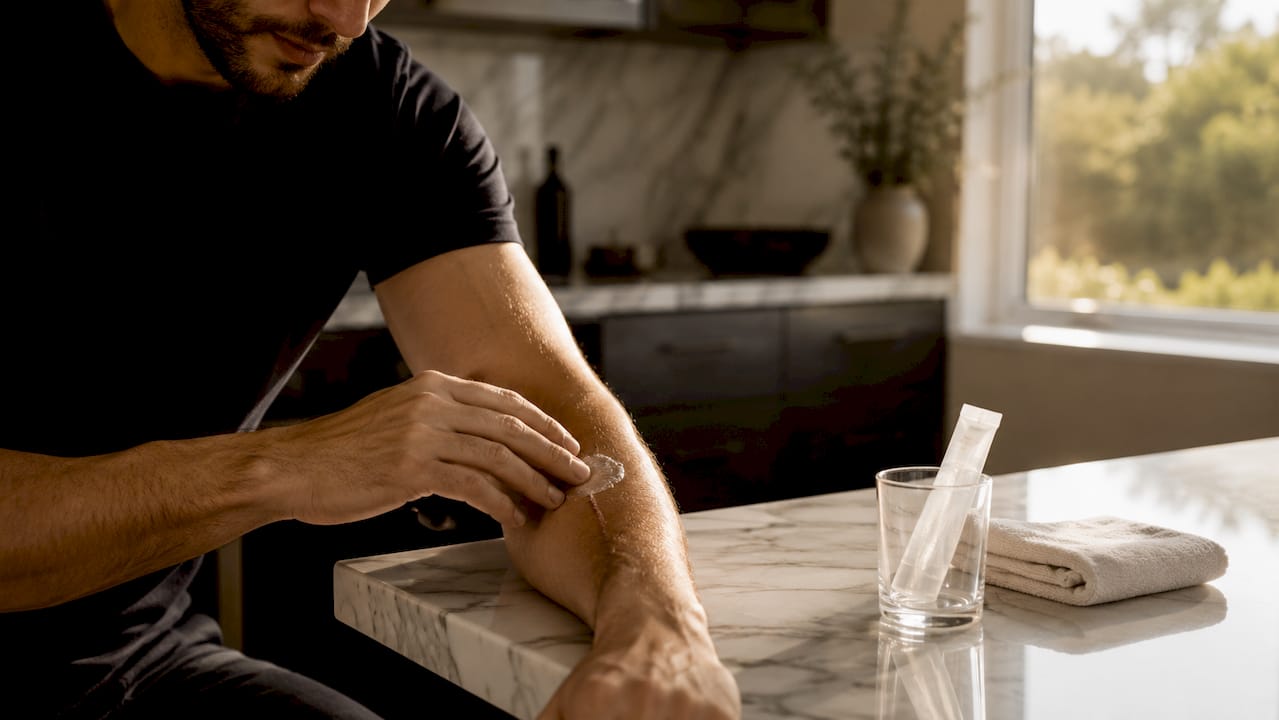
Silicone applied consistently over healed skin for several hours daily, across a minimum of three months, produces measurable improvement. This makes it one of the most practical men’s scar care products because it requires no clinical appointment and fits into a daily routine.
Silicone is available in two main forms: gel applied directly to the skin, and flexible sheets worn over the scar. Sheets are particularly useful for flat, accessible areas such as the chest or abdomen. Gels suit contoured areas like the jaw or shoulder.
Key benefits of silicone therapy include:
- Flattening of raised hypertrophic scars over consistent use
- Reduction in scar-related itching and redness
- Improved skin colour and texture with prolonged application
- Suitable for use alongside other treatments, including laser and injections
- Available without prescription and well tolerated on male skin
Pro Tip: Apply silicone gel immediately after the wound has fully closed. Starting early, within the first few weeks of healing, produces better outcomes than beginning treatment on a mature scar.
2. Intralesional corticosteroid injections
Corticosteroid injections are a frontline clinical treatment for raised and keloid scars. Injected directly into the scar tissue, they reduce local inflammation and suppress collagen synthesis, causing the scar to flatten and soften over successive treatments.
The standard protocol involves injections repeated monthly across a course of 4–6 months. Triamcinolone acetonide is the most commonly used corticosteroid in this context. Patients typically notice progressive flattening and reduced tenderness after the second or third session.
Keloid recurrence rates remain high, with up to 50% of keloids regrowing after surgery alone. This is why UK guidance advocates combining steroid injections with other modalities such as pressure therapy or surgical excision rather than relying on any single approach.
Potential side effects include:
- Skin atrophy or thinning at the injection site
- Hypopigmentation, particularly noticeable on darker skin tones
- Telangiectasia (small visible blood vessels) around the treated area
- Temporary discomfort during injection
- Incomplete response requiring adjunct treatment
Intralesional verapamil injections represent a secondary option for patients who respond poorly to corticosteroids. Verapamil inhibits collagen synthesis and, when combined with steroid injections under specialist supervision, can enhance outcomes for resistant keloids.
Keloid scars have no definitive cure. Treatment focuses on symptom control, flattening, and reducing recurrence risk. Early, aggressive intervention on high-risk areas such as the chest and shoulders is strongly advised by specialists, as these sites are particularly prone to keloid formation in men.
3. Laser therapy for scar texture and colour
Laser therapy is one of the most clinically advanced options for improving scar texture, colour, and surface irregularity. Two main categories apply to scar treatment: ablative and non-ablative lasers.
Ablative lasers
Ablative lasers remove the outer layers of the epidermis, triggering a controlled wound-healing response that stimulates new collagen formation. The skin resurfaces with a smoother, more even texture. Carbon dioxide (CO2) and erbium lasers are the most commonly used ablative systems in scar revision.
Non-ablative lasers
Non-ablative lasers leave the epidermis intact and deliver energy to the dermis beneath. Non-ablative treatment stimulates dermal fibroblasts to remodel collagen without the recovery time associated with ablative procedures. Pulsed dye laser (PDL) is particularly effective for reducing the redness and vascularity of immature scars.
| Laser type | Mechanism | Best suited for | Sessions typically needed |
|---|---|---|---|
| Ablative (CO2, erbium) | Removes epidermis, stimulates collagen | Textured, raised, or pitted scars | 1–3 |
| Non-ablative (Nd:YAG, diode) | Heats dermis, spares epidermis | Red, vascular, or early scars | 3–6 |
| Pulsed dye laser (PDL) | Targets blood vessels in scar tissue | Erythematous or hypertrophic scars | 3–5 |
Multiple sessions are required for most patients, and results build gradually between appointments. Laser therapy is administered by a trained specialist and is not suitable for active skin infections or very recent wounds.
For pitted or atrophic scars, dermal fillers provide volume correction by lifting the base of the scar to the level of surrounding skin. This is a temporary measure, typically lasting 12–18 months, but it can significantly improve the appearance of acne or trauma scars on the face.
Pro Tip: Avoid sun exposure for at least four weeks before and after laser treatment. UV exposure on treated skin increases the risk of post-inflammatory hyperpigmentation, which is harder to correct than the original scar.
4. Scar massage technique
Scar massage is a patient-led technique with strong clinical backing. It promotes tissue softening, improves scar mobility, and reduces the tethering that makes scars feel tight or restrictive. Patients are advised to massage scars 2–3 times daily, yet this recommendation is frequently overlooked by men.
The technique involves applying firm, circular pressure to the scar using the pad of a finger or thumb. The pressure should be enough to cause slight blanching of the skin. Each session should last 5–10 minutes per scar site.
Men who integrate daily massage into their skincare routine for scars report improved flexibility and reduced discomfort within weeks. The technique is most effective when started once the wound has fully closed and the skin can tolerate pressure without breaking down.
5. Pressure garment therapy
Pressure garments are a specialist treatment used primarily after burn injuries or skin graft surgery. They work by applying continuous compression to the scar, which reduces collagen synthesis and limits scar thickening over time.
Garments are custom-made to fit the affected body area and worn for 23 hours per day, typically for 6–12 months post-surgery. Compliance is the single biggest factor in their effectiveness. Men undergoing post-burn scar management are advised to wear garments consistently, even during physical activity.
Pressure therapy is not suitable for all scar types. A specialist will assess whether the scar location, depth, and maturity make it an appropriate option before prescribing a garment.
6. Topical skin care and moisturisation
Topical products support scar healing but do not replace clinical treatments. Moisturisers such as E45 and Bio-Oil are commonly recommended to maintain skin suppleness and prevent the dryness that makes scars feel tight and uncomfortable. Vitamin E and C creams may help reduce hyperpigmented scars, though the evidence for significant scar regression remains limited.
The primary role of a daily moisturiser in a men’s skincare routine for scars is to keep the skin barrier intact and reduce itching. This is particularly relevant during the first 12 months of healing, when the scar is still active and reactive to environmental changes.
For men interested in a broader approach to skin health alongside scar care, natural skincare guidance for men covers complementary product choices that support skin barrier function without irritating healing tissue.
7. Sun protection for healing scars
Sunscreen is not optional in scar management. Ultraviolet radiation causes post-inflammatory hyperpigmentation in healing scars, making them darker and more visible than the surrounding skin. This effect is particularly pronounced in men with medium to darker skin tones.
A broad-spectrum SPF 30 or higher should be applied to any exposed scar daily, regardless of weather conditions. This applies throughout the full maturation period of the scar, which can extend to 18–24 months after injury or surgery.
Men who spend time outdoors for work or sport face a higher cumulative UV exposure than average. Physical sun protection, such as clothing or hats, is advisable in addition to topical SPF when the scar is on an exposed area.
8. Surgical scar revision
Surgical revision is considered when a scar causes functional impairment, significant cosmetic concern, or has not responded to non-surgical treatments. The procedure involves excising the existing scar and reclosing the wound under controlled surgical conditions to produce a finer, less visible result.
Optimal timing for scar revision surgery is generally 12–18 months after the original injury. This allows the scar to fully mature before intervention, reducing the risk of a poor surgical outcome. Operating on an immature scar increases the likelihood of recurrence.
Surgical revision is not a guarantee of improvement and carries its own healing process. It is most effective when combined with post-operative silicone therapy, steroid injections, or pressure dressings to manage the new scar as it heals.
9. Patience and realistic timelines
Scars mature over 18–24 months, with gradual softening and colour fading throughout that period. Premature intensive treatments risk complications and should be avoided. This is one of the most clinically important points in male scar care and one of the most frequently ignored.
Men often seek aggressive treatment within weeks of injury, expecting rapid results. The biology of scar formation does not accommodate this. Collagen remodelling is a slow process, and the most effective scar treatments for men work with that timeline rather than against it.
A structured, patient-led routine combining daily silicone application, massage, sun protection, and moisturisation provides consistent benefit across the full maturation period. Clinical treatments such as laser and injections are layered on top of this foundation at appropriate intervals.
Key takeaways
Effective scar management for men requires a multimodal approach combining clinical treatments and consistent daily care across the full 18–24 month scar maturation period.
| Point | Details |
|---|---|
| Multimodal treatment is standard | No single therapy eliminates a scar; combining silicone, injections, and laser produces the best outcomes. |
| Silicone therapy is the first step | Apply silicone gel or sheets daily for at least three months on fully healed skin. |
| Keloid recurrence is high | Up to 50% of keloids regrow after surgery alone; combination treatment reduces this risk. |
| Scars take up to two years to mature | Premature aggressive treatment risks complications; patience and consistency are clinically advised. |
| Specialist assessment is necessary | Scar type, location, and skin characteristics determine which treatments are appropriate for each patient. |
What I have learned treating male scars
Men tend to arrive at a consultation expecting a single procedure to resolve the problem. The reality of scar treatment is more gradual and more layered than that, and I think it is worth being direct about this from the outset.
The scars that concern men most are typically on the chest, shoulders, and jaw. These are also the sites most prone to keloid formation, partly because of skin tension in those areas and partly because of the way male skin responds to trauma. A raised, itchy keloid on the chest after a minor procedure or injury is not a cosmetic inconvenience. It can cause real discomfort and affect how a man feels about his body.
What I have found, working within NHS and BAAPS guidelines, is that the men who achieve the best outcomes are those who commit to the process early. Starting silicone therapy within weeks of wound closure, attending injection appointments consistently, and protecting the scar from UV exposure throughout the maturation period all compound over time. The men who skip steps or abandon treatment after a few months rarely achieve the same degree of improvement.
The other point I make consistently is that scar treatment outcomes depend heavily on the type of scar being treated. A hypertrophic scar responds differently to a keloid, and an atrophic acne scar requires a completely different approach. Treating all scars the same way is one of the most common errors I see, and it is entirely avoidable with a proper initial assessment.
Men should also resist the temptation to self-manage keloids on the chest or shoulders without specialist input. These sites have high recurrence rates even with combined therapies. Early referral to a consultant plastic surgeon gives you the widest range of options and the best chance of a lasting result.
— Lux
Lux Plastic Surgery: consultant-led scar assessment for men
Lux Plastic Surgery offers consultant-led evaluations for men seeking a clear, evidence-based plan for managing their scars. Professor Sandip Hindocha, GMC-registered Consultant Plastic Surgeon and NHS Clinical Director, assesses each patient individually, taking into account scar type, skin characteristics, and treatment history before recommending a course of action.

The clinic provides access to both surgical and non-surgical treatment modalities, including laser therapy, intralesional injections, and post-operative scar management support. Patients receive guidance throughout the recovery period and long-term advice on maintaining results. To discuss a personalised scar treatment plan, visit the Lux Plastic Surgery services page to book a consultation.
This article is for informational purposes only and does not constitute medical advice. Consult a GMC-registered specialist before beginning any scar treatment programme.
FAQ
What are the most effective scar treatments for men?
The most effective approach combines silicone gel therapy, intralesional corticosteroid injections, and laser treatment, tailored to the scar type and location. No single treatment eliminates a scar; multimodal protocols produce the best results.
How long does scar treatment take to show results?
Scars mature over 18–24 months, and most treatments require consistent application or multiple clinical sessions across that period. Visible improvement typically begins within 3–6 months of starting a structured treatment plan.
Can keloid scars be permanently removed?
Keloid scars have no definitive cure. Up to 50% regrow after surgical removal alone, which is why UK specialists recommend combining surgery with steroid injections or pressure therapy to reduce recurrence risk.
Is scar massage actually useful for men?
Scar massage is a clinically recommended technique that promotes tissue softening and improves scar mobility. Patients advised to massage scars 2–3 times daily report measurable improvement in flexibility and discomfort over several weeks.
When should a man see a specialist about a scar?
A specialist consultation is advisable if a scar is raised, itchy, or growing beyond the original wound boundary, or if it has not improved after three months of consistent self-management. Early referral is particularly important for keloids on the chest and shoulders.