A facelift incision that works well on a woman can leave a man with a sideburn pulled onto his ear, or beard hair sitting where it should not. It is one of the clearest examples of why a male facelift is planned differently from the start.
Men’s skin is thicker and more vascular, their hair-bearing areas change position when skin is lifted, and the goal is usually a strong, natural jawline, not a softened one. Most facelift information is written with women in mind, and it shows.
Here’s how a facelift differs for men, what the safety evidence says, and what to expect from the cost and recovery.
Key takeaways
| Point | Details |
|---|---|
| Hairline and beard planning | Lifting skin moves hair-bearing areas, so incisions and sideburns need deliberate placement. |
| Higher bleeding risk | Male gender is a recognised risk factor for haematoma, which makes blood pressure control essential. |
| A natural result is the goal | A well-planned male facelift aims to keep a masculine jawline and avoid an over-tight look. |
| Neck is part of the plan | Men’s necks usually need as much attention as the face. |
| Typical private cost | Roughly £8,000 to £12,000 for a standard facelift, with combined face and neck lifts toward the upper end. |
| Not funded on the NHS | Facelifts are cosmetic and not routinely funded. |
Why a male facelift is a different operation
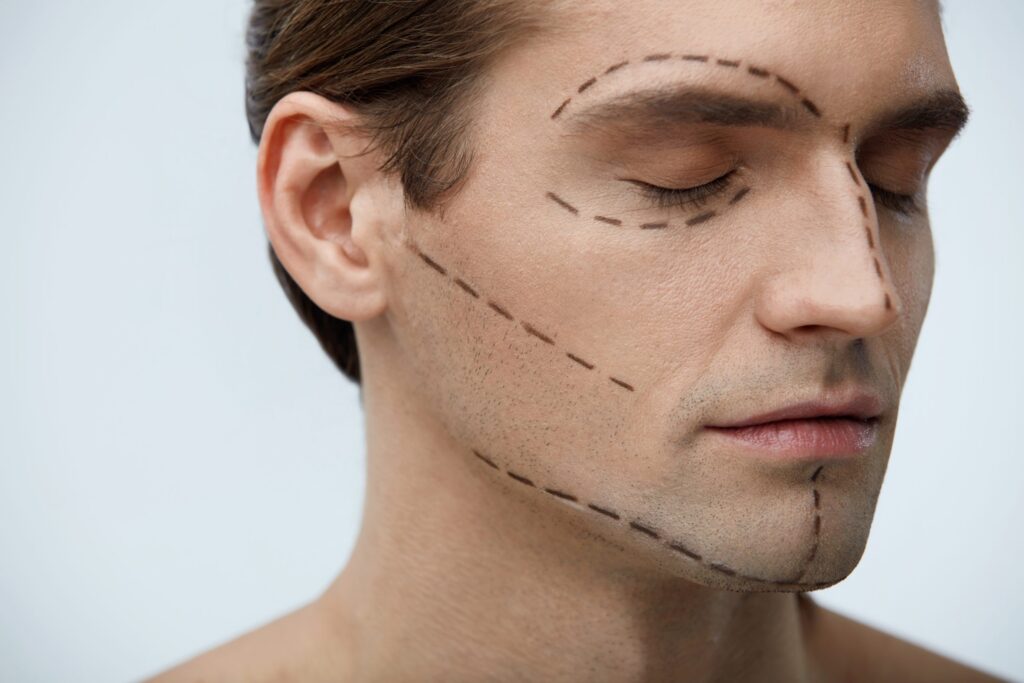
Male and female faces age differently because their anatomy differs. A UK guide to facial aesthetics for men notes that male anatomy differs in bone structure, muscle mass and skin thickness, and those differences carry straight into surgery.
The neck muscle (platysma) is also thicker in men, so tightening it takes more care. The aim is not to make a face look younger in a generic way but to restore a rested, defined jawline that still looks like him.
That is the same principle behind male rhinoplasty and why female-default technique can backfire: applying a feminine template to a male face rarely looks natural.
Hairline, sideburns and beard skin
When facial skin is lifted, the hair-bearing skin moves with it. The BAAPS facelift patient guide warns that hair can be lost in any area of skin that has been elevated, which is particularly relevant for men in the beard area, and that beard-bearing skin can end up on the tragus of the ear.
Surgeons plan for this. A clinical review recommends a pretragal incision in men so the sideburns are not pulled back toward the ear. Ask any surgeon you consult how they place incisions around the sideburn and beard line.
Bleeding risk and why screening matters
Haematoma, a collection of blood under the skin, is the most discussed facelift complication. The StatPearls chapter on cervicofacial rhytidectomy lists male gender and hypertension as risk factors, and explains that male skin has more hair follicles and a richer blood supply.
The same source describes a study where strict blood pressure control cut haematoma in male patients from 8.7% to 3.97%. For you, that means a thorough pre-operative assessment, a review of blood thinners and supplements, and careful blood pressure management on the day.
Technique, neck and recovery
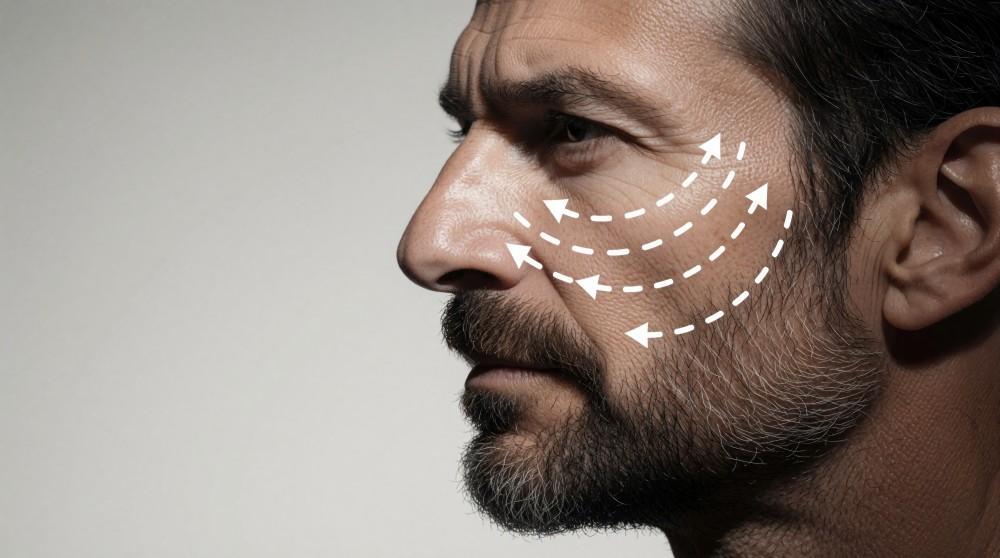
Men often need work on the jowls and the neck together. What to expect from a facelift and how to choose a surgeon explains the main techniques, from short-scar lifts to deeper operations.
Where the neck needs more, a combined operation is common, and what a neck lift costs on its own helps you see what is included in a combined quote.
Expect swelling and bruising for the first weeks and numbness that can take 12 to 18 months to settle. The BAAPS guide advises stopping smoking and nicotine six weeks beforehand, since they raise complication rates.
Cost and NHS funding
Private facelifts in the UK are commonly quoted at around £8,000 to £12,000 for a standard operation, with a combined face and neck lift or a deeper technique toward the upper end. London clinics tend to charge more. Professor Hindocha’s fee is quoted individually in writing after consultation.
There is no separate male price, but an operation that is longer or needs extra bleeding precautions can cost more. A fair quote names the technique and itemises the surgeon, anaesthetist, facility and follow-up. Facelifts are cosmetic and are not routinely funded on the NHS.
How Lux Plastic Surgery approaches the male facelift

Professor Sandip Hindocha, FRCS (Plast), GMC-registered Consultant Plastic Surgeon and NHS Clinical Director, plans each operation around male anatomy, hairline and the result you want. Consultations take place at clinics in Bedford, London, and Manchester.
You can read more about the face lift surgery service or send an enquiry through the contact page.
This article is for general information only and does not constitute medical advice. Prices are indicative and vary by surgeon, clinic and technique, so always request a written quote.
FAQ
Is a facelift different for men?
Yes. Men have thicker, more vascular skin, hair-bearing areas that shift when skin is lifted, and a bleeding risk that needs extra planning.
Will a facelift affect my beard or sideburns?
It can. Skin that is lifted can lose hair or move, so incisions are planned to protect the sideburn and beard line.
Will I look feminised or overdone?
Careful planning makes it less likely. The goal is a defined, natural jawline, not a softened or overly tight face.
How much does a male facelift cost in the UK?
Standard facelifts are commonly quoted at around £8,000 to £12,000, with combined face and neck lifts toward the upper end. There is no separate male price.
How long is recovery after a facelift?
Swelling and bruising take weeks to settle, and numbness can last a year or more. Your surgeon will give you a timeline for returning to work.