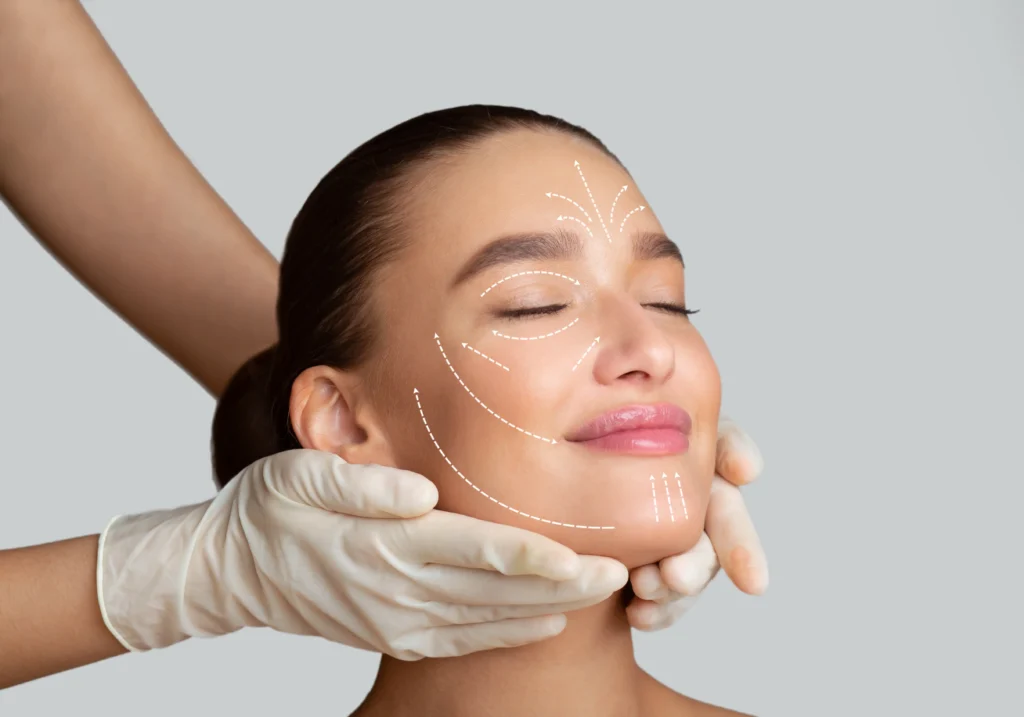
Facial aesthetics matter for men because they address the structural, psychological, and social dimensions of appearance in ways that generic grooming cannot. The treatments available today are calibrated to male facial anatomy, which differs meaningfully from female anatomy in bone structure, muscle mass, and skin thickness. The result, when done well, is a face that looks refreshed and defined rather than altered. BAAPS audit data confirms that men accounted for a small but growing share of all cosmetic procedures in 2024, with face and neck lifts increasing significantly year on year. At Lux Plastic Surgery, Professor Sandip Hindocha, GMC-registered Consultant Plastic Surgeon and NHS Clinical Director, leads a bespoke approach to male facial aesthetics grounded in anatomy, safety, and natural results.
Key reasons men seek facial aesthetic treatment:
- Improved self-confidence and professional presence
- Correction of age-related changes to the jaw, neck, and eyes
- Restoration of facial volume without feminising the result
- Minimal-downtime options suited to working schedules
- Access to GMC-registered, clinically qualified practitioners
How attitudes towards male facial aesthetics have changed
The stigma around men seeking cosmetic treatment has largely dissolved, and the shift is measurable. Research published in 2022 found that 50% of UK men cite improved self-confidence as the primary reason for seeking aesthetic treatment, a figure that mirrors the long-established female motivation. That parity matters. It signals that the decision is no longer fringe behaviour but a mainstream response to how men feel about their appearance.
Cultural expectations have shifted alongside the data. Social media has accelerated male engagement with appearance, and around a third of younger UK men report actively trying to change how they look to align with current visual norms. The language clinics use has changed too: treatments once marketed around youth and beauty are now framed in terms of structure, strength, and freshness, concepts that resonate with a male audience without requiring them to adopt a traditionally feminine frame of reference.
The mental health dimension is real and clinically relevant. Anxiety linked to appearance, sometimes called body dysmorphic concern at its more severe end, responds positively to well-executed aesthetic intervention when the patient’s goals are realistic and the practitioner is qualified. Feeling more comfortable in your own face has a direct effect on how you present yourself professionally and socially.
Changing attitudes in practice: Clinics across the UK report that male clients are increasingly open about seeking facial treatments, though many still prefer discretion. The emphasis is consistently on looking well-rested rather than visibly treated.
What non-invasive facial treatments are available for men?
The range of non-surgical options has expanded considerably, and several are now specifically adapted for male patients. The most common treatments include:
- Botulinum toxin (“Brotox”): relaxes dynamic lines in the forehead, glabella, and crow’s feet without freezing expression
- Dermal fillers: restore volume to the jaw, chin, and cheeks, or address tear trough hollowing
- Skin boosters: improve skin hydration and texture, particularly relevant for men with thicker, rougher skin
- Hair restoration: surgical and non-surgical options, with uptake rising as remote working allows recovery without extended time away from the office
Male patients require higher doses of botulinum toxin than female patients due to greater facial muscle mass and thicker skin. A practitioner using standard female dosing protocols on a male patient will typically undertreat, producing a result that fades faster and fails to address the underlying concern. This is one of the clearest reasons why male-specific treatment planning matters clinically, not just aesthetically.
| Procedure | Male-specific consideration |
|---|---|
| Botulinum toxin | Higher doses required; preserve brow position |
| Jaw/chin filler | Build angularity, not softness |
| Cheek filler | Structural support, not volume lift |
| Skin boosters | Address thicker skin texture |
| Hair restoration | Timing around recovery; assess pattern first |
For a detailed overview of non-surgical facial options, Lux Plastic Surgery provides a dedicated guide covering techniques and candidacy.
Pro Tip: Before booking any injectable treatment, ask your practitioner specifically about their experience with male patients and whether they adjust dosing and placement for male facial anatomy; for detailed hygiene and safety considerations, see this Návod na hygienu pred estetickým ošetrením. A practitioner who gives the same answer for every patient is not tailoring the treatment.
How does male facial anatomy affect treatment planning?
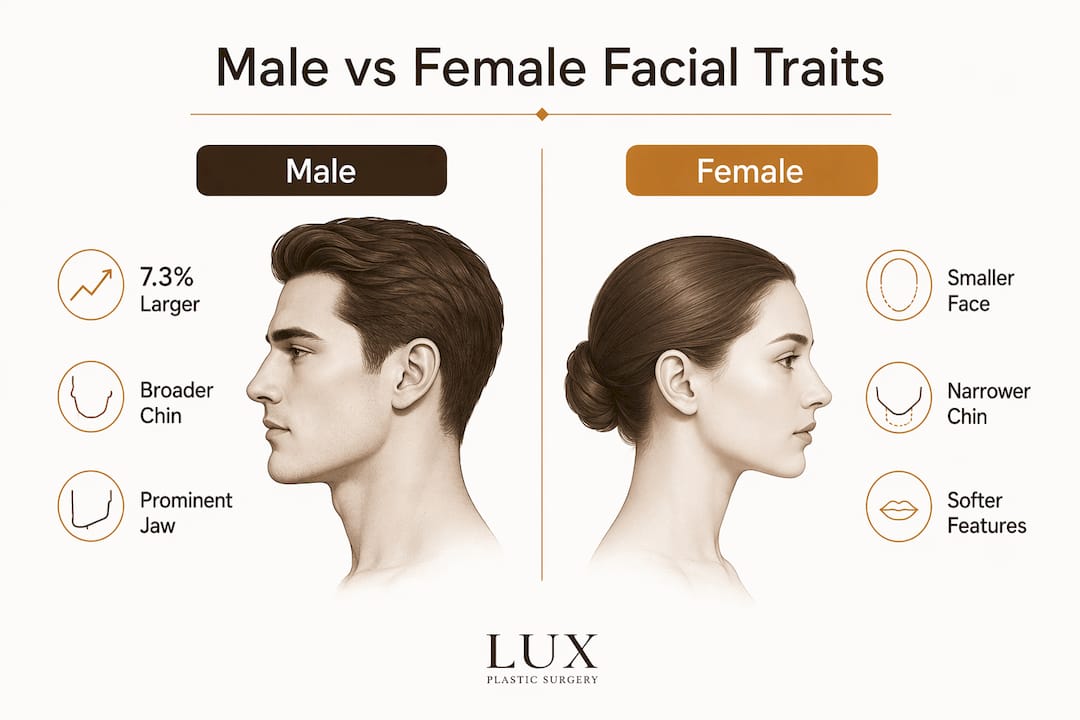
Male faces are on average 7.3% larger than female faces, with greater midfacial width, broader chins, and more prominent brow ridges. This is not a minor variation. It changes where filler is placed, how much botulinum toxin is used, and which surgical techniques preserve rather than undermine masculine structure.
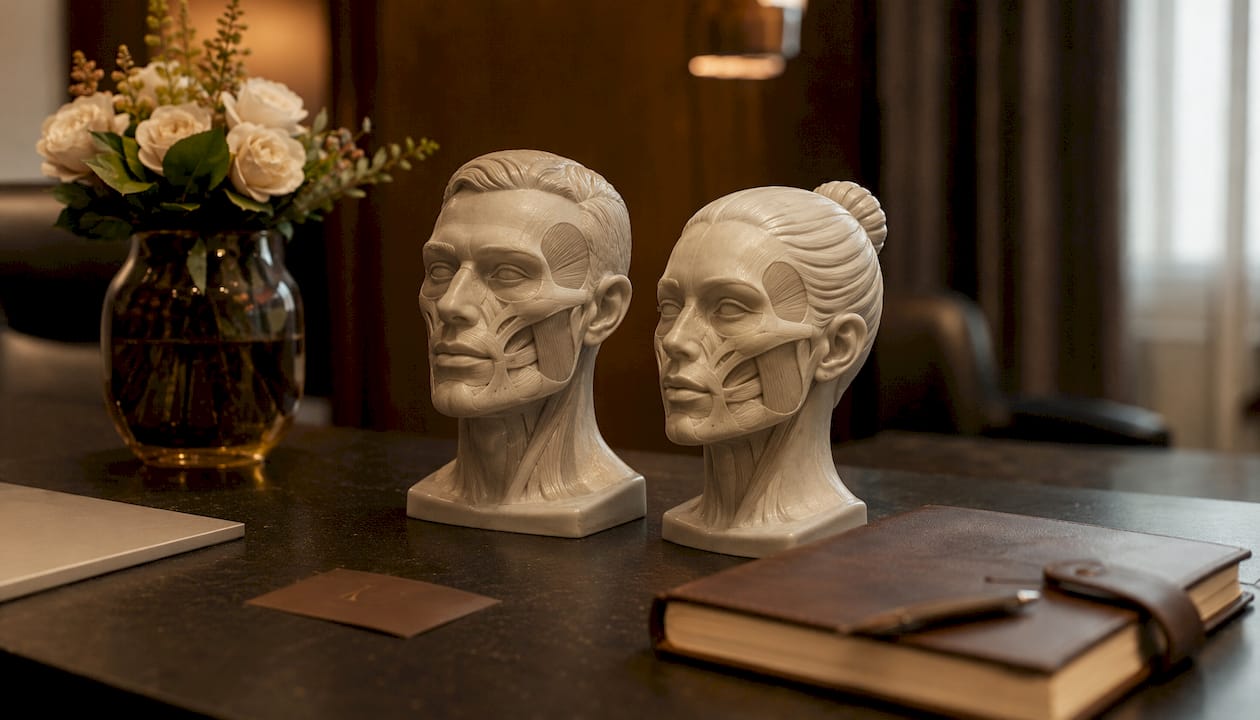
Research using advanced 3D imaging confirms that men have a broader and deeper midfacial skeleton, with greater maxillary depth and longer vertical facial height. These skeletal differences persist across the lifespan and become more pronounced in middle age, precisely the period when many men first consider aesthetic treatment.
Key anatomical differences relevant to treatment:
- Stronger brow prominence requiring careful botulinum toxin placement to avoid brow ptosis
- Broader jaw and chin benefiting from volume-building rather than tapering techniques
- Thicker skin with larger pores, affecting filler depth and skin treatment choice
- Greater muscle mass in the masseter and frontalis, influencing toxin dosing
The practical implication is straightforward. A clinician who does not account for these differences will produce results that look wrong, not because the treatment failed, but because it was designed for a different face. Consulting a practitioner with specific experience in personalised facial surgery for male patients is not a luxury; it is the baseline for a safe and appropriate outcome.
What do UK trends tell us about male facial aesthetics in 2026?
Male participation in facial aesthetics is growing across every measurable metric. BAAPS data for 2024 shows face and neck lifts, blepharoplasty, and otoplasty for men have all increased in popularity in recent years. These are surgical procedures with meaningful recovery periods, which suggests men are not simply dabbling; they are making considered decisions about longer-term results.

The “Zoom Boom” effect is well documented. Video conferencing placed men in the unusual position of watching their own face for hours each day, making previously unnoticed changes to the jaw, neck, and under-eyes suddenly visible. That awareness translated directly into clinic enquiries. Remote working also facilitated uptake of more invasive procedures such as hair transplants, since recovery no longer required extended absence from a physical workplace.
The British College of Aesthetic Medicine reported a rise in male clientele from 10% in 2024 to 16% in 2025, particularly around injectable procedures. The trajectory is consistent: male aesthetic engagement is normalising, and the procedures men choose are becoming more varied and more considered. For an up-to-date picture of trending aesthetic procedures, Lux Plastic Surgery publishes annual guidance for patients.
Professor Hindocha and Lux Plastic Surgery on male facial aesthetics
Professor Sandip Hindocha, FRCS (Plast), brings a philosophy grounded in anatomical precision and restraint. The goal in male facial rejuvenation is not to reverse the clock dramatically but to produce a result that looks like the patient at their best, with structure preserved and fatigue removed. That means working with the face’s existing proportions rather than imposing a template.
The most common concerns men raise at consultation include:
- Jowling and loss of jawline definition
- Neck laxity and the appearance of a “turkey neck”
- Hollowing under the eyes and a tired appearance
- Deep forehead lines or a heavy brow
- Hair thinning or recession
Safety concerns are a genuine barrier for male patients: 75% of UK men cite procedure safety as a concern, and 76% worry about product quality. Professor Hindocha’s GMC registration, BAPRAS membership, and NHS clinical directorship are the credentials that address those concerns directly. Choosing a practitioner without verifiable qualifications is the single greatest risk in aesthetic medicine.
Treatment costs at Lux Plastic Surgery vary by procedure. Non-surgical treatments such as botulinum toxin typically start from £300–£500 per session; dermal filler treatments from £400–£800. Surgical procedures including face and neck lifts are priced individually following consultation. All figures are indicative; a formal quote follows a clinical assessment.
This article is for informational purposes only and does not constitute medical advice. Consult a GMC-registered specialist before pursuing any aesthetic procedure.
Lux Plastic Surgery: consultant-led care for male patients
Men who want facial aesthetic treatment done properly, by a surgeon who understands male anatomy and prioritises natural results, have a clear option in Lux Plastic Surgery. Professor Hindocha leads every consultation personally, assessing facial structure, skin quality, and the patient’s specific goals before recommending any procedure. There is no off-the-shelf treatment plan.

Lux Plastic Surgery operates across Bedford, London, and Manchester, offering both non-surgical and surgical facial treatments calibrated for male patients. The clinic’s before-and-after galleries and patient testimonials reflect outcomes that look considered rather than conspicuous. For men who want to understand their options without pressure, the starting point is a consultation.
Book a consultation with Professor Hindocha to discuss your goals and receive a personalised treatment plan. Full details on surgical and non-surgical options are available on the Lux Plastic Surgery website.
Key takeaways
Male facial aesthetics deliver measurable improvements to appearance, confidence, and professional presence when treatments are planned around male anatomy and delivered by a qualified practitioner.
| Point | Details |
|---|---|
| Male anatomy requires tailored treatment | Male faces are 7.3% larger on average, with greater muscle mass and bone structure that affect dosing and technique. |
| Confidence is the primary driver | 50% of UK men seeking aesthetic treatment cite improved self-confidence as their main motivation. |
| Surgical uptake is rising | Face and neck lifts for men increased significantly in 2024, according to BAAPS audit data. |
| Safety credentials matter most | 75% of UK men cite procedure safety as a barrier; GMC registration is the key qualifying signal. |
| Lux Plastic Surgery | Professor Hindocha provides consultant-led, anatomy-specific facial treatment plans for male patients across Bedford, London, and Manchester. |
FAQ
Does botulinum toxin look natural on men?
Yes, when dosed and placed correctly for male facial anatomy. Men require higher doses than female patients due to greater muscle mass, and placement must preserve the natural brow position rather than create an arched or feminised result.
What makes a male face look attractive?
Research shows that aesthetic male faces have greater facial height and width, a more prominent lower third, and a broader jaw relative to the cheekbones. Treatments that reinforce these proportions tend to produce the most natural-looking results.
Do men actually seek facial aesthetic treatments?
38% of UK consumers who received aesthetic treatment in the past 12 months are men, and one in three UK men are considering treatment in the next 12 months. Male participation is no longer a niche segment.
What facial treatments work best for men?
Botulinum toxin, jaw and chin filler, skin boosters, and surgical face or neck lifts are among the most requested by male patients. The right choice depends on individual anatomy and goals, which is why a consultation with a GMC-registered specialist such as Professor Hindocha at Lux Plastic Surgery is the appropriate first step.
How do I choose a safe practitioner for facial aesthetics?
Verify GMC registration, check membership of BAAPS or BAPRAS, and confirm the practitioner has specific experience with male patients. For guidance on selecting procedures safely, Lux Plastic Surgery provides a dedicated UK patient resource.