Medically reviewed by Professor Sandip Hindocha, GMC-registered Consultant Plastic Surgeon and NHS Clinical Director. Articles are reviewed against current UK guidance from the GMC, BAAPS, BAPRAS and NICE.
TL;DR:
- Modern implant technology has advanced to produce natural-looking breasts that vary greatly in shape, feel, and appearance. Surgical placement, size, and implant type, combined with personalised planning, significantly influence whether results look natural or artificial. Aftercare, lifestyle, and non-surgical options also play vital roles in maintaining and enhancing natural breast aesthetics over time.
The idea that breast implants look obviously artificial is one of the most persistent misconceptions in cosmetic surgery. Natural breasts vary enormously in shape, density, and feel, and modern implant technology has caught up with that reality in ways that genuinely surprise most women when they see the results. Whether you are considering a subtle size increase, correcting asymmetry, or restoring volume after pregnancy, your ability to achieve a result that looks and feels genuinely your own has never been better. This guide walks you through everything that influences that outcome, from anatomy to aftercare.
Key Takeaways
| Point | Details |
|---|---|
| Silicone implants preferred | Silicone and cohesive gel implants provide a more natural look and feel than saline options, especially in slimmer patients. |
| Personalised surgical planning | Choosing implant type, size, and placement tailored to your anatomy is critical for natural results. |
| Aftercare sustains outcomes | Following surgeon guidance and regular monitoring helps maintain the breast’s natural appearance over time. |
| Non-surgical options assist | Fat transfer and skin treatments can enhance or preserve natural breast aesthetics alongside surgery. |
| Holistic approach essential | Expert consultation, realistic expectations, and lifestyle factors together ensure the best natural breast enhancement. |
Understanding natural breasts: anatomy and appearance
Before you can make an informed decision about enhancement, it helps to understand what gives natural breasts their distinctive look and feel. Breast shape is determined by a combination of glandular tissue, fat distribution, skin elasticity, and the position of the inframammary fold (the natural crease beneath the breast). These factors vary considerably between women, and even between the two breasts on the same woman.
Skin elasticity plays a particularly underappreciated role. Women with thicker, more elastic skin tend to have more tissue coverage, which means implants sit more naturally beneath the surface. Those with thinner skin, or minimal breast tissue, face a different surgical challenge because the implant is less concealed by the body’s own structure.
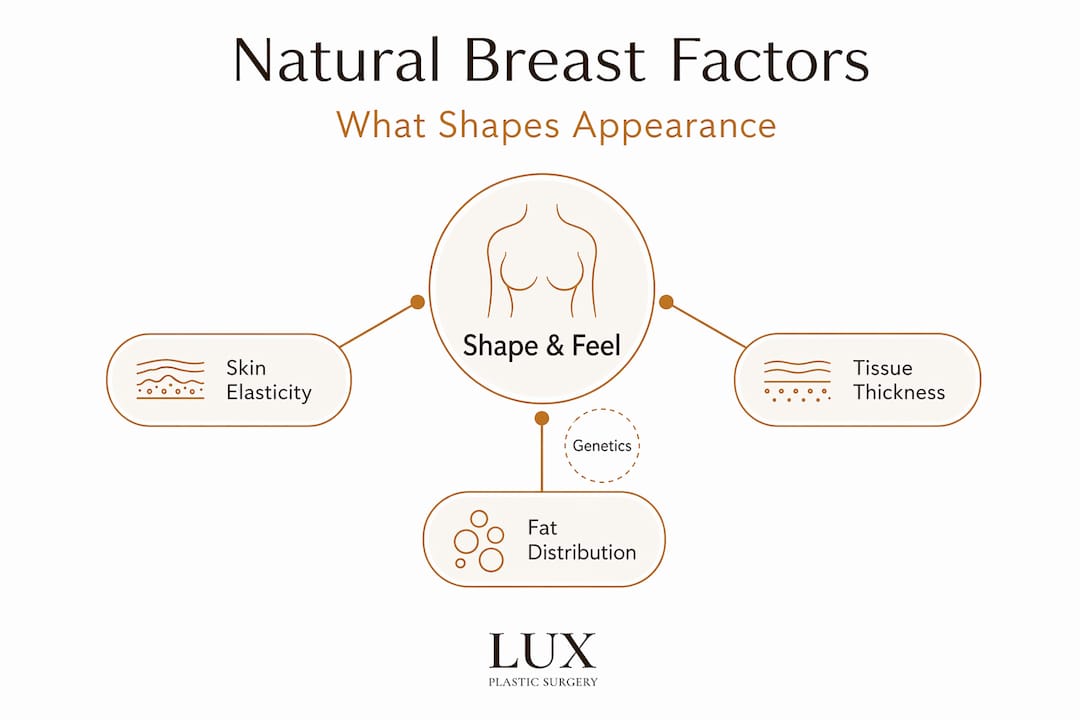
The natural breast also changes throughout life. Pregnancy, breastfeeding, weight fluctuation, and ageing all shift the balance between tissue and fat, affect skin laxity, and alter the position of the nipple. Any realistic surgical plan has to account for this baseline, not just your ideal outcome.
Key anatomical factors that influence surgical decisions include:
- Breast tissue density, which varies from predominantly fatty to almost entirely glandular
- Skin thickness and elasticity, which affects how well an implant is concealed
- Chest wall shape, whether flat, convex, or asymmetrical
- Nipple and areola position relative to the inframammary fold
- Natural breast width and projection, which inform implant sizing
Understanding these variables is central to breast augmentation insights and the kind of personalised planning that produces results you actually recognise as yourself.
Types of breast implants and their impact on natural results
Not all implants behave the same way once they are inside the body, and the differences matter more than most people expect.
Saline implants are filled with sterile salt water after insertion, which allows a smaller incision scar. The trade-off is feel. Saline tends to be firmer and can produce visible rippling, particularly in women with minimal tissue coverage. For those who value tactile naturalness above all else, saline is rarely the first recommendation.
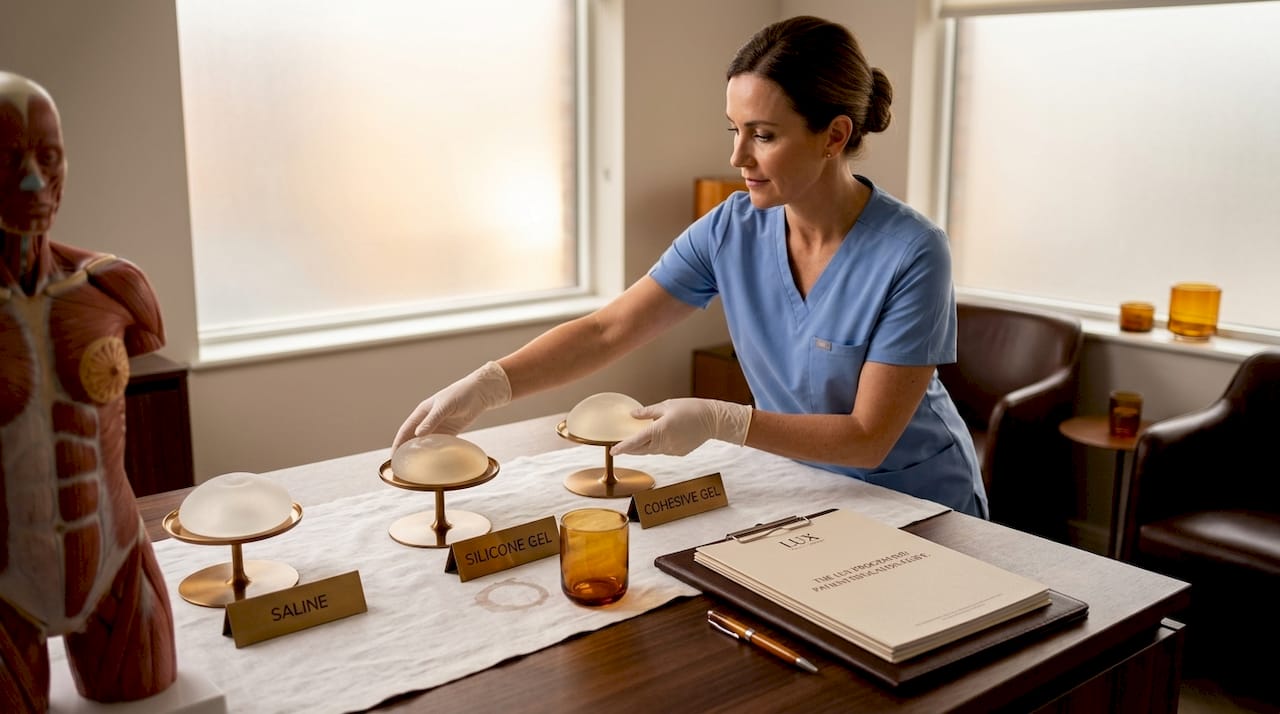
Silicone gel implants are pre-filled and have a softer, more tissue-like consistency. They move more naturally with the body and blend more convincingly with surrounding breast tissue. This is why silicone has become the preferred choice for the majority of breast augmentation procedures in the UK.
Cohesive gel implants, often called “gummy bear” implants, take silicone technology a step further. The gel is firm enough to hold its shape if the outer shell is ever compromised, which reduces the risk of gel migration. As silicone implant benefits from expert surgical guides confirm, silicone and cohesive gel implants generally create the most natural look and feel, particularly for patients with minimal natural breast tissue.
| Implant type | Natural feel | Rippling risk | Shape retention | Best suited to |
|---|---|---|---|---|
| Saline | Moderate | Higher | Good | Women with adequate tissue coverage |
| Silicone gel | Excellent | Low | Good | Most women, especially those with minimal tissue |
| Cohesive gel (gummy bear) | Very good | Very low | Excellent | Women wanting long-term shape stability |
When choosing between these options, consider:
- Your existing tissue coverage, which determines how much the implant will be visible or felt
- Your lifestyle, particularly if you are physically active or want to avoid long-term maintenance anxiety
- Your aesthetic goal, whether you want a subtle natural enhancement or a more defined projection
Pro Tip: Ask your surgeon to show you implant samples in person. The difference in feel between saline and cohesive gel is immediately obvious when you hold them, and it helps ground your expectations before surgery.
Exploring the breast augmentation step by step process and the breast augmentation complete guide gives you a fuller picture of how these choices fit into the broader surgical journey.
Surgical techniques that enhance natural breast aesthetics
Choosing the right implant is only half the equation. Where it is placed, and how the surgery is performed, determines whether the result looks natural or not.
Implant placement assessment. Surgeons choose between subglandular placement (above the chest muscle) and submuscular placement (partially or fully beneath the pectoralis major). Submuscular placement generally provides better tissue coverage and a softer upper pole, which is the area above the nipple that tends to give away artificial augmentation when it appears overly round or full.
Implant size selection relative to anatomy. Choosing an implant that is too wide for your chest wall is one of the most common causes of an unnatural result. A well-sized implant respects your existing breast width and sits within the natural footprint of the breast rather than extending beyond it.
Profile selection. Implants come in low, moderate, and high profile options, referring to how far they project outward relative to their base width. A narrower chest typically suits a higher profile implant to achieve natural projection without widening the breast base beyond its natural boundary.
Anatomical (teardrop) implant consideration. These implants are shaped to mimic the natural slope of the breast, with more volume at the lower pole. They can be particularly effective for women whose natural breasts have a gentle slope rather than a rounded shape.
Surgeons evaluate chest wall and tissue characteristics to recommend implant type, size, profile, and placement for natural results. This is not a one-size-fits-all process, and any surgeon who approaches it as such is worth questioning.
Pro Tip: Bring reference photos to your consultation, but choose images of women with a similar body type to your own. Images of women with dramatically different frames can create unrealistic benchmarks that set the consultation off in the wrong direction.
You can read more about the available options through Lux Plastic Surgery’s breast augmentation options page.
Aftercare and maintenance to preserve natural appearance
Surgery delivers the result. Aftercare is what protects it over the years that follow. This is where many women underinvest their attention, and where long-term outcomes are quietly decided.
Good aftercare includes:
- Following your surgeon’s post-operative instructions precisely, including wearing a surgical support bra for the recommended period to support tissue settling
- Avoiding heavy lifting and strenuous upper-body exercise during the initial recovery phase to prevent implant displacement
- Regular imaging checks, since silicone implant ruptures are often silent (meaning you may not feel or see any change), and early detection matters for both safety and aesthetics
- Maintaining skin health through moisturisation, sun protection, and adequate hydration, all of which preserve the elasticity that helps implants look natural over time
- Avoiding smoking, which impairs blood flow, slows healing, and degrades skin quality faster than almost any other lifestyle factor
As implant monitoring guidance makes clear, patients should monitor implants for ruptures and undergo regular check-ups to maintain natural appearance and safety.
Weight stability also matters more than most women anticipate. Significant weight gain or loss after augmentation changes the fat distribution in and around the breast, which can alter the appearance of the implant beneath the tissue. This is not a reason to avoid surgery, but it is a reason to be thoughtful about timing.
For personalised guidance, the resources on surgery recovery tips and the importance of aftercare are worth reading before and after your procedure.
Non-surgical and complementary options for enhancing natural breasts
Surgery is not the only route to improving breast aesthetics, and for some women it is not even the first step worth considering.
- Fat transfer breast augmentation uses liposuction to harvest fat from areas such as the abdomen or thighs, which is then purified and injected into the breasts. The result is a modest size increase, typically one cup size, using your own tissue. Because nothing foreign is introduced, the feel is entirely natural. The limitation is predictability; not all transferred fat survives, and results can be subtler than expected.
- Skin tightening treatments using radiofrequency or ultrasound technology can improve skin laxity and give the appearance of a modest lift without surgery. These work best as maintenance tools or for women with very mild laxity concerns.
- Collagen-stimulating treatments applied to the décolletage and breast skin can improve surface texture and elasticity over time, complementing surgical results.
- Supportive bras and posture correction have a surprisingly significant impact on how breast shape is perceived day to day. A well-fitted bra provides the right lift, while good posture opens the chest and changes how the breast sits entirely.
For women who want enhancement without surgery, or who want to maintain their surgical results between check-ups, non-surgical breast enhancement options are worth exploring in detail.
The uncomfortable truth about natural breasts and cosmetic surgery
Here is what most breast augmentation content does not say plainly: the pursuit of “natural” is frequently misunderstood as a single fixed outcome rather than a personalised one.
Women often come into consultations with a picture of what natural looks like, usually drawn from someone else’s body. The problem is that natural, by definition, is specific to your anatomy. An implant that looks beautifully natural on one woman can look exactly like an implant on another, not because the surgery was poorly done, but because the surgical plan was not tailored to the individual’s unique tissue profile.
The surgeons who consistently produce natural results are not just technically skilled. They are the ones who spend enough time in consultation to understand your anatomy, your lifestyle, your emotional relationship with your body, and your realistic long-term expectations. The consultation itself is diagnostic. Be cautious of anyone who quotes you a size or product without examining you properly.
There is also a long-term dimension to this conversation that gets glossed over. Breast implants are not permanent devices. They have a lifespan, and the body changes around them. Skin that was firm at 30 is different at 45, and an implant that looks natural in the first decade may require adjustment in the second. Women who factor this into their original decision, choosing cohesive gel implant advantages for their reduced rippling and superior long-term stability, often find that their results age more gracefully.
Breast size and self-esteem are deeply connected for many women, but the most enduring confidence comes from results that still feel right years after surgery. That only happens when the approach respects your individuality from the first appointment onward. For genuinely risk aware cosmetic surgery, understanding the full picture before committing is essential.
Choose expert plastic surgery for natural breast enhancement in the UK
If you have done the research and are ready to take the next step, who you choose to perform your surgery shapes everything that follows.
At Lux Plastic Surgery, Professor Sandip Hindocha and his team approach every procedure with the same commitment: personalised planning that puts your anatomy and your goals at the centre of every decision. Whether you are exploring breast augmentation surgery, considering a breast lift surgery to restore youthful contour, or looking into breast reduction surgery for comfort and proportion, the focus is always on a result that looks and feels genuinely yours. With clinics in Bedford, London, and Manchester, expert care is accessible wherever you are based. Book your consultation to begin a conversation built around your individual needs.
FAQ
What implant type looks and feels most natural?
Silicone gel, and particularly cohesive gel implants, offer the most natural look and feel for most women, especially those with minimal existing breast tissue to provide coverage over the implant.
How important is surgical technique for natural breast appearance?
Surgical technique is arguably more important than implant choice alone. Surgeons who evaluate chest wall dimensions and tissue to guide implant selection and placement consistently produce more natural, proportionate outcomes than those who rely on patient preference alone.
Can non-surgical methods improve natural breast aesthetics?
Yes. Fat transfer, skin tightening treatments, and collagen-stimulating procedures can all contribute to improved breast appearance, whether as standalone options for subtle enhancement or as complements to surgical results maintained over time.