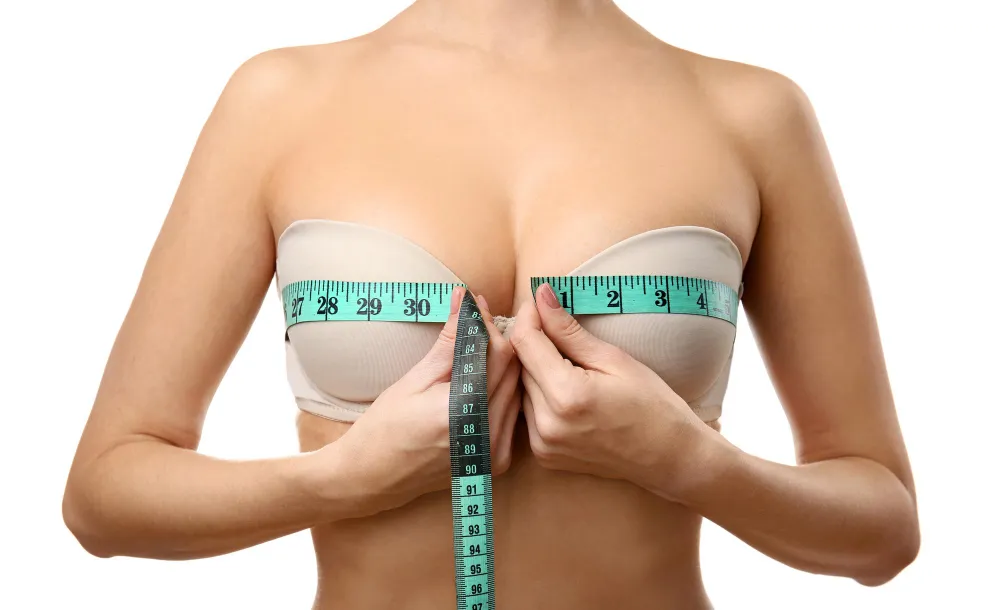
Breast augmentation is an operation to increase the size and change the shape of the breasts, most often with silicone implants. Whether you’re looking to restore breast volume after pregnancy or weight loss, or would like larger breasts, it can change their size and shape. What it can realistically achieve depends on your build and breast tissue, and that is discussed at consultation. Your consultation is with Professor Sandip Hindocha, a GMC-registered Consultant Plastic Surgeon (GMC 6122218), who will plan the operation around your anatomy and what you want.
At Lux Plastic Surgery in Bedford, we offer breast augmentation with silicone implants and, for smaller changes, with fat transfer. Professor Hindocha will talk you through implant size, shape and placement, and what each option can and cannot achieve for your build.
What is Breast Augmentation?
Breast augmentation, often referred to as a “boob job,” is a surgical procedure aimed at enhancing the size and shape of the breasts. While silicone implants are the most popular option, some patients prefer fat transfer, where fat is taken from another part of the body and used to increase breast volume. Fat transfer provides a more natural alternative to implants and may be suitable for those looking for subtle enhancements.
When choosing breast augmentation, it’s essential to consider various factors such as the desired size, body type, implant shape, and placement. Each of these affects how the result looks, and Professor Hindocha will go through them with you at consultation, along with what is realistic for your body.
Service Details
Duration
1h 30m
done under
General Anaesthesia
Hospitalisation
Day
Drains Required
Rarely hours
Supporting Garment
Sports bra for 6 weeks post procedure
Why Breast Augmentation Surgery?
Breast augmentation is a commonly performed cosmetic operation. Many women consider it for several reasons, including aesthetic desires and functional needs. Here are the key motivations for choosing breast augmentation:
- Restoring Volume: Pregnancy, significant weight changes, or ageing can often lead to a decrease in breast fullness. Breast augmentation can replace some of that volume.
- Achieve Proportionality: For some women, their breasts may feel disproportionate to their body size. Breast augmentation increases breast size, which some women feel brings their proportions more into balance.
- Personal Choice: Some women want a different breast size or shape for its own sake. The consultation is where that is weighed against the risks and the recovery, before any decision is made.
Correct Asymmetry: For those with uneven breast size, augmentation can reduce the difference between the two sides. Perfect symmetry is not a realistic aim, and Professor Hindocha will explain what is.
Aftercare and Recovery
After your breast augmentation surgery, you’ll be able to return home the same day. Although hospitalisation is not typically necessary, it’s essential to follow your surgeon’s aftercare instructions to ensure proper healing.
- First Week After Surgery: Expect some swelling, bruising, and mild discomfort during the first few days, which can be managed with prescribed pain medication. A sports bra will be required for 6 weeks to provide support and reduce swelling. You’ll have a follow-up appointment during the first week to assess your recovery.
- 2-3 Weeks After Surgery: At this stage, you should be able to return to light work and most daily activities. Swelling and bruising will have subsided significantly by this time.
- 4 Weeks After Surgery: You can return to moderately heavy physical activities after about 4 weeks but should avoid any strenuous exercises or heavy lifting.
- 6 Weeks After Surgery: After 6 weeks, you should be able to return to all physical activities, including heavy workouts and lifting.
While recovery varies between individuals, following the surgeon’s instructions and attending your follow-up appointments helps reduce the risk of complications.
What to Expect After Breast Augmentation Surgery
Recovery from breast augmentation surgery can vary depending on each individual’s health and the specifics of the procedure. Here’s what to expect:
- Swelling and Bruising: It’s normal to experience swelling and bruising in the first few days after surgery, which should gradually subside over the next week.
- Pain Management: Some discomfort is expected, and you will be given pain medications to manage it. Recovery progress is typically observed within several days by most patients.
- Return to Normal Activities: Most women can return to light activities after 1-2 weeks. However, more intense physical activities should be avoided for at least 4-6 weeks.
Post-Surgery Care: Wearing a supportive bra, following hygiene guidelines, and attending regular check-ups with your surgeon helps your recovery and means any problem is picked up early.
Why Choose Lux Plastic Surgery in Bedford?
At Lux Plastic Surgery, we offer breast augmentation alongside related procedures, including breast uplift surgery, breast asymmetry correction, and implant removal or exchange. We understand that choosing breast augmentation is a deeply personal decision, so we focus on delivering a supportive, comfortable experience tailored to your individual goals. You will be told the risks and the likely recovery before you decide anything.
Many patients now choose the minimally invasive Motiva Preservé breast augmentation technique. Whether it suits you depends on your anatomy and the size you want, which is assessed at consultation.
Frequently Asked Questions (FAQs)
1. What is breast augmentation surgery? Breast augmentation is a cosmetic procedure that involves the placement of implants to increase the size and improve the shape of the breasts.
2. How long does the surgery take?
The procedure usually takes between 1 to 2 hours, depending on the technique and type of implant selected.
3. Are there any risks associated with breast augmentation?
Risks include infection, capsular contracture, and implant rupture. These risks cannot be removed entirely. Professor Hindocha will explain each of them, and any others that apply to you, at consultation.
4. How much does breast augmentation cost?
The cost of breast augmentation ranges from £3,500 to £6,000, depending on the type of implants and the surgeon’s fees.
5. What is the recovery time?
Recovery generally takes about 1-2 weeks for light activities, but full recovery may take 4-6 weeks. During this period, it’s important to avoid strenuous physical activities.
Minimally invasive breast augmentationDiscover Motiva Preservé
Our most advanced breast augmentation — a tissue-preserving technique that protects your natural breast tissue and sensation, performed by certified Preservé surgeon Professor Sandip Hindocha.
Considering Breast Augmentation?
Your consultation is with Professor Sandip Hindocha, a GMC-registered consultant plastic surgeon. He will examine you, talk through whether this procedure is appropriate for you, and explain the risks and the likely recovery before you decide anything.
Call 07740 306144contact@luxplasticsurgery.co.uk
Clinics in Bedford, London, Manchester, Cheshire and Newton-le-Willows.