Medically reviewed by Professor Sandip Hindocha, GMC-registered Consultant Plastic Surgeon and NHS Clinical Director. Articles are reviewed against current UK guidance from the GMC, BAAPS, BAPRAS and NICE.
TL;DR:
- Jawline contouring combines surgical and non-surgical methods to reshape and define the lower face, targeting fat, muscle, or bone structure. Proper assessment of the underlying causes and a full-face evaluation are essential for effective, balanced results. Maintenance treatments are often necessary for long-lasting aesthetic improvements.
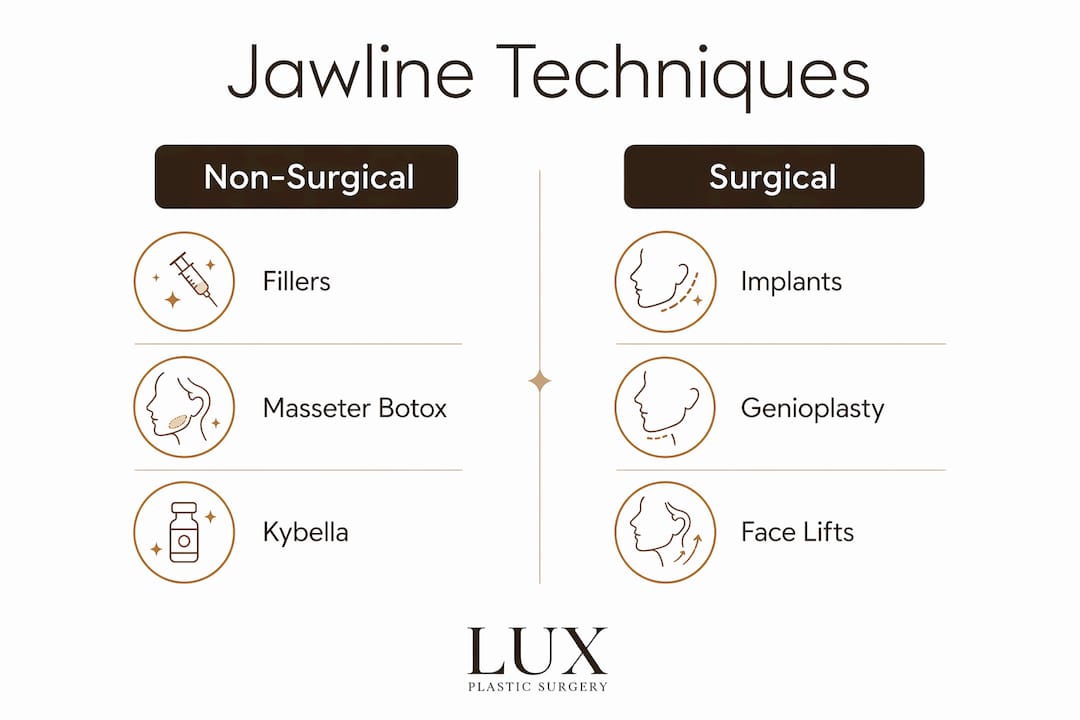
Jawline contouring is defined as a set of cosmetic procedures designed to reshape, define, or refine the lower face by targeting muscle bulk, fat deposits, or bone structure. The term covers both surgical and non-surgical facial reshaping options, including dermal fillers, masseter Botox, Kybella injections, and surgical implants or osteotomy. Understanding which method suits your anatomy is the single most important decision you will make before booking a consultation. This guide covers every major technique, realistic timelines, and the clinical factors that determine whether you are a candidate for one approach or several combined.
What is jawline contouring and how does it work?
Jawline contouring is the clinical practice of altering the shape, projection, or definition of the mandibular region to improve overall facial harmony. The procedure is not one treatment but a category of interventions, each targeting a different underlying cause of a poorly defined jaw. Non-surgical contouring has grown substantially in popularity because it delivers measurable aesthetic improvement without the recovery demands of surgery.

The three primary causes of a weak or undefined jawline are excess submental fat (the double chin), overdeveloped masseter muscles that create a square or heavy lower face, and insufficient bone projection that leaves the jaw looking recessed. Each cause requires a different treatment. Applying the wrong treatment to the wrong cause is the most common reason patients are dissatisfied with their results.
A qualified practitioner will assess all three factors before recommending a protocol. This full lower-face assessment separates competent clinical work from superficial cosmetic treatment, and it is the foundation of every successful jawline shaping plan.
What are the main jawline contouring techniques?
Dermal fillers for volume and projection
Hyaluronic acid fillers and calcium hydroxylapatite (CaHA) fillers are the two most widely used injectables for adding structure and projection to the jawline. Hyaluronic acid fillers are favoured for their reversibility and hydrating properties, making them a lower-risk entry point for patients new to facial contouring. CaHA fillers, such as Radiesse, go further by stimulating natural collagen production, which improves skin firmness and elasticity beyond the immediate volumising effect.
The injection technique matters as much as the product. Practitioners place filler along the mandibular border, at the angle of the jaw, and sometimes at the chin to create a continuous, defined line from ear to chin. The result is a sharper, more structured lower face without any incisions.
- Hyaluronic acid fillers: Reversible, hydrating, ideal for subtle definition or first-time patients
- Calcium hydroxylapatite fillers: Longer-lasting structural support with collagen stimulation benefits
- Combination protocols: Many practitioners layer both types across different anatomical zones for a more complete result
Pro Tip: Ask your practitioner to show you a full-face photograph assessment before any filler is placed. Contouring one area in isolation, without considering chin projection and cheekbone position, frequently produces an unbalanced result.
Masseter Botox for jaw slimming
Masseter Botox targets the large chewing muscle at the angle of the jaw. When this muscle is overdeveloped, whether from genetics, teeth grinding (bruxism), or habitual jaw clenching, it creates a wide, square lower face. Botulinum toxin injected directly into the masseter causes gradual muscle atrophy, reducing its bulk and producing a narrower, more oval facial shape. The treatment takes approximately 15 minutes and requires no downtime.
Kybella for submental fat reduction
Kybella is the brand name for deoxycholic acid, an FDA-approved injectable that destroys fat cells beneath the chin. Each session involves up to 50 small injections spaced approximately 1 cm apart across the submental area. Once the fat cells are destroyed, they do not return, making Kybella one of the few non-surgical jawline enhancement options with genuinely permanent results after two to four sessions.
Surgical options
Surgical jawline contouring includes jaw implants, genioplasty (chin repositioning), and lower face lifts. These are appropriate when non-surgical methods cannot achieve the desired structural change, particularly in cases of significant bone recession or severe skin laxity. Surgical routes carry longer recovery periods but produce permanent, structural results that injectables cannot replicate.
How long do results last and what is the recovery process?
Recovery and longevity vary considerably depending on which technique you choose. Setting accurate expectations before treatment prevents disappointment and helps you plan your maintenance schedule.
- Hyaluronic acid fillers typically last 9 to 12 months in the jawline region, where product is metabolised faster due to muscle movement. Top-up treatments are required to maintain the result.
- Calcium hydroxylapatite fillers provide structural support lasting 12 to 18 months, and sometimes up to 24 months, depending on the patient’s metabolism and the volume placed.
- Masseter Botox produces visible jaw slimming at 6 to 8 weeks post-treatment as the muscle gradually atrophies. The cosmetic result lasts approximately three months, after which repeat treatment is needed to maintain the slimmer contour.
- Kybella requires two to four sessions spaced at least four weeks apart. Once the full course is complete, the destroyed fat cells do not regenerate, so the submental reduction is permanent.
- Surgical procedures produce permanent structural changes, though natural ageing continues and some patients choose complementary non-surgical treatments in later years to address soft tissue changes.
Aftercare following injectables is straightforward but non-negotiable. Avoid alcohol, strenuous exercise, and lying flat for at least four hours after filler or Botox injections. Swelling and bruising are normal for three to five days. Surgical recovery ranges from two to six weeks depending on the procedure, with post-operative care playing a direct role in the quality of the final result.
Pro Tip: Photograph your jawline from the same angle and lighting every four weeks after masseter Botox. The change is gradual enough that patients often underestimate the result until they compare images side by side.
What are the benefits and risks of jawline contouring?
The benefits of jawline contouring extend beyond aesthetics. Masseter Botox, for instance, relieves TMJ symptoms within one to two weeks of treatment, making it one of the few cosmetic procedures that also addresses a functional medical complaint. Patients with bruxism frequently report reduced jaw pain, headaches, and tooth wear alongside the cosmetic slimming effect.
Aesthetic benefits:
- Improved facial symmetry and a more defined lower face
- Reduction of jowling or heaviness along the mandibular border
- A sharper chin-to-jaw angle that photographs well and reads as youthful in person
- Correction of asymmetry caused by uneven masseter development or uneven fat distribution
Therapeutic benefits:
- Masseter Botox alleviates TMJ pain and bruxism-related discomfort
- Submental fat reduction can improve neck posture perception and reduce skin friction in the chin area
Potential risks and side effects:
- Filler: bruising, swelling, asymmetry, and in rare cases vascular occlusion if injected near a blood vessel
- Masseter Botox: temporary difficulty chewing hard foods, asymmetry if dosing is uneven
- Kybella: swelling lasting up to two weeks, numbness, and the rare risk of nerve injury in the marginal mandibular nerve
- Surgical procedures: infection, scarring, prolonged swelling, and anaesthesia-related risks
The non-invasive nature of injectable treatments makes them the preferred starting point for most patients. However, non-invasive does not mean safe. Every treatment carries a complication profile, and the skill of the practitioner is the single greatest variable in determining whether you experience them.
How to choose the right jawline contouring method
The right method depends on what is actually causing your jawline to look undefined. This sounds obvious, but treating only visible fat without assessing chin projection or jaw structure is a common clinical error that leads to unsatisfactory outcomes. A thorough consultation with a qualified practitioner is not optional. It is the mechanism by which the correct treatment is identified.
| Factor | Non-surgical approach | Surgical approach |
|---|---|---|
| Excess submental fat | Kybella injections (permanent fat reduction) | Liposuction or neck lift |
| Overdeveloped masseter muscle | Masseter Botox (temporary, repeatable) | Surgical muscle reduction (rare) |
| Insufficient jaw projection | CaHA or HA dermal fillers | Jaw implants or genioplasty |
| Significant skin laxity | Limited benefit from injectables alone | Lower face lift or neck lift |
| Combination of causes | Layered injectable protocol | Surgical plus injectable combination |
Skin laxity is the factor most often underestimated by patients researching treatments online. If the skin along the jaw has lost significant elasticity, adding filler volume can sometimes worsen the appearance of jowling rather than improve it. A practitioner who does not assess skin quality before recommending fillers is not conducting a proper consultation.
Combination treatments are increasingly common and often produce the most natural-looking results. A patient with both masseter hypertrophy and submental fat might benefit from Botox to slim the muscle and Kybella to reduce the fat, with a small amount of CaHA filler to sharpen the mandibular border. Surgical versus non-surgical decisions should always be made with a practitioner who is qualified to offer both, so the recommendation is based on your anatomy rather than the limits of the clinic’s service menu.
Key takeaways
Jawline contouring delivers the best results when the treatment is matched precisely to the underlying anatomical cause, whether that is muscle bulk, fat, or bone structure.
| Point | Details |
|---|---|
| Match treatment to cause | Identify whether your jawline concern stems from fat, muscle, or bone before choosing a method. |
| Non-surgical options are effective | Dermal fillers, masseter Botox, and Kybella each address different causes with minimal downtime. |
| Results timelines vary | CaHA fillers last 12 to 18 months; masseter Botox results appear at 6 to 8 weeks and last around 3 months. |
| Full-face assessment is non-negotiable | Treating one area in isolation without assessing the whole lower face frequently produces imbalanced results. |
| Practitioner skill is the key variable | The complication rate and quality of outcome depend more on who performs the treatment than which product is used. |
What we have learned treating the lower face
The most persistent misconception we encounter is that jawline contouring is a single treatment with a single outcome. Patients often arrive having decided they want “jaw filler” after seeing a result on social media, without knowing whether their concern is muscular, structural, or related to fat. The result they admired was achieved on a different face with different anatomy.
The lower face is one of the most anatomically complex regions to treat. The masseter muscle, the mandibular border, the submental fat compartment, and the overlying skin all interact. Changing one without considering the others is how you end up with a result that looks treated rather than refined. The patients who achieve the most natural outcomes are those who come to a consultation with an open mind about which treatment is actually appropriate, rather than a fixed idea about which product they want.
We also see patients who treat aggressively once and then disengage from maintenance. Jawline contouring is not a one-time event for most people. Masseter Botox requires repeat sessions. Fillers need topping up. The patients who maintain the best long-term results treat their jawline as part of an ongoing care plan rather than a single purchase. That mindset shift, from procedure to programme, is what separates patients who are consistently happy with their appearance from those who feel they are chasing a result that never quite sticks.
— Lux
Explore jawline contouring at Lux Plastic Surgery

Lux Plastic Surgery offers both surgical and non-surgical jawline contouring under the care of Professor Sandip Hindocha, an award-winning consultant with extensive experience in facial aesthetics. Whether you are considering masseter Botox, dermal fillers, Kybella, or a surgical approach, every treatment plan begins with a thorough consultation to assess your anatomy and align the method with your goals. The clinic operates across Bedford, London, and Manchester, with a focus on natural-looking, patient-centred results. To explore the full range of available treatments, visit the Lux Plastic Surgery services page or book a consultation directly to discuss your options with a qualified specialist.
FAQ
What is the difference between jawline contouring and facial contouring?
Facial contouring refers to reshaping any area of the face, including the cheeks, nose, temples, and chin. Jawline contouring is a subset of facial contouring that focuses specifically on the mandibular region, submental area, and lower face definition.
How many sessions of Kybella are needed for a defined jawline?
Most patients require two to four Kybella sessions spaced at least four weeks apart. The fat cell destruction is permanent, so no further sessions are needed once the desired reduction is achieved.
Does masseter Botox hurt and how long before results show?
Masseter Botox involves several small injections and is generally well tolerated. Visible jaw slimming appears at six to eight weeks as the muscle gradually reduces in bulk, with TMJ relief often noticeable within one to two weeks.
Can dermal fillers alone contour the jawline effectively?
Dermal fillers are effective for adding projection and sharpening the mandibular border, but they cannot address muscle bulk or submental fat. A full lower-face assessment is required to determine whether fillers alone will achieve your goals or whether a combination approach is needed.
Is jawline contouring permanent?
Permanence depends on the method. Kybella produces permanent fat reduction; surgical procedures create lasting structural changes. Dermal fillers and masseter Botox are temporary and require ongoing maintenance to sustain the result.