Medically reviewed by Professor Sandip Hindocha, GMC-registered Consultant Plastic Surgeon and NHS Clinical Director. Articles are reviewed against current UK guidance from the GMC, BAAPS, BAPRAS and NICE.
TL;DR:
- Hooded eyes involve excess skin over the eyelid crease, affecting appearance and sometimes vision. Treatments vary from makeup techniques and non-surgical options like Botox to surgical procedures such as blepharoplasty and brow lifts, depending on severity. Maintaining skin health through lifestyle choices can slow levels of hooding and support surgical results.
Hooded eyes are one of the most commonly misunderstood eye shapes in both the beauty world and medical settings. Many people live with them for years without realising they have a name, let alone a range of targeted solutions. The hooded eyes definition is straightforward: excess skin folds from the brow bone down over the natural eyelid crease, partially or fully concealing it. What is less straightforward is knowing what to do about them. Whether your concern is makeup that seems to disappear the moment you open your eyes, or a heaviness that affects your vision, this guide covers both the cosmetic and medical sides of the picture.
Key takeaways
| Point | Details |
|---|---|
| Clear definition matters | Hooded eyes differ from ptosis; getting the right diagnosis determines which treatments will actually work. |
| Makeup technique is specific | Applying shadow above the natural crease and using minimal lower liner creates a noticeably more open look. |
| Non-surgical options exist | Botox and dermal fillers offer temporary improvement for mild to moderate cases with no downtime. |
| Surgery can be functional | Upper blepharoplasty and brow lifts address both cosmetic concerns and vision impairment when hooding is severe. |
| Lifestyle slows progression | Daily SPF, hydration, and quality sleep support skin elasticity and delay worsening of hooded lids. |
What are hooded eyes?
The term refers to a specific anatomical feature rather than a medical diagnosis. Excess skin folds from the brow bone down over the natural eyelid crease, which can make the lid appear smaller, heavier, or almost absent. The medical term for this is dermatochalasis, and it becomes more noticeable with age, often starting around the mid-twenties. That said, plenty of people are born with it, and it is particularly common across East Asian and South-East Asian ethnicities.
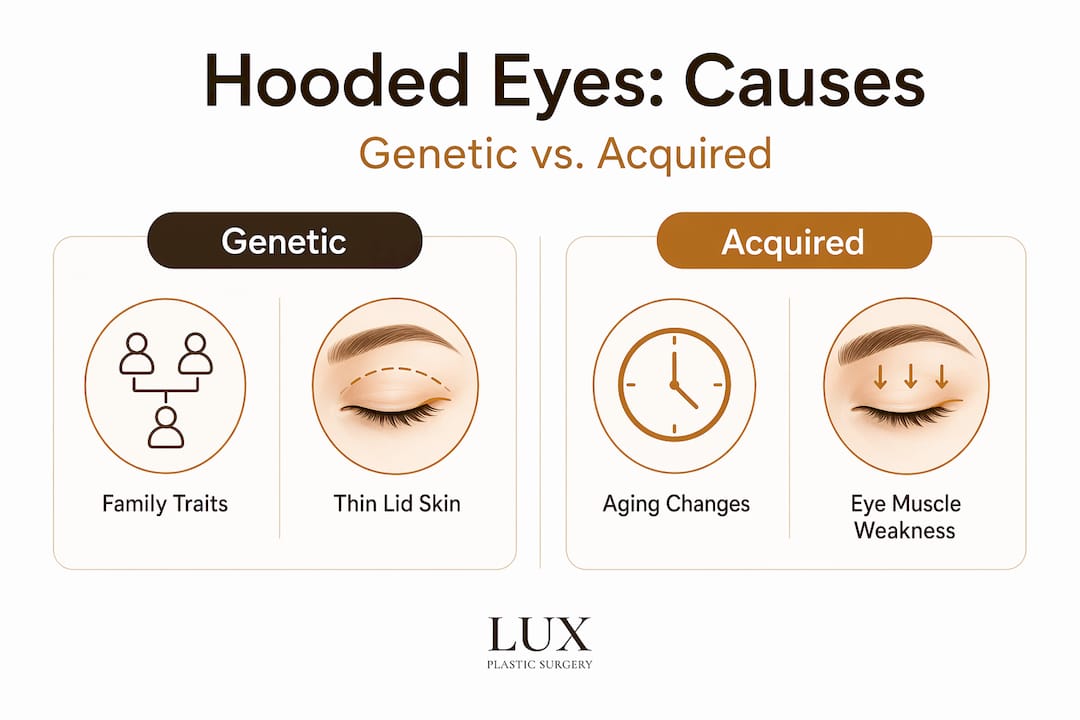
The causes split broadly into two categories: genetic and acquired. Genetically, the skin around the eyes may simply lack the structure to keep the lid crease visible. Acquired causes include the natural decline in skin elasticity that comes with ageing, significant weight loss, sun damage, and chronic rubbing of the eyes. None of these make hooded eyes a medical emergency, but they do influence which treatment, if any, is the right fit.
It is worth understanding how hooded eyes differ from a condition called ptosis. Ptosis involves a drooping of the eyelid itself due to muscle weakness, rather than excess overlying skin. The lift test helps distinguish between the two: gently lift the sagging skin away from the eye and observe the eyelid margin. If the margin remains low, muscle weakness is likely involved, and the treatment path changes significantly.
Pro Tip: Photograph yourself with relaxed, neutral eyes in good lighting before any consultation. This gives a clinician an accurate baseline and removes the unconscious brow-raising many people with hooded lids develop as a habit.
People with pronounced hooding often raise their eyebrows unconsciously to compensate for reduced vision, which over time leads to tension headaches and persistent eye fatigue. This is a functional issue, not merely cosmetic, and it is one reason why treatment in severe cases can be medically justified.
Makeup techniques that actually work
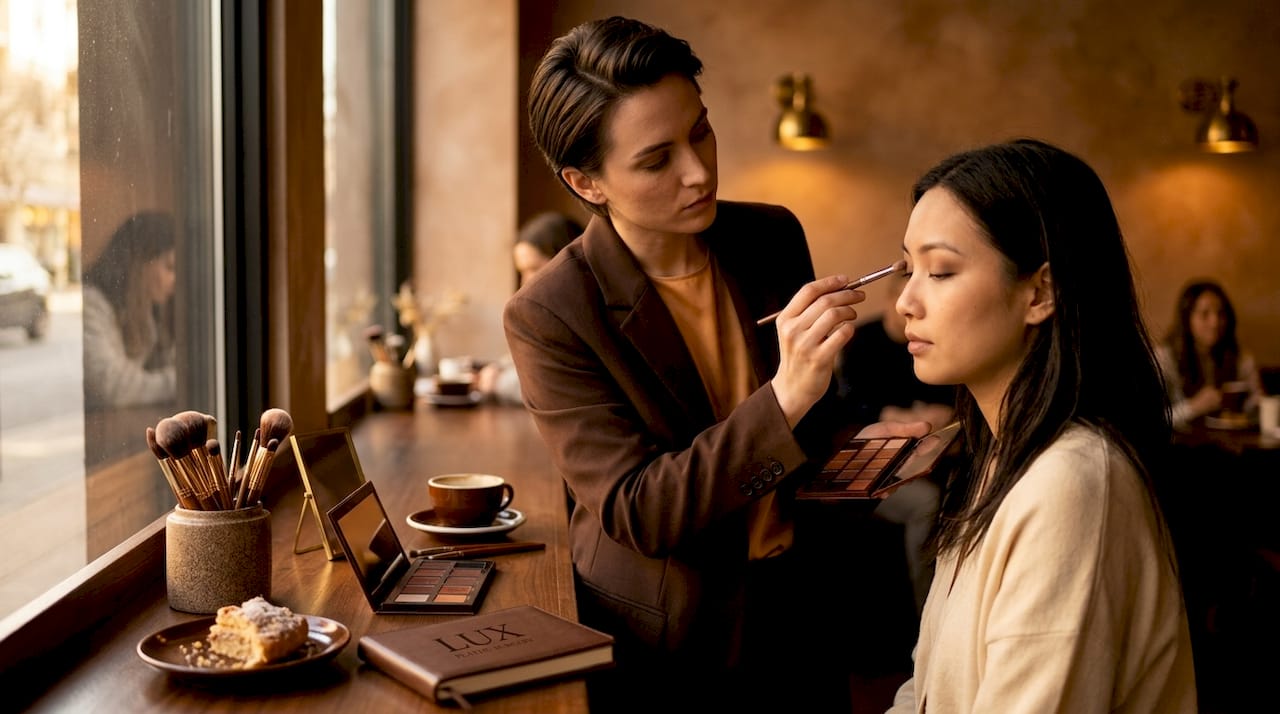
The golden rule of makeup for hooded eyes is this: forget where your crease naturally sits and create a new one higher up. This single adjustment changes everything else that follows.
- Start with a transition shade. Use a soft, matte mid-tone colour well above your natural crease, roughly where the crease would sit if your eyes were open and the lid was fully visible. Blend this upward, not outward.
- Add depth precisely. A deeper shadow above the crease should be placed just above the natural fold and blended in a windscreen-wiper motion. This creates the impression of depth that the hood otherwise obscures.
- Avoid shimmer on the lid itself. Lighter, shimmery shades on the actual mobile lid tend to disappear once the eye opens and the hood drops back into place. Use shimmer sparingly on the inner corner or centre lid only.
- Line with a light hand. Heavy eyeliner for hooded eyes is usually counterproductive. A soft brown or grey pencil tight-lined along the upper lash line keeps definition without closing the eye down further. On the lower waterline, a nude or beige liner immediately brightens the appearance.
- Curl your lashes before mascara. This is non-negotiable for hooded eyes. Straight lashes point directly at the hood and amplify the heaviness. Curling them creates lift, making the eye appear more open before a single drop of mascara is applied.
Pro Tip: Set your eye makeup with a translucent powder before applying shadow. The hood frequently transfers product onto itself throughout the day, and a powder barrier significantly reduces creasing.
The most common mistake is applying everything in the same position as tutorials designed for other eye shapes. Most mainstream beauty content is filmed on people with visible, defined creases. If you follow those placement guides precisely, your makeup will look completely different once your eyes are open. Always check your work with eyes fully open, not looking down at a mirror.
Non-surgical treatments for hooded eyes
For those not ready for surgery, or whose hooding is mild to moderate, several non-surgical treatments can produce meaningful improvement.
- Botox brow lifts. Injecting botulinum toxin into specific muscles around the brow causes the frontalis muscle to pull the brow upward, creating a subtle but visible lift. Results typically last three to four months and work best for patients whose hooding is primarily driven by a low brow position rather than skin excess.
- Dermal fillers. Strategically placed filler above the brow or along the upper orbital rim adds volume that supports the overlying skin, which can reduce the degree of folding. This approach suits patients with some loss of facial volume contributing to the hooded appearance.
- Plasma fibroblast therapy. This procedure uses a pen-like device to deliver plasma energy to the skin surface, stimulating collagen production and causing skin tightening over several weeks. It is most effective for very mild hooding and requires a careful recovery period.
- Thread lifts. Dissolvable threads are inserted under the skin to physically lift tissue. Results vary and are generally more modest than surgical options, but the recovery is considerably shorter.
- Prescription eye drops. UPNEEQ is a prescription drop approved for use in some cases of acquired ptosis. It temporarily stimulates the muscle that raises the upper lid and may suit patients whose drooping has a muscle rather than a skin cause.
None of these approaches are permanent, and for significant dermatochalasis they are unlikely to deliver the same degree of change as surgery. They are best viewed as maintenance tools or as bridges for patients who want improvement without committing to a procedure. For a deeper look at what non-surgical options can realistically achieve, the non-surgical aesthetics overview at Luxplasticsurgery is worth reviewing.
Surgical options: blepharoplasty, ptosis repair, and brow lifts
Getting the surgical diagnosis right matters enormously. As oculoplastic specialists note, the correct procedure depends entirely on whether the hooding comes from excess skin, a low brow position, or muscle weakness. Confuse these, and the surgery will not produce the result the patient expects.
Upper blepharoplasty is the procedure most people associate with hooded eye correction. It removes excess skin and fat from the upper eyelid, revealing the natural crease and opening the eye. Results are long-lasting. Recovery typically involves swelling and bruising for one to two weeks, after which the improvement becomes visible. You can find detailed information on eyelid surgery options at Luxplasticsurgery if this is the route you are considering.
Ptosis repair targets the levator muscle or Müller’s muscle responsible for raising the eyelid. It is a different operation from blepharoplasty and is sometimes performed alongside it. In some cases, ptosis surgery is carried out under light sedation so that the eyelid height can be adjusted while the patient is conscious enough to cooperate, ensuring symmetry. There is also an interesting physiological reason why ptosis can appear worse after treating just one eye: Hering’s law of equal innervation means both eyelids receive equal neural signals, so correcting one side can unmask weakness on the other. This is why experienced surgeons assess both eyes carefully before operating.
Brow lift surgery addresses hooding caused by descending brow position. Rather than removing eyelid skin, it repositions the brow upward through incisions typically hidden along the hairline or in natural forehead creases. Details on brow lift procedures are available for those who want to explore whether this is the appropriate route. Recovery is slightly longer than for blepharoplasty, with swelling and numbness that can persist for a few weeks.
| Procedure | Addresses | Recovery | Permanence |
|---|---|---|---|
| Upper blepharoplasty | Excess eyelid skin and fat | 1 to 2 weeks | Long-lasting |
| Ptosis repair | Levator muscle weakness | 1 to 2 weeks | Long-lasting |
| Brow lift | Low brow position | 2 to 3 weeks | Long-lasting |
| Non-surgical Botox lift | Mild brow descent | Minimal | 3 to 4 months |
Pro Tip: Ask any surgeon you consult whether they are trained in oculoplastics specifically. General plastic surgeons are skilled, but oculoplastic expertise includes a much deeper understanding of eyelid anatomy, which significantly affects both safety and results.
Lifestyle habits that slow progression
Surgery and treatments address the existing condition, but daily habits determine how quickly things change in the years that follow.
- Use SPF around the eyes daily. UV exposure accelerates collagen and elastin breakdown. A mineral SPF formulated for the eye area is the single most effective preventative measure available.
- Stay hydrated and sleep well. Daily hydration and sleep quality directly support skin elasticity. Chronic dehydration and poor sleep compound the fluid retention and puffiness that can exacerbate hooding.
- Handle the eye area gently. Rubbing the eyes, particularly when removing makeup, causes mechanical stress to already-delicate skin. Use a soft cotton pad and a gentle, oil-based remover that requires minimal pressure.
- Eat for skin health. Collagen-supporting nutrients including vitamin C, zinc, and omega-3 fatty acids contribute meaningfully to skin integrity over time.
- Know when to seek medical advice. If hooding is affecting your field of vision, causing persistent headaches from brow compensation, or producing discomfort, these are functional symptoms that warrant a professional assessment rather than cosmetic management alone.
No lifestyle change will reverse significant dermatochalasis, but maintaining skin health delays worsening and improves the longevity of any treatment you choose.
My honest take on living with hooded eyes
I’ve spoken with a great many people who arrive at their first consultation genuinely frustrated, not just with their eyes, but with the years of advice that simply did not work. The beauty industry, for all its progress, still largely produces tutorials aimed at almond or round eye shapes. If you have hooded eyes and have followed those guides faithfully without success, that is not a failure of skill. It is a failure of relevance.
What I’ve learned from watching people navigate this is that the makeup journey is genuinely one of trial and error. The most useful shift is learning to assess your eye with it fully open rather than in a downward-looking mirror, because that is the perspective everyone else sees. Once that clicks, the entire approach to shadow placement changes.
On the surgical side, I’ve seen patients delay consultations for years because they feared they were being vain, only to discover that their vision had been quietly narrowing the whole time. There is nothing superficial about wanting to see clearly and comfortably. Equally, I’ve seen people pursue surgery for purely cosmetic reasons and come away genuinely happier. Both motivations are valid.
The one caution I’d offer: do not let urgency push you toward the wrong surgeon. Eyelid anatomy is precise and unforgiving. The consultation process matters enormously, and a thorough assessment by someone who truly knows this anatomy is not optional. It is the foundation of a good result.
— Gregg
Expert care for hooded eyes at Luxplasticsurgery
Whether you are exploring your options for the first time or ready to commit to treatment, speaking with a specialist who understands the full range of solutions makes an enormous difference.

At Luxplasticsurgery, Professor Sandip Hindocha and the team offer both surgical and non-surgical treatments tailored specifically to your anatomy and goals. From upper eyelid surgery to brow lifts and non-invasive aesthetic procedures, every treatment plan begins with a thorough consultation and a clear, honest assessment of what is realistically achievable. Safety, precision, and natural-looking results are the standard at every stage. You can explore the full scope of surgical and non-surgical options on the Luxplasticsurgery website or book a consultation directly to begin with a conversation that is about you and your specific situation.
FAQ
What is the hooded eyes meaning in medical terms?
Hooded eyes refer to a condition called dermatochalasis, where excess skin folds from the brow bone over the upper eyelid crease. It is distinct from ptosis, which involves drooping caused by muscle weakness rather than skin excess.
What is the best eyeshadow for hooded eyes?
Matte, mid-tone transition shades applied above the natural crease work best. Applying a deeper matte shadow just above the fold and blending upward creates the illusion of depth and lift that shimmers placed on the lid cannot achieve.
How do hooded eyes differ from monolid eyes?
Hooded eyes have a crease that exists but is covered by overhanging skin, whereas monolid eyes have no defined crease at all. The distinction matters for both makeup application and surgical planning.
Can eyeliner work for hooded eyes?
Yes, but technique matters. Tight-lining the upper lash line with a soft pencil and using a nude or beige liner on the lower waterline brightens the eye without closing it down, which heavy liner along the lower lash line tends to do.
When does hooding require surgery rather than makeup or non-surgical treatment?
When excess skin begins to obstruct peripheral vision, causes persistent discomfort, or cannot be adequately addressed with non-surgical methods, upper blepharoplasty or a brow lift becomes a medically appropriate option rather than a purely cosmetic one.