Personalised cosmetic treatment is the practice of tailoring medical aesthetic procedures to each individual’s unique facial anatomy, skin condition, medical history, and personal goals. The industry term for this approach is bespoke aesthetic care, and it sits at the heart of modern, evidence-based cosmetic medicine. A standardised, one-size-fits-all approach cannot account for the differences in bone structure, muscle activity, tissue quality, and health history that vary significantly between patients. At Lux Plastic Surgery, every treatment plan begins with this principle: your face, your health, and your goals are unlike anyone else’s, and your treatment should reflect that.
Why personalise cosmetic treatment: the safety case
Safety is the most compelling reason to personalise any cosmetic procedure, and it is not optional. Cosmetic injectables require prior consultation to review medical history, discuss risks, and obtain informed consent before any treatment proceeds. This matters because a patient taking blood thinners, living with an autoimmune condition, or recovering from recent surgery faces a completely different risk profile than someone in full health. Treating cosmetic injectables as medical procedures is the only defensible clinical standard.
The personalisation of dosing and product selection is equally critical. Botulinum toxin, for example, must be dosed to individual anatomy rather than applied at a standard volume across all patients. A person with strong masseter muscles requires a different approach to someone with delicate periorbital tissue. Getting this wrong does not just produce poor aesthetics. It can cause ptosis, asymmetry, or prolonged functional impairment.
Regulations in the UK reinforce this standard. Prescription-only injectables such as botulinum toxin and certain dermal fillers must be prescribed by a qualified clinician following a face-to-face assessment. This legal requirement exists precisely because personalised evaluation is the mechanism that keeps patients safe.
- Review your full medical history, including medications, allergies, and prior cosmetic procedures
- Disclose any autoimmune conditions, clotting disorders, or recent illness before any injectable treatment
- Ask your clinician to explain how your specific anatomy influences the product choice and dosage
- Confirm that follow-up appointments are built into your treatment plan from the outset
Pro Tip: Before any consultation, write down your complete medication list, including supplements. Omega-3 oils, aspirin, and vitamin E all increase bruising risk with injectables and must be flagged in advance.
What facial and medical factors shape a bespoke treatment plan?
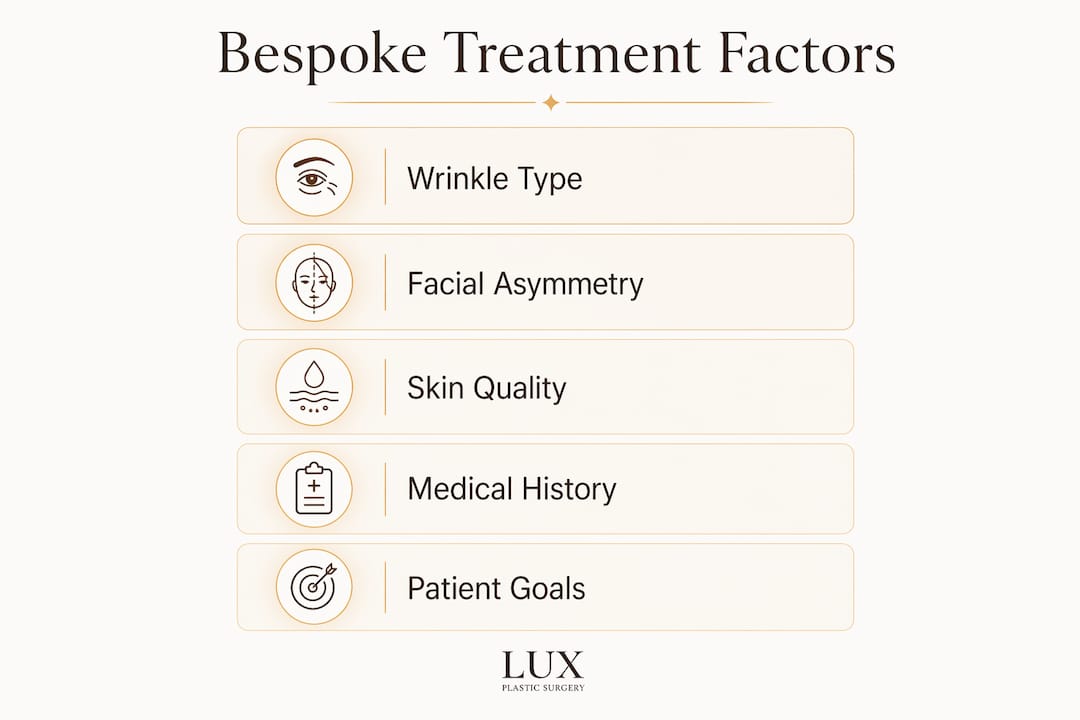
The clinical assessment behind a bespoke plan covers far more than the area a patient wants to address. Dynamic and static wrinkles require different treatment modalities, and confusing the two is one of the most common errors in non-personalised care. Dynamic wrinkles, caused by repeated muscle movement, respond quickly and dramatically to neurotoxins. Static wrinkles, present at rest, often need combination therapies and multiple sessions to achieve meaningful improvement.
| Factor | What the clinician assesses | Why it matters |
|---|---|---|
| Wrinkle type | Dynamic vs static presentation at rest and in motion | Determines whether neurotoxin, filler, or combination therapy is appropriate |
| Bone structure and asymmetry | Facial proportions, brow position, jaw shape | Guides injection sites, volumes, and which asymmetries to address first |
| Skin quality and elasticity | Hydration, laxity, prior treatment history | Influences product viscosity and whether skin resurfacing is needed alongside injectables |
| Muscle activity | Strength and pattern of facial muscle contraction | Affects dosage and placement of botulinum toxin to preserve natural expression |
| Internal health | Sleep quality, hormonal balance, stress levels | Optimised health foundations improve recovery and longevity of results |
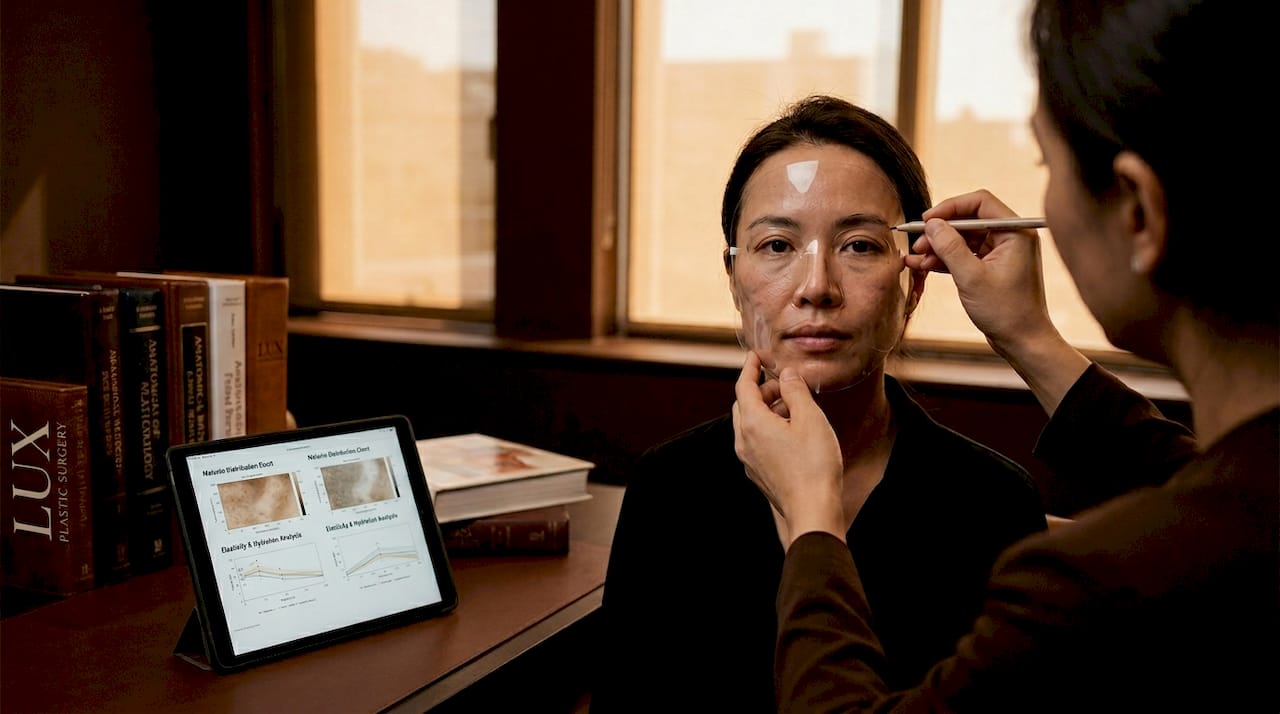
Identifying facial asymmetries during consultation allows the clinician and patient to prioritise treatment areas and set realistic expectations together. Most faces carry natural asymmetry. The goal of bespoke treatment is not to erase it but to work with it, creating balance without erasing character. Photographic documentation at baseline provides an objective reference that supports this process and protects both patient and clinician.
Skin quality deserves particular attention. A patient with thin, dehydrated skin and compromised elasticity needs a fundamentally different product selection to someone with thicker, more resilient tissue. Using a range of products matched to facial zones creates more balanced, natural enhancements than applying a single formula across the entire face.
Why does personalised treatment produce more natural aesthetic outcomes?
The most visible benefit of bespoke cosmetic care is the quality of the result. Natural-looking outcomes depend on respecting facial harmony rather than chasing an idealised template. When a clinician accounts for your specific bone structure, muscle patterns, and skin type, the result integrates with your face rather than sitting on top of it.
Gradual, staged treatments are a defining feature of this approach. Rather than addressing every concern in a single session, a bespoke plan sequences interventions to allow the clinician to assess response, adjust technique, and avoid over-treatment. This matters because tissue response varies between individuals and even between sessions for the same patient.
- Begin with a thorough dynamic facial assessment, observing movement and expression at rest and in animation
- Prioritise the areas of greatest concern to the patient, not the areas most visible to the clinician
- Start with conservative doses and review results at two weeks before considering additional treatment
- Introduce combination therapies only after baseline treatments have settled and been assessed
- Schedule maintenance based on visible muscle function returning, not on a fixed calendar interval
“The goal is never to make someone look treated. It is to make them look like themselves, only rested, refreshed, and confident. That only happens when the plan is built around the individual, not around a standard protocol.”
Patient trust grows substantially when providers listen, adapt, and tailor their recommendations rather than fitting patients into pre-set templates. This is not just a matter of satisfaction. It directly influences whether patients return, whether they refer others, and whether they feel safe disclosing concerns during follow-up appointments.
How does personalisation shape the full treatment journey?
The consultation is not a precursor to treatment. For experienced clinicians, the consultation is the treatment. It is where the clinical picture is formed, goals are clarified, and the entire plan is constructed. Comprehensive facial movement analysis and photographic documentation at baseline establish the foundation for every subsequent decision.
Setting realistic expectations is a core function of personalisation. A patient hoping to address deep static lines with a single session of botulinum toxin needs to understand that maximal wrinkle reduction is visible at two weeks and that static lines may require combination approaches over several months. This is not a limitation. It is an honest, patient-centred framework that prevents disappointment and builds long-term confidence in the process.
Maintenance scheduling is another area where personalisation outperforms rigid protocols. Muscle function returns gradually over three to four months after botulinum toxin treatment, but the precise timeline varies between individuals based on metabolism, muscle mass, and lifestyle. Re-treatment guided by the visible return of muscle contraction produces better results than booking appointments at uniform intervals regardless of clinical response.
- Track your results with photographs taken at the same angle and lighting at baseline, two weeks, and eight weeks post-treatment
- Note when expression lines begin to return, as this is your personalised indicator for maintenance timing
- Discuss lifestyle factors including sleep, hydration, and sun exposure with your clinician, as these directly affect how long results last
- Treat your maintenance appointment as a clinical review, not just a top-up booking
Pro Tip: A structured approach to aesthetics that prioritises internal health, skin quality, and facial structure before finesse treatments consistently produces better long-term results. Address the foundations before the details.
How do leading clinics deliver bespoke cosmetic care in practice?
Delivering genuinely personalised care requires more than good intentions. It demands clinic infrastructure, product diversity, and a culture that values individuality over efficiency.
Extended consultations are the first requirement. A fifteen-minute appointment cannot accommodate the depth of assessment needed to build a truly bespoke plan. Clinics that prioritise personalised consultation allocate time for dynamic facial assessment, full medical history review, photographic documentation, and shared decision-making before any treatment is agreed.
Product diversity is equally important. A clinic stocking only one or two filler formulations cannot match product viscosity and lift capacity to the specific anatomical needs of each patient. The most capable clinics maintain a broad product range precisely because different facial zones, tissue depths, and treatment goals require different solutions.
| Clinic capability | Why it supports personalised care |
|---|---|
| Extended consultation time | Allows thorough assessment and realistic goal-setting |
| Diverse product range | Enables precise matching of formula to anatomical zone |
| Photographic documentation | Provides objective baseline and post-treatment comparison |
| Structured follow-up protocol | Captures response, enables touch-ups, and guides maintenance |
| Ongoing patient education | Builds informed consent and long-term treatment confidence |
Staff training in anatomy, product behaviour, and combination therapies underpins all of this. A clinician who understands how hyaluronic acid behaves differently in the lips versus the tear trough, or how botulinum toxin interacts with existing filler, can make genuinely personalised decisions. Clinics that invest in this level of education produce consistently better outcomes and earn patient loyalty that no marketing budget can replicate.
Key takeaways
Personalised cosmetic treatment produces safer, more natural, and more satisfying outcomes because it matches every clinical decision to the individual’s unique anatomy, health status, and goals.
| Point | Details |
|---|---|
| Safety depends on personalisation | Medical history review before injectables prevents contraindications and adverse events. |
| Wrinkle type determines treatment | Dynamic wrinkles respond to neurotoxins; static wrinkles often need combination therapies over multiple sessions. |
| Natural results require facial respect | Accounting for asymmetry, bone structure, and muscle activity produces results that integrate with your face. |
| Maintenance is individual, not fixed | Re-treatment timing based on visible muscle return outperforms rigid calendar scheduling. |
| Internal health affects outcomes | Sleep, hormones, and stress levels directly influence recovery and how long results last. |
The case for restraint: a view from Lux Plastic Surgery
After working with patients across Bedford, London, and Manchester, the pattern that stands out most clearly is this: the treatments that generate the greatest satisfaction are almost never the most dramatic ones. They are the ones where the clinician listened carefully, moved slowly, and built a plan around the person rather than the procedure.
The risk in cosmetic medicine is not under-treatment. It is what I would call medicalised perfectionism. Patients who arrive with a list of features they want to change, driven by social media comparisons or a desire to look like someone else entirely, rarely achieve lasting satisfaction through volume or frequency of treatment. The patients who do achieve it are those whose clinicians helped them understand what their face needs, at this stage of their life, with their health foundations in place.
I have seen patients who had received years of standardised filler protocols elsewhere arrive looking fatigued and unnatural, not because the products were wrong, but because no one had assessed whether those products were right for them. Reversing that takes time, patience, and a genuinely bespoke approach.
The most powerful tool in aesthetic medicine is not a syringe. It is a thorough consultation with a clinician who treats your individuality as the starting point, not an inconvenience. If you are considering any cosmetic procedure, the quality of that first conversation will tell you everything you need to know about the quality of care that follows.
— Lux
Discover bespoke cosmetic care at Lux Plastic Surgery
At Lux Plastic Surgery, every patient receives a personalised treatment plan designed around their specific anatomy, skin health, and aesthetic goals, not a standard protocol applied to everyone who walks through the door.
Professor Sandip Hindocha and the Lux team offer extended consultations across Bedford, London, and Manchester, covering the full spectrum of surgical and non-surgical options. Whether you are exploring non-surgical aesthetic treatments for the first time or considering a more significant procedure, the process begins with listening to you. Explore the full range of expert cosmetic services available at Lux Plastic Surgery and book your consultation to start a treatment plan built entirely around you.
FAQ
What is personalised cosmetic treatment?
Personalised cosmetic treatment is the practice of tailoring aesthetic procedures to each individual’s anatomy, skin type, medical history, and goals rather than applying a standard protocol. It covers everything from product selection and dosage to treatment sequencing and maintenance scheduling.
Why is a consultation so important before cosmetic injectables?
A consultation allows the clinician to review your medical history, assess your facial anatomy, and identify any contraindications before treatment. Queensland Health mandates this step for all injectable procedures to protect patient safety and ensure the most appropriate options are selected.
How does wrinkle type affect treatment choice?
Dynamic wrinkles caused by muscle movement respond quickly to botulinum toxin, while static wrinkles present at rest often require combination therapies and multiple sessions. Identifying which type you have is a core part of any bespoke assessment.
How often should botulinum toxin be repeated?
Re-treatment timing should be guided by the visible return of muscle contraction rather than a fixed interval. Muscle function typically returns over three to four months, but individual metabolism and lifestyle mean the precise timing varies between patients.
Does internal health affect cosmetic treatment results?
Yes. Sleep quality, hormonal balance, and stress levels all influence how skin responds to treatment and how long results last. A structured approach that addresses these foundations before aesthetic procedures consistently produces better and more durable outcomes.