Medically reviewed by Professor Sandip Hindocha, GMC-registered Consultant Plastic Surgeon and NHS Clinical Director. Articles are reviewed against current UK guidance from the GMC, BAAPS, BAPRAS and NICE.
TL;DR:
- Nearly 93.5% of cosmetic surgeries in 2024 were performed on women, but facial procedure choices depend on individual goals and anatomy. Understanding the differences between surgical and minimally invasive options, along with personalised assessment, optimises satisfaction and safety. Expert guidance ensures decisions are evidence-based, realistic, and tailored to age, gender, and specific facial features.
Nearly 93.5% of cosmetic surgical procedures in 2024 were performed on women, according to the latest BAAPS audit, yet the confusion about choosing between surgical and non-surgical facial options affects everyone who walks through a consultation door. Whether you are drawn to the idea of a subtle rhinoplasty, a refreshed blepharoplasty, or simply wondering whether fillers might be enough, navigating the options without clear, personalised guidance can feel overwhelming. This guide breaks down what each approach genuinely offers, how UK data shapes those choices, and how to match the right procedure to your individual anatomy, age, and goals.
Key Takeaways
| Point | Details |
|---|---|
| Gender-driven demand | Women undergo nearly 94% of UK facial cosmetic surgeries, but men also pursue key procedures. |
| Surgical vs. non-surgical | Operative facial procedures offer lasting structural changes, while minimally invasive treatments are temporary and lower risk. |
| Personalised decisions | Anatomy, age, goals, and emotional readiness shape the ideal facial surgery approach. |
| Realistic expectations | Outcomes depend on clear communication and accepting improvement over perfection. |
| Recovery and risks | Surgery requires preparation for recovery and managing risks, with evidence-based strategies for optimal results. |
Understanding facial plastic surgery in the UK
Facial plastic surgery is a broad term. It covers everything from major structural operations under general anaesthetic to quick lunchtime appointments for botulinum toxin injections. Understanding the full spectrum is the essential first step before evaluating surgery options that truly suit your circumstances.
At its most surgical end, facial plastic surgery includes rhinoplasty (reshaping of the nose), face and neck lifts, and blepharoplasty (eyelid correction). These are performed in theatre, require recovery time, and deliver lasting, structural change. At the minimally invasive end sit botulinum toxin injections and dermal fillers, which work on the surface, require no theatre time, and wear off over months. There is also a meaningful middle ground: treatments such as thread lifts and skin resurfacing procedures sit between those two poles. Knowing the surgery benefits and safety profile of each category helps you set realistic expectations long before your consultation.
People seek facial procedures for a variety of reasons, including:
- Improving specific features they have been self-conscious about for years
- Addressing signs of ageing such as sagging skin, deepening lines, or drooping eyelids
- Restoring facial balance following weight loss, illness, or injury
- Boosting confidence ahead of major life events
- Complementing other body procedures already undertaken
“Women received 25,663 cosmetic surgical procedures and men 1,799 in 2024, with women accounting for 93.5% of procedures.”
The following table illustrates how procedure preferences vary by gender in the UK, based on 2024 BAAPS audit data:
| Procedure | Women (2024) | Men (2024) |
|---|---|---|
| Blepharoplasty | 2,818 | 320 |
| Face/neck lift | 1,742 | 140 |
| Rhinoplasty | 1,606 | 332 |
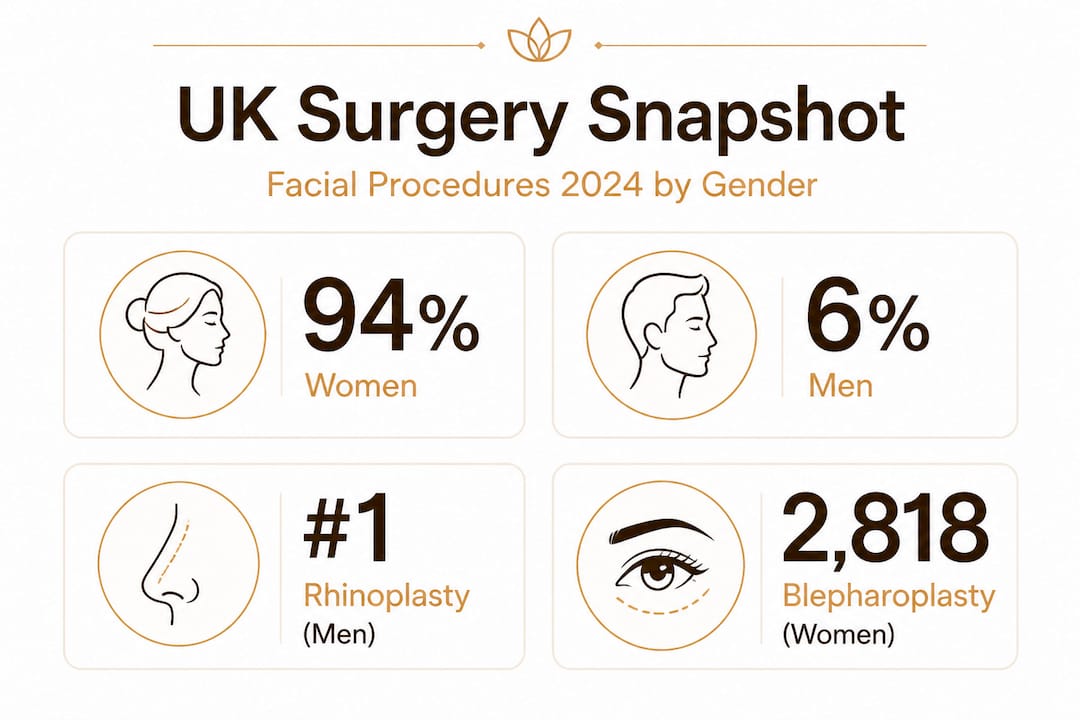
What stands out in this data is that rhinoplasty is proportionally the most popular procedure among men, suggesting that nose reshaping is a strong motivator across genders. The BAAPS figures confirm that key facial procedures differ in volume but not necessarily in the underlying desire for natural-looking improvement. For non-surgical facial reshaping, preferences also vary considerably, which is why reading a solid non-surgical facial reshaping guide is worth your time before committing to any path.
Comparing operative and minimally invasive options
Understanding that both surgical and non-surgical routes exist is one thing. Knowing exactly how they differ in terms of mechanism, durability, and risk helps you make a genuinely informed choice rather than a pressured one.
Surgical procedures alter the physical structure of the face. A rhinoplasty reshapes cartilage and bone. A face lift repositions and tightens underlying tissue layers. A blepharoplasty removes or redistributes fat and skin around the eyelids. These changes are durable, often lasting many years or permanently, and require a meaningful recovery period. Non-surgical treatments, by contrast, work on the surface. Botulinum toxin relaxes specific muscles to reduce dynamic wrinkles, while fillers add volume or definition to areas such as the lips, cheeks, and jawline. According to BAPRAS botulinum toxin facts, botulinum toxin smooths wrinkles within a week, wears off after two to three months, and fillers typically last six months to two years depending on the product and area treated.
| Factor | Surgical procedures | Minimally invasive treatments |
|---|---|---|
| Mechanism | Structural changes to tissue/bone/cartilage | Surface volume, muscle relaxation |
| Durability | Often permanent or long-lasting (years) | Temporary (2 months to 2 years) |
| Recovery time | Days to weeks | Hours to days |
| Typical risks | Scarring, anaesthetic risks, infection | Bruising, migration, rare vascular events |
| Cost per session | Higher (one-off) | Lower (but repeated) |
Advantages of surgical procedures:
- Long-lasting or permanent structural improvement
- One procedure rather than repeated treatments
- Addresses concerns that fillers cannot correct, such as a deviated septum or significant skin laxity
Advantages of minimally invasive treatments:
- Lower immediate risk profile
- No general anaesthetic required
- Ability to try a change before committing to surgery
- Rapid return to daily activities
Disadvantages worth noting:
- Non-surgical results require ongoing maintenance costs
- Surgical procedures carry a longer, more demanding recovery
- Both carry risks when performed by unqualified practitioners
Pro Tip: Avoid permanent or long-lasting fillers marketed as semi-permanent. Clinical evidence consistently shows these carry higher rates of late complications including granulomas and migration, which can be difficult to treat. Reputable practitioners offering expert dermal fillers will always discuss product longevity and reversal options before treatment.
Personalisation: Matching procedures to individual goals
The most common mistake people make when researching facial plastic surgery is focusing on a specific procedure rather than a specific goal. The procedure should follow the goal, never the other way around. A surgeon who specialises in non-surgical reshaping guide approaches will tell you the same thing: your anatomy sets the parameters, not the trend on social media.
According to the BAPRAS rhinoplasty guide, rhinoplasty outcomes depend on nose size, skin condition, and patient age, and clear communication about expectations is critical to satisfaction. Critically, purely cosmetic rhinoplasty is not usually available on the NHS, meaning you will be funding this privately and deserve absolute transparency about what is achievable.
Here is a practical framework for personalising your decision:
- Start with a thorough consultation — a qualified surgeon should assess your facial anatomy, skin quality, and overall health before recommending anything
- Anatomy assessment — your surgeon should identify structural factors that will affect both the procedure choice and the achievable outcome
- Goal setting — articulate what you want to change, what you want to preserve, and what outcome would make you feel genuinely satisfied, not just different
- Outcome review — ask to see before-and-after examples of patients with similar anatomy, not just idealised images
- Aftercare planning — understand what support is included post-procedure; the importance of aftercare cannot be overstated in terms of both safety and result quality
“Surgery may not resolve emotional or social issues attributed to appearance.” BAPRAS Rhinoplasty Guide
This statement from BAPRAS is important. It is not a deterrent from surgery. It is a reminder that the most satisfied patients are those who undergo procedures with clear, realistic goals rooted in physical improvement rather than solutions to broader emotional challenges. This is also why choosing a surgeon who asks probing questions about your motivations is actually a good sign, not an obstacle.
Pro Tip: Most cosmetic facial procedures are not NHS-funded if they are purely aesthetic. Budget realistically, and factor in aftercare, potential revision costs, and time off work when comparing providers.
Age and gender also shape the right approach considerably. A woman in her late thirties seeking to address early jowling may be an excellent candidate for a combination of fillers and thread work, or may benefit more from a surgical face lift if the laxity is significant. A man in his forties concerned about his nasal bridge needs a surgeon experienced in male rhinoplasty, where aesthetic goals and structural considerations differ from female rhinoplasty norms. These nuances are why generic online advice has limits.
Expected outcomes, recovery and managing risks
Choosing your procedure is only the beginning. Understanding what to expect during recovery and how to protect your results is equally important for long-term satisfaction.

For surgical procedures, timelines vary, but rhinoplasty provides a useful benchmark. According to BAPRAS clinical guidance, rhinoplasty operations last 90 to 180 minutes, involve a hospital stay of one to two nights, require splint tape for seven days, and show tip changes in approximately 60% of patients by three weeks, with further changes continuing over several months up to a year. This means patience is genuinely part of the process.
Key recovery milestones across common facial procedures:
- Rhinoplasty: Splint removed at one week; social presentability at two to three weeks; final result visible at 12 months
- Blepharoplasty: Bruising resolves at two weeks; final result visible at six to eight weeks
- Face/neck lift: Initial swelling subsides at three to four weeks; full result at three to six months
- Botulinum toxin: Effects visible within five to seven days; no meaningful downtime
- Dermal fillers: Immediate result with minor swelling resolving in 24 to 48 hours
| Procedure | Operation time | Hospital stay | Initial recovery | Full result |
|---|---|---|---|---|
| Rhinoplasty | 90–180 minutes | 1–2 nights | 2–3 weeks | Up to 12 months |
| Blepharoplasty | 60–90 minutes | Day case | 1–2 weeks | 6–8 weeks |
| Face/neck lift | 3–5 hours | 1–2 nights | 3–4 weeks | 3–6 months |
| Botulinum toxin | 15–30 minutes | None | Hours | 5–7 days |
A 2020 rhinoplasty outcome study published in PRS Global Open found that endonasal rhinoplasty showed a higher columella correction rate of 90% compared to 67% for open rhinoplasty, a statistically significant difference that underscores why surgical technique choice matters enormously.
Managing risks starts before the procedure. Detailed guidance on cosmetic surgery recovery and dedicated recovery tips from experienced teams help patients avoid the most common setbacks. Beyond the physical, managing dissatisfaction is an emotional process too. BAPRAS advises accepting improvement rather than pursuing repeated surgery, because revision procedures carry incrementally higher risks and do not always deliver incrementally better results.
Why personalised, evidence-based decisions matter more than ever
We have seen a significant shift in how people approach facial plastic surgery over the past decade. The volume of online before-and-after content has created an illusion that outcomes are predictable and universal, when in reality they are deeply individual. This matters practically, not just philosophically.
The one-size-fits-all approach to facial surgery is not just outdated, it is genuinely risky. A patient who chooses a rhinoplasty based on a celebrity nose rather than their own facial proportions is setting up a mismatch between expectation and anatomy. A patient who pursues repeated non-surgical treatments in pursuit of a surgical result is accumulating costs and, eventually, complications without ever addressing the underlying structural issue. True satisfaction in facial aesthetics comes from aligning the best available medical science with your specific identity, anatomy, and emotional readiness.
Evidence from BAPRAS reinforces this clearly: “surgery alone may not resolve emotional or social issues attributed to appearance.” This is one of the most important things a prospective patient can internalise. The patients who report the highest satisfaction rates are consistently those with specific, anatomy-based goals and a clear understanding of the procedure’s limitations.
Gender is another underappreciated factor. Men and women not only seek different procedures in different volumes, they have different anatomical norms, healing profiles, and aesthetic goals. A surgeon with strong expert plastic surgery advice experience will tailor their recommendations accordingly rather than applying a gender-neutral template. Reading about plastic surgery explained in full, from both a scientific and emotional standpoint, builds the kind of informed confidence that leads to good outcomes.
Age shapes everything from skin elasticity to healing speed and expected longevity of results. A 30-year-old and a 50-year-old seeking a similar outcome may need entirely different approaches. Evidence-based personalisation is not a luxury feature of premium care. It is the minimum standard you should expect.
Connect with expert facial plastic surgery guidance
Understanding the options is the foundation, but translating that knowledge into confident, safe action is where professional guidance becomes essential.
At Lux Plastic Surgery, Professor Sandip Hindocha and the team work with patients across Bedford, London, and Manchester to create genuinely bespoke treatment plans. Whether you want to discover surgery options that match your anatomy and goals, explore tailored facial rejuvenation advice for your age group, or understand which non-surgical treatments might deliver the results you are looking for, a consultation with an award-winning specialist is the most valuable next step you can take. Book yours today and start making decisions rooted in evidence, expertise, and your individual needs.
FAQ
How long do facial fillers and botulinum toxin results typically last?
Botulinum toxin effects last around two to three months, while fillers and botulinum toxin products typically provide results lasting six months to two years depending on the product used.
Is it normal to experience dissatisfaction after facial plastic surgery?
Some patients are dissatisfied initially, and BAPRAS recommends accepting improvement rather than pursuing repeated surgery, which carries incrementally higher risks with each revision.
Are purely cosmetic surgeries available on the NHS?
Most cosmetic facial surgeries undertaken for purely aesthetic reasons are not NHS-funded; cosmetic rhinoplasty is a clear example of a procedure that is not usually available on the NHS.
What factors influence the outcome of facial plastic surgery?
Outcomes are shaped by anatomy, age, skin quality, and clear communication with your surgical team, as rhinoplasty outcomes illustrate well in clinical guidance.
What is a typical recovery timeline after rhinoplasty?
Most people spend one to two nights in hospital after rhinoplasty, with visible changes appearing at around three weeks and the final result emerging progressively over up to twelve months.