The neck is one of the first places to reveal your age. Loose skin, vertical banding, and that stubborn “turkey neck” beneath the jaw can all undermine confidence, even when the rest of your face looks relatively youthful. For many adults across the UK, neck lift surgery represents a genuine, long-lasting solution rather than a temporary fix. But with so many clinics, techniques, and surgeons to consider, knowing where to start and how to stay safe can feel overwhelming. This guide walks you through every stage: what the procedure involves, how to prepare, what recovery looks like, and the surgeon qualifications you genuinely cannot afford to overlook.
Key Takeaways
| Point | Details |
|---|---|
| Neck lift is low-risk | Major complications are rare, with a 1.78% risk rate reported in studies. |
| Satisfaction rates are high | Most patients report a 94% satisfaction rate when surgery is tailored to their anatomy. |
| Preparation shapes outcome | Thorough consultation and qualified surgeon selection are crucial for best results. |
| Aftercare is essential | Adhering to postoperative care helps speed recovery and minimise scarring. |
| Results depend on lifestyle | Long-term satisfaction is influenced by ongoing self-care and the natural ageing process. |
Understanding neck lift surgery: benefits, risks and expectations
A neck lift, known medically as a lower rhytidectomy, is a surgical procedure designed to remove excess skin, tighten underlying muscles, and redefine the jaw and neck contour. It directly targets the structural causes of neck ageing rather than simply filling or masking them. The procedure is one of the most popular facial rejuvenation surgeries in the UK, and its appeal lies in how targeted and durable the results are compared to non-surgical alternatives.
People seek neck lift procedure details for a variety of reasons. The most common motivations include sagging skin that has lost elasticity, excess fatty tissue beneath the chin, and prominent platysmal bands (the vertical cords visible in the neck as the underlying muscle weakens with age). Weight loss, genetics, and sun damage can all accelerate these changes, and many patients find that no amount of exercise or skincare makes a meaningful difference once the structural laxity sets in.
Key benefits of neck lift surgery include:
- Improved definition along the jawline and beneath the chin
- Smoother, firmer neck skin with reduced banding
- A more youthful and proportionate facial profile
- Long-lasting results compared to non-surgical treatments
- Improved confidence in social, professional, and personal settings
Suitability is not determined solely by age. Surgeons assess anatomy, skin quality, fat distribution, muscle tone, and overall health. Someone in their forties with significant laxity may be a stronger candidate than someone in their sixties with good tissue quality. This distinction matters enormously.
On the safety side, it is important to approach the decision with clear, evidence-based information. Risks include swelling, bruising, infection, scarring, asymmetry, and rarely, nerve injury. The complication rate of approximately 1.78% reported in a study of 450 patients suggests that serious complications are uncommon when surgery is performed by a skilled practitioner in an appropriate clinical setting. Understanding these numbers helps you weigh the procedure’s genuine risk profile without either dismissing or exaggerating the concerns.
When comparing procedures, understanding the difference between a face lift versus neck lift is important. A face lift addresses the mid and lower face as well as the neck, whilst a neck lift focuses exclusively on the neck and jaw region. Your surgeon will recommend the right approach, or combination of approaches, based on your individual anatomy and goals.
Preparing for your neck lift: steps, questions and essentials
Once you understand the risks and rewards, it is vital to prepare properly for the best possible results. Preparation is not merely administrative. It is genuinely clinical, and the quality of your preparation has a direct bearing on your safety and your outcome.
Selecting a qualified surgeon is the single most important decision you will make. In the UK, look for a surgeon registered with the General Medical Council (GMC) and listed on the Specialist Register for Plastic Surgery. Fellowship of the Royal College of Surgeons (FRCS) with a plastic surgery subspecialty is a strong indicator of formal training. Membership of the British Association of Aesthetic Plastic Surgeons (BAAPS) signals a commitment to ethical practice and ongoing education.
At your initial neck lift consultation guide, these are the questions you should bring with you:
- How many neck lift procedures have you performed, and can I see before-and-after images?
- What technique do you recommend for my anatomy, and why?
- What type of anaesthesia will be used, and who administers it?
- What is your specific protocol for managing complications?
- What does aftercare include, and how accessible are you post-surgery?
- Are there any aspects of my health or lifestyle that could increase my risk?
Research shows that satisfaction rates of 94% have been recorded in patient series, and choosing based on anatomy rather than age is a key factor in achieving such outcomes. This should guide your consultation conversation from the very beginning.
When considering your facial surgery overview, it is worth understanding how a neck lift sits within a broader suite of facial procedures. Some patients benefit from combining a neck lift with a brow lift, eyelid surgery, or fat transfer for a more balanced, harmonious result.
| Procedure | Target area | Typical duration | Usual recovery |
|---|---|---|---|
| Neck lift | Jaw, neck, submental area | 2 to 3 hours | 2 to 4 weeks |
| Face lift | Mid and lower face, neck | 3 to 5 hours | 3 to 6 weeks |
| Brow lift | Forehead, brow position | 1 to 2 hours | 1 to 2 weeks |
This comparison helps you explore choosing the right procedure in an informed way before committing to any surgical plan.
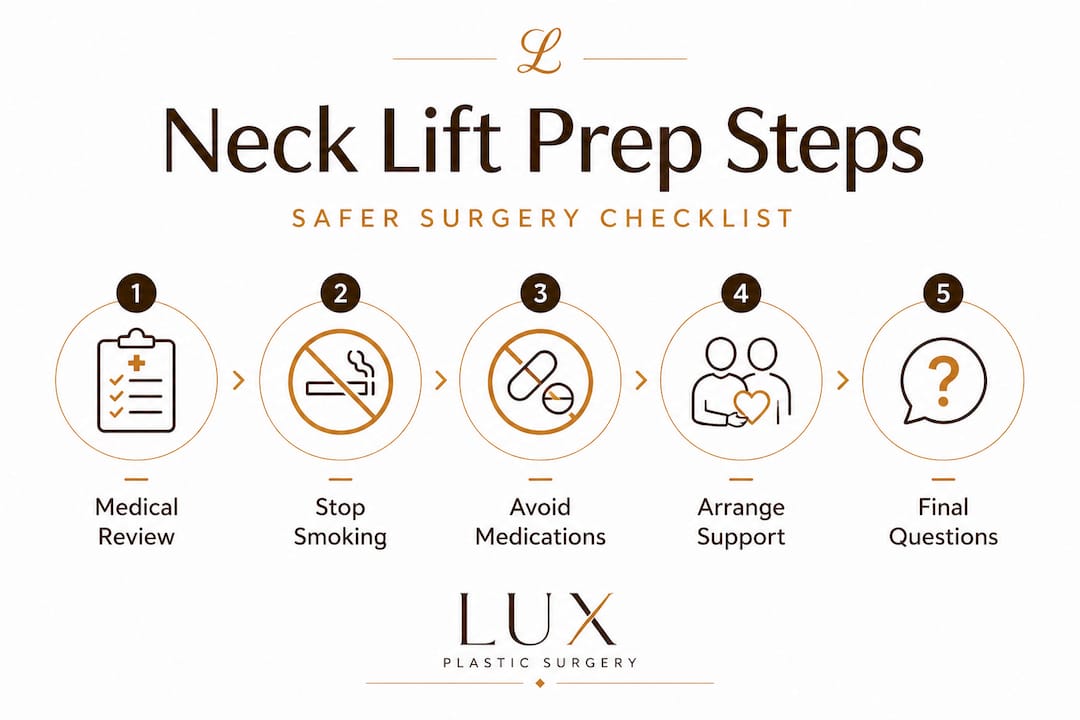
Pre-surgery preparation steps include stopping smoking at least six weeks before surgery, avoiding blood-thinning medications such as aspirin and ibuprofen unless medically essential, arranging post-operative support at home, and attending all pre-operative assessments your surgical team requires.
Pro Tip: Bring a list of all supplements you take, not just prescribed medications. Supplements like fish oil, vitamin E, and St John’s Wort can all increase bleeding risk and must be disclosed to your surgeon before the procedure.
What happens during neck lift surgery: step-by-step process
After appropriate preparation, you are ready for the procedure itself. Here is exactly what will take place on the day of your neck lift, so that nothing comes as a surprise.
- Arrival and anaesthesia: You will be welcomed by the nursing team and reviewed by the anaesthetist. Neck lift surgery is typically performed under general anaesthesia or intravenous sedation combined with local anaesthesia, depending on the extent of the procedure and surgical preference.
- Incisions: The surgeon makes carefully placed incisions. These are usually positioned just behind the ears, continuing into the natural hairline at the back of the head, and sometimes through a small incision beneath the chin. Placement is planned to ensure scarring remains discreet and well-concealed.
- Tissue work: Depending on your anatomy, the surgeon will remove or reposition excess fat, tighten the platysma muscle (the sheet of muscle running along the front of the neck), and redrape the overlying skin for a natural, smooth result.
- Closure: Incisions are closed with fine sutures, and drains may be placed temporarily to prevent fluid build-up. A supportive bandage or compression garment is applied immediately.
- Recovery room: You will be monitored in a recovery area until the anaesthetic has worn off sufficiently and your observations are stable before being moved to a ward or discharged.
“The key to natural-looking results lies in respecting each patient’s unique anatomy. The goal is never to make someone look ‘done’, but to restore what time has taken away.” This principle sits at the heart of skilled neck lift surgical procedure planning.
Most neck lift procedures are performed as day cases or with a single overnight stay, depending on the surgical plan and each patient’s clinical needs. The low overall complication rate of 1.78% in published research reflects the benefit of thorough pre-operative screening and careful surgical technique. Immediate post-operative sensations include tightness, mild pain, and swelling, all of which are expected and manageable with prescribed pain relief.
Recovery and aftercare: minimising risks and maximising results
Surgery is only one part of the journey. What you do after your neck lift is crucial for beautiful, lasting results. Recovery is where patience becomes your most important tool.

In the first 48 hours, rest is essential. Keep your head elevated, even whilst sleeping, to reduce swelling. Avoid any activity that increases blood pressure, including bending, lifting, or straining. Your wound sites need to be kept clean and dry according to your surgeon’s specific instructions, and you should take prescribed antibiotics and pain relief as directed.
Signs and symptoms that are completely normal during recovery:
- Swelling and bruising, which typically peaks around days three to five
- Temporary numbness or altered sensation around the jaw and ears
- Skin that feels tight or slightly uneven as healing progresses
- Mild discomfort when turning the head or opening the mouth widely
Signs that require prompt medical attention:
- Sudden, severe, or worsening pain not controlled by medication
- Excessive redness, heat, or discharge from wound sites indicating possible infection
- Significant asymmetry in swelling suggesting possible haematoma (blood collection)
- Facial weakness or changes in movement that may indicate nerve involvement
Following aftercare essentials consistently is not optional. It is a clinical commitment. Many patients underestimate how much the recovery period contributes to the final result. Attending all follow-up appointments allows your surgical team to monitor healing, address concerns early, and adjust recommendations based on your progress.
To give yourself the best chance of smooth, quick healing, review these quick recovery tips and explore scar minimisation strategies once your wounds have closed. Silicone sheets and SPF protection over scar sites are well-evidenced approaches that can make a genuine difference to long-term scar appearance.
Understanding post-op expectations helps you stay calm and informed throughout the healing process, rather than alarmed by normal but unexpected changes.
The complication rate of 1.78% reported in published research underlines that serious complications are uncommon, but your behaviour during recovery plays a meaningful role in keeping your personal risk within that reassuring range.
Pro Tip: Sleep on your back with two pillows for at least three weeks post-surgery. Pressure on the neck from side sleeping can affect healing and temporarily worsen swelling, even when you feel comfortable enough to change position.
Results, satisfaction, and long-term outlook
With good recovery comes the reward. What you can realistically expect from your neck lift, both now and in the years ahead, depends on several interconnected factors.
Most patients notice a dramatically improved neck contour within three to four weeks, though full results become visible once swelling has completely resolved, typically between three and six months. The skin appears smoother and firmer, the jawline is better defined, and the neck profile looks genuinely more youthful rather than simply different.
Research consistently supports this positive picture. A 94% patient satisfaction rate recorded in one clinical series is a compelling figure, and it reflects the targeted nature of the procedure when matched correctly to the right candidate.
Results typically last between five and ten years, though this varies based on several factors. Skin quality and thickness affect how well the tissues hold their repositioned structure over time. Lifestyle choices, particularly sun exposure, smoking, and significant weight fluctuations, can accelerate the return of laxity. Genetics also play a role; some patients maintain excellent results well beyond a decade.
To maintain results for as long as possible, consider a high-quality skincare routine, consistent sun protection, a stable body weight, and avoidance of smoking. Exploring the long-term benefits of facial rejuvenation surgery reveals a broader picture of improved wellbeing, confidence, and quality of life that many patients report extending far beyond the physical result. For those interested in a more holistic transformation, reviewing facial surgery results across different procedures helps set realistic and motivating expectations.
Choosing the right surgeon: what most people overlook
Here is something most guides do not say directly enough. The technical skill of your surgeon matters, but it is not the only variable that determines your outcome. What often separates a genuinely excellent result from a merely acceptable one is the quality of communication, the depth of pre-operative planning, and the surgeon’s willingness to tailor their technique to your specific anatomy rather than applying a formulaic approach.
Most patients research before-and-after images and focus heavily on aesthetic outcome. Fewer ask the harder questions: Does this surgeon explain trade-offs honestly? Do they tell you when they think a different procedure would serve you better? Are they accessible after surgery when concerns arise at 11pm? These questions reveal the character of a surgeon as much as their technical repertoire.
The evidence from research on patient satisfaction points clearly to anatomy-led decision-making as a cornerstone of achieving high satisfaction rates. This only happens when a surgeon invests genuine time in understanding you as an individual rather than categorising you by age or working from a standard template.
Cost is another area where caution is warranted. Significantly lower prices frequently reflect compromises in surgical time, anaesthetic expertise, facility standards, or post-operative follow-up. A surgeon who rushes the pre-operative conversation to fill appointment slots is showing you exactly what your post-operative care will look like. Choosing based on a flashy website or celebrity endorsement, without verifying GMC registration and specialist training, is a risk that no cosmetic outcome is worth taking.
Reviewing a surgeon expertise guide before your initial consultation equips you to ask better questions, interpret answers more critically, and ultimately select a practitioner who gives your safety and result the priority both deserve.
Explore expert-led, personalised neck lift care
With a clearer understanding of your options and the factors that influence your outcome, you may be ready to take the next step toward a rejuvenated profile.

At Lux Plastic Surgery, Professor Sandip Hindocha and the team bring award-winning surgical expertise together with a genuinely personalised approach to every patient journey. Whether you are ready to book a neck lift consultation or simply want to understand your options more clearly, the clinic offers thorough pre-operative assessments across Bedford, London, and Manchester. You can review qualified surgeon credentials in advance and explore a full breakdown of safe cosmetic surgery steps to feel confident and informed before committing to any surgical pathway.
FAQ
How long does it take to recover from neck lift surgery?
Full recovery usually takes 2 to 4 weeks, although most visible swelling resolves within 10 to 14 days. The overall complication rate remains low when aftercare instructions are followed carefully.
Is neck lift surgery suitable for older adults?
Suitability is determined by skin quality and anatomy rather than age alone, so older adults in good health can be excellent candidates. Research consistently shows that anatomy-led assessment produces the highest satisfaction outcomes regardless of patient age.
What are the main risks of neck lift surgery?
Risks include swelling, bruising, infection, scarring, asymmetry, and rarely nerve injury. Published data places the overall complication rate at approximately 1.78% in carefully screened patients.
How long do neck lift results last?
Results typically last between 5 and 10 years, depending on skin type, lifestyle habits, and natural ageing processes. Sun protection, a stable weight, and avoiding smoking all help to maintain results for longer.
How can I ensure the best outcome from neck lift surgery?
Choose a GMC-registered surgeon with specialist plastic surgery training, follow all aftercare instructions precisely, and attend every post-surgery review without exception. Evidence shows that patient satisfaction reaches 94% when both surgeon selection and aftercare are handled well.