Medically reviewed by Professor Sandip Hindocha, GMC-registered Consultant Plastic Surgeon and NHS Clinical Director. Articles are reviewed against current UK guidance from the GMC, BAAPS, BAPRAS and NICE.
TL;DR:
- Dermal fillers vary widely in composition, safety, and longevity, making expert injection technique crucial for optimal results.
- Choosing a qualified, experienced clinician with appropriate training and safety protocols is essential to minimise risks and manage complications effectively.
Not all dermal fillers are the same, and that single misconception leads more people into disappointing or even dangerous outcomes than almost anything else in aesthetic medicine. If you have been searching for clear answers about what is dermal filler, how the different types compare, and whether the treatment is genuinely safe, you are in exactly the right place. This guide covers everything from the science behind how fillers work to the questions you should ask before you book a single appointment, all written with UK adults in mind.
Key Takeaways
| Point | Details |
|---|---|
| Variety of fillers | Dermal fillers include several types with different materials and effects to suit your treatment goals. |
| Safety depends on skill | Choosing a qualified and experienced injector is crucial to minimise risks and ensure safe outcomes. |
| Results last 6-24 months | Longevity varies by product and treatment area, not a one-size-fits-all duration. |
| Aftercare matters | Report any unusual symptoms promptly as some complications may occur long after treatment. |
| Injector expertise over brand | The skill in injection technique and anatomy knowledge is more important than the filler brand used. |
What are dermal fillers and how do they work
A dermal filler is a gel-like substance injected beneath the skin to restore lost volume, smooth wrinkles, or reshape facial features without surgery. The key word there is substance, because dermal filler categories vary enormously in composition, longevity, and what they are best suited for.
Filler types differ by active ingredient and mechanism: hyaluronic acid, calcium hydroxylapatite, collagen, poly-L-lactic acid, and permanent options such as synthetic microspheres or silicone each behave differently in the tissue. Understanding this is not just academic. It directly affects how long your results last, how reversible the treatment is, and what happens if something goes wrong.
Hyaluronic acid (HA) is by far the most widely used filler in the UK. It is a sugar molecule that occurs naturally in the body, which makes it well tolerated and, crucially, reversible. An enzyme called hyaluronidase can dissolve HA filler quickly in an emergency, which is a significant safety advantage no other mainstream filler category offers.
Here is a breakdown of the most common types:
- Hyaluronic acid fillers: Biodegradable, reversible, suitable for lips, cheeks, and lines. Brands include Juvederm and Restylane.
- Calcium hydroxylapatite (CaHA): A mineral-like compound that also stimulates collagen production. Longer lasting than HA and not reversible.
- Poly-L-lactic acid (PLLA): A collagen stimulator that works gradually over months rather than delivering instant volume.
- Collagen-based fillers: Less common now but still used; derived from bovine or human sources.
- Permanent fillers: Synthetic microspheres or silicone remain indefinitely. Higher risk profile and rarely recommended by experienced clinicians.
- Autologous fat transfer: Your own fat is harvested, processed, and re-injected. Longest lasting but involves a more involved procedure.
Each filler works by being deposited at a specific depth within the facial tissue, where it physically adds volume, attracts water molecules (in the case of HA), or triggers the body’s own collagen response. The injection plane matters enormously, which is why the same product in different hands can produce completely different results.
Safety considerations and risks of dermal fillers
This is the section most people skip, and it is the one they most need to read. Dermal filler treatment carries a real safety profile, and being informed before you sit in the chair is not paranoia; it is sensible.
The good news is that most side effects resolve within days or weeks: swelling, bruising, redness, and injection-site tenderness are all common and temporary. They are the body’s normal response to needles and foreign material, and they are rarely cause for concern.
Common side effects include:
- Swelling and oedema at the injection site, particularly around the lips and under the eyes
- Bruising, which can look dramatic but typically fades within one to two weeks
- Redness and tenderness that usually settles within 48 to 72 hours
- Asymmetry in the first few days while swelling is uneven
- Lumps or nodules, which may be temporary or, with permanent fillers, long-lasting
Rare but serious complications are a different matter entirely. Vascular occlusion, where filler is inadvertently injected into or compresses a blood vessel, can cut off the blood supply to surrounding tissue. The result can be skin necrosis (tissue death), scarring, or in the most serious cases involving vessels near the eye, permanent vision loss from intravascular injection. These are genuine medical emergencies.
The difference between a complication being managed and a complication becoming catastrophic often comes down to one thing: whether the person holding the syringe recognised the warning signs immediately and knew exactly what to do.
This is not written to frighten you. It is written to be honest. The risk of serious complications in the hands of a qualified, experienced clinician is low. In the hands of someone without proper anatomical training, that risk rises substantially.
Choosing safe cosmetic procedures means verifying that your injector has a genuine medical background, not simply a certificate from a weekend course. Similarly, understanding what aesthetic clinic safety looks like in practice will help you recognise a clinic that takes these risks seriously.

Pro Tip: Ask any potential injector directly: “Do you carry hyaluronidase, and have you managed a vascular occlusion before?” Their answer will tell you more than any website testimonial.
Effectiveness and typical longevity of dermal fillers
Knowing how long your results will last is essential for budgeting and planning, but the honest answer is: it depends. Results last from 6 to 24 months depending on the filler material and the area treated, and individual variation is significant.
Several factors influence longevity:
- Filler type: HA fillers in the lips often last six to nine months; HA cheek filler may last twelve to eighteen months. CaHA and PLLA tend to outlast HA.
- Facial area: High-movement areas like the lips metabolise filler faster than lower-movement areas like the cheeks or temples.
- Injection depth: Deeper placements, particularly onto bone, generally last longer than superficial injections.
- Individual metabolism: Some people simply break down filler faster. Smokers and those with very active lifestyles tend to see shorter results.
The table below gives a practical reference for expected durations by filler type:
| Filler material | Typical duration | Reversible? |
|---|---|---|
| Hyaluronic acid | 6 to 18 months | Yes, with hyaluronidase |
| Calcium hydroxylapatite | 12 to 18 months | No |
| Poly-L-lactic acid | 18 to 24 months | No |
| Collagen-based | 3 to 6 months | Limited |
| Permanent microspheres | Indefinite | No |
| Autologous fat | Variable, potentially permanent | Partial |
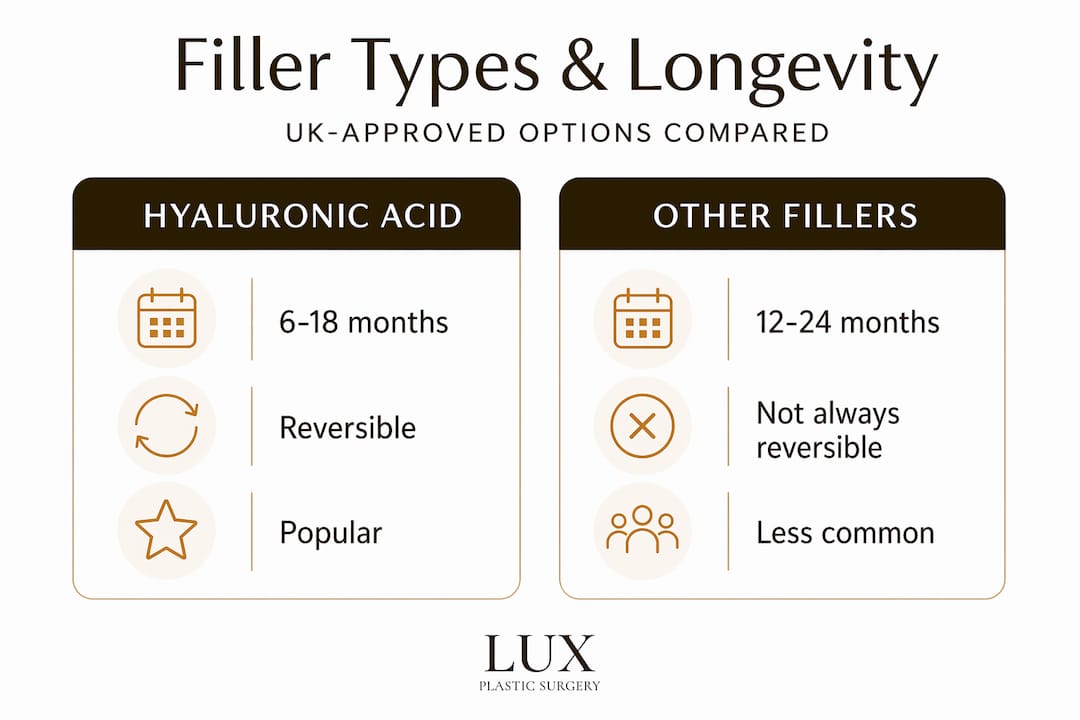
It is also worth understanding that lip enhancement longevity behaves differently from cheek or jawline filler, even when using the same product. Managing expectations around this from the outset prevents disappointment and over-treatment down the line.
Dermal fillers vs Botox is a comparison that comes up constantly. They are fundamentally different treatments. Botox relaxes the muscles that cause dynamic wrinkles (the kind that appear when you move). Fillers add volume and address static lines, those present when your face is at rest. Many people benefit from both, used together in a considered treatment plan.
Choosing the right clinic and practitioner for dermal fillers
The filler product is almost secondary to the person administering it. This cannot be overstated. A skilled, medically trained injector will achieve a natural result with a mid-range product far more reliably than an untrained person using the most expensive filler on the market.
Here are the key questions to ask before committing to any dermal filler treatment:
- What are your medical qualifications? Doctors, dentists, nurses, and pharmacists are the professional categories regulated to administer fillers in the UK. Always verify.
- How many filler procedures have you performed? Volume of experience matters, but so does specialisation. Ask specifically about the area you want treated.
- Is this clinic registered with the Care Quality Commission (CQC)? CQC registration is a baseline indicator of clinical standards in England.
- Do you carry hyaluronidase on-site? If a clinic offering HA fillers does not carry this reversal agent, walk away.
- What does your aftercare protocol look like? A reputable clinic will have a clear process for managing any concerns post-treatment, including access to the injector.
- Can I see before-and-after photographs of real patients? Stock images are not evidence. Ask for actual patient results.
Selecting safe cosmetic clinics requires the same due diligence you would apply to any medical procedure. Similarly, understanding what to look for in a certified surgeon or clinician will ground your decision-making in quality rather than convenience.
Practitioner training is essential for both preventing and managing adverse events. That is not a marketing line; it is a clinical reality. A private surgery safety guide can help you navigate what questions to ask across different types of aesthetic treatments.
Pro Tip: Always book an in-person consultation before any treatment. If a clinic offers to skip the consultation and go straight to injecting, that is a red flag, not a convenience.
Why injector expertise matters more than the filler brand
Here is something the aesthetics industry rarely tells you plainly: the marketing around filler brands is largely irrelevant to your outcome. The conversations patients have about which brand is “best” miss the point entirely. A filler brand cannot save you from poor injection technique. A premium product deposited in the wrong anatomical plane, or worse, into a facial vessel, causes exactly the same damage as a cheaper one.
The most devastating complications from filler treatments relate to injection technique and vascular anatomy knowledge, not the filler itself. Experienced injectors think in three dimensions. They know where the facial arteries run, how they vary between individuals, and how to modify their approach based on your specific anatomy. That is not something a brand name can replicate.
What this means practically: when you are comparing clinics, resist the temptation to be swayed by impressive-sounding product names. Instead, ask about the injector’s training in facial anatomy, their experience managing complications, and whether the clinic has a clear emergency protocol including access to hyaluronidase and, in the most serious cases, appropriate medical referral pathways.
Clinic preparedness is a genuinely important differentiator. An injector who has never experienced a complication may simply have been lucky. The one you want is the one who has been trained to handle every scenario and knows exactly what to do in the first two minutes of an emergency.
Understanding aesthetic medicine at a deeper level gives you the vocabulary to ask the right questions and recognise the right answers. That knowledge is, frankly, your best protection.
Find trusted dermal filler experts in the UK
At Lux Plastic Surgery, dermal filler treatments are performed by clinicians who combine medical expertise with a genuine understanding of facial anatomy and aesthetics. Professor Sandip Hindocha and the wider team prioritise natural-looking results and patient safety above all else, with every treatment underpinned by a thorough consultation and a clear aftercare plan.

Whether you are considering fillers for the first time or looking to move to a more experienced provider, Lux Plastic Surgery offers consultations across Bedford, London, and Manchester. Facilities meet rigorous clinical standards, and emergency protocols are not an afterthought. You can explore what makes an aesthetic clinic trustworthy, learn more about expert dermal filler treatments, or read about safe aesthetic approaches before booking. Your consultation is the first step toward results you can feel confident about.
Frequently asked questions
What types of dermal fillers are available in the UK?
Dermal fillers commonly used in the UK include hyaluronic acid and permanent microspheres, alongside calcium hydroxylapatite, poly-L-lactic acid, collagen, and autologous fat, each with distinct longevity and reversibility profiles.
Are dermal fillers safe and what risks should I know?
Dermal fillers are generally safe with temporary side effects such as bruising and swelling, but rare intravascular injection risks including skin necrosis and vision loss make choosing a qualified, experienced injector essential.
How long do dermal filler results typically last?
Results vary by product and area, but facial filler typically lasts between six and twenty-four months, with lips generally at the shorter end and cheeks or temples at the longer end of that range.
How do I choose a qualified practitioner for dermal fillers?
Look for clinicians with appropriate training in facial anatomy and filler administration, a CQC-registered clinic, hyaluronidase on-site, clear aftercare protocols, and verifiable patient results.
Can complications from dermal fillers appear long after treatment?
Yes. Some side effects appear months or years after injection, including nodules and delayed inflammatory reactions, which is why ongoing communication with your clinic after treatment is genuinely important.