Many UK adults exploring face lifting without surgery expect results that mirror what a scalpel can achieve. They do not. Non-surgical facelifts work differently, act differently, and suit a different stage of ageing entirely. That distinction is not a failing — it is simply the truth that most clinics gloss over. This guide explains what non-surgical options genuinely offer, which treatments are worth your time and money, and how to navigate the UK market safely. Whether you are noticing early jowling, losing definition in your cheeks, or just want your skin to feel firmer, this is the honest guide you deserve.
Key Takeaways
| Point | Details |
|---|---|
| Non-surgical facelift basics | They combine injectables and energy-based treatments to provide subtle to moderate lifting without surgery. |
| Best suited candidates | Ideal for early to moderate signs of ageing with mild to moderate skin laxity. |
| Safety first | Use licensed products administered by qualified professionals, and avoid unregulated or illegal fillers. |
| Realistic expectations | Non-surgical lifts cannot fully mimic surgical results but can delay the need for surgery. |
| Personalised plans | Effective treatment requires tailored combinations based on individual facial anatomy and ageing patterns. |
What is a face lift without surgery?
Non-surgical facelifts are not a single treatment. They are a collection of approaches that, used together or alone, can improve skin laxity and contour with varying degrees of effect. The category includes injectables such as dermal fillers and wrinkle relaxers, energy-based devices such as ultrasound and radiofrequency, and skin-rebuilding treatments such as microneedling and lasers.
What they share is an important limitation: none of them physically repositions deep facial tissues or removes excess skin. Surgery does those things. Non-surgical treatments work at the level of collagen, volume, and surface quality — which is genuinely powerful for early to mid-stage ageing, but will not resolve heavy jowls or significant neck laxity.
If you are exploring facial rejuvenation options for the first time, understanding this boundary is the single most important piece of information you need before booking anything.
What non-surgical face lifting can address:
- Mild to moderate skin laxity along the jawline and cheeks
- Loss of volume in the mid-face and temples
- Fine lines, skin texture irregularities, and uneven tone
- Early brow heaviness or mild neck skin looseness
- Gradual improvement in skin firmness over a series of sessions
How non-surgical face lifting treatments work and what to expect
Each treatment type targets a different layer of the face and a different problem. Ultherapy, radiofrequency, lasers, microneedling, and fillers each have distinct roles in tightening, lifting, and improving skin quality. Understanding those roles means you can have an informed conversation with your clinician rather than simply accepting a package.
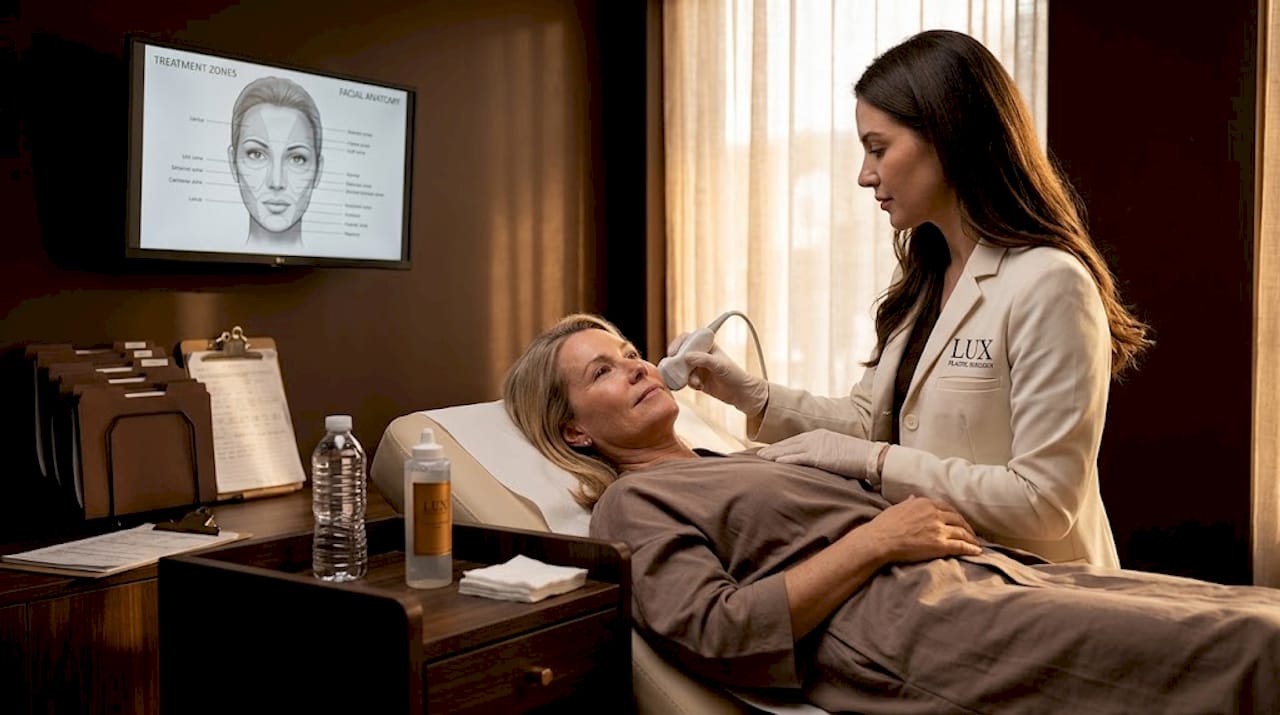
Ultrasound facial treatment (Ultherapy): Ultherapy delivers focused ultrasound energy to the same depth targeted during surgical facelifts, stimulating collagen production below the surface. It works gradually, with most patients noticing the full effect three to six months after a single session. It is particularly effective for lifting the brow, tightening the neck, and refining the jawline. There are no needles and minimal downtime.
Radiofrequency skin treatment: Radiofrequency (RF) heats the deeper dermal layers to trigger collagen remodelling. It is comfortable, produces mild temporary redness, and is often combined with microneedling to enhance penetration. RF treatments typically require a series of sessions and improve both skin firmness and texture. Results appear gradually and continue improving over several months.
Microcurrent facial therapy: A more subtle option, microcurrent uses low-level electrical currents to re-educate facial muscles and stimulate ATP production at the cellular level. It is non-invasive, completely painless, and often described as a “workout” for the face. Results are mild but cumulative, making it useful as part of a maintenance programme rather than a primary treatment for laxity.
Dermal fillers for lifting: Fillers do not physically lift skin. What they do is restore volume in areas like the cheeks, temples, and jawline, which creates the appearance of lift. When placed strategically by an experienced clinician, this can be impressively effective. For non-surgical facial reshaping, fillers remain one of the most versatile tools available.
Lasers: Laser treatments improve skin surface quality, reduce pigmentation, and smooth fine lines. They do not lift the face on their own, but they complement lifting treatments by improving the overall appearance of skin that has been tightened through other methods.
Microneedling: Controlled micro-injuries to the skin surface trigger the body’s wound-healing response, boosting collagen and elastin. It works well in combination with topical treatments and RF, and requires several sessions to produce visible improvement.
Pro Tip: Ask your clinician which layer of the face each proposed treatment targets. Collagen stimulation at depth (ultrasound or RF), volume restoration (fillers), and surface improvement (lasers or microneedling) are three different jobs. The best plans combine all three strategically.
Realistic results and safety: what UK adults should know
The results from non-surgical face lifting are real — but they are subtle to moderate, not dramatic. Non-surgical options are suited to mild or moderate laxity, not the kind of sagging that involves heavy jowls or significant neck skin excess. If you fall into that category, surgery will likely deliver what you are truly hoping for, and a trustworthy clinician will tell you that plainly.
The other major consideration is safety. The UK market has a serious problem with unlicensed dermal fillers. In 2024, the MHRA seized illegal fillers worth up to £4 million, underlining the scale of the issue. These products are not quality-controlled, may contain harmful substances, and have caused infections, tissue death, and permanent disfigurement.
“The MHRA strongly advises that dermal fillers be administered only by qualified healthcare professionals using licensed products, and that adverse reactions are reported through the Yellow Card scheme to help protect other patients.”
Key safety points every patient should know:
- Avoid providers offering unusually low prices; cost-cutting often means unregulated products
- Always ask to see evidence of the product being used, including its licence status
- Ensure your clinician has formal medical training and is registered with a recognised body
- Any adverse reaction should be reported via the MHRA Yellow Card system
- Read more about selecting cosmetic procedures safely before booking
For those researching specific injectable options, the expert dermal fillers guidance on our website outlines what responsible filler treatment looks like in practice.
Personalising your non-surgical face lift: assessment and treatment planning
No two faces age in the same way. One person’s concerns may be driven primarily by volume loss in the mid-face; another’s may come from skin laxity along the jawline; a third may have muscle descent creating that characteristic heaviness in the lower face. Clinicians begin by analysing your specific ageing pattern before recommending anything.
A good consultation follows a clear sequence:
- Facial analysis: Identifying whether the primary issue is skin laxity, volume loss, or structural change (or a combination of all three).
- Discussing goals: What does “lift” actually mean to you? Sharper jawline? Lifted brow? Fuller cheeks? The word covers many different outcomes.
- Building a treatment plan: Combining the appropriate modalities for your anatomy, rather than defaulting to a single popular treatment.
- Setting realistic expectations: How many sessions, what improvement to expect, and over what timeframe.
- Clarifying when surgery is the better answer: An honest clinician will tell you when non-surgical options are unlikely to deliver what you want.
For those considering a personalised facial plastic surgery approach or wondering where non-surgical options end and surgical ones begin, this step is where that conversation happens.
Pro Tip: Bring reference photographs to your consultation, not of celebrities, but of yourself at an earlier age. This gives your clinician a genuine target and helps you both define what “improvement” actually looks like for your face.
Comparing common non-surgical treatments: benefits, side effects, and upkeep
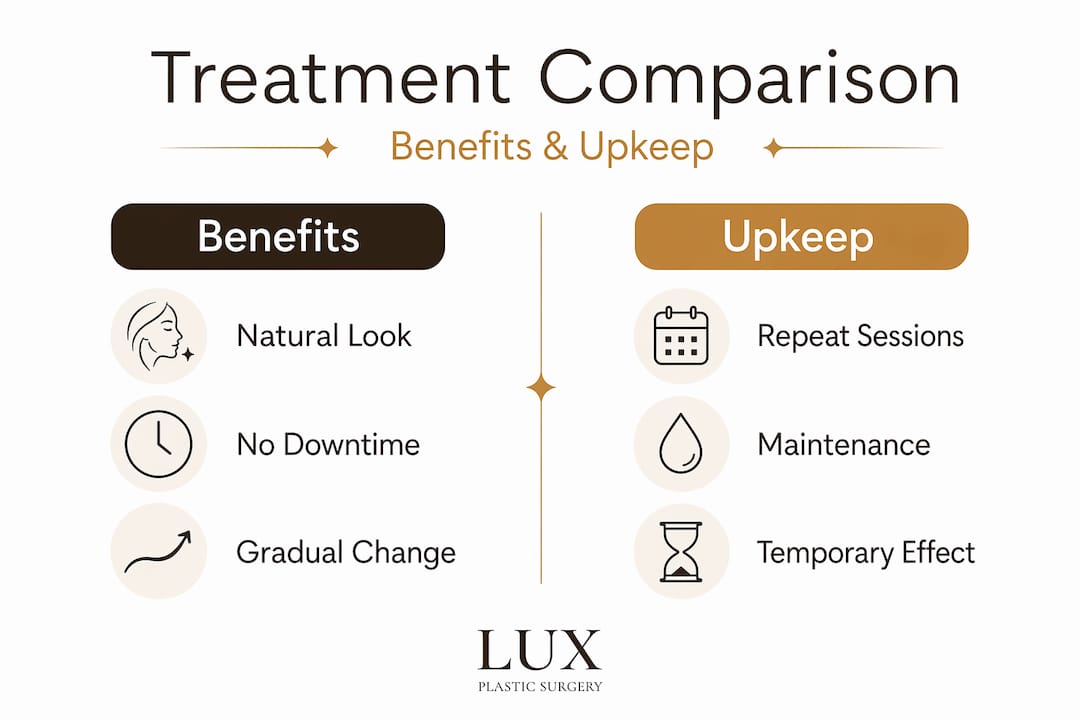
Each treatment has different benefits and maintenance requirements, and understanding these side by side makes it easier to plan realistically. Here is a clear comparison:
| Treatment | Primary benefit | Typical side effects | Sessions needed | Maintenance |
|---|---|---|---|---|
| Ultherapy (ultrasound) | Gradual lifting via collagen stimulation | Mild discomfort, temporary redness | Usually one | 12-18 months |
| Radiofrequency | Skin tightening and texture improvement | Mild redness, warmth | Series of 3-6 | Every 6-12 months |
| Microneedling | Collagen boosting, texture refinement | Redness, mild swelling | Series of 3-6 | Every 3-6 months |
| Dermal fillers | Volume restoration and contouring | Bruising, temporary swelling | One session | Every 6-18 months |
| Laser resurfacing | Surface quality, pigmentation, fine lines | Redness, peeling (varies by type) | One or series | Annually |
| Microcurrent therapy | Mild muscle toning and firming | None typically | Ongoing series | Monthly or bimonthly |
What this comparison tells you:
- No single treatment does everything; combination approaches produce the most balanced results
- Recovery and downtime vary significantly between options; plan accordingly
- Maintenance is not optional — without it, results fade and you return to baseline
- Facelift options comparison resources can help you understand where surgical and non-surgical options intersect
Preparing for and maintaining your non-surgical face lift results
The preparation you do before treatment, and the care you take after it, can meaningfully extend how long your results last.
- Choose a regulated provider. This is not negotiable. MHRA safety guidance reinforces that medical supervision and proper device use are essential for non-surgical aesthetic procedures.
- Start SPF30 or higher sunscreen daily. UV exposure degrades collagen faster than almost any other factor. Sun protection is not optional if you want your investment to last.
- Introduce a medical-grade retinoid. Prescription retinoids promote collagen synthesis and accelerate cell turnover. They take three to six months to show full effect, so daily sun protection and retinoids work best when started well before or alongside treatment.
- Support your skin from within. Hydration, a diet rich in antioxidants, quality sleep, and not smoking all contribute to skin resilience in ways no treatment can fully compensate for.
- Follow aftercare instructions exactly. Post-treatment protocols exist to minimise side effects and support healing. Ignoring them can compromise your results.
- Schedule maintenance in advance. Whether it is annual Ultherapy or six-monthly filler top-ups, building maintenance into your plan from the start prevents backsliding.
For a thorough overview of protecting yourself throughout this process, the safe cosmetic procedures guide is worth reading before you book anything.
Pro Tip: The week before any energy-based treatment, avoid aspirin, ibuprofen, alcohol, and vitamin E supplements, as all of these thin the blood and increase bruising risk significantly.
A fresh perspective: why realistic expectations and expert guidance matter most
Here is something most clinics will not say plainly: the word “lift” is doing enormous amounts of heavy lifting itself, and almost nobody defines it clearly. A patient who says they want a non-surgical facelift might mean they want sharper cheekbones. Or a tighter jawline. Or a less heavy brow. Or all three. Defining what “lift” means personally is critical, because each of those goals requires a different approach, and conflating them leads to both poor treatment selection and disappointed patients.
The other hard truth is about price. A clinician who can combine Ultherapy, fillers, and RF safely and effectively has spent years training and significant money on the equipment. When you see pricing that bears no resemblance to that reality, you are not finding a bargain — you are encountering a compromise somewhere. Either the product is unlicensed, the device is substandard, or the operator lacks the qualifications to use it well. The MHRA’s seizure of illegal fillers worth millions is a reminder that this market has a supply problem, and patients are at the end of that supply chain.
The most effective non-surgical results we see come from patients who arrived with clear, specific goals, were assessed thoroughly, received a genuinely personalised combination plan, and committed to maintenance. Not from those who booked the cheapest option or tried to skip the consultation. A good clinician following sound procedure safety guidance will also tell you honestly when non-surgical is not enough and surgery is the more appropriate path. That honesty is a sign of trustworthiness, not failure.
Explore safe and personalised non-surgical face lifting treatments with Lux Plastic Surgery
If this guide has helped you understand what face lifting without surgery can realistically achieve, the natural next step is a consultation with a clinician who will assess your face properly and tell you the truth about what will and will not work for you.

At Lux Plastic Surgery, Professor Sandip Hindocha and the clinical team offer expert consultations focused on natural non-surgical treatments and genuinely personalised outcomes. Every plan is built around your specific anatomy, concerns, and goals. We use only licensed products and regulated devices, and we will always tell you clearly when surgical options would serve you better. Discover what personalised non-surgical treatments can achieve, and take your first step with a team that prioritises your safety and cosmetic choices above all else.
FAQ
Can non-surgical face lifts replace surgical facelifts completely?
No. Non-surgical options provide moderate improvement for mild to moderate laxity, but they cannot reposition deep tissues or remove excess skin the way surgery does.
Are dermal fillers safe to use for face lifting in the UK?
Dermal fillers are safe when administered by a qualified professional using licensed products, but unlicensed fillers carry serious risks including infection and disfigurement and must always be avoided.
How long do the results of non-surgical face lifts typically last?
Results range from several months to around 18 months depending on the treatment, but effects are gradual and temporary and require repeat sessions to sustain.
What safety measures should I look for before choosing a non-surgical face lift provider?
Look for medically qualified clinicians, licensed products, transparent consultation, and a clinic that follows MHRA safety standards including Yellow Card adverse event reporting.
Can at-home gadgets replace professional non-surgical face lifting treatments?
No. At-home skincare and devices support general skin health but cannot replicate the collagen stimulation and structural improvement achieved through professional in-clinic treatments.