Medically reviewed by Professor Sandip Hindocha, GMC-registered Consultant Plastic Surgeon and NHS Clinical Director. Articles are reviewed against current UK guidance from the GMC, BAAPS, BAPRAS and NICE.
TL;DR:
- The rise in UK cosmetic surgeries is driven by psychological, physical, and social factors.
- Short-term satisfaction with procedures like implants and body contouring is high, but long-term outcomes vary.
- Choosing a certified, experienced surgeon and having clear motivations are crucial for safe, satisfying results.
Cosmetic surgery numbers in the UK are climbing steadily, and the reasons behind that rise are far more layered than most people assume. In 2024 alone, breast augmentation rose 6% to 5,202 cases, while male facial procedures including rhinoplasty and face or neck lifts reached 1,882 cases, up 8% on the previous year.
Yet despite these figures, a great deal of confusion persists about what actually motivates adults to pursue surgery, what the genuine benefits are, and how to navigate the process safely. This guide walks you through the real drivers, the most popular procedures, the honest evidence on benefits and risks, and the practical steps to make a well-informed decision.
Key Takeaways
| Point | Details |
|---|---|
| Motivations go deeper | Plastic surgery is most often driven by personal confidence, physical comfort, and life changes, not just looks. |
| Benefits are real but nuanced | Short-term satisfaction is high, though long-term psychological results can be unpredictable. |
| Risks require caution | Choose only certified, UK-based surgeons and avoid medical tourism to reduce health complications. |
| Informed choices matter | Research your options, know your motivations, and never rush the decision or skip professional advice. |
Understanding motivations: Why adults in the UK consider plastic surgery
The decision to pursue plastic surgery is rarely just about wanting to look different. For most people, the motivation runs considerably deeper. Patient motivations consistently include psychological well-being, such as reduced anxiety and a better self-image, physical relief from conditions like back pain caused by large breasts, and post-weight-loss body contouring following procedures or medications like Ozempic.
Gender differences play a clear role in the types of procedures people seek. Women predominantly pursue breast and body treatments, while men are increasingly drawn to facial rejuvenation and body contouring. This shift in male interest reflects a broader cultural change, with more men prioritising their appearance in professional settings, partly in response to a rising pension age and the desire to remain competitive in the workplace.
Social media and video calls have also changed how people perceive themselves. Spending hours looking at your own face on screen can sharpen awareness of features you might not previously have noticed. At the same time, the stigma around cosmetic surgery has significantly reduced over the past decade, making it easier for people to speak openly about their choices.
Post-weight-loss procedures have seen particularly strong growth. Tummy tuck numbers rose 6% to 2,997 cases, and thigh lifts jumped by 24%, reflecting the wave of patients achieving significant weight loss through medical programmes and then seeking surgical solutions for excess skin.
Key motivations driving UK adults to consider cosmetic surgery include:
- Aesthetic enhancement and improved body proportions
- Psychological well-being, including reduced anxiety and stronger self-confidence
- Physical relief, particularly for conditions such as chronic back pain or skin irritation
- Post-weight-loss contouring following bariatric surgery or medication
- Reduced stigma and greater social acceptance of cosmetic procedures
- Increased accessibility through private clinics and financing options
Understanding your own motivation is the first and most important step. Exploring breast augmentation motivations or body contouring in depth can help clarify whether surgery is genuinely the right pathway for you. It is equally important to ensure you are choosing a certified surgeon from the very outset of your research.
Popular procedures, techniques and what to expect
With motivations in mind, the next step is to explore the procedures themselves and what patients can expect at each stage.

The most popular procedures differ by gender but share a common thread: they address specific physical concerns that have a measurable impact on quality of life. Here is a snapshot of where demand currently sits:
| Procedure | Primary audience | Average UK cost | Recovery time |
|---|---|---|---|
| Breast augmentation | Women | £3,500 to £8,000 | 4 to 6 weeks |
| Breast reduction | Women | £5,000 to £8,000 | 4 to 6 weeks |
| Tummy tuck | Women and men | £5,500 to £8,000 | 6 to 8 weeks |
| Rhinoplasty | Men and women | £4,000 to £7,000 | 2 to 3 weeks |
| Liposuction | Men and women | £2,000 to £6,000 | 1 to 3 weeks |
Breast augmentation involves silicone or saline implants placed either under the breast tissue or the chest muscle, performed under general anaesthetic. It is not routinely funded by the NHS unless there is significant asymmetry or the absence of breast tissue causing psychological distress. You can learn more about breast reduction procedures and body surgery pathways through dedicated clinic resources.
Body contouring involves liposuction to remove localised fat deposits and tummy tucks to excise excess skin and fat, often after major weight loss. Post-Ozempic demand for these procedures is rising sharply as more patients achieve significant weight reduction through medication before seeking surgical refinement. You can explore body contouring options to understand the full range of techniques available.
Here is what to expect when going through a typical surgical pathway:
- Initial consultation: Discuss goals, medical history, and suitability
- Pre-operative assessments: Blood tests, anaesthetic review, and marking
- The procedure itself: Performed under local or general anaesthetic depending on complexity
- Immediate recovery: Usually one to two nights in a clinical setting
- At-home recovery: Varies from one to eight weeks depending on procedure
- Follow-up reviews: To assess healing and address any concerns
Pro Tip: Always verify that your surgeon holds GMC registration, and ideally membership of BAAPS (British Association of Aesthetic Plastic Surgeons) or BAPRAS (British Association of Plastic, Reconstructive and Aesthetic Surgeons) before proceeding.
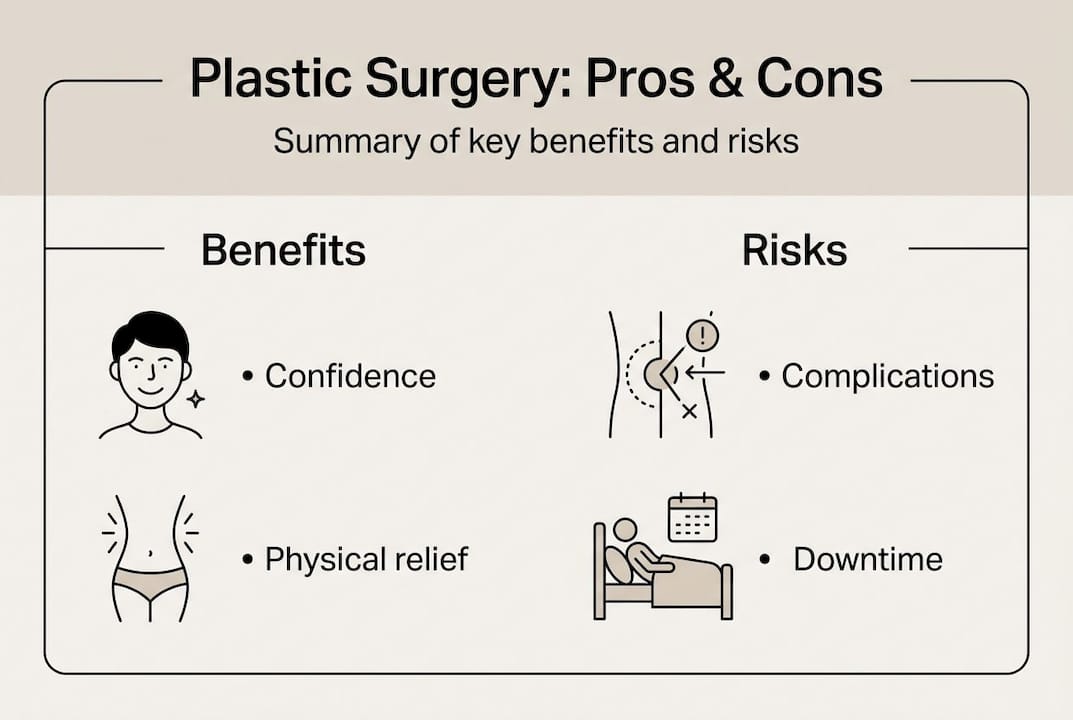
Weighing the benefits and risks: Evidence and experience
Having seen the main options, it is essential to step back and balance the genuine benefits with potential complications and longer-term realities.
The evidence on short-term benefits is actually quite strong. The BAAPS 2024 audit recorded 27,462 procedures across the UK, with 93.5% performed on women. Short-term satisfaction rates are high, with Botox satisfaction reaching around 90%, and body satisfaction scores after breast augmentation showing effect sizes of 1.8 to 2.0 at the four-year mark. These are meaningful improvements in how people feel about themselves.
Physical benefits are also well documented. Breast reduction relieves chronic back and shoulder pain in the vast majority of patients. Body contouring after significant weight loss removes excess skin that causes hygiene problems and physical discomfort. These are not trivial gains.
However, the long-term picture is more nuanced. Complications including scarring, infection, and in rare cases BIA-ALCL (a type of lymphoma associated with textured implants) do occur. Psychosocial outcomes can also decline over time, with some patients reporting a drop in satisfaction metrics, including nipple satisfaction falling by around 20 points in longer follow-up studies. Implants may also require replacement after ten to fifteen years.
“The evidence for short-term benefit is robust, but long-term psychosocial outcomes remain heterogeneous and are not well studied. Patients should be counselled accordingly.” — Journal of Plastic, Reconstructive and Aesthetic Surgery, 2025
Key risks to understand before proceeding:
- Scarring and wound healing complications
- Infection requiring antibiotic treatment or further surgery
- Anaesthetic risks, which increase with age or underlying health conditions
- Dissatisfaction, particularly if expectations are unrealistic
- Implant-related complications including rupture or capsular contracture
- Complications from overseas surgery, with 96% of NHS referrals for post-surgical complications linked to procedures performed abroad
Carefully evaluating surgery risks before committing is not optional; it is a core part of the process. Comparing surgical versus non-surgical options may also reveal less invasive pathways worth exploring first.
Making safe, informed choices: Practical steps and expert advice
In light of all these pros, cons, and nuances, how can you ensure your decision is informed, safe, and aligned with your best interests?
The starting point is always the surgeon’s credentials. GMC registration and BAAPS or BAPRAS membership are non-negotiable markers of quality and accountability. Any GMC-registered doctor can legally perform cosmetic surgery in the UK, which means professional body membership is the clearest signal that your surgeon has specialist training.
Here are the practical steps to take before committing to any procedure:
- Research thoroughly: Use the BAAPS and BAPRAS member directories to find qualified surgeons
- Book a formal consultation: Never commit based on a brief phone call or a price quote alone
- Ask the right questions: Confirm the surgeon’s experience with your specific procedure and ask for outcome statistics
- Seek a second opinion: Especially for major procedures or when something does not feel quite right
- Consider the alternatives: Therapy, exercise, or non-surgical treatments may address the underlying concern
- Verify aftercare provisions: Confirm what support is included if complications arise
Psychological readiness matters enormously. Experts recommend considering whether your motivations are your own, whether you have realistic expectations, and whether you have explored non-surgical alternatives. Good surgeons will conduct psychological screening as part of the consultation process.
Pro Tip: Avoid clinics offering dramatic discounts or pressure-selling tactics. Medical tourism carries serious risks. The 96% complication rate from overseas procedures requiring NHS intervention is a sobering reminder that bargain prices rarely account for aftercare costs.
Learning how to approach selecting cosmetic procedures safely and understanding the value of expert consultation can make a genuine difference in your experience and outcome.
The reality most guides miss: It’s about more than just looks
The popular narrative around plastic surgery tends to frame it as vanity. That framing does a disservice to the people who genuinely benefit from it. When someone with chronic back pain from oversized breasts achieves relief after a reduction, that is not a vanity project. When a person who has worked for years to lose eight stone seeks surgery to remove the excess skin that prevents them from exercising comfortably, that is a quality-of-life decision.
What the evidence consistently shows is that long-term satisfaction depends far less on the specific procedure and far more on three things: realistic expectations, psychological readiness, and the quality of the practitioner. The patients who struggle are often those who pursued surgery under social pressure, with unresolved emotional concerns, or with surgeons who prioritised throughput over genuine care.
The best outcomes come from a holistic, consultative process. Exploring real-life motivations with an experienced surgeon, being honest about your goals, and taking the time to make an unhurried decision consistently produces better results than acting impulsively. Cosmetic surgery can be genuinely significant. The key is ensuring the change it delivers is the one you actually need.
Interested in exploring your options? Next steps with Lux Plastic Surgery
If reading this has sparked a genuine interest in exploring what cosmetic surgery could offer you, the most important next move is speaking with a qualified professional who will listen carefully and advise honestly.
At Lux Plastic Surgery, Professor Sandip Hindocha and his team take a consultative, patient-first approach to every procedure. Whether you are curious about the basics of plastic surgery, ready to understand how to choose the right plastic surgeon, or interested in specific body contouring services, the team is here to guide you safely. Book a consultation to discuss your goals in a confidential, pressure-free environment with a surgeon who prioritises your wellbeing above all else.
FAQ
What are the most common reasons people choose plastic surgery?
Aesthetic enhancement, self-esteem improvement, physical relief, and post-weight-loss body contouring are the main motivations in the UK. Research confirms that psychological well-being and physical relief are central drivers, not simply vanity.
How safe is plastic surgery in the UK?
Plastic surgery is generally safe when performed by GMC-registered, BAAPS or BAPRAS-certified surgeons. Risks rise considerably with non-certified clinics or overseas procedures, where complications and unregulated practice are far more common.
Does the NHS cover plastic surgery?
The NHS funds surgery only in cases of genuine medical or psychological need, not for routine cosmetic reasons. Breast augmentation costs £3,500 to £8,000 privately and is not routinely available on the NHS unless specific clinical criteria are met.
Are the benefits of cosmetic surgery long-lasting?
Short-term satisfaction and confidence gains are well-documented and meaningful. However, long-term psychosocial evidence is less consistent, and outcomes vary depending on individual expectations and the quality of the surgical experience.
What questions should I ask a potential plastic surgeon?
Ask about their GMC registration, BAAPS or BAPRAS membership, specific experience with your procedure, complication rates, and what aftercare is included. Verifying credentials and discussing risks openly before committing is the mark of a trustworthy practitioner.