A nose that has been operated on once is not the same starting point as a nose that has never been touched. If you are unhappy with the result of a first rhinoplasty, or your breathing is worse than before, a second operation may be possible, but it is a different and harder job.
That affects who should do it, when, and what it costs. Revision work is quoted individually and is usually priced above a first-time operation.
Here’s what revision rhinoplasty involves, who it suits, the risks, and what to budget.
The essentials
| Point | Details |
|---|---|
| What it is | A further operation to correct the look or function of a nose that has already had surgery. |
| Harder than the first | Scar tissue and altered anatomy make the work more complex, and grafts are often needed. |
| Timing matters | Swelling can take months to clear, so judging a result too early can lead to a rushed second operation. |
| Typical private cost | Often £7,500 or more, quoted individually. Primary surgery is usually less. |
| Recovery | Similar to a first operation, with a splint for about a week and swelling settling over months. |
| Choose carefully | Ask any surgeon how many revision operations they perform. |
When a first nose job needs a second look
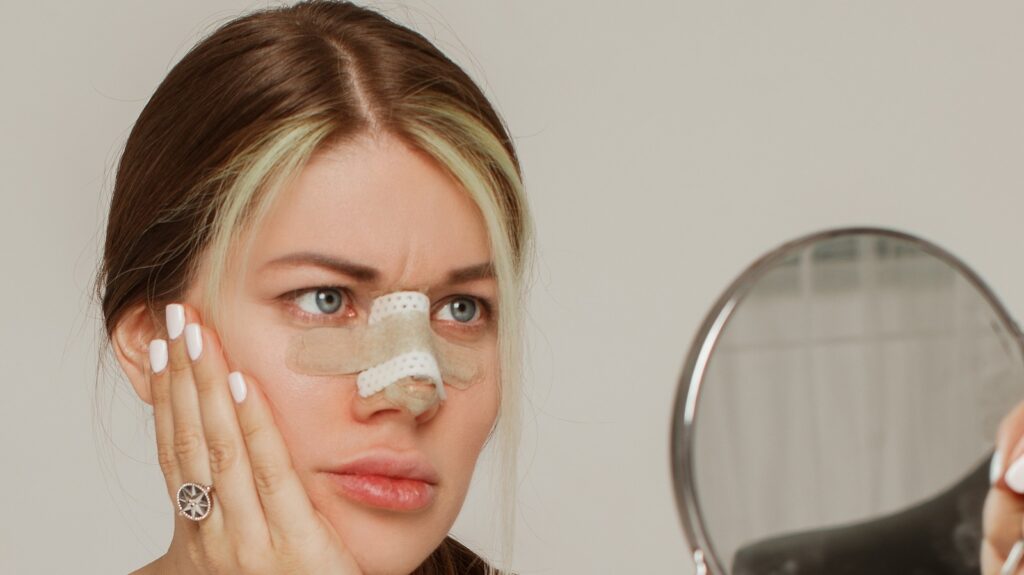
Revision rhinoplasty, sometimes called secondary rhinoplasty, is surgery on a nose that has had a previous operation. It can be for appearance, for breathing, or both. If you want the basics of the first operation first, a UK patient guide to rhinoplasty covers them.
Rhinoplasty is a complex operation, and the NHS states plainly that the results cannot be guaranteed. A minority of people end up wanting further work, whether because of the shape, a change over time, or a problem the first operation caused.
Why people seek revision
Common reasons include a bump or tip shape that is not what was agreed, asymmetry, a nose that looks over-reduced, and new difficulty breathing through the nose. Some noses also change slowly over the years as tissues settle.
NHS information on nose reshaping lists permanent breathing difficulty, damage to the wall between the nostrils and an altered sense of smell among the possible problems. Where function is the issue, that shapes the plan as much as appearance does.
How long should you wait?
Patience is part of the treatment. The NHS says it can be several months before you see the full effect of a rhinoplasty and up to six months for swelling to go completely. Surgeons commonly advise waiting longer than that before judging the result, and often about a year.
Operating too early on a swollen nose risks working on tissue that has not yet settled. The exception is a clear complication, such as a breathing problem or an obvious structural fault, which your surgeon may want to address sooner.
Why the second operation is harder
Scar tissue from the first surgery makes the anatomy harder to read and to work with. Cartilage may also have been used or removed already, so grafts are often needed from the ear or rib, which adds to the operation and the price.
That is why the choice of surgeon matters more than for a first operation. Our piece on why surgical expertise matters explains what to look for.
Are you a good candidate?
Good candidates are in good general health, do not smoke, have waited long enough for the nose to settle, and have realistic expectations. A clear idea of what bothers you helps, because a surgeon can only change what can be changed safely.
For a small irregularity, a non-surgical option may be worth discussing. What non-surgical rhinoplasty can and cannot do explains how filler is used to smooth minor bumps or improve symmetry, though it is not suitable for every nose.
The risks to weigh up
All the risks of a first rhinoplasty apply: bleeding, infection, breathing problems and a result that is still not what you hoped for. Because revision is more complex, a further operation can carry a higher chance of an imperfect outcome, so expectations should be set carefully at consultation.
Ask your surgeon how many revision operations they have done, what complications they have seen and how those were handled. Clear, specific answers are a good sign.
What revision rhinoplasty costs
Revision surgery is quoted individually and generally costs more than a first operation. Market figures for revision often start at about £7,500, compared with about £4,000 to £7,000 that the NHS cites for rhinoplasty in the UK.
The price reflects extra theatre time, grafting and complexity. For how primary pricing breaks down, see the rhinoplasty cost guide. Always ask whether follow-up appointments are included, and treat figures here as general context, not a quote.
Recovery after a second operation
Recovery is similar to a first rhinoplasty. At Lux, a splint is worn for about a week, and revision or functional work can add operating time to the usual two to three hours. The NHS suggests up to two weeks off work and avoiding strenuous exercise for four to six weeks.
Swelling can linger for months, so the final shape appears gradually. Before you book, NHS advice on choosing who will do your procedure is worth a read.
Talking through a revision with Professor Hindocha

Professor Sandip Hindocha, FRCS (Plast), Consultant Plastic Surgeon (GMC number 6122218) and NHS Clinical Director, offers revision rhinoplasty for patients who have had earlier nose surgery and are unhappy with the result or have developed complications. Consultations take place at clinics in Bedford, London, and Manchester.
You can read more about the rhinoplasty service or send an enquiry through the contact page.
This article is for general information only and does not constitute medical advice. Prices are indicative and revision surgery is quoted individually, so always request a written quote.
FAQ
How much does revision rhinoplasty cost?
Often from about £7,500, and quoted individually. It usually costs more than a first operation because the work is more complex.
How long should I wait before revision surgery?
Swelling can take up to six months to clear, and many surgeons advise waiting longer, often about a year, unless there is a clear complication.
Is revision rhinoplasty riskier than the first operation?
It is more complex, so the chance of an imperfect result can be higher. Choosing an experienced surgeon matters more.
Can revision rhinoplasty improve breathing?
It can, where the problem is structural. Your surgeon will assess whether function, appearance or both need correcting.
Is revision rhinoplasty available on the NHS?
Not usually for cosmetic reasons, but the NHS may provide nose surgery needed to help you breathe. Your GP can advise.