Medically reviewed by Professor Sandip Hindocha, GMC-registered Consultant Plastic Surgeon and NHS Clinical Director. Articles are reviewed against current UK guidance from the GMC, BAAPS, BAPRAS and NICE.
Choosing plastic surgery is one of the most personal decisions you’ll make, yet many people lack a clear framework for evaluating their options safely. Poor choices lead to complications, regret, and costly corrections. This guide provides a structured, step-by-step approach to help you assess surgeons, clinics, and your own readiness with confidence, ensuring your decision is informed, safe, and aligned with your goals.
Key Takeaways
| Point | Details |
|---|---|
| Check surgeon credentials | Always verify your surgeon is GMC registered and a BAAPS or BAPRAS member to ensure proper training and safety. |
| Review clinic quality | Choose a CQC-registered clinic with strong ratings for best results and minimal risk. |
| Prepare thorough questions | Have clear questions about your procedure, risks and aftercare for your consultations. |
| Avoid rushed or pressured decisions | Allow at least a two-week cooling-off period and assess your personal readiness honestly. |
| Steer clear of cosmetic tourism | Overseas surgery greatly increases complication risks and often leads to more costly corrections back home. |
Understanding the current landscape of plastic surgery in the UK
To evaluate your options effectively, you need context on what procedures are available and how safe they can be under proper regulation. The UK plastic surgery sector has grown steadily, with 27,462 procedures performed in 2024 according to the British Association of Aesthetic Plastic Surgeons audit. The most popular procedures include breast augmentation at 5,202 cases, breast reduction at 4,707, blepharoplasty at 3,138, abdominoplasty at approximately 3,000, and liposuction at 2,623.
These numbers reflect a 5% year-on-year increase, driven by improved techniques, better patient education, and growing acceptance of aesthetic enhancement. When performed by qualified surgeons in regulated facilities, complication rates remain low at 1-2% for procedures like breast augmentation. However, complications rise sharply with unqualified providers or unregulated clinics.
Key procedure categories in 2026:
- Breast procedures: Augmentation, reduction, lift, reconstruction
- Body contouring: Abdominoplasty, liposuction, body lift
- Facial surgery: Blepharoplasty, facelift, rhinoplasty
- Non-surgical options: Injectables, skin treatments, fat transfer
Understanding these trends helps you recognise what’s normal and what’s risky. The latest cosmetic surgery statistics show that whilst demand grows, so does the number of patients seeking corrections for botched procedures. Your goal is to be in the safe majority.
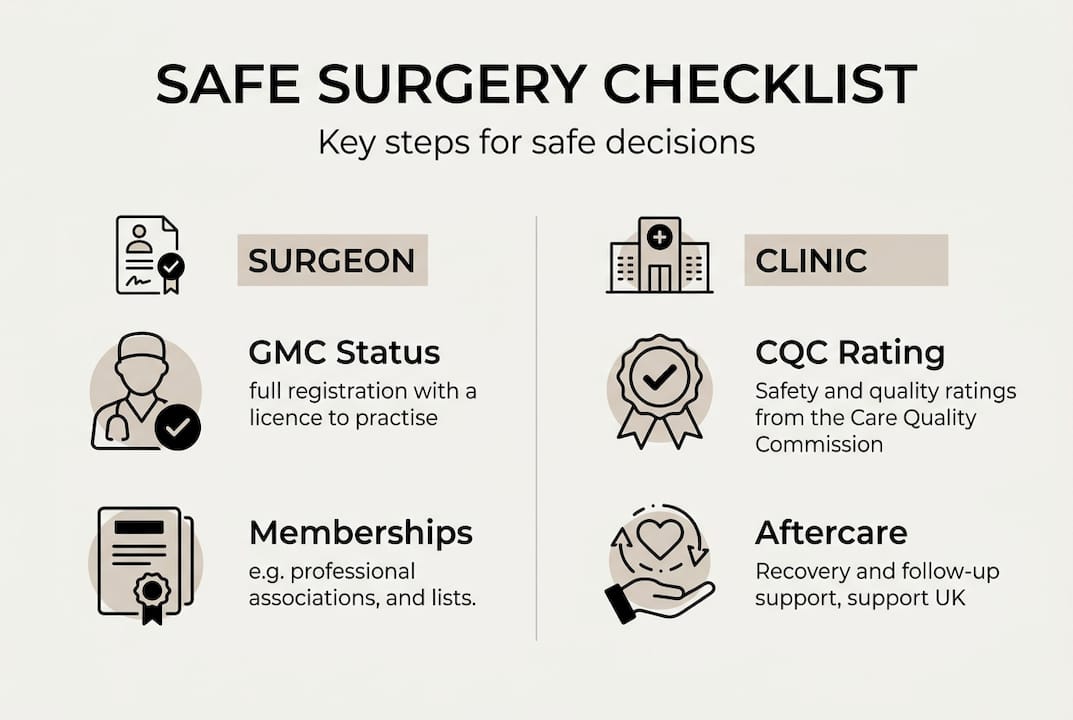
Checklist for assessing surgeon qualifications and clinic standards
Now that you understand the landscape, the next critical step is verifying your provider’s credentials. This checklist ensures you’re working with qualified professionals in safe environments.
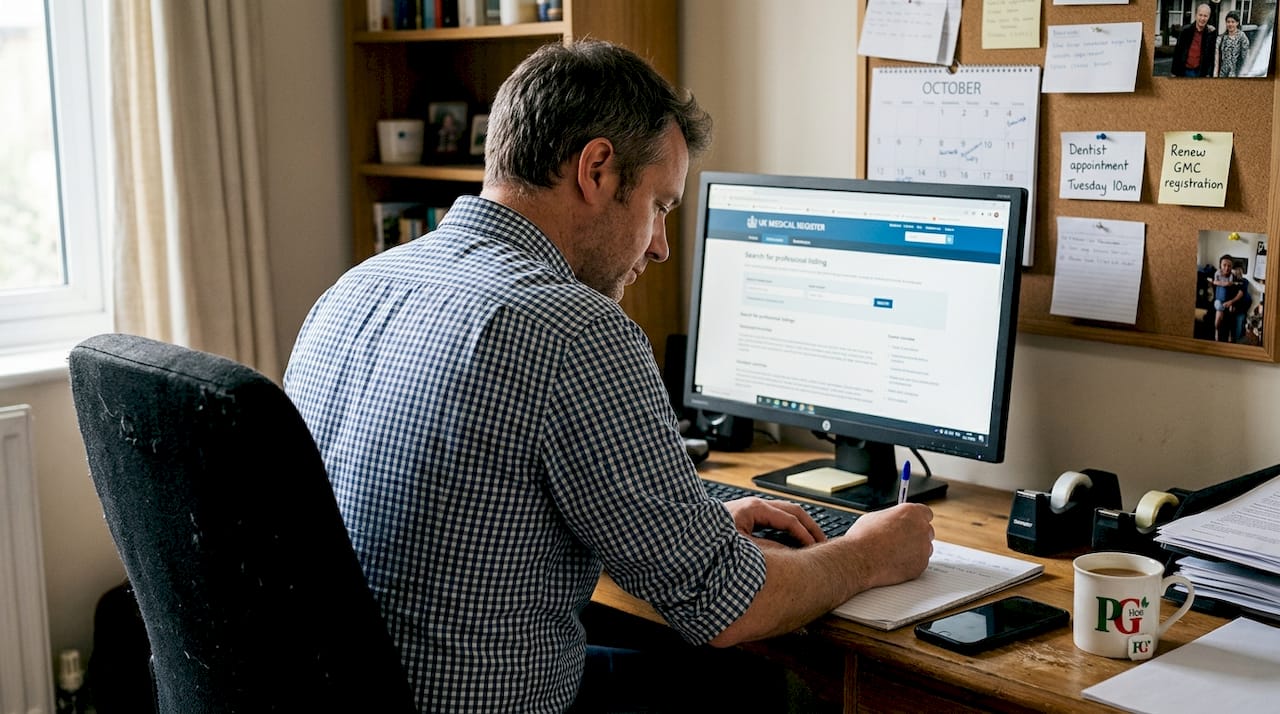
Step 1: Verify GMC registration
Check the surgeon is on the GMC Specialist Register for Plastic Surgery. This confirms they’ve completed rigorous training and maintain professional standards. Search the General Medical Council website using the surgeon’s name.
Step 2: Confirm professional membership
Your surgeon should be a member of BAAPS or BAPRAS. These organisations require ongoing education, ethical practice, and peer review. Membership isn’t automatic; it signals commitment to excellence.
Step 3: Check clinic registration
Verify the clinic is CQC registered with recent good ratings. The Care Quality Commission inspects facilities for safety, cleanliness, and proper protocols. Unregistered clinics operate outside regulatory oversight.
Step 4: Review experience and specialisation
Ask how many procedures of your specific type the surgeon performs annually. Specialists who focus on particular procedures typically achieve better outcomes than generalists.
| Verification item | Where to check | What to look for |
|---|---|---|
| GMC registration | GMC website | Specialist Register status |
| Professional body | BAAPS/BAPRAS sites | Current membership |
| Clinic safety | CQC register | Good or Outstanding rating |
| Insurance | Direct enquiry | Medical indemnity coverage |
Pro Tip: Search the CQC register before booking any consultation. Recent poor ratings or enforcement actions are red flags you cannot ignore.
This systematic approach to choosing a plastic surgeon protects you from unqualified practitioners. Never skip these checks, regardless of how impressive a website or marketing appears. Your safety depends on verifiable credentials, not persuasive advertising.
Key questions to ask during your consultations
With background checks complete, it’s time to gather personal answers that reveal whether the surgeon’s approach meets your standards. Book two consultations with the operating surgeon to ensure you have time to think and compare.
Essential questions about experience:
- How many of this specific procedure have you performed?
- What is your complication rate for this surgery?
- What percentage of patients require revision surgery?
- Can I see before-and-after photos of similar cases?
Critical safety and outcome questions:
- What are the specific risks for my situation?
- What results can I realistically expect?
- What happens if I’m not satisfied with the outcome?
- Who provides aftercare, and what does it include?
Facility and support questions:
- Where will the surgery take place?
- Who will administer anaesthesia?
- What emergency protocols are in place?
- How do I contact you if complications arise?
Pay attention to how the surgeon responds. Qualified professionals welcome questions and provide detailed, honest answers. They discuss risks openly and never guarantee perfect results. If a surgeon seems defensive, vague, or dismissive, that’s a warning sign.
Pro Tip: Bring a consultation checklist and take notes. You’ll forget details later, and written records help you compare providers objectively.
“The best surgeons spend time understanding your goals, explaining what’s achievable, and ensuring you’re making an informed choice. If you feel rushed or pressured, walk away.”
Use your consultations to assess not just technical skill but also communication style and ethical standards. You’re entrusting this person with your body and wellbeing. The relationship matters as much as the credentials. Review specific procedure questions and patient experience stories to prepare thoroughly.
Evaluating your readiness and safety considerations
Gathering facts from clinicians only works if you’re truly ready for what surgery involves. This section helps you assess your motivations, identify red flags, and avoid common pitfalls.
Self-assessment checklist:
- Are your expectations realistic about what surgery can achieve?
- Is your life situation stable (no major stressors or transitions)?
- Are you making this decision for yourself, not to please others?
- Have you considered non-surgical alternatives?
- Do you understand the recovery time and limitations?
Assess your personal readiness honestly. Surgery won’t fix relationship problems, career dissatisfaction, or low self-esteem rooted in other issues. It can enhance your appearance when you have specific, achievable goals.
Warning signs to reconsider or delay:
- You’re experiencing mental health difficulties
- Someone else is pressuring you to have surgery
- You’re making the decision impulsively
- You expect surgery to transform your entire life
- You’re comparing yourself obsessively to social media images
Edge cases requiring extra caution:
If you have unrealistic expectations or mental health concerns, surgery may cause more harm than good. Rushed decisions made in under two weeks correlate with higher regret rates. Take time to reflect, discuss with trusted friends or family, and ensure you’re emotionally prepared.
“Surgery is permanent. Your decision should be too. If you’re uncertain, that uncertainty is telling you something important.”
Consider whether your concern might be addressed through non-surgical options like injectables, skin treatments, or lifestyle changes. Not every aesthetic goal requires surgery. Exploring alternatives demonstrates you’re making a thoughtful, informed choice rather than jumping to the most dramatic solution.
Understanding your psychological readiness for surgery is as important as choosing the right surgeon. Both factors determine whether you’ll be satisfied with your decision years later.
The hidden dangers: Cosmetic tourism and rushing your decision
True safety means looking beyond individual surgeons and clinics to wider risks that trap many UK patients each year. Two dangers stand out: travelling abroad for cheaper surgery and making rushed decisions.
The cosmetic tourism trap:
Surgery abroad has a 96% complication rate, particularly in destinations like Turkey. These complications create an NHS burden exceeding £110,000 annually, and BAAPS reports a 94% rise in correction surgeries for botched overseas procedures. The apparent savings disappear when you factor in revision costs, travel for corrections, and the physical and emotional toll.
Why patients choose poorly:
- Price-focused decisions ignore quality and safety
- Celebrity endorsements and social media marketing create false confidence
- Pressure from friends, partners, or influencers overrides personal judgment
- Rushed timelines prevent proper research and reflection
The two-week rule:
Research shows that 59% of patients feel less confident when rushed into decisions under two weeks. Additionally, 24% don’t check credentials properly, and 21% remain unaware of risks, specialist directly to regret. A minimum two-week cooling-off period between consultation and surgery allows you to research, compare, and ensure you’re making the right choice.
Red flags for rushed or risky decisions:
- Same-day consultations and surgery
- Pressure to book immediately for “special pricing”
- Packages that seem too good to be true
- Clinics that don’t require medical history or assessments
- Providers operating outside the UK without proper credentials
“The cheapest option is rarely the safest. When complications arise, the true cost becomes apparent, and by then it’s too late.”
Stick with qualified UK clinics where you have legal recourse, access to aftercare, and the protection of UK medical regulations. The peace of mind alone justifies any price difference.
Personalised, safe options at Lux Plastic Surgery
With a comprehensive checklist for safety and a clear understanding of pitfalls, you’re ready to take your next step with expert, locally based support. At Lux Plastic Surgery, we align with every best practice outlined in this guide.
Professor Sandip Hindocha is GMC registered, holds specialist credentials, and is a member of relevant professional bodies. Our clinics in Bedford, London, and Manchester are CQC registered with excellent ratings. We provide two consultations as standard, comprehensive aftercare, and transparent communication about risks, outcomes, and costs. Our range of personalised procedures covers breast, body, and facial surgery, all performed in regulated facilities with full medical support.
We understand that choosing surgery is significant. That’s why we encourage you to use the expert guidance for choosing a surgeon and take all the time you need to feel confident. Book a no-obligation consultation to discuss your goals, ask questions, and see if we’re the right fit for your journey. Visit Lux Plastic Surgery to explore your options with a team committed to your safety and satisfaction.
FAQ
What credentials should a UK plastic surgeon have?
Look for GMC Specialist Register status and BAAPS or BAPRAS membership. These confirm rigorous training and ongoing professional standards.
How can I check a clinic’s safety rating?
Search the CQC register for the clinic’s latest inspection results. Look for Good or Outstanding ratings and check for any enforcement actions.
Why should I avoid cosmetic surgery abroad?
Surgery abroad has a 96% complication rate with high NHS correction costs. You lose legal protections, aftercare access, and quality guarantees.
What questions should I ask in a plastic surgery consultation?
Ask about the surgeon’s experience, complication rates, specific risks for your case, and what aftercare is provided. Request before-and-after photos of similar procedures.
How can I tell if I’m ready for plastic surgery?
Ensure your expectations are realistic, your decision isn’t rushed or pressured, and you’re emotionally stable. Consider non-surgical alternatives first.