TL;DR:
- In the UK, anyone with a medical degree can call themselves a cosmetic surgeon, with no protected title.
- Proper qualifications involve over a decade of specialized training and membership in reputable medical organizations.
- Ensuring surgeon credentials, thorough consultations, and avoiding unregulated clinics can significantly improve safety and outcomes.
In the UK, any doctor with a general medical degree can legally call themselves a ‘cosmetic surgeon’. There is no protected title, no mandatory specialist training requirement, and no single governing body ensuring every practitioner has the same skills.
For patients considering aesthetic procedures, this gap creates genuine confusion and, in some cases, real risk. Understanding what separates a rigorously trained cosmetic surgeon from an under-qualified practitioner is one of the most important steps you can take before booking any procedure. This guide walks you through the role, the training pathways, patient safety standards, and what genuine success looks like.
Key Takeaways
| Point | Details |
|---|---|
| Surgeon qualifications matter | Only GMC-registered specialists offer regulated, safe cosmetic procedures. |
| Personalised care is essential | Effective cosmetic surgery starts with thorough consultations and tailored planning. |
| Complications can be prevented | Rigorous screening and choosing UK specialists greatly reduce risks and regrets. |
| Outcomes reflect expertise | Most patients are satisfied, but unqualified providers raise regret and complication rates. |
What does a cosmetic surgeon actually do?
The term ‘cosmetic surgeon’ covers a broad scope of work, from minor tweaks to major surgical interventions. At the core, cosmetic surgeons perform elective aesthetic procedures focused on enhancing appearance and delivering personalised outcomes for each individual patient. This is not one-size-fits-all medicine. Every patient arrives with a different body shape, skin type, aesthetic goal, and emotional baseline, and skilled surgeons account for all of it.
The most commonly performed procedures include:
- Breast augmentation and reduction to alter size, shape, and symmetry
- Liposuction and body contouring to reshape areas resistant to diet and exercise
- Rhinoplasty (nose reshaping) for both aesthetic and functional concerns
- Facelifts and brow lifts to address skin laxity and facial ageing
- Blepharoplasty (eyelid surgery) to correct drooping or puffiness around the eyes
The patient journey begins well before any incision. A thorough consultation is where a surgeon listens, assesses anatomy, reviews medical history, and sets realistic expectations. This stage is arguably more important than the surgery itself, because consultations shape outcomes in ways that go far beyond what happens in the operating theatre. A surgeon who rushes this step is one to avoid.
Following surgery, experienced practitioners track recovery through scheduled follow-up appointments, monitoring for complications and ensuring the result aligns with what was planned. Some patients need minor revisions; others heal beautifully without further intervention. Either way, the surgeon remains responsible throughout.
Modern cosmetic surgery also leans heavily on technology. Three-dimensional imaging tools, digital simulations, and precise pre-operative planning allow surgeons to model likely outcomes before any procedure begins. Expert consultations at specialist level routinely incorporate these tools to help patients visualise results and make better-informed decisions.
The scale of the field is significant. Over 27,000 surgical procedures were performed by BAAPS surgeons in 2024 alone, and that figure only reflects members of one professional association. The true number of cosmetic procedures carried out across the UK is considerably higher.
Pro Tip: Before committing to surgery, ask your surgeon directly how many times they have performed your specific procedure and request to see outcome photographs. Volume and consistency matter.
Training, qualifications, and standards: what sets professionals apart
Knowing what a cosmetic surgeon does is one thing. Understanding how they become qualified is where patient safety truly starts. The pathway to becoming a genuinely expert cosmetic surgeon is long, demanding, and deliberately rigorous.

Specialist training takes over a decade from medical school through to consultant level, incorporating foundation training, core surgical training, and specialist registrar programmes before a surgeon can hold a consultant post. It is a process that filters out those without the commitment, skill, and aptitude for complex surgical work.
The key steps typically look like this:
- Medical degree (5 years) at an accredited UK university
- Foundation training (2 years) across multiple clinical specialties
- Core surgical training (2 years) developing foundational operative skills
- Specialist registrar training in plastic surgery (6 years) with progressive complexity
- Fellowship of the Royal College of Surgeons (FRCS) examination
- Consultant appointment and optional subspecialty fellowship abroad
The organisations that matter most when checking credentials are the General Medical Council (GMC), the British Association of Aesthetic Plastic Surgeons (BAAPS), and the British Association of Plastic, Reconstructive and Aesthetic Surgeons (BAPRAS). Membership of BAAPS or BAPRAS signals a surgeon has met rigorous peer-reviewed standards, not just a general medical licence.
As the NHS advises, surgeons should be GMC-registered and ideally listed on the Specialist Register in Plastic Surgery. This register is the single clearest indicator of verified, advanced training.
| Credential | What it confirms |
|---|---|
| GMC registration | Legal right to practise medicine in the UK |
| GMC Specialist Register (Plastic Surgery) | Completed recognised specialist training |
| BAAPS membership | Peer-reviewed aesthetic surgical expertise |
| BAPRAS membership | Reconstructive and aesthetic surgical standards |
| FRCS qualification | Royal College examination passed |
Understanding board-certified surgeon standards is a practical starting point for anyone beginning their research. If a practitioner cannot clearly demonstrate these credentials, that alone is reason to pause.
“A surgeon’s certificate on the wall should never be the only thing you check. Look them up on the GMC Specialist Register and ask directly about their training background.”
Pro Tip: The GMC register is publicly searchable at no cost. Spend five minutes verifying any surgeon’s specialist status before your first consultation.
Patient safety, screening, and decision-making: how ethical surgeons protect you
Training matters, but so does how a surgeon behaves in practice. The most technically capable surgeon in the world can still cause harm if they take on unsuitable candidates, skip proper screening, or downplay risks to close a booking.
Ethical surgeons carry out thorough pre-operative assessments that go well beyond physical anatomy. These include screening for body dysmorphic disorder (BDD), a psychological condition where a person becomes fixated on perceived flaws that others rarely notice. Performing surgery on someone with untreated BDD almost never improves their wellbeing. Responsible practitioners will refer these patients for psychological support first, and sometimes decline to operate at all.
Key elements of safe practice include:
- Detailed medical history review, including medications, allergies, and previous surgeries
- Honest discussion of realistic outcomes and the limits of what surgery can achieve
- Clear explanation of all material risks before consent is signed
- A mandatory two-week reflection period before proceeding, as recommended by the Paterson Review
- Referral pathways for patients showing signs of psychological unsuitability
In the UK, strict regulations ban fillers and Botox for under-18s, and screening for psychological suitability is standard practice at reputable clinics. These protections exist because cosmetic procedures carry genuine risk, and vulnerable patients deserve additional safeguards.
Cosmetic tourism remains a significant concern. A study found that 96% of patients treated in UK hospitals for post-surgical complications had their procedures performed abroad, costing the NHS an estimated £110,000 to manage those complications. Bargain prices abroad often reflect lower standards of care, less rigorous screening, and limited follow-up support. The cosmetic surgery complications data consistently reinforces this concern.
Using a risk-aware cosmetic surgery guide when planning your procedure helps you ask the right questions and spot warning signs early. Understanding how to select procedures safely in the UK context is equally important before you commit.
Satisfaction, regret, and outcomes: what success looks like in cosmetic surgery
Risk is part of any surgical decision, but understanding the broader picture of outcomes helps patients approach the process more clearly. The numbers, on balance, are encouraging when procedures are performed by the right people.
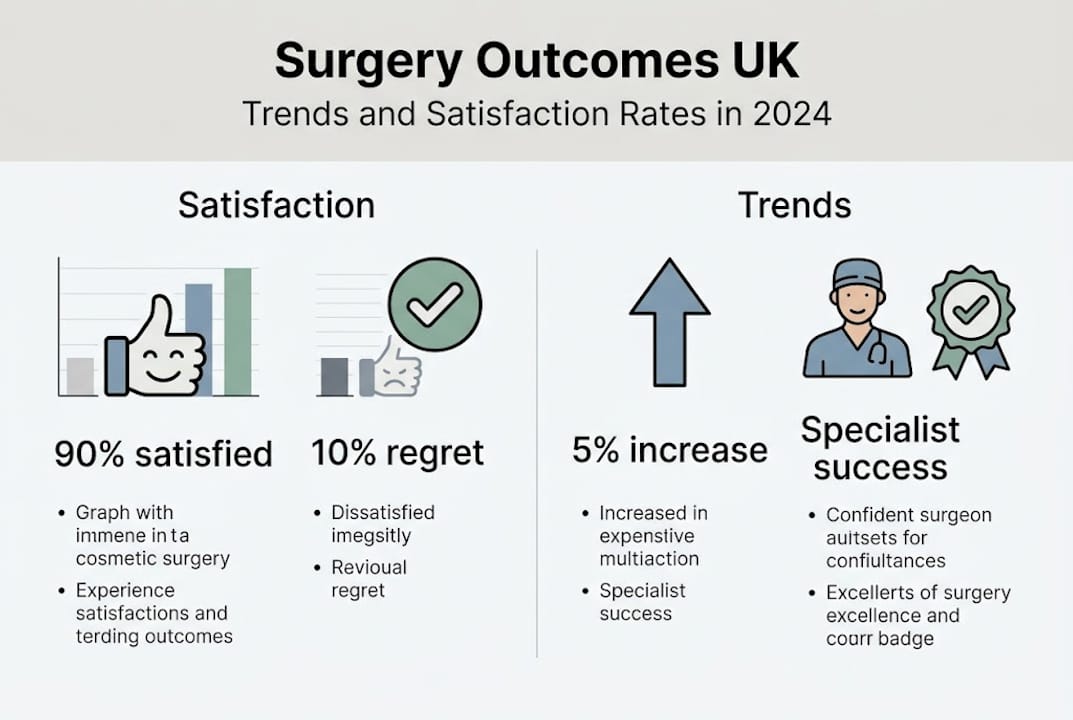
A 5% rise in procedures was recorded in 2024, alongside satisfaction rates exceeding 90% among UK patients. Around 10% of patients report some degree of regret following surgery, a figure that rises sharply when expectations were poorly managed or when an underqualified practitioner was involved.
The most popular procedures by volume include breast augmentation, blepharoplasty, rhinoplasty, facelifts, and liposuction. These are not decisions people take lightly, and when they are guided by a properly trained specialist, the outcomes generally reflect that care.
What influences regret or disappointment?
- Unrealistic expectations not addressed during consultation
- Poor communication between surgeon and patient
- Choosing a provider based on price rather than credentials
- Inadequate post-operative support and follow-up
- Complications arising from unregulated or overseas providers
Complication rates are significantly higher when procedures are carried out by non-specialists or in unregulated settings. This is not a minor statistical footnote. It represents real patients facing corrective surgery, extended recovery, and lasting physical and emotional consequences.
Learning how to evaluate your options safely before committing is one of the most valuable steps a prospective patient can take. For those considering specific procedures, breast augmentation insights offer a useful example of how specialist guidance shapes better outcomes. The true cosmetic surgery regret rates in the UK provide further context for making a grounded decision.
A cosmetic surgeon’s true value: what most people misunderstand
The data tells one part of the story. But the real difference between a good cosmetic surgeon and an exceptional one is harder to quantify.
Technical skill is necessary but not sufficient. Natural-looking results depend just as much on aesthetic judgement, the ability to look at a face or body and understand what proportion, balance, and subtlety actually require. You can teach someone to perform a rhinoplasty. Teaching them to know when not to alter the nose, or by how little, is a different skill entirely.
Ethical surgeons regularly turn patients away. This is not a failure; it is one of the clearest signs of genuine expertise. A practitioner who agrees to every request, regardless of suitability, is one prioritising revenue over outcomes. The best surgeons are honest even when honesty is uncomfortable.
Personal rapport also matters more than most people expect. You will share vulnerable information, ask difficult questions, and need to trust someone’s judgement about your own body. That relationship deserves as much scrutiny as the surgeon’s certificate.
For those still weighing up their options, starting with non-surgical treatments is often a sensible first step, allowing you to assess how a clinic communicates and cares for patients before committing to anything surgical.
Exploring your next steps with leading UK cosmetic surgeons
If this guide has helped you think more clearly about what to look for in a cosmetic surgeon, the logical next step is finding a clinic where those standards are genuinely practised rather than merely claimed.
At Lux Plastic Surgery, every procedure is led by Professor Sandip Hindocha, an award-winning consultant with decades of specialist experience across Bedford, London, and Manchester. The practice is built around honest consultation, rigorous patient screening, and results that look naturally you. Explore the full range of surgery types and their benefits, or read more about why patients choose plastic surgery and what realistic outcomes look like. When you are ready, book a consultation and begin the conversation.
Frequently asked questions
Is cosmetic surgeon a protected title in the UK?
No, any GMC-registered doctor can use the title, so always verify specialist qualifications on the GMC Specialist Register before proceeding.
What is the difference between a cosmetic surgeon and a plastic surgeon?
A plastic surgeon is trained in both reconstructive and aesthetic surgery, while a cosmetic surgeon focuses primarily on appearance enhancement. The NHS outlines this distinction clearly and recommends checking specialist register status.
How can I check if my surgeon is properly qualified?
Search the GMC Specialist Register for Plastic Surgery and confirm membership of BAAPS or BAPRAS, both of which require peer-reviewed evidence of expertise.
What is the typical satisfaction and regret rate for cosmetic surgery in the UK?
Over 90% of UK patients report satisfaction following cosmetic procedures, while around 10% experience regret, most commonly linked to unmet expectations or underqualified practitioners.
How can I avoid complications from cosmetic surgery?
Choose a board-certified UK specialist, attend a thorough consultation, and avoid clinics offering unusually low prices or limited follow-up care. Complication rates rise sharply when procedures are performed abroad or outside regulated settings.