Look closely in any mirror and most people will find that one side of the body does not quite match the other. With breasts, that small difference can become a big one: a bra that fits one side and gapes on the other, or a top that never sits evenly.
When the difference bothers you, surgery can narrow it. But there is no single operation, because the right one depends on whether the gap is in size, shape, position or all three.
Here’s what breast asymmetry correction involves, what it costs, and what results are realistic.
Quick summary
| Point | Details |
|---|---|
| What it is | Surgery to reduce the difference in size, shape or position between the two breasts. |
| Several approaches | Implants, a breast lift, a reduction, or a combination, chosen to suit the difference. |
| Typical cost at Lux | Around £4,000 to £7,000 in Bedford, covering surgeon, anaesthesia, theatre and aftercare. |
| Operation time | About one to two hours, depending on the case. |
| NHS | Sometimes possible for very uneven breasts, depending on your area. |
| Realistic result | Closer symmetry, not perfect symmetry. |
Most women have breasts that don’t quite match
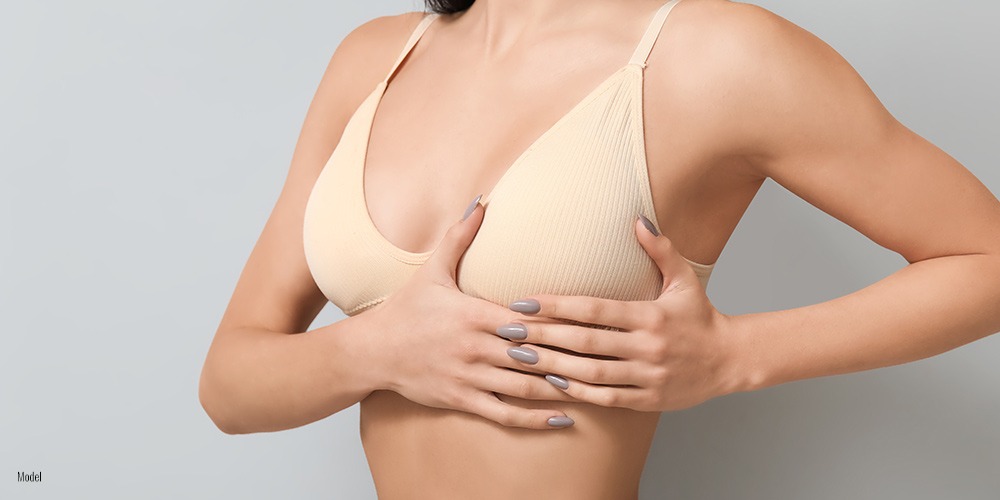
Some difference between the two breasts is normal, and most people never notice it. It becomes a concern when one breast is clearly larger, sits lower, or has a different shape, to the point that it affects clothes, confidence or comfort.
Asymmetry can also be part of a developmental condition. If one breast is narrow, high-set or oddly shaped, it may be related to tuberous breast deformity, its causes and surgery, which needs its own approach.
What causes the difference?
Often it is simply how you developed. Breasts do not always grow at the same rate during puberty, and the gap can persist into adulthood. Other causes include pregnancy and breastfeeding, weight changes, and the effects of earlier surgery or injury.
Knowing the cause matters because it shapes the plan. A difference that is mostly volume is treated differently from one where the nipples sit at different heights or the breast has dropped on one side.
Ways to even things out
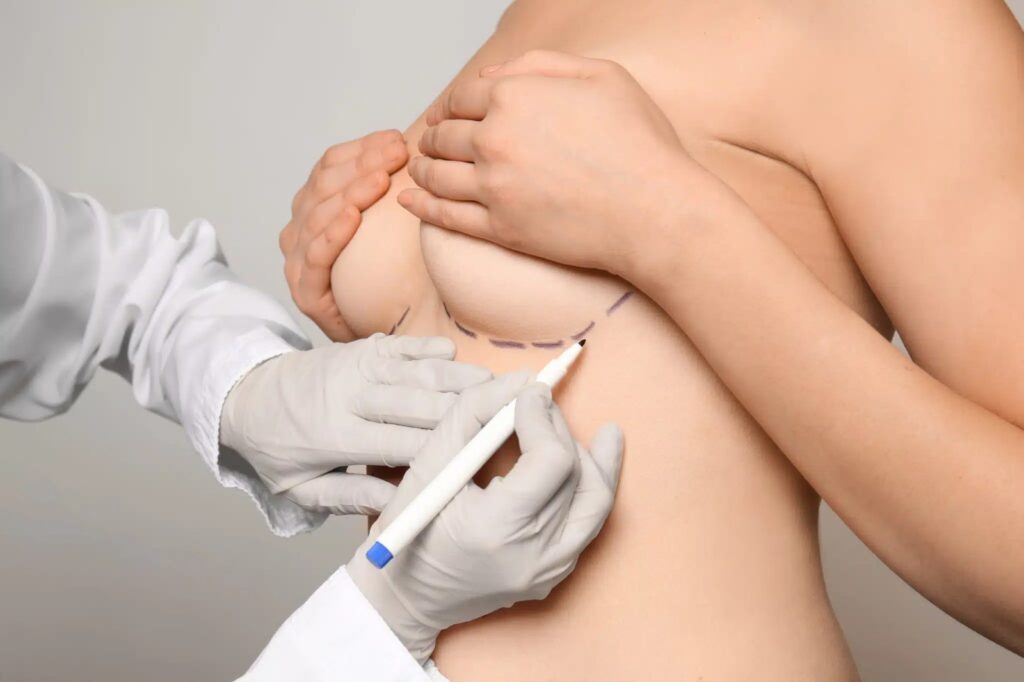
The aim is to reduce the difference as far as your anatomy allows. Depending on your case, that may mean one of the following, or a combination.
Adding volume to the smaller breast
An implant is placed in one breast, or implants of different sizes in both, to match volume. The NHS describes breast implants as being used to increase size, change shape or make the breasts more even. For how implants work in general, see what breast augmentation involves.
Reducing or lifting
If the larger breast is the issue, reducing it can bring it closer to the other. A lift repositions a breast and its nipple, which helps when one sits lower. Costs and scars for reductions are covered in the breast reduction cost guide.
Combining procedures
Many cases need a mix: for example, a lift on one side and an implant on the other. Fat transfer is sometimes used to refine small contour differences afterwards. Your surgeon will explain which route fits your breasts.
What does it cost, and can the NHS help?
At Lux, breast asymmetry correction is typically around £4,000 to £7,000 in Bedford, including the surgeon’s fee, anaesthesia, operating theatre costs and post-operative care. The final figure depends on the technique and how complex the difference is.
For comparison, NHS information on breast enlargement puts implant surgery at about £3,500 to £8,000 in the UK, usually without consultations or follow-up. The same page says the NHS may provide breast enlargement in some circumstances, such as very uneven breasts, depending on where you live, so ask your GP what the rules are locally.
If implants are part of your plan, the breast augmentation cost guide explains implant pricing and what a quote should include.
The operation and the weeks that follow
Correction is carried out under anaesthetic and usually takes one to two hours, depending on what is being done. Whether it is suitable for you is decided at consultation, after examination.
Recovery varies with the procedure. For implant surgery, the NHS suggests taking a week or two off work, avoiding driving for at least a week, and avoiding heavy lifting or strenuous exercise for at least a month. Scars begin to fade over the following weeks and months. NHS advice on choosing who will do your procedure is worth reading before you book.
Setting realistic expectations

Natural breasts are never perfect mirror images, and surgery does not change that. The aim is a result that looks natural and sits much closer together, and no surgeon can promise complete symmetry.
Ask to see examples relevant to your type of asymmetry, and be clear about which difference bothers you most. Risks apply as for any breast surgery, including scarring, changes in nipple sensation and, with implants, the possibility of further surgery later.
Planning your correction with Professor Hindocha
Professor Sandip Hindocha, FRCS (Plast), Consultant Plastic Surgeon (GMC number 6122218) and NHS Clinical Director, examines both breasts, explains what is realistic and builds the plan around your anatomy. Consultations take place at clinics in Bedford, London, and Manchester.
You can read more about the breast asymmetry correction service or send an enquiry through the contact page.
This article is for general information only and does not constitute medical advice. Prices are indicative and depend on the technique used, so always request a written quote.
FAQ
Is it normal to have uneven breasts?
Yes. Some difference between the two breasts is very common. Surgery is only worth considering if the difference bothers you.
How much does breast asymmetry correction cost?
At Lux it is typically around £4,000 to £7,000 in Bedford, depending on the technique. The price includes surgeon, anaesthesia, theatre and aftercare.
Can it be corrected without surgery?
A well-fitted bra or padding can help day to day, but it does not change the breasts. Lasting correction needs an operation.
Will my breasts be perfectly symmetrical afterwards?
No surgeon can promise that. The aim is a natural result that is much closer, within what your anatomy allows.
Can I get breast asymmetry surgery on the NHS?
Sometimes, for very uneven breasts, but it depends on local rules. Your GP can tell you what applies in your area.