TL;DR:
- Only surgeons on the GMC Specialist Register with BAAPS or BAPRAS membership are true experts.
- Expert consultations involve personalized assessments and honest advice, reducing risks of dissatisfaction.
- Safety and aftercare are crucial; unregulated providers lack essential facilities and postoperative support.
In the UK, any doctor registered with the General Medical Council can legally offer cosmetic surgery privately. That single fact should give every prospective patient pause. The cosmetic sector remains under-regulated, meaning the gap between a qualified specialist and an unqualified practitioner is not always visible on a clinic’s website. Choosing the wrong provider can mean botched results, serious complications, and costly revision surgery. Understanding what genuine expertise looks like, and why it matters at every stage from consultation to recovery, is the most important research you can do before booking any procedure.
Table of Contents
- What defines an expert surgeon in the UK
- Personalised consultations: matching procedures to your needs
- Safety and aftercare: why expertise matters
- Complicated cases: expertise for revisions and unpredictable anatomy
- The uncomfortable truth most clinics won’t share
- Take the next step with expert surgeons
- Frequently asked questions
Key Takeaways
| Point | Details |
|---|---|
| Expert credentials matter | Only specialist surgeons with proper training deliver safe, predictable results. |
| Personalised consultations | Tailored expert assessments ensure procedures match your unique anatomy and goals. |
| Safety protocols and aftercare | Regulated providers drastically reduce risks and complications, offering robust support. |
| Expertise for complex cases | Specialists handle challenging anatomy and revisions, preventing poor outcomes. |
What defines an expert surgeon in the UK
Not all surgeons are equal, and in cosmetic surgery that distinction carries real consequences. In the UK, a genuine expert is a surgeon listed on the GMC Specialist Register for plastic surgery. This is not a formality. Reaching that register requires more than ten years of specialist training, including at least six years dedicated to plastic surgery. It is a rigorous pathway that filters out practitioners who simply attended a weekend course or completed a short aesthetic medicine qualification.
Membership of professional bodies such as BAAPS (British Association of Aesthetic Plastic Surgeons) or BAPRAS (British Association of Plastic, Reconstructive and Aesthetic Surgeons) adds another layer of verification. These organisations hold members to strict ethical and clinical standards, require evidence of ongoing training, and provide a mechanism for patient complaints. A surgeon who holds both GMC Specialist Register status and active membership of BAAPS or BAPRAS has demonstrated sustained commitment to the field.
The practical difference this makes is measurable. High-volume specialist surgeons show 20 to 30 per cent fewer complications and lower revision rates compared with non-specialists. That is not a marginal improvement. It reflects the accumulated judgement that only comes from performing hundreds of procedures, encountering rare complications, and refining technique over years.
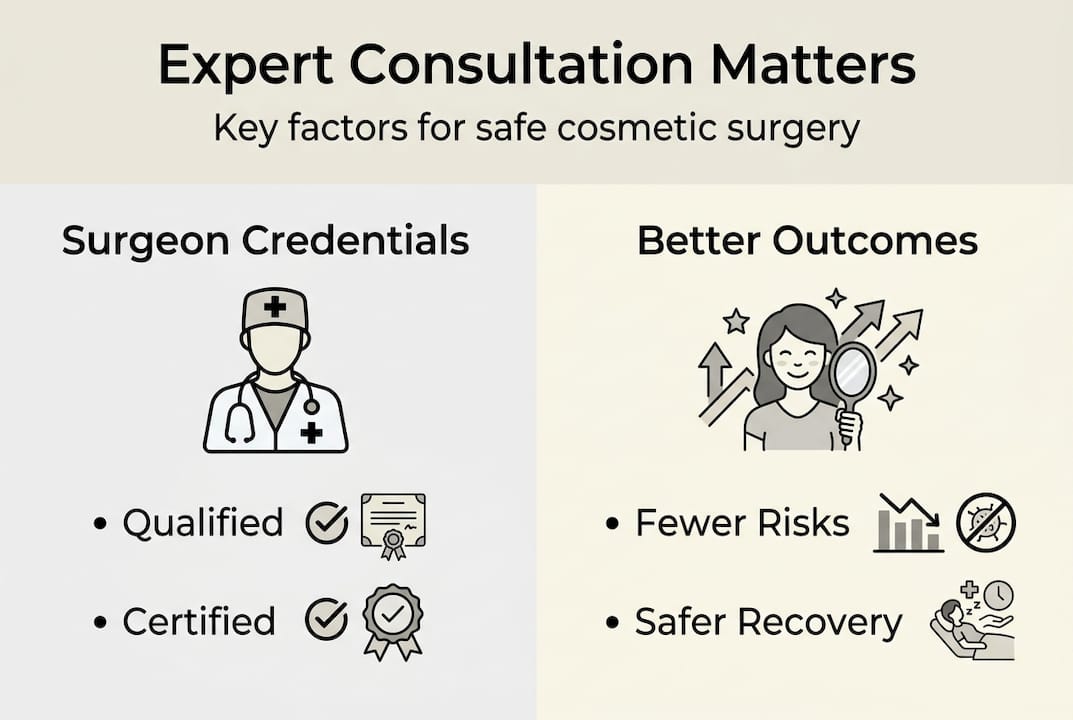
When choosing the right plastic surgeon, look beyond a polished website. Ask directly about their training pathway, their place on the GMC Specialist Register, and their membership of professional bodies.
Key markers of a genuine expert surgeon:
- Listed on the GMC Specialist Register for plastic surgery
- Active BAAPS or BAPRAS membership
- More than ten years of specialist surgical training
- Demonstrable case volume and published or verifiable outcome data
- Willingness to discuss complication rates honestly
| Credential | Expert surgeon | Non-specialist |
|---|---|---|
| GMC Specialist Register | Yes | Rarely |
| BAAPS/BAPRAS membership | Yes | No |
| Specialist training (years) | 10+ | Fewer than 3 |
| Complication rate | 20-30% lower | Significantly higher |
Pro Tip: Before booking any consultation, search the surgeon’s name on the GMC website and cross-reference with the BAAPS or BAPRAS member directories. It takes five minutes and could save you years of regret.
Personalised consultations: matching procedures to your needs
Knowing the qualifications of an expert surgeon, let us look at why their approach to consultations delivers safer, more natural outcomes.
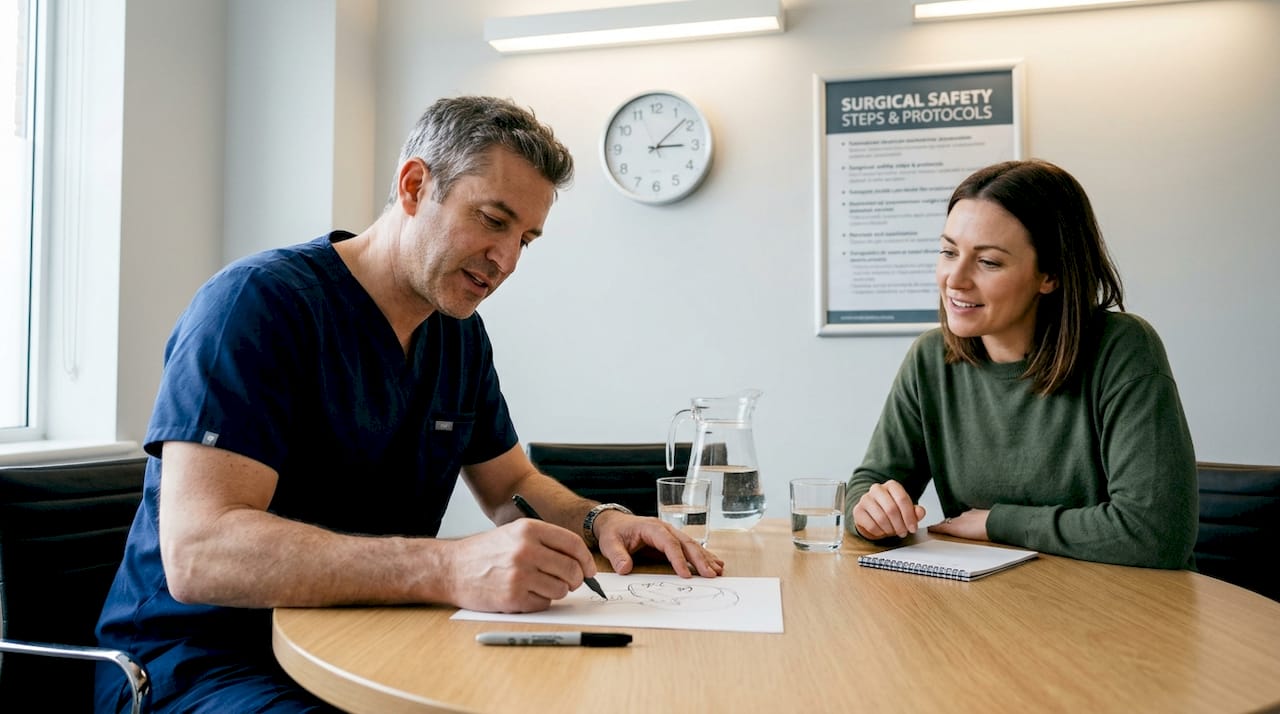
A consultation with a specialist is not a sales meeting. It is a clinical assessment. Expert surgeons evaluate your individual anatomy, skin quality, underlying structure, and personal goals before recommending anything. They understand that two patients asking for the same procedure may need entirely different surgical approaches. This kind of nuanced thinking is what standardised consultations in ethical aesthetic practice are built around.
Generic or high-volume commercial clinics often operate differently. Their consultations may be brief, led by a non-surgeon, and focused on closing a booking rather than assessing suitability. The result is a higher rate of procedures performed on patients who were not ideal candidates, leading to dissatisfaction, complications, and revision surgery.
“Tailored consultation is fundamental to achieving safe, natural results.”
One of the most important things an expert surgeon can do is say no. Ethical refusal, when a patient’s anatomy or psychological readiness makes a procedure inadvisable, is a sign of genuine expertise. It protects you from outcomes you would regret. Cosmetic tourism and budget providers rarely offer this kind of honest assessment because their business model depends on volume.
When researching popular cosmetic procedures, it is worth understanding that the procedure itself is only part of the equation. How it is planned and tailored to your specific anatomy determines whether the result looks natural or obvious.
| Consultation type | Expert surgeon | Generic provider |
|---|---|---|
| Anatomical assessment | Detailed | Minimal |
| Ethical refusal offered | Yes | Rarely |
| Surgical planning | Bespoke | Standardised |
| Natural-looking outcomes | High probability | Variable |
| Patient satisfaction | Consistently high | Inconsistent |
What to ask in your consultation:
- How will you adapt this procedure to my specific anatomy?
- What are the realistic risks for someone with my profile?
- Under what circumstances would you advise against proceeding?
- Can you walk me through your surgical planning process?
Pro Tip: Ask specifically about anatomical mapping during your consultation. A surgeon who cannot explain how they will tailor the procedure to your body is not the right choice.
Safety and aftercare: why expertise matters
Beyond consultation, expertise continues to matter in how surgeries are performed and patients cared for afterwards.
Expert surgeons operate within regulated clinical environments with rigorous infection control, anaesthetic protocols, and emergency procedures. These are not optional extras. They are the infrastructure that keeps you safe when something unexpected happens during or after surgery. Non-specialist providers, particularly those operating in unregulated settings or abroad, frequently lack this infrastructure entirely.
The scale of the problem is stark. A staggering 96% of surgical complications related to cosmetic procedures arise from unregulated or foreign providers. That figure alone should inform every decision you make about where and with whom you have surgery.
“Robust aftercare is the hallmark of expert-led surgery.”
The NHS burden from non-specialist cosmetic surgery is significant, with costs reaching £110,000 per complex corrective case. These are real people who chose a cheaper option and ended up requiring NHS intervention to correct the damage.
What expert aftercare looks like:
- Scheduled follow-up appointments at defined intervals
- Direct access to your surgical team if complications arise
- Written recovery instructions tailored to your procedure
- Psychological support and realistic expectation management
- Clear escalation pathways if something goes wrong
Understanding safe plastic surgery options before you commit means asking not just about the procedure but about what happens after. Equally, reading about surgery recovery tips and recovery expectations helps you understand what genuine post-operative care should include.
Complicated cases: expertise for revisions and unpredictable anatomy
In some scenarios, complexity makes expertise indispensable. Let us consider how specialists navigate these challenges.
Revision surgery is among the most technically demanding work in cosmetic surgery. Whether correcting a previous procedure done elsewhere or managing an unexpected outcome, revision cases require a surgeon who can read scar tissue, work around altered anatomy, and set realistic expectations with a patient who may already be distressed. This is not a job for someone with limited training.
Ongoing CPD and ethical practice are what distinguish genuine experts from practitioners who completed their training and stopped developing. The field evolves. New techniques, new materials, and new evidence emerge regularly. A surgeon committed to continuous professional development is one who will bring current best practice to your care.
“Managing complexity sets true experts apart.”
How expert surgeons handle complex cases:
- Thorough pre-operative assessment, including imaging where appropriate
- Detailed surgical planning that accounts for anatomical variation
- Honest discussion of realistic outcomes and potential limitations
- Access to multidisciplinary support if required
- Structured post-operative monitoring with clear revision protocols
| Scenario | Expert surgeon | Non-specialist |
|---|---|---|
| Revision surgery | Experienced and equipped | Often declines or unsuited |
| Unusual anatomy | Adapts technique | May proceed unsafely |
| Revision rate | Low | Significantly higher |
| CPD engagement | Regular and documented | Minimal or absent |
For anyone considering popular procedures or reading about recovery tips, it is worth remembering that complexity can arise even in routine cases. The surgeon’s ability to respond is what matters.
Pro Tip: For revision surgery or any procedure involving previous scarring, ask the surgeon directly about their CPD record and request examples of similar cases they have managed. A confident expert will welcome the question.
The uncomfortable truth most clinics won’t share
Here is what most clinics will not put on their homepage: in the UK, a doctor with no specialist surgical training can legally offer you a facelift, a rhinoplasty, or a breast augmentation. There is no law preventing it. The under-regulated UK cosmetic sector creates a landscape where marketing budgets and glossy before-and-after photos can disguise a profound lack of surgical expertise.
Budget providers and cosmetic tourism packages rarely include meaningful aftercare, revision support, or access to your surgeon when problems arise. The price you pay upfront does not reflect the true cost when something goes wrong. Choosing on price alone invites regret. Expertise is non-negotiable.
At Lux Plastic Surgery, we believe patients deserve full transparency. When you understand how to evaluate plastic surgery options safely, you make decisions based on evidence rather than marketing. That is the only way to protect yourself in a sector that still allows too much room for unqualified practitioners.
Take the next step with expert surgeons
Now that you understand the crucial difference expertise makes, here is how to connect with specialists for safe, personalised surgery.
At Lux Plastic Surgery, every patient journey begins with a thorough, honest consultation led by Professor Sandip Hindocha, an award-winning consultant with decades of specialist experience. Based in Bedford, with clinics also in London and Manchester, we offer access to body contouring options, a full range of expert surgery services, and detailed recovery advice tailored to your procedure.
Every safe, satisfying outcome starts with the right consultation. Book yours today and take your first step with a surgeon you can trust.
Frequently asked questions
How do I verify if a surgeon is an expert in the UK?
Search the surgeon’s name on the GMC Specialist Register for plastic surgery and confirm active membership with BAAPS or BAPRAS. Both checks take only a few minutes and provide genuine reassurance.
Are expert consultations more expensive than standard ones?
Expert consultations may carry a higher upfront cost, but they significantly reduce the risk of complications, revision surgery, and dissatisfaction. As cosmetic tourism evidence shows, the savings from cheaper providers rarely outweigh the long-term costs.
What aftercare should I expect from an expert surgeon?
Expert surgeons provide structured follow-up appointments, direct access to their team, and written recovery guidance. This robust aftercare is a defining feature of regulated, specialist-led care.
Can expert surgeons handle complex revisions and unusual anatomy?
Yes. Specialist surgeons are specifically trained for complex and revision cases, and their commitment to ongoing CPD ensures they remain current with the latest techniques and safety protocols.